# About
Name: OOOLAB
Description: LearningOS - An Enterprise LMS that Scales
URL: https://blog.thelearningos.com
# Navigation Menu
- Sales Training: https://blog.thelearningos.com/category/sales-training/
- Instructional Design: https://blog.thelearningos.com/category/instructional-design/
- LMS: https://blog.thelearningos.com/category/lms/
- CMS: https://blog.thelearningos.com/category/cms/
- SaaS: https://blog.thelearningos.com/category/saas/
- Enterprise: https://blog.thelearningos.com/category/enterprise
- Case Study: https://blog.thelearningos.com/category/case-study/
- Learning: https://blog.thelearningos.com/category/learning/
- Gamification: https://blog.thelearningos.com/category/gamification/
- Book Intro: https://www.thelearningos.com/book-intro
# Blog Posts
## Agentic Enterprise LMS: A Buyer's Guide to Real Autonomy
Author: Thuy Tran
Author URL: https://blog.thelearningos.com/author/thuy-tran
Published: 2026-09-16
Category: SaaS
Category URL: https://blog.thelearningos.com/category/saas
Meta Title: Agentic Enterprise LMS Buyer's Guide | LearningOS
Meta Description: Agentic AI in an enterprise LMS acts without a human trigger. This buyer's guide shows how to tell real autonomy from a co-pilot with better marketing.
Tags: saas/, LXP/, Enterprise-LMS/, AI/
Tag URLs: saas/ (https://blog.thelearningos.com/tag/saas), LXP/ (https://blog.thelearningos.com/tag/lxp), Enterprise-LMS/ (https://blog.thelearningos.com/tag/enterprise-lms), AI/ (https://blog.thelearningos.com/tag/ai)
URL: https://blog.thelearningos.com/agentic-enterprise-lms-buyers-guide
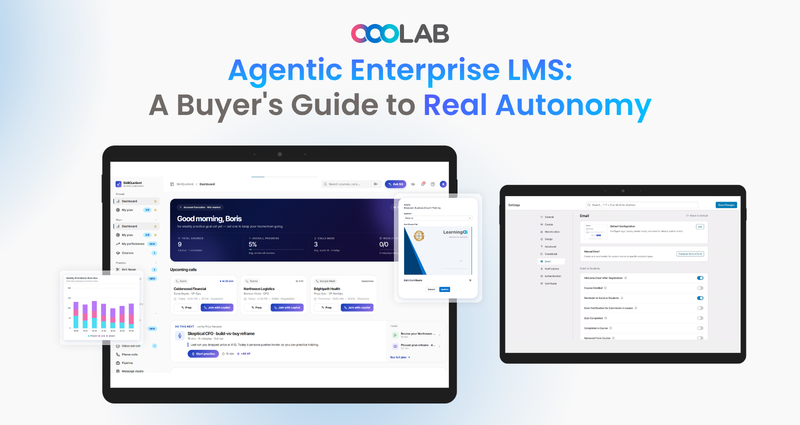
Gartner projects that 40% of enterprise applications will carry task-specific AI agents by the end of 2026, up from under 5% in 2025 _(Source: Gartner, 2025)_. Sales enablement leaders are feeling that shift firsthand, mostly through vendor decks that use the word "agentic" like it's decoration.
Most platforms sold as an [**Enterprise LMS**](https://www.thelearningos.com/) with "AI Powered LMS" features still need a human to click "assign," review the score, and decide what happens next. That is not autonomy.
This guide explores what agentic capability actually means for enablement teams managing reps at scale, supported by data-driven insights.
## **What Is Agentic AI in Learning?**
Agentic AI is a system that detects a condition, decides on an action, and executes it, all without a person triggering the step. A co-pilot, by contrast, only acts when a human asks it to.

In an [**AI Powered LMS**](https://www.thelearningos.com/platform/what-is-learning-os), this plays out as a closed loop: the system reads a signal (a missed objection, a failed assessment), decides what training fixes it, assigns it, and checks whether the behavior actually changed. No manager opens a dashboard to make any of that happen. That's the bar. Most tools marketed as "AI-powered" clear a much lower one.
## **Agentic AI vs. Co-Pilot AI: What's the Difference?**
Here's the cleanest way to separate the two: a co-pilot makes a human faster at a task, while agentic AI removes the human from the task loop entirely. Gartner projects that at least 15% of day-to-day work decisions will be made autonomously through agentic AI by 2028, up from effectively zero in 2024 _(Source: Gartner, 2025)_. A co-pilot can't move that number. Only a system that acts on its own can.
The difference isn't just speed, it's accountability. A co-pilot leaves the human responsible for the outcome. Agentic AI shifts that responsibility to the system and the policies governing it. For an enablement leader, that's the real question buried under the buzzword: when your [**AI Powered LMS**](https://www.thelearningos.com/platform/what-is-learning-os) flags a rep's weak discovery skills, does a person have to notice and act, or does the system already have?
**Ready to see AI roleplay and assessment in action?** [**Book a free Skill Quotient OS demo**](https://www.thelearningos.com/book-intro) **and watch your team's training performance shift.**
## **The Three Tiers of AI Capability in an Enterprise LMS**
Not every vendor demo that says "AI" means the same thing. Sort what you're evaluating into one of three tiers before you sign anything.
**Tier**
**What triggers action**
**Example**
Manual AI-assisted
A person, every time
Manager manually reviews a call, then manually assigns a course
Co-pilot
A person, with AI help
AI suggests which course to assign; manager still clicks "send"
Agentic
The system itself
AI detects the gap, assigns training, and re-tests without a click
If a demo can't show you the third row happening live, on a real trigger, it isn't agentic. It's a co-pilot with better marketing.
**_Read more_**
**_>>\>_** [**_AI Sales Roleplay: The Missing Link Between Training Investment and Revenue Results_**](https://blog.thelearningos.com/ai-sales-roleplay-b2b-sales-training-revenue)
**_>>\>_** [**_Skills Intelligence: Why Skill Quotient Is the Missing Layer in Enterprise LXPs_**](https://blog.thelearningos.com/skills-intelligence-skill-quotient-in-enterprise-lxp)
## **What Agentic Coaching Looks Like in Sales Enablement**
Picture a rep wraps a discovery call and fumbles a pricing objection. In a genuinely agentic setup, the system flags that specific gap within the transcript, assigns a targeted roleplay scenario built around that exact objection, and schedules a re-test, all before the rep's next 1:1 with their manager. Nobody opened the dashboard. Nobody remembered to follow up.
That loop matters because sellers who work effectively with AI-supported coaching are 3.7 times more likely to hit quota _(Source: Gartner Seller Skills Survey, 2024)_. Manual review can't scale to catch every gap across a distributed team; an autonomous loop doesn't need to scale, because it's already running on every call.
**_Read more_**
**_>>\>_** [**_How to Leverage LXP Learning Analytics to Increase ROI_**](https://blog.thelearningos.com/how-to-leverage-lxp-learning-analytics-to-increase-roi)
**_>>\>_** [**_From Cost Centre to Capability Engine: An L&D Strategy That Moves Metrics_**](https://blog.thelearningos.com/ld-strategy-learning-development-lms-capability-engine)
**_>>\>_** [**_Enterprise Learning in 2026: LMS vs. LXP - and Why the Best Platforms Deliver Both_**](https://blog.thelearningos.com/lms-vs-lxp-enterprise-learning-platform)
## **Questions to Ask Before You Buy an "Agentic" LMS**
Vendor demos are built to impress, not to expose the gap between "assisted" and "autonomous." Ask these before you sign:
- Can the system trigger an action (assignment, reassignment, escalation) without a human clicking anything first?
- What specific signal starts the loop, and can you see it happening on a real call, live?
- Does the system verify whether the rep's behavior actually changed, or does it just mark the training as "completed"?
- Who is accountable if the system assigns the wrong coaching, the vendor's policy layer or your manager's judgment?
- What security certifications govern the data an autonomous agent touches, and who audits its decisions?
If a vendor can't answer the first two clearly, you're looking at an **Enterprise LMS** with a chatbot, not an agentic one.
## **Conclusion**
The gap between "AI-powered" and truly agentic is where most enablement budgets get wasted on tools that still require constant babysitting. Teams that get this right free up manager time for actual coaching conversations, not chasing dashboards. Visa saw a 78% increase in seller confidence after introducing AI-powered pitch training and coaching _(Source: LinkedIn Learning Workplace Learning Report, 2025)_, and that kind of shift only happens when the system carries its own weight. LearningOS's Skill Quotient OS was built for exactly this: AI-driven roleplay and assessment aimed at closing that loop, not just flagging it.
**Curious what an all-in-one LMS actually looks like in practice?** [**Book a walkthrough**](https://www.thelearningos.com/book-intro) **: no commitment, just clarity.**
* * *
### **About Us**
At OOOLAB (pronounced "u:laeb"), our mission is to make complex learning operations simple. We aim to positively impact the lives of over 1,000,000 learners and educators by the end of 2026. OOOLAB's LearningOS provides educational institutions and corporate enterprises with an all-in-one solution to create and deliver engaging learning experiences.
- Dedicated success manager
- Personalized setup
- Ongoing assistance
**Learn more at** [**thelearningos.com**](http://thelearningos.com)
## FAQs
Q: What is agentic AI in learning and development?
A: Agentic AI in L&D refers to a system that detects a condition, such as a skill gap or a failed assessment, and takes action on its own, without a person triggering the step. It plans, executes, and verifies outcomes rather than just responding to a request.
Q: What's the difference between agentic AI and a co-pilot in an LMS?
A: A co-pilot assists a human who still initiates and owns every action. Agentic AI runs the full loop itself, from detection to action to verification, which is why Gartner projects agentic systems will handle at least 15% of day-to-day work decisions autonomously by 2028 (Source: Gartner, 2025).
Q: How does agentic AI actually work in sales coaching?
A: In sales enablement, an agentic system reads a call transcript, identifies a specific gap like a mishandled objection, assigns a targeted roleplay scenario built around that gap, and schedules a re-test, all without a manager manually reviewing the call first.
Q: Is "agentic AI" the same thing as an AI-powered LMS?
A: Not automatically. Many platforms marketed as an AI-powered LMS use AI for suggestions or summaries, which makes them a co-pilot, not an agentic system. True agentic capability requires the platform to trigger actions on its own.
Q: How do I check if a vendor's "agentic AI" claim is real?
A: Ask the vendor to demo a real trigger live: a skill gap being detected, training being assigned automatically, and a re-test being scheduled, with no one clicking a button in between. If they can't show that third step happening without human input, it's a co-pilot.
---
This blog is powered by Superblog. Visit https://superblog.ai to know more.
---
## Your Best Sales Reps Are Terrible at Sales Training
Author: Thuy Tran
Author URL: https://blog.thelearningos.com/author/thuy-tran
Published: 2026-09-14
Category: Sales Training
Category URL: https://blog.thelearningos.com/category/sales-training
Meta Title: Build Real Data-Driven Sales Training Playbooks | LearningOS
Meta Description: Shadowing your top sales rep doesn't scale sales training, it just copies a habit nobody can explain. See what actually ramps new reps faster.
Tags: learning-analytics/, AI/, sales-training/, TrainingFramework
Tag URLs: learning-analytics/ (https://blog.thelearningos.com/tag/learning-analytics), AI/ (https://blog.thelearningos.com/tag/ai), sales-training/ (https://blog.thelearningos.com/tag/sales-training), TrainingFramework (https://blog.thelearningos.com/tag/trainingframework)
URL: https://blog.thelearningos.com/best-sales-reps-terrible-sales-training
Every quarter, some poor new hire gets handed a headset, sits next to the top closer, and is told to "just watch and learn." It's the oldest move in the onboarding playbook, and it barely works. Psychologists have a name for why: unconscious competence, the fourth stage of Noel Burch's four-stage learning model, where a skill becomes so automatic the person doing it can no longer explain how they do it _(_ [_Source: The Leader Lab_](https://www.theleaderlab.com/blogs/its-time-to-give-noel-burch-some-credit) _)_. Your star rep isn't hoarding secrets on purpose. They genuinely cannot tell you why the deal closed. That's the uncomfortable truth sitting underneath most [**sales training**](https://www.thelearningos.com/) programs today: the person you picked to teach it is the person least equipped to teach it. This article explores why shadowing fails at sales training, and what a data-derived alternative looks like.
## **The Unconscious Competence Trap Killing Your Sales Training**
Burch's model runs through four stages: you don't know what you don't know, then you know what you don't know, then you consciously grind through the skill, and finally it becomes second nature _(_ [_Source: Toolshero_](https://www.toolshero.com/personal-development/four-stages-of-competence/) _)_. Coaching works best from stage three, when someone still has to think about what they're doing and can narrate it. Stage four is where instincts live, not instructions.
Here's why that matters for your sales training program. Your top rep operates almost entirely on instinct now. Ask them why a deal closed and you'll get a shrug, a vibe, maybe "I just read the room." That's not false modesty. It's the honest limit of unconscious competence, and it's a lousy foundation for training anyone else.
## **Does Shadowing Top Sales Reps Actually Work?**
Sales training is supposed to turn a new hire's first close into a repeatable skill, not a one-off fluke. Shadowing alone rarely gets you there. It gives new hires a front-row seat to a performance they can't reverse-engineer, delivered by someone who's usually too busy to actually teach _(_ [_Source: HR.com_](https://www.hr.com/en/magazines/training_development_excellence_essentials/may_2017_training_development/why-shadow-training-in-sales-onboarding-doesn%E2%80%99t-wo_j2ba240h.html) _)_. **_Your best rep is your best rep because they're closing deals, not because they have 3 hours/week free to babysit a rookie._**

It gets worse. Shadowing passes down bad habits right alongside good ones, with zero structure and zero way to measure whether the new hire actually absorbed anything _(_ [_Source: Allego_](https://www.allego.com/blog/sales-onboarding/) _)_. Managers walk away with no objective read on competency, just a hopeful assumption that osmosis happened. It usually didn't.
**_Poor onboarding is one of the fastest ways to lose new talent._** [**_Book a free call_**](https://www.thelearningos.com/book-intro) **_and learn how LearningOS helps your team ramp up faster._**
## **Shadowing vs. Structured Sales Training: The Onboarding Scorecard**
Lay the two approaches side by side and the gap is obvious:
**Shadowing**
**Structured Sales Training**
**_Scalability_**
Depends on one busy rep's bandwidth
Repeatable across every new hire
**_Data behind it_**
None, no measurable competency signal
Built from actual call data
**_What it teaches_**
Instinct nobody can explain
Specific, nameable behaviors that close deals
One approach scales while the other one just hopes it does.
**_Read more_**
**>>\>** [**_Why Skill Gaps in Sales Training Surface as Lost Deals_**](https://blog.thelearningos.com/sales-training-skill-gaps-lost-deals)
**>>\>** [**_Beyond the Sales Floor: Why Sales Coaching Should Reach Every Team_**](https://blog.thelearningos.com/sales-coaching-for-customer-facing-teams)
## **What Call-Review-Derived Playbooks Actually Look Like**
Instead of hoping talent rubs off, pull the pattern straight from the data:
1. Review your team's actual won and lost calls.
2. Identify the exact moves that separate the two: the objection response, the pivot to value, the question that opened up discovery _(_ [_Source: Koncert_](https://www.koncert.com/b2b-sales-glossary/what-is-ai-sales-role-play) _)_.
3. Turn the pattern into a documented playbook, not a personality, a checklist.
4. Drill it through [**AI Sales Roleplay**](https://www.thelearningos.com/skill-quotient-ai) before reps touch a live call.
Companies with formal, structured [**sales training**](https://www.thelearningos.com/) programs see 78% quota attainment, compared to 63% at companies without one _(Source: RAIN Group)_. That gap doesn't come from a more charismatic mentor. It comes from documenting what works and drilling it.
Teams using AI-driven practice run new hires through dozens of simulated objection-handling scenarios in their first two weeks, versus five or six manager-led mock calls the old way _(_ [_Source: Chambr, 2026_](https://chambr.ai/blog/sales-ramp-time-benchmarks-2026) _)_. One team cut ramp time by 37% just by front-loading repetitions before reps went live.
**_Read more_**
**>>\>** [**_Sales Training in the AI Era: Building the Skills Reps Actually Need_**](https://blog.thelearningos.com/sales-training-in-the-ai-era)
**>>\>** [**_AI Sales Roleplay: The Missing Link Between Training Investment and Revenue Results_**](https://blog.thelearningos.com/ai-sales-roleplay-b2b-sales-training-revenue)
## **How Long Does Sales Training Ramp-Up Really Take?**
Average ramp time for a new SaaS sales rep has stretched to 5.7 months, and 20% of new hires quit within the first 90 days, mostly because of poor onboarding _(Source: SalesSo, 2025)_. Every one of those months is a month of quota that isn't getting hit.
The math scales fast: a 10% reduction in ramp time can add roughly $3.5 million in annual recurring revenue for a typical SaaS company _(_ [_Source: Careertrainer.ai_](https://careertrainer.ai/en/reports/sales-rep-ramp-up-times-statistics/) _)_. That's not a training department win. That's a revenue line item, sitting unclaimed because the default move is still "go sit with Dave."
## **Conclusion**
Your top performer earned that seat through years of instinct nobody asked them to document. That instinct is an asset, but it's not a sales training program, and treating it like one is costing you ramp time, quota, and new hires who quit before they ever get good. Build the playbook from the data instead. Let people who can still explain what they're doing teach the fundamentals, and let AI-driven practice handle the reps a human mentor never has time for.
**_Ready to see AI roleplay and assessment in action?_** [**_Book a free Skill Quotient OS demo_**](https://www.thelearningos.com/book-intro) **_and watch your team's training performance shift._**
* * *
### **About Us**
At OOOLAB (pronounced "u:laeb"), our mission is to make complex learning operations simple. We aim to positively impact the lives of over 1,000,000 learners and educators by the end of 2026. OOOLAB's LearningOS provides educational institutions and corporate enterprises with an all-in-one solution to create and deliver engaging learning experiences.
- Dedicated success manager
- Personalized setup
- Ongoing assistance
**Learn more at** [**thelearningos.com**](https://www.thelearningos.com/)
## FAQs
Q: Does shadowing top sales reps actually work for onboarding?
A: Rarely on its own. Shadowing exposes new hires to a skilled performance, but top performers are usually operating on instinct they can't fully explain, and they're too busy closing deals to teach consistently. It works best as a supplement to a structured sales training program, not the program itself.
Q: What is sales training, and why does the unconscious competence problem matter?
A: Sales training is the structured process of teaching reps the skills, product knowledge, and behaviors that drive closed deals. The unconscious competence problem is the final stage of Noel Burch's four-stage competence model, where a skill becomes so automatic the person performing it can no longer articulate the steps behind it, making star reps poor natural teachers.
Q: How do you build a sales playbook from call data instead of mentorship?
A: Review recorded won and lost calls to identify the specific, repeatable behaviors that separate the two outcomes, such as how objections are handled or when a rep pivots to value. Turn those patterns into a documented, checklist-style playbook that any new hire can practice against.
Q: How does AI Sales Roleplay fit into structured sales training?
A: Once a playbook exists, AI Sales Roleplay gives new hires a space to rehearse it repeatedly before facing real prospects. It allows reps to run through far more practice scenarios than a manager could deliver manually, accelerating the shift from theory to reflex.
Q: How long does sales training ramp-up typically take for a new sales rep?
A: Average ramp time for a SaaS sales rep has climbed to around 5.7 months as products and buyers have grown more complex. Structured sales training built on documented playbooks and repeated practice can meaningfully shorten that window compared to shadowing alone.
---
This blog is powered by Superblog. Visit https://superblog.ai to know more.
---
## Why Skill Gaps in Sales Training Surface as Lost Deals
Author: Thuy Tran
Author URL: https://blog.thelearningos.com/author/thuy-tran
Published: 2026-08-20
Category: Sales Training
Category URL: https://blog.thelearningos.com/category/sales-training
Meta Title: Sales Training Blind Spots: Why Skill Gaps Cost You Deals | LearningOS
Meta Description: Most sales coaching runs on guesswork. See why skill gaps stay invisible in sales training until they cost a deal, and how full-coverage evaluation fixes it.
Tags: ROI/, sales-training/, SkillQuotient, salescoaching
Tag URLs: ROI/ (https://blog.thelearningos.com/tag/roi), sales-training/ (https://blog.thelearningos.com/tag/sales-training), SkillQuotient (https://blog.thelearningos.com/tag/skillquotient), salescoaching (https://blog.thelearningos.com/tag/salescoaching)
URL: https://blog.thelearningos.com/sales-training-skill-gaps-lost-deals

A manager can usually name their problem reps from memory. What they can't do is name the specific skill behind each stalled deal, because they never saw the call where it happened. Manual call review covers roughly 2 to 5% of conversations, and some benchmarks put it under 1% _(Source: Coffee.ai/Gong Labs; Avoma, 2025)_. [**Sales training**](https://blog.thelearningos.com/what-is-sales-training) only works when it targets the right gap, and most sales training programs today are aimed at whatever a manager happens to notice.
This blog explores why skill gaps stay invisible until they cost a deal, supported by data-driven insights.
## **How Do Skill Gaps Go Unnoticed?**
Skill gaps go unnoticed in most sales training programs because managers coach from memory and spot checks, not full visibility into every call. Without a consistent way to see what actually happened in each conversation, coaching gets aimed at whatever surfaced last, not the behavior that is actually costing deals.
Research shows 73% of sales managers spend less than 5% of their time coaching, roughly two hours a week for a team of six to eight reps _(Source: RepsMate, 2026)_. Average span of control has also grown, from 10.9 reps to 12.1 reps in a single year, shrinking the attention available per rep even further _(Source: RepsMate, 2026)_.
The calls that do get reviewed are rarely a representative sample. They're the ones already flagged as trouble, the deals already at risk, the reps who asked for feedback. That's a coaching model built on selective attention, not evidence.
## **The Coverage Gap: What Managers See vs. What Actually Happens**
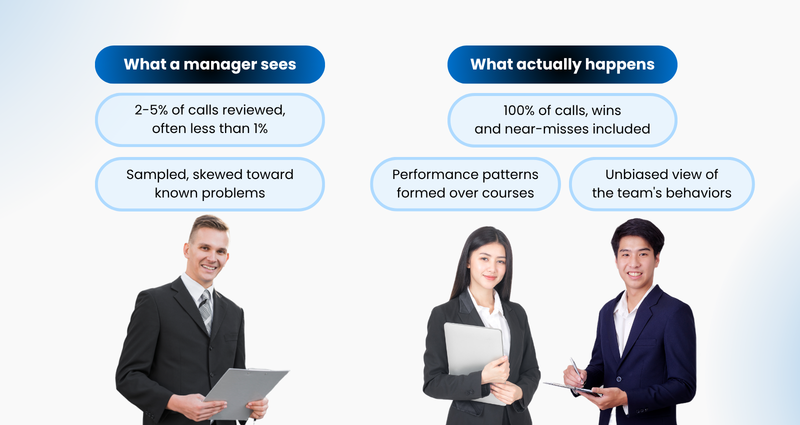
The gap between perception and reality shows up in how coaching is experienced, too. 90% of sales leaders believe they provide monthly coaching, but only 62% of reps report receiving it regularly _(Source: MySalesCoach, State of Sales Coaching 2026)_. That's not a scheduling problem. It's a visibility problem.
**_Read more_**
**>>\>** [**_xAPI: A Data-Driven Approach for High-Impact Enterprise LMS Learning_**](https://blog.thelearningos.com/xapi-for-enterprise-lms-learning)
**>>\>** [**_10 Surprising Ways an LMS Can Revolutionize Your Corporate Training_**](https://blog.thelearningos.com/how-an-lms-revolutionize-corporate-training)
**Not sure where to start?** [**Chat with our consultants**](https://www.thelearningos.com/book-intro) **and we'll map out a solution built around your training goals.**
## **What Invisible Skill Gaps Actually Cost Your Sales Training ROI**
Two behaviors show up again and again in lost deals: unaddressed objections and unconfirmed next steps. Both are correctable once a sales training program can actually see them, and both are usually invisible until it's too late.
- **68% of lost deals** contain at least one unaddressed objection somewhere in the recording _(Source: Nimitai, 2026)_
- **91% of ghosted deals** end without a confirmed next step _(Source: Nimitai, 2026)_
Neither of these is a talent problem. They're coaching targets that no one flagged in time.
Underneath both is a simpler issue. Gartner's Seller Skills Survey of 1,026 B2B sellers found 72% feel overwhelmed by the number of skills their role now requires _(Source: Gartner, 2024)_. When reps don't know which skill to prioritize, and managers can't see which skill is actually missing, training effort gets spent on the wrong thing.
## **Coaching Isn't the Bottleneck. Visibility Is.**
Formal coaching programs, informal one-on-ones, structured playbooks: they all run into the same wall. They're aimed at a guessed problem, not a measured one.

A [**sales training**](https://blog.thelearningos.com/sales-training-in-the-ai-era) program built on a handful of reviewed calls will always reflect a manager's blind spots along with the rep's. Fixing the coaching conversation starts with fixing what feeds it: evaluating what actually happened on every call, not just the ones that happened to get noticed.
## **What Makes Sales Training Visible: Real-Call Evaluation and Standardized Scoring**
[**Skill Quotient**](https://blog.thelearningos.com/iq-eq-sq-skill-quotient-workforce-metric) is OOOLAB's AI-powered assessment tool that evaluates and scores real sales calls against a standardized rubric, not a handful of manually reviewed ones. It is the objective, always-on input most sales training programs are missing, and the shift from sampled visibility to full visibility.
Every conversation gets measured the same way, so managers see the pattern behind a lost deal, not just the deal itself. This doesn't replace the coaching conversation. It tells the manager what to actually coach on.
**_Read more_**
**>>\>** [**_Training That Proves Its Worth: How to Connect L&D Programs to Measurable Business Outcomes_**](https://blog.thelearningos.com/training-roi-business-outcomes-ld-framework)
## **Conclusion**
Sales training only improves once the input feeding the coaching conversation is complete, not selective. A rep's skill gap doesn't announce itself. It sits quietly in a call no one reviewed, until it shows up as a deal that went dark.
**Ready to see AI roleplay and assessment in action?** [**Book a free Skill Quotient OS demo**](https://www.thelearningos.com/book-intro) **and watch your team's training performance shift.**
### **About Us**
At OOOLAB (pronounced "uːlæb"), our mission is to make complex learning operations simple. We aim to positively impact the lives of over 1,000,000 learners and educators by the end of 2026. OOOLAB's LearningOS provides educational institutions and corporate enterprises with an all-in-one solution to create and deliver engaging learning experiences.
- Dedicated success manager
- Personalized setup
- Ongoing assistance
**Learn more at** [**thelearningos.com**](https://www.thelearningos.com/)
## FAQs
Q: Can objective call evaluation replace manager coaching entirely?
A: No. Call evaluation identifies which skill to coach on. The manager still delivers the coaching conversation. The two work together, not as a substitute for one another.
Q: Why do most sales managers miss skill gaps until a deal is lost?
A: Managers typically review only 2 to 5% of calls, and the ones they do review are usually already flagged as problems. That leaves most rep behavior, good and bad, unseen until it shows up in a lost deal.
Q: What percentage of sales calls do managers actually review?
A: Benchmarks put manual call review between 1% and 5% of total calls, largely because managers spend less than 5% of their time coaching on average.
Q: How is skill gap visibility different from more coaching sessions?
A: Adding more coaching sessions doesn't fix a visibility problem. Managers still coach based on the same small sample of calls. Skill gap visibility means evaluating every call, so coaching time gets pointed at the right behavior instead of the loudest one.
Q: What is Skill Quotient and how does it relate to sales training?
A: Skill Quotient is OOOLAB's AI-powered assessment tool that scores real sales calls against a standardized rubric. It gives sales training programs a complete, objective view of rep performance instead of a sampled one.
---
This blog is powered by Superblog. Visit https://superblog.ai to know more.
---
## Skills Intelligence: Why Skill Quotient Is the Missing Layer in Enterprise LXPs
Author: Thuy Tran
Author URL: https://blog.thelearningos.com/author/thuy-tran
Published: 2026-08-17
Category: SaaS
Category URL: https://blog.thelearningos.com/category/saas
Meta Title: Skill Quotient: The Missing Layer in Enterprise LXPs | LearningOS
Meta Description: Enterprise LXPs measure engagement, not capability. See how Skill Quotient closes that gap and proves whether training actually built real skill.
Tags: LMS/, LXP/, SkillQuotient, TrainingFramework
Tag URLs: LMS/ (https://blog.thelearningos.com/tag/lms), LXP/ (https://blog.thelearningos.com/tag/lxp), SkillQuotient (https://blog.thelearningos.com/tag/skillquotient), TrainingFramework (https://blog.thelearningos.com/tag/trainingframework)
URL: https://blog.thelearningos.com/skills-intelligence-skill-quotient-in-enterprise-lxp

Companies aren't short on talent. According to [**TalentLMS's 2026 Skills Visibility Report**](https://www.talentlms.com/research/skills-visibility-report), they're short on skills visibility: the ability to see, with confidence, what their workforce can actually do. That's the gap most Enterprise LXPs were never built to close.
Learning experience platforms have solved engagement: better content discovery, sharper personalization, higher completion rates. What they haven't solved is proof. Completing a course and being capable of the skill it teaches are two different things, and most platforms still can't tell you which one happened. This is where [**Skill Quotient**](https://www.thelearningos.com/skill-quotient-ai) comes in, as the measurable layer that turns learning activity into evidence of actual capability.
## **What Is a Skills Intelligence Layer, and Why Don't Most LXPs Have One?**
A skills intelligence layer is the part of a learning system that measures capability directly, not engagement as a proxy for it. Instead of tracking completions and time-on-platform, it scores what a learner can actually do against defined competencies, and updates as new evidence comes in.
Most LXPs stop at the first kind of data: what was viewed, how long, how often. None of that tells an L&D leader whether a rep can run a discovery call or a manager can deliver difficult feedback. Skills intelligence is the piece that closes the distance between activity and ability.
## **Why Is the LXP Adoption Gap Really a Proof Gap?**
The LXP market is growing fast on paper: it reached roughly $3.74 billion in 2025, expanding at close to 34% annually ( _Source: Business Research Insights, 2026_). Yet only about 16% of companies currently use one ( _Source: Brandon Hall Group, via Docebo, 2023_). That gap points to a proof problem: buyers are being asked to invest in a platform that can't yet show them the workforce-capability outcome they're actually paying for.
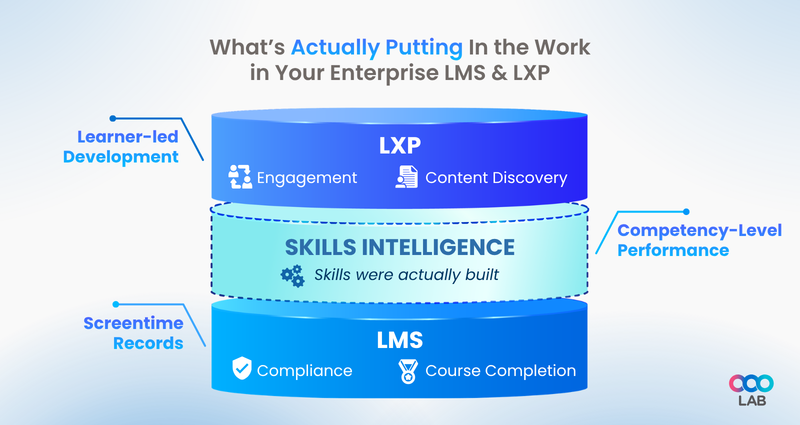
An Enterprise LXP without a skills intelligence layer can tell you a learner is engaged. It can't tell you they're capable. That distinction is exactly what's stalling adoption at scale, because a platform that can't prove capability is difficult to justify against a shrinking training budget.
**_Read more_**
**>>\>** [**_Enterprise Learning in 2026: LMS vs. LXP - and Why the Best Platforms Deliver Both_**](https://blog.thelearningos.com/lms-vs-lxp-enterprise-learning-platform)
**>>\>** [**_What is a Capability LMS and Why Does Your Organization Need One?_**](https://blog.thelearningos.com/enterprise-lms-for-growth)
**Built for L&D leaders who need results, not more admin.** [**Book your free demo**](https://www.thelearningos.com/book-intro) **and bring your learning operations up to speed.**
## **What Is Skill Quotient, and How Does It Bridge Engagement and Capability?**
Skill Quotient is a single, trackable score for how developed a person's capabilities are against the roles and competencies that matter to your business, built to sit on top of whatever learning content you already deliver. Where IQ measures raw cognitive ability and EQ measures emotional intelligence, SQ measures something more directly useful to an employer: demonstrated, current capability.
That framing matters more now than it did a few years ago. 69% of HR professionals say their organization faces a widening skills gap (Source: Wiley, Closing the Skills Gap Report), and organizations applying skills-based practices are 63% more likely to achieve strong business results than those still managing talent by role instead of by capability (Source: Deloitte, The Skills-Based Organization). The organizations pulling ahead aren't the ones with the most content; they're the ones that can see where their workforce stands.
## **What Skills Visibility Looks Like When It's Built In, Not Bolted On**
Skills visibility works best when it's a byproduct of how people already work and learn, not a separate assessment cycle layered on top. Capability scores should update continuously as employees complete training and get evaluated in the flow of their role, rather than resetting to zero every time a new course is assigned. A quarterly skills audit finds problems months after they started; a system where SQ updates continuously surfaces the same gap almost immediately, while there's still time to act on it.
## **How Does a Capability LMS Turn Skills Data Into Action?**
Visibility only pays off if it routes somewhere. A capability LMS takes the gaps a skills intelligence layer surfaces and turns them directly into the next assigned module, coaching note, or development path, without a manager having to manually connect the dots. That closes the loop most LXPs leave open: see the gap, then actually do something about it. It also gives managers a shared, objective reference point for coaching conversations, instead of relying on gut feel about who needs help with what.
**_Read more_**
**>>\>** [**_IQ, EQ, and now, SQ: Why Skill Quotient Is the Defining Metric for Today's Workforce_**](https://blog.thelearningos.com/iq-eq-sq-skill-quotient-workforce-metric)
**>>\>** [**_How to Leverage LXP Learning Analytics to Increase ROI_**](https://blog.thelearningos.com/how-to-leverage-lxp-learning-analytics-to-increase-roi)
## **Will the LXPs That Win This Decade Prove Capability, Not Just Engagement?**
LXP adoption isn't stalling because the content or personalization is weak. It's stalling because most platforms can't answer the one question every L&D budget conversation comes down to: did this actually build a skill. Skill Quotient is built to answer that directly, making workforce capability something you can see, not something you have to assume.
**_Ready to see AI roleplay and assessment in action?_** [**_Book a free Skill Quotient OS demo_**](https://www.thelearningos.com/book-intro) **_and watch your team's training performance shift._**
### **About Us**
At OOOLAB (pronounced "uːlæb"), our mission is to make complex learning operations simple. We aim to positively impact the lives of over 1,000,000 learners and educators by the end of 2026. OOOLAB's LearningOS provides educational institutions and corporate enterprises with an all-in-one solution to create and deliver engaging learning experiences.
- Dedicated success manager
- Personalized setup
- Ongoing assistance
**Learn more at** [**thelearningos.com**](https://www.thelearningos.com/)
## FAQs
Q: What is a skills intelligence layer?
A: A skills intelligence layer is the part of a learning platform that measures actual capability against defined competencies, rather than relying on engagement metrics like completions or time-on-platform as a stand-in for skill.
Q: How is Skill Quotient different from a skills taxonomy?
A: A skills taxonomy is a static list of skills mapped to roles. Skill Quotient is a live, trackable score that measures how developed someone's capabilities actually are against that taxonomy, and updates as new performance evidence comes in.
Q: Why do LXPs struggle to prove skill development?
A: Most LXPs were built to optimize content discovery and engagement, so their analytics reflect activity, not competency. Without a dedicated skills intelligence layer, they can show a learner was active but not whether they became capable.
Q: What's the difference between an LXP and a Capability LMS?
A: An LXP is optimized for personalized, learner-led content discovery. A Capability LMS goes further by connecting measured skill gaps directly to the next training action, closing the loop between what a learner needs and what they're assigned.
Q: How do you measure whether training actually built a skill?
A: The most reliable approach combines competency-based scoring with continuous, in-the-flow-of-work assessment, rather than a one-time test at the end of a course. That way, capability data reflects current performance instead of a single point in time.
---
This blog is powered by Superblog. Visit https://superblog.ai to know more.
---
## The 20% Nobody Trains For: Building Peer Learning Into Sales Coaching
Author: Thuy Tran
Author URL: https://blog.thelearningos.com/author/thuy-tran
Published: 2026-08-10
Category: Sales Training
Category URL: https://blog.thelearningos.com/category/sales-training
Meta Title: Peer Learning in Sales Coaching: Structuring the Missing 20% | LearningOS
Meta Description: Most sales coaching budgets ignore the 20% of learning that comes from peers. Here's how to structure peer learning into your coaching strategy today.
Tags: learning-analytics/, TrainingFramework, salescoaching
Tag URLs: learning-analytics/ (https://blog.thelearningos.com/tag/learning-analytics), TrainingFramework (https://blog.thelearningos.com/tag/trainingframework), salescoaching (https://blog.thelearningos.com/tag/salescoaching)
URL: https://blog.thelearningos.com/peer-learning-sales-coaching-strategy
The 70-20-10 model has shaped workplace learning for decades: 70% of skill development comes from on-the-job experience, 20% from peers and social learning, and 10% from formal training _(Source: Center for Creative Leadership research)_. Sales coaching is the ongoing practice of developing a rep's skills through structured feedback, practice, and reinforcement, and it draws on all three layers of that model.
Most sales coaching budgets do the opposite. They pour resources into the 10%, formal courses and onboarding decks, while the 20% that peers deliver stays informal, unmeasured, and easy to cut when quotas tighten. That gap costs more than most sales leaders realize.
This article explores how to structure peer learning as a deliberate part of your sales coaching strategy, supported by data-driven insights.
## **What Does the 70-20-10 Model Actually Say About How Reps Learn?**
The 70-20-10 model, developed through research by Morgan McCall, Michael Lombardo, and Robert Eichinger at the Center for Creative Leadership, holds that 70% of professional learning happens through hands-on experience, 20% through peers and coaching, and 10% through formal instruction _(Source: Center for Creative Leadership)_. The proportions are descriptive, not a mandated budget split.
For sales teams, that 20% covers deal debriefs, shadowing, and informal advice traded between reps. [**Sales coaching**](https://www.thelearningos.com/enterprise-knowledge/mastering-sales-training-strategies-for-high-performing-teams) programs that ignore this layer are optimizing for a third of the model at most.
## **Why Does Most Sales Coaching Investment Still Target the Wrong 10%?**
Formal training is easy to budget, schedule, and measure. That is likely why it still absorbs most of the coaching spend, even though it accounts for the smallest share of how reps actually learn.
The imbalance shows up in performance data. Structured coaching improves rep performance by 19% on average _(Source: Gartner, 2024)_, and sales organizations with dynamic coaching programs see 28% higher win rates and 16.7% greater revenue growth _(Source: CSO Insights, 2023)_. Yet 41% of reps report being rarely or never coached at all _(Source: MySalesCoach, 2026)_.
The implication is straightforward: teams that treat coaching as a scheduled event, rather than an embedded practice, are leaving the 20% on the table. Companies with formal sales training programs see 78% quota attainment versus 63% for those without one _(Source: RAIN Group)_, but formal training alone does not explain the full gap.

**_Built for L&D leaders who need results, not more admin._** [**_Book your free demo_**](https://www.thelearningos.com/book-intro) **_and bring your learning operations up to speed._**
## **The Business Case for Peer Learning in Sales Coaching**
Peer learning delivers its biggest return with the middle 60% of performers, the reps who are not struggling but are not maxed out either. CSO Insights data shows mid-pack reps respond roughly twice as well to coaching as top performers, since they have more room to improve and fewer entrenched habits _(Source: CSO Insights)_.
One sales organization saw this play out directly: one rep closed 25% of a specific opportunity type, another closed just 5%. Instead of replacing the weaker performer, the team paired them for structured collaboration, and both reps' results improved _(Source: Sandler)_.
That is the peer learning effect in miniature. It multiplies a manager's coaching capacity without multiplying their hours, which matters most for that responsive middle tier.
**Aspect**
**Formal Training**
**Mentorship**
**Peer Learning**
**Frequency**
_Scheduled, infrequent_
_Ongoing, 1:1_
_Ongoing, reciprocal_
**Manager Time Required**
_High_
_(planning, delivery)_
_Medium_
_Low, self-sustaining_
**Best Fit**
_Onboarding, compliance_
_New reps, tenure gaps_
_Middle 60% of performers_
## **How to Structure Peer Learning: Buddy Pairing, Deal Debriefs, and Call Reviews**
Peer learning fails when it is left to chance. It works when it is built into the sales coaching cadence with the same rigor as formal training.
- **Buddy pairing:** Match reps by complementary strengths, not tenure, and set a recurring check-in.
- **Deal debriefs:** Review closed-won and closed-lost deals together, focusing on decision points, not outcomes.
- **Shared call reviews:** Have pairs listen to one recorded call each week and exchange written feedback.
- **Rotating peer-led sessions:** Let a different rep lead a short skills session each month.
RAIN Group's Self-Study+ program builds this in directly, pairing participants as accountability partners who check progress and share feedback _(Source: RAIN Group)_.

**_Read more_**
**>>\>** [**_Building Confidence in Your Sales Team Through Training and Development_**](https://blog.thelearningos.com/building-confidence-in-your-sales-team-through-training-and-development)
**>>\>** [**_The Role of Emotional Intelligence in Sales Training_**](https://blog.thelearningos.com/the-role-of-emotional-intelligence-in-effective-sales-training)
**>>\>** [**_How to Add Gamification into Your Sales Training Curriculum_**](https://blog.thelearningos.com/how-to-gamification-into-your-sales-training-curriculum)
**>>\>** [**_Effective Onboarding Strategies for New Sales Hires: Setting Them Up for Success_**](https://blog.thelearningos.com/effective-onboarding-strategies-for-new-sales-hires-setting-them-up-for-success)
**>>\>** [**_Sales Training in the AI Era: Building the Skills Reps Actually Need_**](https://blog.thelearningos.com/sales-training-in-the-ai-era)
## **Making Peer Learning Trackable, Not Informal**
Informal peer learning has a shelf life. Without structure, it fades the moment quotas tighten and calendars fill up.
Tracking fixes that. Logging peer sessions, debriefs, and call reviews inside the same system that tracks formal training gives managers visibility into the full 90% of learning, not just the 10% that shows up in a training report. Employees are also 90% more likely to stay at a company that visibly invests in their growth _(Source: LinkedIn Workplace Learning, 2025)_, and that includes peer development, not only formal courses.
Treat peer learning as a coaching output worth reporting on, not an unofficial extra. When it shows up in the same dashboard as formal training completion, it stops competing for budget and starts justifying its own.
## **Conclusion**
Peer learning is not a replacement for formal sales coaching. It is the layer most programs quietly skip, even though it accounts for twice the learning impact of formal training. Structuring buddy pairs, debriefs, and call reviews turns an informal habit into a measurable part of your coaching strategy.
Teams that get this right do not just close more deals. They keep their people. LearningOS clients report 30 to 50% higher employee retention when structured development, including peer coaching, becomes part of the culture _(Source: LearningOS' Client Sata)_.
**_If retention and engagement are a priority for your team, start here —_** [**_Book a demo_**](https://www.thelearningos.com/book-intro) **_and see how LearningOS delivers both._**
### **About Us**
At OOOLAB (pronounced "u:laeb"), our mission is to make complex learning operations simple. We aim to positively impact the lives of over 1,000,000 learners and educators by the end of 2026. OOOLAB's LearningOS provides educational institutions and corporate enterprises with an all-in-one solution to create and deliver engaging learning experiences.
- Dedicated success manager
- Personalized setup
- Ongoing assistance
**Learn more at** [**thelearningos.com**](https://www.thelearningos.com/)
## FAQs
Q: How is peer learning different from mentorship?
A: Mentorship typically pairs a less experienced rep with a more senior one in an ongoing relationship. Peer learning is broader and often reciprocal, pairing reps at similar levels so both sides contribute and improve.
Q: How much time should peer coaching structures take from a manager's schedule?
A: Very little, since peers coach each other directly. A manager's role is mainly to set up the pairing structure, review cadence, and hold both reps accountable to it.
Q: What is peer learning in sales training?
A: Peer learning is skill development that happens between reps rather than from a manager or a course, such as call reviews, deal debriefs, and buddy pairing. The 70-20-10 model attributes roughly 20% of workplace learning to this category.
Q: Can peer learning replace formal sales coaching?
A: No. Peer learning works alongside formal coaching and on-the-job experience, not instead of them. All three layers of the 70-20-10 model contribute to how reps develop.
Q: How do you measure the ROI of a peer learning program?
A: Track it the same way you track formal training: log sessions, debriefs, and reviews in your LMS, then compare quota attainment and retention for reps who participate consistently versus those who do not.
---
This blog is powered by Superblog. Visit https://superblog.ai to know more.
---
## Selling to the C-Suite: Why Your Sales Training Must Adapt
Author: Thuy Tran
Author URL: https://blog.thelearningos.com/author/thuy-tran
Published: 2026-08-05
Category: Sales Training
Category URL: https://blog.thelearningos.com/category/sales-training
Meta Title: Selling to the C-Suite: A Different Sales Training Approach | LearningOS
Meta Description: Executive deals need a different sales training approach: business-case building, stakeholder mapping, and AI roleplay for C-suite conversations.
Tags: corporate-elearning/, employee-upskilling/, B2BSales
Tag URLs: corporate-elearning/ (https://blog.thelearningos.com/tag/corporate-elearning), employee-upskilling/ (https://blog.thelearningos.com/tag/employee-upskilling), B2BSales (https://blog.thelearningos.com/tag/b2bsales)
URL: https://blog.thelearningos.com/c-suite-sales-training-approach
Selling to the C-suite means pitching a room of stakeholders instead of one buyer; it demands business-case fluency, financial storytelling, and multi-stakeholder navigation that standard sales training was never built to teach.
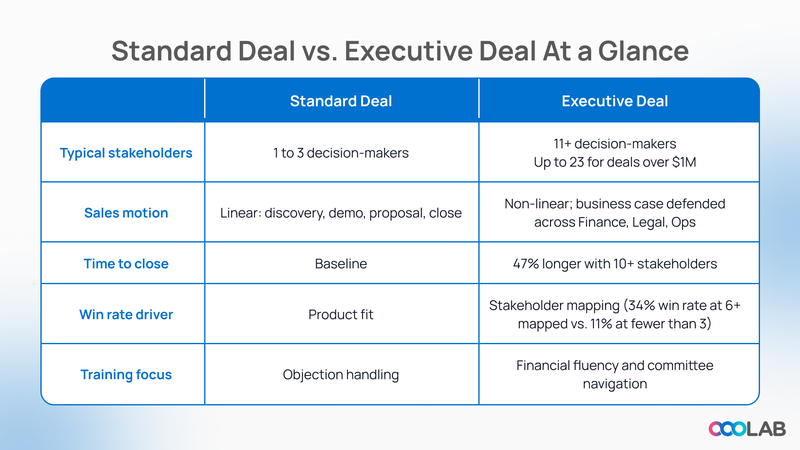
The average enterprise buying committee has grown to 11 stakeholders, up from just 7 in 2017 _(Source: Gartner, 2024)_. Reps trained to pitch a single buyer freeze the moment a CFO or CEO joins the call. Closing an executive deal is not a bigger version of a standard deal, it is a different motion built on business-case fluency and multi-stakeholder navigation.
This blog explores how [**sales training**](https://www.thelearningos.com/enterprise-knowledge/sales-training-demystified-why-it-matters-more-than-ever) has to change once your buyer sits in the C-suite, supported by data-driven insights.
## **The Executive Deal Is a Different Sport**
Selling to the C-suite means selling to a room, not a person. Buying committees now average 11 stakeholders for enterprise software purchases, and deals above $1 million routinely involve 14 to 23 people across finance, legal, and operations _(Source: Forrester, 2023)_. Reps who prepare a single-buyer pitch are outnumbered before the call even starts.
That complexity has a direct cost. **_Deals with 10 or more stakeholders take 47% longer to close_** and require 3X as many touchpoints _(Source: McKinsey, 2024)_; and teams that actively map their stakeholders, see it pay off. Deals where six or more stakeholders are mapped in the CRM close at a 34% win rate, compared to 11% when fewer than three are tracked _(Source: The Starr Conspiracy, 2024)_. Reps who can identify and navigate a complex, multi-stakeholder deal early have a measurable edge over reps who wait for the committee to reveal itself.
## **Why Does Standard-Cycle Sales Training Fall Short at the C-Suite?**
Most [**sales training**](https://www.thelearningos.com/) builds reps for a linear path: discovery, demo, proposal, close. Executive deals do not follow that path. Committees experience unhealthy internal conflict 74% of the time during the buying decision, and sellers are rarely in the room when that friction happens _(Source: Gartner, 2025)_. A rep trained only to handle objections from one buyer has no playbook for aligning finance, IT, and operations around a single "yes."
The gap shows up in numbers reps can feel. Only 81% of sellers say understanding a company's financial performance is critical to engaging executives, yet just 72% report they are actually successful when they use financial data in their conversations _(Source: Databook, 2023)_. The distance between knowing it matters and being able to do it is exactly what standard-cycle training leaves unaddressed.
**_Read more_**
**>>\>** [**_Effective Onboarding Strategies for New Sales Hires: Setting Them Up for Success_**](https://blog.thelearningos.com/effective-onboarding-strategies-for-new-sales-hires-setting-them-up-for-success)
**>>\>** [**_Sales Training in the AI Era: Building the Skills Reps Actually Need_**](https://blog.thelearningos.com/sales-training-in-the-ai-era)
**_Built for L&D leaders who need results, not more admin._** [**_Book your free demo_**](https://www.thelearningos.com/book-intro) **_and bring your learning operations up to speed._**
## **The Skill Layer Executive Selling Actually Requires**
Executive selling is a distinct competency, not an advanced version of discovery calls. It demands three specific skills: building a defensible business case, speaking the language of ROI and margin, and navigating a committee whose members do not always agree with each other.
This is where [**Competency and Skill**](https://blog.thelearningos.com/iq-eq-sq-skill-quotient-workforce-metric) frameworks matter more than generic coaching. A rep can be excellent at consultative questioning and still stall at the C-suite if they cannot translate a feature into a line on a P&L statement. Training programs that isolate executive selling as its own skill track, rather than folding it into general sales enablement, give reps a clear standard to work toward instead of assuming the skill will develop on its own.
Enterprise sales leaders who treat executive selling as a bolt-on to existing curriculum tend to see the gap resurface every time a new rep is promoted into strategic accounts. Building it as a standalone competency, with its own benchmarks and practice cadence, keeps the skill from eroding between deals.
## **Business-Case Building: Teaching Reps to Speak CFO**
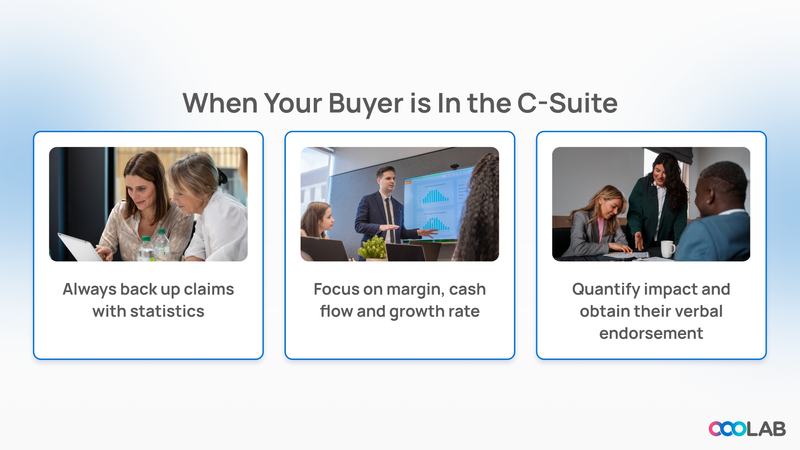
**Three things that change when your buyer is a CFO:**
- Every claim needs a number attached, even in the first meeting; CFOs assume sellers can produce reasonable estimates on demand
- The conversation shifts from product capability to margin, cash flow, and growth rate
- Silence is not neutral; a CFO who is not given quantified impact treats the pitch as unfinished
Reps do not need a finance degree to clear this bar. They need repeatable frameworks for reading a balance sheet, tying a solution to a specific financial line item, and rehearsing that translation until it is second nature rather than improvised.
## **Practicing Executive Conversations Before They Count**
Executive conversations are unscripted, so scripted practice does not prepare reps for them. Top-selling reps run twice as many practice roleplays as their peers _(Source: Mindtickle, 2026)_, and that gap compounds when the scenario is a CFO pushing back on an ROI number instead of a familiar product objection.
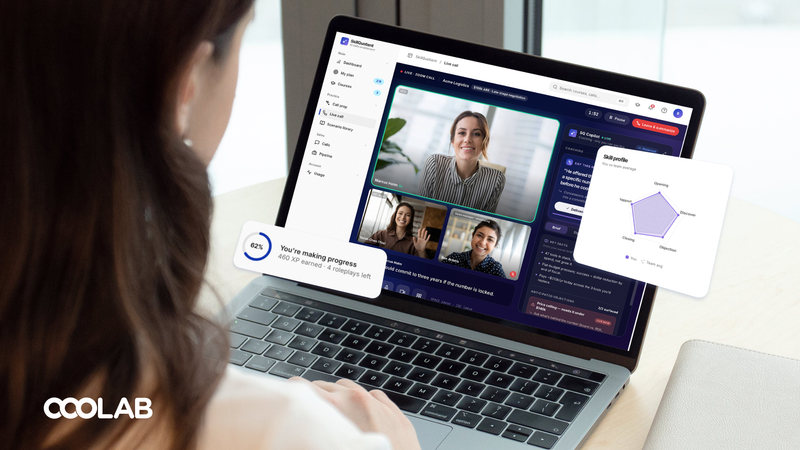
**Skill Quotient AI**, OOOLAB's AI-powered roleplay and assessment tool, gives reps a safe environment to rehearse exactly this kind of pressure. Instead of a generic buyer persona, reps can practice against a simulated CFO or CEO who probes for numbers, challenges assumptions, and does not soften the questions the way a peer [**AI Sales Roleplay**](https://www.thelearningos.com/skill-quotient-ai) partner might.
## **Your Next Executive Deal Starts With How You Train Today**
Executive-level deals will keep growing in size and complexity as buying committees expand. Reps who rehearse business-case conversations, learn to navigate conflicting stakeholders, and practice under real pressure walk into the boardroom prepared instead of hopeful. The sales training decisions your team makes now determine whether the next C-suite deal closes on your terms.
**_Organisations around the world trust LearningOS to run their training at scale._** [**_Book a demo_**](https://www.thelearningos.com/book-intro) **_and see why._**
### **About Us**
At OOOLAB (pronounced "uːlæb"), our mission is to make complex learning operations simple. We aim to positively impact the lives of over 1,000,000 learners and educators by the end of 2026. OOOLAB's LearningOS provides educational institutions and corporate enterprises with an all-in-one solution to create and deliver engaging learning experiences.
- Dedicated success manager
- Personalized setup
- Ongoing assistance
**Learn more at** [**thelearningos.com**](https://www.thelearningos.com/)
## FAQs
Q: What's different about selling to senior executives?
A: Selling to senior executives means selling to a buying committee, not a single decision-maker; enterprise committees average 11 stakeholders across finance, legal, and operations. Conversations shift from product features to business impact, and reps need to build a quantified case rather than rely on relationship-based persuasion alone.
Q: What skills do sales reps need to sell to the C-suite?
A: Reps need business-case building, financial fluency to speak in terms of ROI and margin, and the ability to navigate a multi-stakeholder committee whose members may disagree with each other. These are distinct competencies from standard discovery and objection-handling skills.
Q: How long does it take to train reps for executive-level deals?
A: There is no fixed timeline, but reps typically need repeated, scenario-based practice rather than a single workshop. Programs that combine business-acumen training with ongoing roleplay practice see measurable improvement faster than one-time sessions, since the skill is built through repetition against realistic pushback.
Q: Can AI roleplay prepare reps for real C-suite conversations?
A: Yes. AI roleplay lets reps rehearse against simulated executive personas that probe for numbers and challenge assumptions, closing the gap between practice and a live boardroom conversation. Top-performing reps already practice roleplays at twice the frequency of their peers, and AI makes that repetition scalable across a full team.
Q: How is executive selling training different from general sales training?
A: General sales training typically covers discovery, demos, and objection handling for a single buyer across a standard sales cycle. Executive selling training isolates skills specific to committee-based, high-stakes deals: financial storytelling, stakeholder mapping, and rehearsing conversations where the buyer pushes back harder and expects numbers immediately.
---
This blog is powered by Superblog. Visit https://superblog.ai to know more.
---
## Online Professional Development Courses: A New Retention Strategy
Author: Thuy Tran
Author URL: https://blog.thelearningos.com/author/thuy-tran
Published: 2026-08-03
Category: Enterprise
Category URL: https://blog.thelearningos.com/category/enterprise
Meta Title: Online Professional Development Courses: A New Retention Strategy | LearningOS
Meta Description: Online professional development courses now function as a retention lever, not a perk. See the data proving a professional development LMS cuts turnover.
Tags: Enterprise-LMS/, LearningandDevelopment, Retention-Strategy
Tag URLs: Enterprise-LMS/ (https://blog.thelearningos.com/tag/enterprise-lms), LearningandDevelopment (https://blog.thelearningos.com/tag/learninganddevelopment), Retention-Strategy (https://blog.thelearningos.com/tag/retention-strategy)
URL: https://blog.thelearningos.com/professional-development-retention-strategy
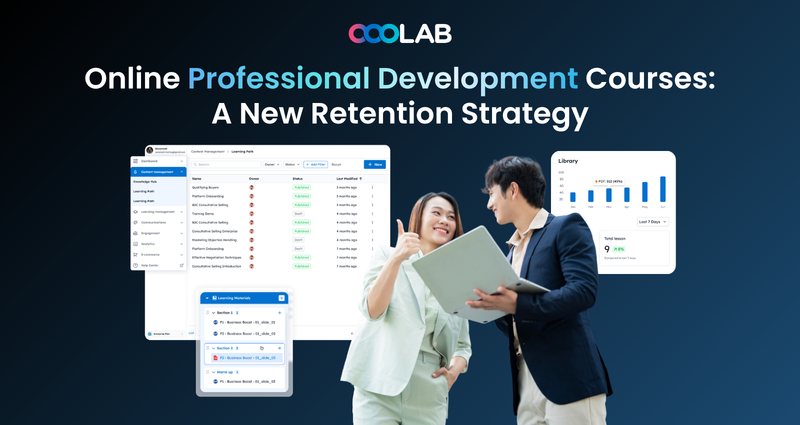
Let’s face it: Professional development still sits in the same budget line as gym stipends and snack subsidies at most companies. That placement is starting to look like a mistake. Employees who feel their company invests in their growth are far more likely to stay. The gap between firms that treat learning as infrastructure, and firms that treat it as a perk, is widening every year.
For L&D leaders defending a budget line in front of their finance department, this shift matters more than any number of engagement surveys. A [**professional development LMS**](https://www.thelearningos.com/) is one of the few levers with a direct, measurable line to retention.
## **The Perception Gap: Why PD Still Gets Treated as a Perk**
Ask most HR teams to list their benefits, and professional development LMS access usually shows up somewhere between wellness apps and free coffee. That framing made sense when training budgets were flush and retention was not a board-level concern. It makes far less sense now.
The problem is not that companies dislike training. It is that [**professional development**](https://www.thelearningos.com/) (PD) gets budgeted like a **_nice-to-have_**, reviewed like a **_nice-to-have_**, and cut like a **_nice-to-have_** the moment finance asks hard questions. Meanwhile, the data connecting learning access to whether people stay keeps getting harder to ignore.
The language around a professional development LMS needs to change first. Calling something a perk signals it is optional. Calling it a retention strategy signals something different. It ties learning to a business outcome finance already cares about, and that reframing changes how the next budget conversation goes.
## **Does Professional Development Actually Improve Employee Retention?**
Employees who believe their company invests in their growth are 90% more likely to stay _(Source: LinkedIn Workplace Learning Report, 2025)_. That single number reframes the entire conversation. It is not a soft engagement metric. It is a direct predictor of who walks out the door, and a professional development LMS is what turns that predictor around.
The gap widens further when you look at learning culture specifically. Organisations with a strong learning culture report 57% retention, compared to just 27% at companies with a moderate one _(Source: LinkedIn Learning)_. Here's why that matters: losing an employee typically costs a meaningful share of their annual salary in replacement and ramp-up time. A [**professional development LMS**](https://www.thelearningos.com/platform/what-is-learning-os) that keeps even a handful of additional people each year pays for itself several times over.
**_Read more_**
**>>\>** [**_IQ, EQ, and SQ: Skill Quotient as the New Workforce Metric_**](https://blog.thelearningos.com/iq-eq-sq-skill-quotient-workforce-metric)
**_If retention and engagement are a priority for your team,_** [**_start here_**](https://www.thelearningos.com/book-intro) **_and see how LearningOS delivers both._**

## **Signs Your Team Lacks Real Development Access**
Most organisations already offer some form of training. The question is whether it actually functions as development. A few patterns tend to show up before attrition does, especially without a real professional development LMS in place:
- No visible growth path beyond the current role
- Training limited to mandatory compliance content
- High performers going quiet in one-on-ones
- A generic professional development LMS with no connection to individual skill gaps
- No way to tie completed learning to career or performance outcomes
None of these look dramatic in isolation. Together, they describe a workforce that experiences learning as a checkbox rather than a career lever. Left unaddressed, that pattern shows up later as attrition among exactly the people a team can least afford to lose.
## **Why Budget Scrutiny Makes This Harder to Ignore**

L&D leaders are not imagining the pressure. The cost per formal training hour rose 34% year over year to $165 in 2024 _(Source:_ [_ATD via SeerTech_](https://www.seertechsolutions.com/ld-budget-planning-2026-how-to-secure-your-seat-at-the-table/) _, 2026)_. Meanwhile, large enterprises trimmed average training spend from $16.1 million to $13.3 million. Organisations are paying more to deliver less, and that is precisely the environment where a generic professional development LMS gets cut first.
That is also why vague justifications no longer work in the budget conversation. Per [LinkedIn's 2026 Workplace Learning Report](https://influenceflow.io/resources/learning-and-development-roi-measurement-a-comprehensive-2026-guide-to-proving-training-value/), 67% of L&D leaders struggle to demonstrate training impact to their executives. Completion rates and course counts do not survive a serious CFO review. Retention numbers, attrition, cost avoidance, and skills-readiness metrics do. A professional development LMS that reports on all three closes that gap.
## **What a Retention-First Professional Development LMS Looks Like**
A [professional development LMS](https://www.thelearningos.com/platform/what-is-learning-os) built for retention looks different from a generic course catalogue. It combines structured, role-relevant learning paths with analytics that tie completed training back to retention and performance, not just click-through rates.
LearningOS clients report 30 to 50% higher employee retention and 40 to 60% less training time. Both run from a single learner record instead of a patchwork of disconnected tools. Bring your professional development LMS to a new height with [LearningOS](https://www.thelearningos.com/). That single dataset is what makes it possible to show, in one dashboard, whether development access is actually changing who stays.
**_Read more_**
**>>\>** [**_How Can an LMS Help Automate My Learning Operations?_**](https://blog.thelearningos.com/lms-learning-operation-automation)
**>>\>** [**_Mid-Year Sales Training Reset: A Playbook for Q3 Performance_**](https://blog.thelearningos.com/mid-year-sales-training-reset-q3-playbook)
## **Building the Business Case for a Professional Development LMS**
Making the case for a professional development LMS to a CFO starts with dropping the word "perk" entirely. Replace it with a specific, defensible metric instead. Use the cost of replacing a departing employee, the current attrition rate among high performers, or the retention gap between well-trained and undertrained teams.
Pair that number with a [structured development path](https://www.thelearningos.com/enterprise-knowledge/career-growth-supported-by-a-professional-development-lms) anchor, something a CFO can visualise rather than a vague promise. Show what happens when access expands, not just what it costs. The organisations winning this argument are not asking for more budget. They are reframing existing spend as a measurable retention lever, backed by a professional development LMS that can prove it.
## **Conclusion**
Professional development is no longer a line item to defend once a year. It is one of the clearest retention levers L&D leaders have, and the data now backs that up directly. The organisations that move first will retain the people their competitors are still trying to replace.
**_Built for L&D leaders who need results, not more admin._** [**_Book your free demo_**](https://www.thelearningos.com/book-intro) **_and bring your learning operations up to speed._**
### **About Us**
At OOOLAB (pronounced "u:laeb"), our mission is to make complex learning operations simple. We aim to positively impact the lives of over 1,000,000 learners and educators by the end of 2026. OOOLAB's LearningOS provides educational institutions and corporate enterprises with an all-in-one solution to create and deliver engaging learning experiences.
- Dedicated success manager
- Personalized setup
- Ongoing assistance
**Learn more at** [**thelearningos.com**](https://www.thelearningos.com/)
## FAQs
Q: How do you justify a professional development budget to the CFO?
A: Reframe the ask around cost avoidance rather than spend. Present the cost of replacing an employee, the current attrition rate, and a professional development LMS that can report retention outcomes directly, not just completion counts.
Q: Is online professional development actually a retention strategy?
A: Yes. Employees who believe their employer invests in their growth are significantly more likely to stay, and companies with strong learning cultures report retention rates roughly double those with weak ones.
Q: How much does professional development affect employee turnover?
A: Access to structured development is one of the strongest predictors of voluntary turnover. Employees without a visible growth path are far more likely to disengage and eventually leave, even when compensation is competitive.
Q: What should L&D leaders track to prove PD reduces attrition?
A: Track retention rates for employees who complete development programmes versus those who do not, time-to-promotion, and attrition among high performers before and after expanding access.
Q: What features should a professional development LMS have to support retention?
A: Look for role-relevant learning paths, a single learner record, and analytics that connect completed training to retention and performance outcomes rather than just tracking course completions.
---
This blog is powered by Superblog. Visit https://superblog.ai to know more.
---
## Beyond the Sales Floor: Why Sales Coaching Should Reach Every Team
Author: Thuy Tran
Author URL: https://blog.thelearningos.com/author/thuy-tran
Published: 2026-07-31
Category: Sales Training
Category URL: https://blog.thelearningos.com/category/sales-training
Meta Title: Beyond the Sales Floor: Why Sales Coaching Should Reach Every Team | LearningOS
Meta Description: Extend sales coaching discipline beyond reps to support and account teams. Protect retention and expansion revenue with LearningOS.
Tags: AI/, sales-training/, LearningandDevelopment
Tag URLs: AI/ (https://blog.thelearningos.com/tag/ai), sales-training/ (https://blog.thelearningos.com/tag/sales-training), LearningandDevelopment (https://blog.thelearningos.com/tag/learninganddevelopment)
URL: https://blog.thelearningos.com/sales-coaching-for-customer-facing-teams
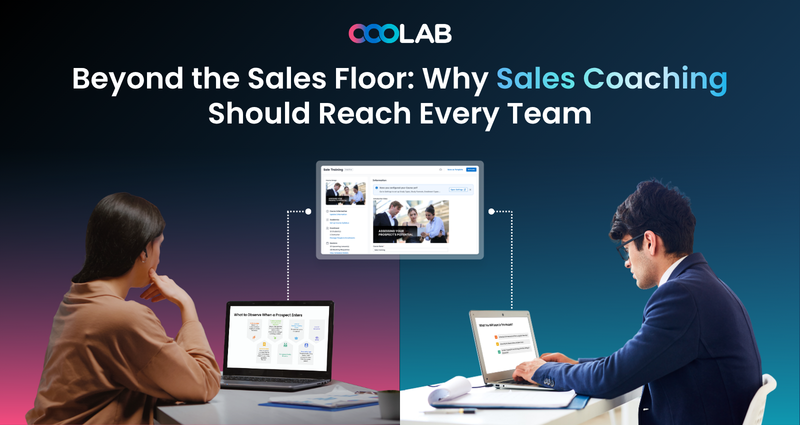
Companies with dedicated customer success teams see up to 25% higher net revenue retention than those without one ( _Source: Benchmarkit, 2025_). Most training budgets never reach the teams driving that number.
[**Sales coaching**](https://www.thelearningos.com/) gets the budget, the frameworks, and the leadership attention. Meanwhile, customer success, support, and account management teams, the people who determine whether a signed deal turns into a renewed or expanded one, are often left with onboarding decks and good intentions. Customer engagement doesn't stop at the handshake; it's a skill set that has to be built and maintained across every team a customer touches after the deal closes.
This gap tends to widen as companies scale. A growing customer base means more renewal conversations, more support escalations, and more accounts at risk of quiet churn. This article makes the case for extending sales coaching discipline, not just budget, to every team that touches a customer after the deal closes.
## **Does Coaching Stop After the Deal Closes?**
For most organizations, yes, and that's the problem. Sales coaching programs are structured, measured, and continuously refined. Post-sale training is often ad hoc: a product walkthrough here, a support ticket macro there, rarely a coordinated skill-building program.
The two groups need different things. Reps require proper coaching to open conversations, handle objections, and close. Customer-facing teams need to sustain relationships, read account health signals, and know when to escalate versus reassure. Treating both with the same generic content misses what each role actually demands.
Consider a support agent fielding a renewal-timed complaint. Without training in de-escalation and account context, that call can turn a resolvable issue into a lost contract. With it, the same call becomes a save, and sometimes an upsell conversation.
**Focus Area**
**Sales Coaching Focus**
**Customer-Facing Training**
Primary goal
_Win the deal_
_Retain and grow the account_
Core skill
_Objection handling, negotiation_
_Active listening, de-escalation_
Training cadence
_Pre-close, deal-specific_
_Ongoing, relationship-based_
Success metric
_Win rate, deal velocity_
_Retention rate, expansion revenue_
## **What's at Stake: Retention and Expansion Revenue**
Skipping post-sale training isn't a minor gap; it's a direct hit to revenue that's already been won. A combined 83.6% of customer success leaders expect to drive more expansion revenue in 2025 than they did the previous year _(Source: Vitally, 2025)_. Untrained customer-facing teams struggle to capture that opportunity even when it's sitting in front of them.
Expansion revenue costs far less to generate than new business, but only if the team managing the relationship knows how to spot the moment and have the conversation. That's a trainable skill, the same discipline sales coaching already applies to closing, just aimed at a different moment in the relationship.
Account health signals, like declining feature usage or a spike in support tickets, are often visible weeks before a renewal conversation happens. Teams trained to read and act on those signals catch risk early instead of finding out during the renewal call itself.
**_If retention and engagement are a priority for your team,_** [**_start here_**](https://www.thelearningos.com/book-intro) **_and see how LearningOS delivers both._**
## **The Soft Skills Gap in Customer-Facing Teams**
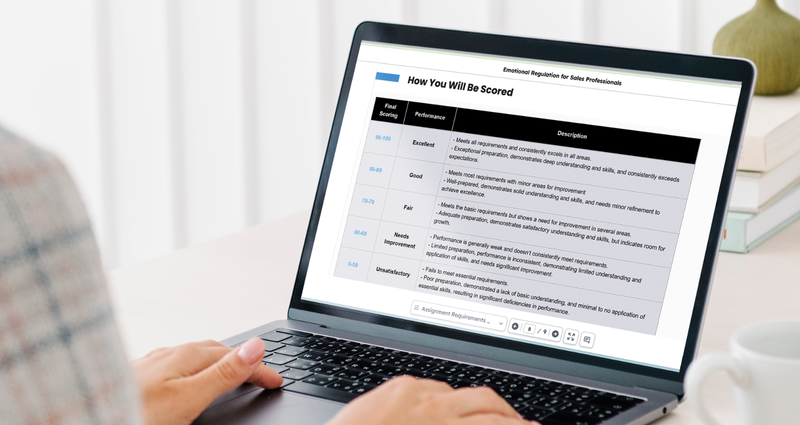
Emotional intelligence rarely shows up on a support team's training calendar, yet it's often the deciding factor in whether a frustrated customer stays or leaves. Active listening, tone control, and de-escalation are learnable competencies, the same way sales coaching already treats negotiation as learnable rather than innate.
Teams that treat these as soft, unstructured skills tend to under-invest in them, then wonder why churn spikes after a rough support interaction. Structured practice, not just tenure, is what builds consistency across a team.
**_Read more_**
**>>\>** [**_The Role of Emotional Intelligence in Sales Training_**](https://blog.thelearningos.com/the-role-of-emotional-intelligence-in-effective-sales-training)
## **How AI-Powered Roleplay Extends Beyond Sales**
AI roleplay tools are usually pitched as sales coaching enablement, but the same mechanics apply to support and account teams. An [**AI LMS**](https://www.thelearningos.com/) built for one function can typically extend to the others. [**Skill Quotient OS**](https://www.thelearningos.com/skill-quotient-ai), OOOLAB's AI roleplay and assessment tool, is built for sales coaching, corporate development, and customer support training alike.
A support agent can rehearse a de-escalation scenario with scored feedback the same way a rep rehearses a negotiation. That risk-free repetition, without needing a manager to sit in on every call, is what turns a one-off coaching session into a consistent, team-wide standard.
Competency-mapped scoring also gives managers a clear view of where a team is strong and where it isn't, instead of relying on a handful of overheard calls. That visibility makes coaching conversations specific rather than generic.

## **Extending Sales Coaching Into a Cross-Team Culture**
Employee engagement and training investment are closely linked, and that link doesn't stop at the sales floor. 90% of employees say they're more likely to stay at a company that invests in their growth _(Source: LinkedIn Workplace Learning, 2025)_. Customer-facing teams notice when they're left out of that investment.
A shared learning platform across sales, success, and support gives leadership one place to see skill gaps, track completion, and connect coaching data to retention outcomes, instead of managing disconnected systems.
It also removes a quieter cost: the sense among customer-facing staff that they're an afterthought in the company's growth story. This isn't a single [**professional training course**](https://www.thelearningos.com/); it works best as an ongoing program. A shared platform signals that their role in retaining revenue matters as much as the role that won it.
**_Read more_**
**>>\>** [**_How to Gamification into Your Sales Training Curriculum_**](https://blog.thelearningos.com/how-to-gamification-into-your-sales-training-curriculum)
**>>\>** [**_Why Upskilling Your Employees is Non-Negotiable for Business Success_**](https://blog.thelearningos.com/employee-upskilling-with-lms)
**>>\>** [**_GenAI Co-Pilots in Your LMS: A Practical Deployment Guide for L&D Leaders_**](https://blog.thelearningos.com/genai-co-pilot-ai-lms-corporate-training-guide)
## **Coaching Doesn't End When the Deal Closes**
The revenue a sales team wins is only as durable as the team that manages it afterward. Sales coaching gets a rep to the close; extending that same practice and feedback to customer success, support, and account teams protects the revenue once it's signed.
Start with the account most at risk of quiet churn this quarter, and ask whether the team managing it has had the same training investment as the team that sold it.
**_Built for L&D leaders who need results, not more admin._** [**_Book your free demo_**](https://www.thelearningos.com/book-intro) **_and bring your learning operations up to speed._**
### **About Us**
At OOOLAB (pronounced "u:laeb"), our mission is to make complex learning operations simple. We aim to positively impact the lives of over 1,000,000 learners and educators by the end of 2026. OOOLAB's LearningOS provides educational institutions and corporate enterprises with an all-in-one solution to create and deliver engaging learning experiences.
- Dedicated success manager
- Personalized setup
- Ongoing assistance
**Learn more at** [**thelearningos.com**](https://www.thelearningos.com/)
## FAQs
Q: What is customer-facing team training beyond sales?
A: It's structured training for customer success, support, and account management teams, the roles that manage a customer relationship after a deal closes. It covers soft skills like active listening and de-escalation, account health monitoring, and product knowledge, rather than deal-closing skills alone.
Q: How does customer engagement training affect retention?
A: Teams trained in relationship management and de-escalation are better equipped to prevent churn before it happens. Companies with dedicated, well-trained customer success functions report up to 25% higher net revenue retention than those without.
Q: Can AI roleplay tools train support and account teams, not just sales reps?
A: Yes. Tools like Skill Quotient OS apply the same scenario-based, scored practice model used in sales training to customer support scenarios, letting agents rehearse de-escalation and account conversations with consistent feedback.
Q: What skills matter most for post-sale customer-facing roles?
A: Active listening, tone control, de-escalation, and the ability to read account health signals matter more than product trivia alone. These are trainable skills, not fixed personality traits.
Q: How do you measure ROI on customer success training?
A: Track net revenue retention, expansion revenue, and churn rate before and after training rollout, the same way sales teams track win rate against training investment. LearningOS clients typically see positive training ROI within 6 to 12 months.
---
This blog is powered by Superblog. Visit https://superblog.ai to know more.
---
## The Onboarding Bottleneck: Why Corporate LMS Speed Drives Retention
Author: Thuy Tran
Author URL: https://blog.thelearningos.com/author/thuy-tran
Published: 2026-07-28
Category: Enterprise
Category URL: https://blog.thelearningos.com/category/enterprise
Meta Title: Corporate LMS Onboarding Speed: Turning Ramp Time Into Retention | LearningOS
Meta Description: Slow onboarding costs more than most new hires realize. See how a structured corporate LMS path turns ramp time into a measurable, trackable retention metric.
Tags: corporate-training/, LearningandDevelopment, Onboarding
Tag URLs: corporate-training/ (https://blog.thelearningos.com/tag/corporate-training), LearningandDevelopment (https://blog.thelearningos.com/tag/learninganddevelopment), Onboarding (https://blog.thelearningos.com/tag/onboarding)
URL: https://blog.thelearningos.com/corporate-lms-onboarding-speed-retention-metric
New hires can take up to eight months to reach full productivity, and that gap costs more than a slow start suggests _(Source: SHRM)_. Most L&D teams still treat onboarding as a checklist: paperwork, system access, a welcome deck. What gets missed is the point where ramp time turns into a retention problem. A well-built [**corporate LMS**](https://www.thelearningos.com/) closes that gap by giving new hires a structured path instead of a scattered one. This article explores why onboarding speed now functions as a retention metric, supported by data-driven insights.
## **What Is Time-to-Productivity, and Why It Is a Retention Metric**
Time-to-productivity is the number of days a new hire needs to perform their role independently, at the standard expected of the position. Every extra week of ramp time means lower output, more manager coaching hours, and a wider window for early attrition. Replacing a mid-level employee and absorbing that ramp-up delay costs over $30,000 once lost output and rehiring are factored in ( _Source: Oxford Economics_). Slow onboarding is not a soft-skills problem, it is a line item. A corporate LMS is what turns that line item into something a team can manage. Without one, most teams only notice the cost after a new hire has already quit.
## **The Real Cost of Slow, Unstructured Onboarding**
Unstructured onboarding does not just delay productivity, it accelerates exits. One in five employees who leave within their first year do so inside the first 45 days. That is often before a manager notices something is wrong _(Source: Enboarder)_. Only 29% of new hires feel fully supported and prepared once formal onboarding ends _(Source: Gallup)_. A scattered mix of PDFs, Slack messages, and shadowing sessions cannot close that gap consistently. It works for employees who land a good manager. Everyone else is left to figure it out, and some leave before they do.
A dip in new-hire performance during the first quarter usually reads as a training problem. The response, then, is more content: another module, another deck, another day of orientation. The actual issue is rarely a lack of information. It is the absence of a consistent path telling every new hire what to learn and when. A corporate LMS is built to solve exactly that consistency problem. Teams without a corporate LMS in place are the ones most exposed to this kind of early attrition.
**_If retention and engagement are a priority for your team,_** [**_book a demo_**](https://www.thelearningos.com/book-intro) **_and see how LearningOS delivers both._**
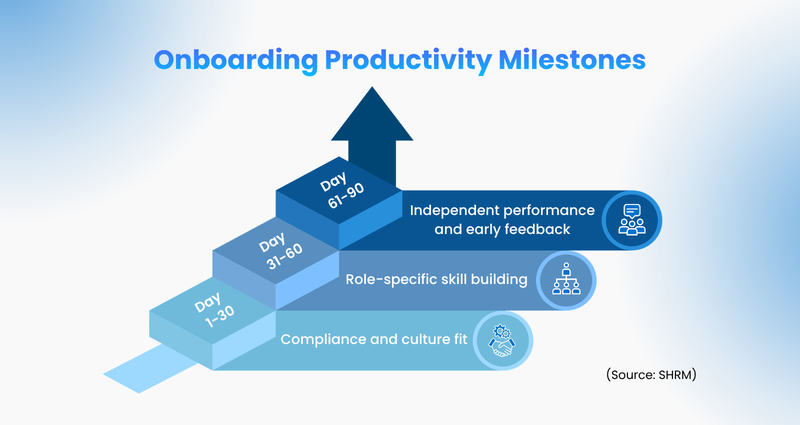
## **How Long Should Employee Onboarding Take?**
Most HR practitioners treat 90 days as the minimum structured onboarding window inside a corporate LMS. Full productivity, though, often lands somewhere between three and eight months depending on role complexity _(Source: SHRM)_.
- **Days 1-30:** Compliance and culture fit
- **Days 31-60:** Role-specific skill building
- **Days 61-90:** Independent performance and early feedback
A corporate LMS is what keeps this 30-60-90 structure consistent instead of depending on memory or good intentions. Stretching structured support beyond day 90, even lightly, correlates with stronger retention than treating onboarding as a first-week event.
## **Corporate LMS as the Infrastructure Fix, Not Another Checklist**
A [**corporate LMS**](https://www.thelearningos.com/) replaces the scattered mix of tools with a single, structured onboarding path. Instead of a generic PDF sent to every new hire, role-based tracks assign the right professional training courses at the right stage. Automated enrollment then moves someone from onboarding into ongoing development without a manual handoff. This is where a [**structured onboarding path**](https://www.thelearningos.com/enterprise-knowledge/lms-supporting-from-onboarding-to-mastery) does the heavy lifting that ad hoc coaching cannot. Consistent delivery across every new hire, regardless of which manager they land with, is the core promise of an LMS for corporate training done right.

**_Read more_**
**>>\>** [**_How to Foster a Continuous Learning Culture with an LMS_**](https://www.thelearningos.com/enterprise-knowledge/lms-supporting-from-onboarding-to-mastery)
**>>\>** [**_10 Surprising Ways an LMS Can Revolutionize Your Corporate Training_**](https://blog.thelearningos.com/how-an-lms-revolutionize-corporate-training)
**>>\>** [**_Effective Onboarding Strategies for New Sales Hires: Setting Them Up for Success_**](https://blog.thelearningos.com/effective-onboarding-strategies-for-new-sales-hires-setting-them-up-for-success)
## **How Do You Measure Onboarding ROI?**
Completion rates tell you who finished a course, not whether they can do the job. A corporate LMS is what makes time-to-productivity, early skill quotient gains, and 90-day retention visible in the first place. Otherwise, that data stays scattered across spreadsheets nobody updates. Organizations with structured onboarding report 82% higher new-hire retention and productivity gains above 70% _(Source: Brandon Hall Group)_. LearningOS clients report 30 to 50% higher employee retention once onboarding moves onto a single tracked corporate LMS platform. Retention like that is not an HR win, it is a budget one.
## **Building a Corporate LMS Onboarding Reset Before Your Next Hiring Wave**
Start by pulling your current time-to-productivity by role, then compare it against the 90-day benchmark. Map every scattered onboarding step, that welcome deck, that shadowing week, that Slack channel, onto a single structured path inside your [**corporate LMS**](https://www.thelearningos.com/). Track it the same way you track pipeline or revenue: as a number that moves, gets reviewed, and gets fixed when it slips.
Picture a new hire on a fixed, role-based track inside a corporate LMS from week one, instead of a stack of unrelated links. They complete compliance and culture modules by day 30. By day 60 they move into role-specific training, and by day 90 they reach a manager-reviewed checkpoint, all logged automatically. Once ramp time is visible, it stops being an HR footnote and becomes a retention lever leadership actually watches.
## **Onboarding Speed Is Now a Business Metric**
_Onboarding speed was never just an HR checklist item. It is one of the clearest early signals of whether a new hire will still be there in a year. A corporate LMS will not fix a broken hiring process, but it will stop your ramp time from quietly becoming your retention problem. Audit where new hires stall, put a structured path in place, and start treating time-to-productivity as a metric worth reporting on._
**_Poor onboarding is one of the fastest ways to lose new talent._** [**_Book a free call_**](https://www.thelearningos.com/book-intro) **_and learn how LearningOS helps your team ramp up faster._**
### **About Us**
At OOOLAB (pronounced "uːlæb"), our mission is to make complex learning operations simple. We aim to positively impact the lives of over 1,000,000 learners and educators by the end of 2026. OOOLAB's LearningOS provides educational institutions and corporate enterprises with an all-in-one solution to create and deliver engaging learning experiences.
- Dedicated success manager
- Personalized setup
- Ongoing assistance
**Learn more at** [**thelearningos.com**](https://www.thelearningos.com/)
## FAQs
Q: How long should employee onboarding take?
A: Most HR practitioners treat 90 days as the minimum for structured onboarding. That covers compliance and culture in the first 30 days, role-specific skills in days 31 to 60, and independent performance in days 61 to 90. Full productivity, however, often takes three to eight months depending on role complexity. Stretching structured support beyond the first 90 days, even lightly, tends to improve retention outcomes.
Q: What is time-to-productivity and why does it matter for retention?
A: Time-to-productivity is the number of days a new hire needs to perform independently at the standard expected of their role. It matters for retention because slow ramp-up periods are strongly linked to early attrition. Replacing a mid-level employee plus their lost output can cost more than $30,000.
Q: How does a corporate LMS speed up onboarding?
A: A corporate LMS replaces scattered onboarding materials with a single structured path. It assigns role-based training and automatically enrolls new hires into the right professional training courses at the right stage. This removes the inconsistency that comes from relying on individual managers to onboard well.
Q: Why do new hires leave in their first 90 days?
A: New hires often leave early because onboarding stops at orientation instead of extending through the ramp-up period. One in five early departures happen within the first 45 days. Fewer than a third of new hires feel fully supported and prepared once formal onboarding ends.
Q: How do you measure onboarding ROI?
A: Track time-to-productivity, 90-day retention, and skill quotient gains rather than course completion rates alone. Structured onboarding correlates with 82% higher retention and 70%+ higher productivity. LearningOS clients report 30 to 50% higher employee retention after standardizing onboarding on one platform.
---
This blog is powered by Superblog. Visit https://superblog.ai to know more.
---
## Sales Training in the AI Era: Building the Skills Reps Actually Need
Author: Thuy Tran
Author URL: https://blog.thelearningos.com/author/thuy-tran
Published: 2026-07-19
Category: Sales Training
Category URL: https://blog.thelearningos.com/category/sales-training
Meta Title: Sales Training in the AI Era: Building the Skills Reps Need | LearningOS
Meta Description: Sales training hasn't kept pace with how fast AI entered sales. Learn what a modern sales training curriculum should cover, and how to measure its ROI.
Tags: sales-training/, LearningandDevelopment, AIroleplay
Tag URLs: sales-training/ (https://blog.thelearningos.com/tag/sales-training), LearningandDevelopment (https://blog.thelearningos.com/tag/learninganddevelopment), AIroleplay (https://blog.thelearningos.com/tag/airoleplay)
URL: https://blog.thelearningos.com/sales-training-in-the-ai-era
Sales orgs have adopted AI faster than they've updated how they train for it. Nearly half of GTM leaders name building an effective training programme as one of their top challenges today (Source: Highspot State of Sales Enablement Report, 2025).
[**Sales training**](https://www.thelearningos.com/) hasn't caught up to how fast AI has entered the sales process. Reps are working alongside AI agents daily, but most training curricula still teach the job as it looked three years ago. This article looks at what sales training actually needs to cover now, and why the gap matters more than the technology itself.
## **What AI Is Actually Changing in the Sales Process**
AI agents now handle prospecting, lead scoring, and CRM enrichment before a rep ever picks up the phone. That shift changes what a rep spends their day doing, but it doesn't remove the rep from the process. It moves them further up the decision chain, closer to judgment calls and further from repetitive research work.
The mechanics of the job are shrinking. The decisions attached to it are getting heavier. That's the part most sales training programmes haven't caught up to yet.
## **Why Doesn't Traditional Sales Training Cover This Skill Gap?**
Traditional sales training doesn't cover this gap because it was built to teach outreach mechanics, not judgment calls on AI-flagged leads. Most programmes still assume every rep starts from a blank slate, an assumption AI adoption has made outdated.
That gap shows up clearly in how most curricula are still structured. They teach how to write a cold email, run a discovery call, and handle objections, skills that still matter, but skills that say nothing about reviewing what an AI agent already did. Closing that gap is exactly the challenge nearly half of GTM leaders point to when asked about training programme design (Source: Highspot State of Sales Enablement Report, 2025).
**_Built for L&D leaders who need results, not more admin._** [**_Book your free demo_**](https://www.thelearningos.com/book-intro) **_and bring your learning operations up to speed._**
**_Read more_**
**>>\>** [**_Sales Training Trends to Watch in 2026_**](https://www.thelearningos.com/enterprise-knowledge/sales-training-trends-to-watch-in-2026) **>>\>** [**_AI Sales Roleplay: The Missing Link Between Training Investment and Revenue Results_**](https://blog.thelearningos.com/ai-sales-roleplay-b2b-sales-training-revenue)
## **What Does AI-Era Sales Training Look Like in Practice?**
AI-era sales training pairs traditional skills with a new one: reviewing what an AI agent already did. In practice, that means reps rehearsing lead-review decisions, not just outreach scripts, before those decisions carry real revenue.
Reps who work alongside AI tools book 23% more meetings than reps who don't (Source: HubSpot State of Sales Report, 2024). That gain doesn't happen automatically. It happens when sales training teaches reps how to use the agent's output well, not just hand it off and hope.
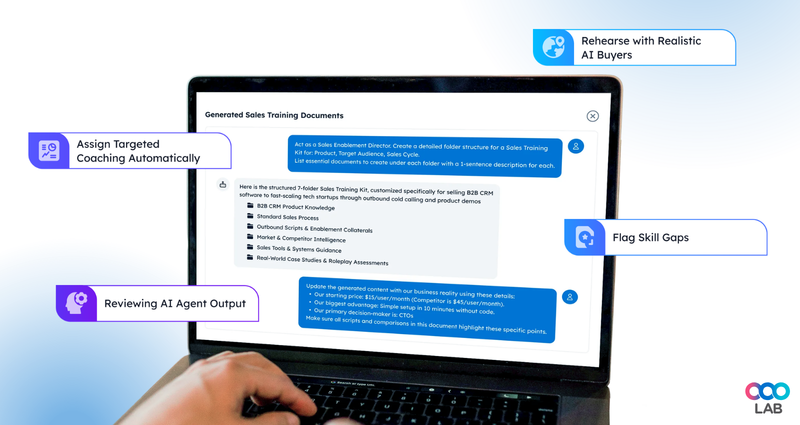
This is where Skills Quotient AI fits in. OOOLAB's [**AI-powered sales roleplay**](https://www.thelearningos.com/skill-quotient-ai) tool lets reps rehearse tough conversations against realistic AI buyer personas, then reviews their real customer calls to flag skill gaps and assign targeted coaching automatically. It also clears the admin work that used to eat into selling time, updating CRM records, moving pipeline stages, and drafting follow-up emails, so reps spend that saved time closing the skill gaps the practice loop just found. Reps build the judgment this shift demands through practice, not by guessing on a live deal.
## **Teaching Reps to Review AI Output, Not Just Trust It**
When AI generates engagement reports automatically, SDR managers spend 30% less time on manual coaching and activity tracking (Source: Gartner Sales Technology Adoption Survey, Q3 2025). That freed-up time is only valuable if sales training redirects it toward something useful.
The skill worth teaching here is specific: checking an agent's reasoning, not just its conclusion. Did it flag a lead as hot for a legitimate reason, or did it miss context a human would have caught? A rep trained to ask that question catches errors before a prospect ever sees them.
## **Training for the Judgment Calls AI Can't Make**
Reps now split their time roughly 50/50: half on relationship-building, half overseeing AI agents (Source: Betts Recruiting, "The Future of GTM in the Age of AI," 2026). Sales training programmes need to reflect that split directly, not treat relationship skills and agent oversight as separate tracks.
An agent can qualify a lead, draft an email, and book a meeting. It can't read hesitation in a buyer's voice or adjust a pitch mid-conversation. Training that only covers the mechanical half of the job leaves reps unprepared for the half that actually closes deals.
Picture a deal that stalls for reasons the CRM can't explain: a stakeholder goes quiet, or a new decision-maker joins the call unannounced. No agent flags that as a risk. A rep trained to notice it is the difference between a deal that recovers and one that quietly dies.
## **Measuring the ROI of AI-Era Sales Training**
Onboarding time drops by roughly 40% when AI handles list-building and outreach setup for new reps (Source: The Bridge Group SDR Metrics & Compensation Report, 2025). That's a real time saving, but it only becomes a sales training win if the freed-up ramp time goes into structured coaching instead of disappearing.
Sellers who work well alongside AI agents are also close to four times more likely to hit quota than those who don't (Source: Gartner, cited via SecondBody, 2026). That gap is a training outcome, not a tooling outcome. It's the clearest ROI case for investing in structured, AI-era sales training now.

A modern sales training programme should track:
- Onboarding speed for new reps working alongside AI agents
- Time reinvested into coaching versus administrative work
- Quota attainment for AI-trained reps versus untrained reps
- Lead-review accuracy: how often reps catch what the agent missed
**_Read more_**
**>>\>** [**_The Benefits of Role-Playing in Sales Training and How to Implement It_**](https://blog.thelearningos.com/benefits-of-sales-training-and-how-to-implement-it) **>>\>** [**_Adapting Your Sales Training for Different Generations Now_**](https://blog.thelearningos.com/adapting-your-sales-training-for-different-generations-in-the-workplace)
## **Conclusion**
AI didn't remove the need for skilled sales reps, it raised the bar on what skilled means. The organisations pulling ahead aren't the ones with the most advanced agents. They're the ones whose sales training programmes caught up to the job reps actually do now: reviewing, judging, and stepping in exactly when it counts.
**_The best training platforms prove their value quickly._** [**_Explore LearningOS_**](https://www.thelearningos.com/book-intro) **_and find out why clients see a strong return well within their first year._**
### **About Us**
At OOOLAB (pronounced "uːlæb"), our mission is to make complex learning operations simple. We aim to positively impact the lives of over 1,000,000 learners and educators by the end of 2026. OOOLAB's LearningOS provides educational institutions and corporate enterprises with an all-in-one solution to create and deliver engaging learning experiences.
- Dedicated success manager
- Personalized setup
- Ongoing assistance
**Learn more at** [**thelearningos.com**](https://www.thelearningos.com/)
## FAQs
Q: How should sales training programs change for AI tools?
A: Training needs to shift from pure outreach mechanics toward judgment skills: reviewing AI agent output, scoring which flagged leads are genuinely worth pursuing, and knowing when a conversation needs a human handoff.
Q: What does an AI-era sales training curriculum include?
A: A modern curriculum pairs traditional skills like objection handling and discovery calls with new ones: reviewing agent reasoning, catching missed signals, and practicing scenario-based judgment calls through AI-powered roleplay.
Q: Will AI SDRs replace sales reps?
A: No. The highest-performing sales teams run hybrid models where AI handles volume and consistency while reps handle nuance, judgment, and complex conversations. Structured training is what makes that hybrid model work.
Q: How do I measure ROI on AI-era sales training?
A: Track onboarding speed, time reinvested into coaching versus admin, and quota attainment for reps trained to work alongside AI agents versus those who aren't. The gap between the two is the ROI case.
Q: What skills should sales training prioritize when reps work alongside AI agents?
A: Prioritize reviewing agent output critically, scoring lead quality beyond what the agent flags, and relationship-building skills for the moments automation can't cover.
---
This blog is powered by Superblog. Visit https://superblog.ai to know more.
---
## Distributed Sales Team Training: Blended and AI-Supported Approaches That Work
Author: Thuy Tran
Author URL: https://blog.thelearningos.com/author/thuy-tran
Published: 2026-07-17
Category: Instructional Design
Category URL: https://blog.thelearningos.com/category/instructional-design
Meta Title: Distributed Sales Team Training: Blended and AI Approaches That Work | LearningOS
Meta Description: Train distributed sales teams with a blended and AI-powered approach: Enterprise LMS, virtual sessions, and AI Sales Roleplay in one unified platform
Tags: sales-training/, AIroleplay, B2BSales
Tag URLs: sales-training/ (https://blog.thelearningos.com/tag/sales-training), AIroleplay (https://blog.thelearningos.com/tag/airoleplay), B2BSales (https://blog.thelearningos.com/tag/b2bsales)
URL: https://blog.thelearningos.com/distributed-sales-team-training
By 2030, 39% of core workforce skills will have changed ( [WEF Future of Jobs Report, 2025](https://www.weforum.org/publications/the-future-of-jobs-report-2025/)), and distributed, hybrid sales teams are now the dominant structure across global enterprises. Most training infrastructure wasn't built for this pressure. Effective [sales training](https://blog.thelearningos.com/building-confidence-in-your-sales-team-through-training-and-development) for distributed teams isn't a scheduling problem; it's an architecture problem.
**The short answer:** Effective distributed sales team training combines three layers: structured content via an Enterprise LMS, live virtual facilitation for collaborative skill-building, and AI-powered roleplay for on-demand practice. Running all three from a single learner record keeps coaching quality consistent regardless of region or time zone.
## **What Makes Distributed Sales Team Training So Hard to Get Right?**
### **The Coaching Consistency Gap**
62% of sales leaders cite outdated training as their biggest performance barrier (Source: The Sales Collective, 2025). Without ambient coaching or in-person ride-alongs, managers default to pipeline reviews rather than skill-building sessions, so training reflects local priorities rather than a central standard.
### **The Regional Compounding Effect**
The further a sales training programme spreads geographically, the wider regional standards diverge: a new hire in London onboards differently than a rep in Singapore. Left unmanaged, that variation erodes performance in ways a central view can't diagnose.
## **What Blended Learning Actually Means for a Sales Team Across Multiple Regions**
### **The Async Layer: Structured Course Delivery**
The async layer is the foundation: a structured [Enterprise LMS](https://www.thelearningos.com/) delivers product knowledge, compliance content, and process documentation on demand, so every rep starts from the same baseline. Companies with formal sales training programmes achieve 78% quota attainment, versus 63% without (Source: RAIN Group). The difference is consistency, not content volume.
### **The Live Layer: Virtual Facilitation**
Structured async content handles what; live virtual sessions handle how. Facilitated sessions on deal strategy, objection handling, and regional case studies give distributed teams a collaborative space self-paced content can't replicate, and give managers visibility into skill gaps before quarter-end.
### **The In-Flow Layer: Microlearning and Learning in the Flow of Work**
The third layer connects learning to the moment it matters most: before a call, during a launch, or right after a lost deal. Microlearning nudges embedded in CRM workflows reinforce async content without pulling reps out of their day.
**_Read more_**
**>>\>** [**_AI Sales Roleplay: The Missing Link Between Training Investment and Revenue Results_**](https://blog.thelearningos.com/ai-sales-roleplay-b2b-sales-training-revenue)
**>>\>** [**_How to Gamification into Your Sales Training Curriculum_**](https://blog.thelearningos.com/how-to-gamification-into-your-sales-training-curriculum)
**_Ready to see AI roleplay and assessment in action?_** [**_Book a free demo_**](https://www.thelearningos.com/book-intro) **_and watch your team's training performance shift._**
## **What Is AI Sales Roleplay and Why Does It Work for Distributed Teams?**
### **The Forgetting Curve Problem**
Without reinforcement, reps forget up to 87% of training content within a month, a pattern long documented by the Ebbinghaus Forgetting Curve. Real-world scenarios improve retention by 70% over lecture-based methods (Source: Sales Performance International). 43% of revenue enablement leaders now use AI-powered coaching for distributed teams (Source: Allego, 2025), and AI-assisted coaching lifts sales performance by 25% (Source: Deloitte, 2025).
### **Standardized Practice Across Three Continents**
Every rep should practise the same pitch to the same standard, regardless of location. [AI Sales Roleplay](https://www.thelearningos.com/skill-quotient-ai) makes that standardized and feedback-rich without a trainer in each region. [Skill Quotient OS](https://www.thelearningos.com/skill-quotient-ai) is LearningOS's native AI roleplay and competency assessment tool, and enterprise B2B teams using AI in coaching are 20% more likely to improve revenue outcomes (Source: Highspot, 2025).
## **The Three-Layer Sales Training Stack That Scales**
Mapped to LearningOS's architecture, the three layers become system components:
- **Enterprise LMS** \- async delivery, compliance tracking, and certification; the system of record for what's been taught across every region.
- **Virtual Learning Environment** \- facilitated, scheduled sessions where distributed teams meet in real time, across time zones.
- **AI Powered LMS / Skill Quotient OS** \- on-demand roleplay and competency-based progression, so reps get consistent feedback without waiting on a manager.
## **Why One Learner Record Changes Everything**
LearningOS combines all three layers natively, with Skill Quotient OS embedded as the AI practice layer. Clients report $3.5 ROI on every dollar invested and 40-60% less training time, the result of one thing: a single learner record spanning all three layers, with one admin interface and one unbroken view of every rep's development.
Running two or three disconnected platforms doesn't double your training capability. It halves your visibility into what your sales force actually knows.
**_Read more_**
**>>\>** [**_Enterprise Learning in 2026: LMS vs. LXP - and Why the Best Platforms Deliver Both_**](https://blog.thelearningos.com/lms-vs-lxp-enterprise-learning-platform)
## **How to Measure Competency and Skill Consistency Across Distributed Teams**
### **What Good Looks Like: Key Training Metrics**
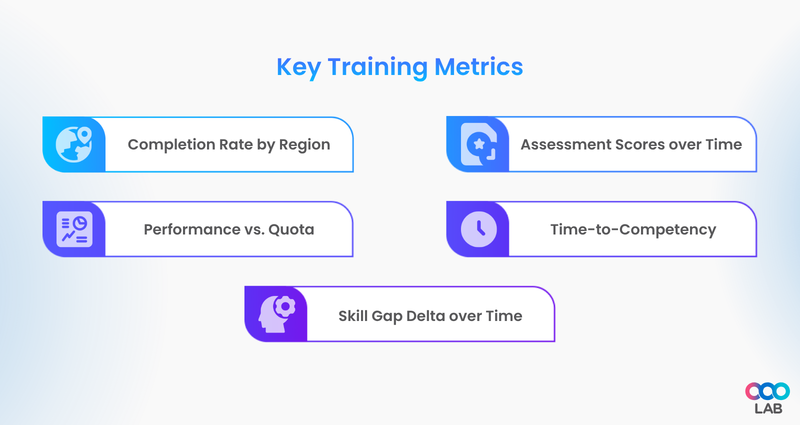
52% of sales teams lack the analytics to measure training ROI (Source: [Global Growth Insights, 2026](https://www.globalgrowthinsights.com/market-reports/sales-training-market-102394)). Measuring competency and skill development across regions takes more than completion rates. Five indicators tell the fuller story:
1. **Completion rates by region:** gaps here reveal structural access or engagement issues
2. **Assessment scores over time:** measures whether learning is transferring, not just occurring
3. **AI roleplay performance vs. quota attainment:** connects practice quality to deal outcomes
4. **Time to competency for new hires:** the clearest signal of onboarding programme effectiveness
5. **Skill gap delta over time:** shows whether the training stack is closing the gaps it was designed to close
Moving from " _Did they complete it?_" to " _Did it change how they sell?_" requires training and performance data to share the same system.
## **Conclusion**
Distributed sales teams are now the permanent state of enterprise selling, and training infrastructure needs to match. The organisations closing the performance gap aren't adding more tools; they run structured delivery, live facilitation, and AI-powered practice from one unified system, measured against real business outcomes.
**_Built for L&D leaders who need results, not more admin._** [**_Book your free demo_**](https://www.thelearningos.com/book-intro) **_and bring your learning operations up to speed._**
### **About Us**
At OOOLAB (pronounced "uːlæb"), our mission is to make complex learning operations simple. We aim to positively impact the lives of over 1,000,000 learners and educators by the end of 2026. OOOLAB's LearningOS provides educational institutions and corporate enterprises with an all-in-one solution to create and deliver engaging learning experiences.
- Dedicated success manager
- Personalized setup
- Ongoing assistance
**Learn more at** [**thelearningos.com**](https://www.thelearningos.com/)
## FAQs
Q: What is the best way to train a distributed sales team?
A: The most effective approach combines three layers: async content via an Enterprise LMS, live virtual facilitation, and AI-powered roleplay. Running all three from a single learner record ensures coaching consistency across regions. Companies with formal sales training programmes achieve 78% quota attainment, compared to 63% without.
Q: How does blended learning work for remote sales reps?
A: For remote sales teams, blended learning means three things: self-paced LMS modules, live virtual sessions, and microlearning nudges in CRM workflows. The async layer builds knowledge, the live layer builds judgment, and the in-flow layer reinforces both at the moment reps need it most.
Q: What is AI sales roleplay and how does it improve training outcomes?
A: AI Sales Roleplay uses AI to simulate realistic sales conversations, giving reps on-demand practice with standardized feedback at scale. Without reinforcement, reps forget up to 87% of training content within a month, per the Ebbinghaus Forgetting Curve. AI-assisted coaching lifts sales performance by 25%, providing consistent, scalable practice that manager-led coaching alone cannot deliver.
Q: How do you track sales competency and skill development across distributed teams?
A: Effective tracking requires a unified learner record connecting training activity to business performance data. Key metrics include: completion rates by region, assessment scores over time, AI roleplay performance relative to quota attainment, time to competency for new hires, and skill gap reduction rates. Platforms that fragment this data across separate tools make it nearly impossible to connect training investment to revenue outcomes.
Q: What features should an enterprise learning platform have for distributed sales teams?
A: A platform for distributed sales teams needs five capabilities from one learner record: structured course delivery and compliance tracking; AI-powered sales roleplay and competency assessment; a unified learner profile; analytics connecting training to business outcomes beyond completion rates; and mobile-first access across iOS, Android, and desktop. LearningOS delivers all five natively, combining an Enterprise LMS, Virtual Learning Environment, and Skill Quotient OS.
---
This blog is powered by Superblog. Visit https://superblog.ai to know more.
---
## From Cost Centre to Capability Engine: An L&D Strategy That Moves Metrics
Author: Thuy Tran
Author URL: https://blog.thelearningos.com/author/thuy-tran
Published: 2026-07-14
Category: SaaS
Category URL: https://blog.thelearningos.com/category/saas
Meta Title: Learning & Development LMS Strategy: From Cost Centre to Capability Engine | LearningOS
Meta Description: Build a learning and development strategy that proves its value - align enterprise LMS to workforce readiness, retention, time-to-productivity, and compliance
Tags: Enterprise-LMS/, LearningandDevelopment, TrainingFramework, CompetencyFramework
Tag URLs: Enterprise-LMS/ (https://blog.thelearningos.com/tag/enterprise-lms), LearningandDevelopment (https://blog.thelearningos.com/tag/learninganddevelopment), TrainingFramework (https://blog.thelearningos.com/tag/trainingframework), CompetencyFramework (https://blog.thelearningos.com/tag/competencyframework)
URL: https://blog.thelearningos.com/ld-strategy-learning-development-lms-capability-engine
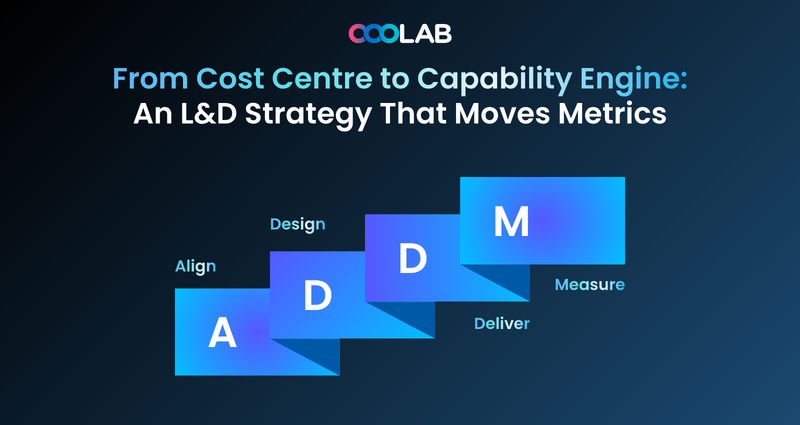
41% of executives still view L&D as a cost rather than an investment, even as U.S. corporate training spend hit $102.8 billion in 2025 _(Source: TalentLMS L&D Report, 2026; Training Magazine, 2025)_. The money is there. The credibility isn't.
That gap isn't a budget problem, it's an architecture problem. Programmes designed around completions and satisfaction scores will always look like overhead to a CFO. Programmes designed around four specific business outcomes will not. A [Learning & Development LMS](https://www.thelearningos.com/) is the operational infrastructure that connects training activity directly to workforce performance data, using a four-layer framework.
## **Why L&D Gets Stuck in the Cost-Centre Trap**
75% of HR managers say their strategy is aligned with business KPIs (Source: TalentLMS L&D Report, 2026), yet 41% of executives still see L&D as a cost. The gap comes down to measurement: programmes tracked by completions and satisfaction scores will always look like overhead, because those metrics don't speak the language of business performance.
An L&D team that delivers 94% course completion still gets asked whether sales numbers improved, with no data connecting the two. That's not a reporting failure, it's a design failure: the fix is building a clear line of sight to outcomes from the start.
## **The L&D Strategy Stack - A Four-Layer Framework**
The **L&D Strategy Stack** is OOOLAB's four-layer framework for building an L&D function that produces measurable business results, with each layer mapping directly to a platform capability so strategy and your [Learning & Development LMS](https://www.thelearningos.com/) operate as one system.
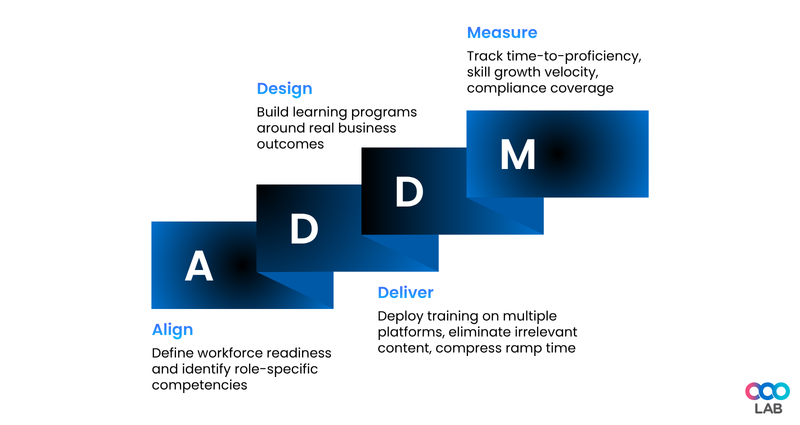
Here's how each layer works:
**Layer 1 - Align:** Define workforce readiness as a measurable outcome and establish your competency baseline before training is designed.
**Layer 2 - Design:** Build programmes around the outcomes you need to move, like retention and internal mobility, not content availability.
**Layer 3 - Deliver:** Deploy training through a platform that meets employees where they are, with personalised paths that compress ramp time.
**Layer 4 - Measure:** Track time-to-proficiency, skill growth velocity, and compliance coverage, not completion rates.
**_Built for L&D leaders who need results, not more admin._** [**_Book your free demo_**](https://www.thelearningos.com/book-intro) **_and bring your learning operations up to speed._**
## **Layer 1 - Align: Workforce Readiness as a Measurable Outcome**
Workforce readiness is a business metric, not a training goal: the percentage of your workforce performing at the competency level their role requires. A [Capability LMS](https://www.thelearningos.com/) makes this visible by tracking skill gap assessments, competency completion, and time-to-proficiency by role, not just course completion.
63% of employers cite skills gaps as the biggest barrier to business transformation _(Source: Training Orchestra, 2026)_, and in most organisations it's a visibility problem, not a hiring one. When an L&D director finds 40% of new hires missing baseline proficiency within 60 days, the right LMS analytics turn that anecdote into an actionable finding, pinpointing exactly which modules and cohorts are falling behind.
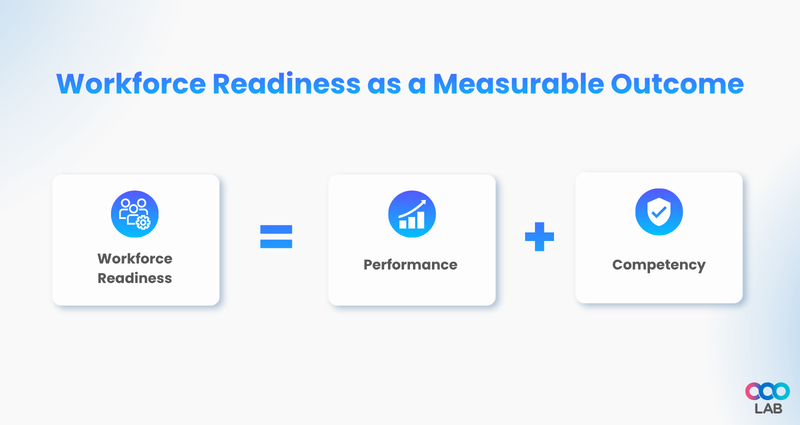
**_Read more_**
**>>\>** [**_5 Reasons Why you should choose a SaaS for your LMS_**](https://blog.thelearningos.com/5-reasons-why-you-should-choose-saas-for-your-lms)
**>>\>** [**_How to Leverage LXP Learning Analytics to Increase ROI_**](https://blog.thelearningos.com/how-to-leverage-lxp-learning-analytics-to-increase-roi)
## **Layer 2 - Design: Employee Retention as a Training Outcome**
Retention and L&D strategy aren't separate programmes. 90% of employees are more likely to stay at a company that invests in their growth _(Source: LinkedIn Workplace Learning, 2025)_, and organisations with strong learning cultures see 30-50% higher retention _(Source: Clarity Consultants/Brandon Hall Group, 2026)_. Your [Professional Development LMS](https://www.thelearningos.com/) architecture is a direct input to that number.
Designing for retention means building visible development paths, not just assigning courses, so employees can see what roles and certifications their learning leads toward. A platform with structured career pathways and internal mobility tracking turns L&D from a training calendar into a career architecture.
**_Read more_**
**>>\>** [**_Effective Onboarding Strategies for New Sales Hires: Setting Them Up for Success_**](https://blog.thelearningos.com/effective-onboarding-strategies-for-new-sales-hires-setting-them-up-for-success)
## **Layer 3 - Deliver: Time-to-Productivity as a Training KPI**
New hire ramp time and internal transfer transition cost are among the most quantifiable, and most underreported, L&D impact areas. Every week a new employee isn't at full productivity is a cost. The Deliver layer is where your [AI LMS](https://www.thelearningos.com/) reduces both.
LearningOS clients report 40-60% less training time than traditional delivery, through AI-assigned paths based on role, prior competency, and skill gaps that cut the irrelevant modules generic course catalogues add. Track completion velocity, first-attempt pass rates, and manager-confirmed readiness against your onboarding timeline to make this measurable.
## **Layer 4 - Measure: Compliance Risk Reduction**
Compliance training isn't just a legal obligation, untracked compliance is a quantifiable financial risk. The right frame for leadership isn't course completion rates, it's reduced regulatory exposure with an audit trail to prove it.
That reframe positions L&D as a risk management function, a budget case that survives any downturn. LearningOS is [SOC 2 Type 2](https://www.thelearningos.com/enterprise-knowledge/we-ve-been-recertified-for-soc-2-type-2-and-iso-iec-27001-2022) and [ISO 27001](https://www.thelearningos.com/enterprise-knowledge/we-ve-been-recertified-for-soc-2-type-2-and-iso-iec-27001-2022) certified, meeting the same compliance bar it helps your organisation achieve. Track certification expiry, overdue alerts, and audit-ready, timestamped reporting to convert compliance training into risk-reduction evidence.

## **What the Full Strategy Stack Looks Like in Practice**
Each layer maps to a specific LearningOS capability: Align uses competency frameworks and skill gap assessments, Design uses personalised career pathways, Deliver uses the Virtual Learning Environment and Mobile Learner Portal, and Measure uses the analytics dashboard linking training to performance.
The result is one platform, one learner record, and one line of sight from training activity to outcome. Organisations aligning [L&D](https://www.thelearningos.com/) around skills see up to 40% higher productivity (Source: McKinsey), with LearningOS clients reporting $3.5 ROI on every dollar invested and 30-50% higher retention.
**_Read more_**
**>>\>** [**_AI Sales Roleplay: The Missing Link Between Training Investment and Revenue Results_**](https://blog.thelearningos.com/ai-sales-roleplay-b2b-sales-training-revenue)
## **Conclusion**
L&D's shift from cost centre to capability engine is a design question, not a budget one. Organisations achieving it build platforms around business outcomes, not training delivery. The four-layer L&D Strategy Stack gives your team the architecture, and the language, to make that case before your next budget review.
**_Built for L&D leaders who need results, not more admin._** [**_Book your free demo_**](https://www.thelearningos.com/book-intro) **_and bring your learning operations up to speed._**
### **About Us**
At OOOLAB (pronounced "uːlæb"), our mission is to make complex learning operations simple. We aim to positively impact the lives of over 1,000,000 learners and educators by the end of 2026. OOOLAB's LearningOS provides educational institutions and corporate enterprises with an all-in-one solution to create and deliver engaging learning experiences.
- Dedicated success manager
- Personalized setup
- Ongoing assistance
**Learn more at** [**thelearningos.com**](https://www.thelearningos.com/)
## FAQs
Q: What is the difference between an L&D strategy and a Learning & Development LMS?
A: An L&D strategy is the plan - it defines which business outcomes training should move, which competencies need building, and how progress will be measured. A Learning & Development LMS is the infrastructure that executes that plan at scale. Without a strategy, an LMS is a content warehouse. Without an LMS, a strategy has no operational engine. The two work together: strategy defines the outcomes, the platform tracks and delivers them.
Q: What are the four layers of an effective L&D strategy?
A: An effective L&D strategy built around business outcomes has four layers. Align defines workforce readiness as a measurable competency metric. Design builds programmes around retention and career development outcomes. Deliver deploys personalized learning paths that compress time-to-productivity. Measure tracks compliance coverage and performance data that leadership can act on. Together, these layers form the L&D Strategy Stack - a framework that connects every training decision to a business result.
Q: How does a Learning & Development LMS reduce employee turnover?
A: A Learning & Development LMS supports retention by making development visible. When employees see structured career pathways, track progress toward certifications, and access learning for their next role - not just their current one - they're significantly more likely to stay. Research shows that 90% of employees are more likely to remain at companies that invest in their growth. The LMS is the infrastructure that makes that investment visible and measurable.
Q: What is time-to-productivity and how do you measure it with an LMS?
A: Time-to-productivity is the period between a new hire's start date and the point at which they're performing at the competency level their role requires. It's one of the most direct measures of onboarding effectiveness - and one of the easiest to quantify in financial terms. An LMS measures it by tracking completion velocity, first-attempt assessment pass rates, and manager-confirmed readiness sign-offs against a defined role benchmark. LearningOS clients report 40–60% less training time, which directly compresses this metric and reduces the cost of every new hire and internal transfer.
Q: How can L&D leaders prove training value to leadership before the budget review?
A: The most effective approach is to design programmes around business outcomes from the start - not to retrospectively map training activity to results. That means selecting four to five KPIs leadership already tracks - retention rate, time-to-productivity, compliance coverage, productivity improvement - and configuring your LMS to surface data against each from day one. When the budget conversation arrives, you're presenting outcome data, not activity reports. Organisations aligning L&D around measurable skills see up to 40% higher productivity - the kind of metric that secures budgets rather than defends them.
---
This blog is powered by Superblog. Visit https://superblog.ai to know more.
---
## Mid-Year Sales Training Reset: A Playbook for Q3 Performance
Author: Thuy Tran
Author URL: https://blog.thelearningos.com/author/thuy-tran
Published: 2026-07-10
Category: Sales Training
Category URL: https://blog.thelearningos.com/category/sales-training
Meta Title: Mid-Year Sales Training Reset: Q3 Playbook | LearningOS
Meta Description: Close Q3 stronger with a data-backed mid-year sales training reset. A 4-step enterprise playbook: audit gaps, assign AI coaching, and track ROI with LearningOS
Tags: AI/, LearningandDevelopment, B2BSales
Tag URLs: AI/ (https://blog.thelearningos.com/tag/ai), LearningandDevelopment (https://blog.thelearningos.com/tag/learninganddevelopment), B2BSales (https://blog.thelearningos.com/tag/b2bsales)
URL: https://blog.thelearningos.com/mid-year-sales-training-reset-q3-playbook

Only 43.5% of sales professionals hit quota in Q1 2024. Mid-year sales training resets exist to close that gap before Q3 deals are decided.
By June, most sales leaders know where first half (H1) performance went wrong: win rates dipped, discovery calls converted poorly, new hires ramped slowly. What's less clear is how to intervene fast enough to change Q3 outcomes. Ad hoc coaching patches symptoms; it doesn't close skill gaps. A structured reset, deployed now with a purpose-built enterprise LMS, is one of the highest-leverage investments a revenue team can make before pipeline pressure peaks. This guide explores a four-step mid-year sales training playbook for enterprise B2B teams.
## **Why Mid-Year Is the Right Moment to Reset Sales Training**
June sits at the inflection point between H1 results and Q3 targets: the last window to course-correct before pipeline pressure intensifies, and the last moment a structured sales training intervention can move the needle before year-end.
Companies with formal [**sales training**](https://www.thelearningos.com/) programs see 78% quota attainment, versus 63% for teams without one (Source: RAIN Group). That 15-point gap comes from consistent, structured skill development built before Q3, not during it. Acting in June gives your team roughly 60 days to develop new behaviors before Q3 pipeline reviews determine outcomes, rather than asking reps to learn and perform at the same time in Q4.
## **Step 1 - Audit H1 Performance to Surface Actual Skill Gaps**
Before assigning any training, pull real H1 data, including win rates, deal velocity, objection patterns, and discovery call recordings, then map shortfalls to specific rep-level skill deficits. Gut feel doesn't close Q3 gaps; data does. Sales reps spend only 30% of their time actively selling, with the rest absorbed by admin and inefficient workflows _(Source: Everstage, 2025)_. Identifying which frictions are skill-based versus process-based separates a useful audit from a generic one.
**What to pull for your H1 audit:**
- Win rate by deal stage
- Conversion rate from discovery call to demo
- Average sales cycle length vs. target
- Objection patterns from call recordings
- New hire time-to-first-close vs. onboarding benchmarks
Late-stage losses typically signal negotiation or business case weaknesses. Poor discovery conversion points to consultative questioning gaps. Long ramp times often reflect onboarding that covers product knowledge but skips selling skills.
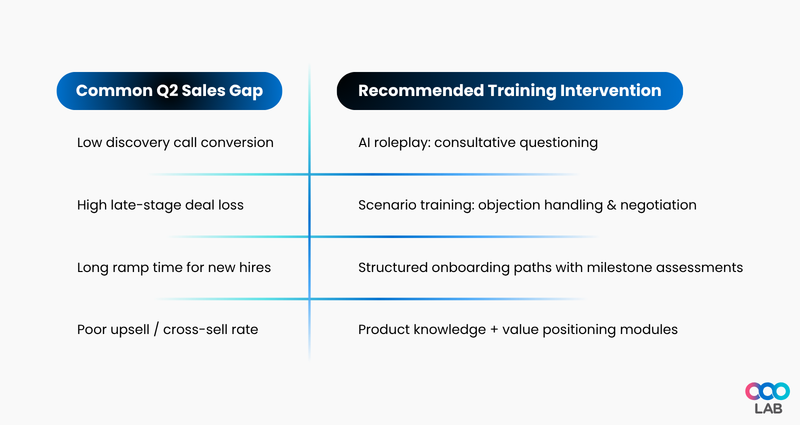
**_Read more_**
**>>\>** [**_Building Confidence in Your Sales Team Through Training and Development_**](https://blog.thelearningos.com/building-confidence-in-your-sales-team-through-training-and-development)
**>>\>** [**_The Benefits of Role-Playing in Sales Training and How to Implement It_**](https://blog.thelearningos.com/benefits-of-sales-training-and-how-to-implement-it)
[**_Book a Free Demo_**](https://www.thelearningos.com/book-intro) **_with us. Bring your Training and Learning to a new height with_** [**_LearningOS_**](https://www.thelearningos.com/) **_._**
## **Step 2 - Map Gaps to a Role-Based Sales Training and Sales Enablement Plan**
Once you know where the gaps are, the fix isn't more content, it's the right content assigned to the right role at the right time. A role-based sales training plan does exactly that. A mid-market AE and a new SDR don't share the same needs: training with real-world scenarios improves retention by 70% (Source: Sales Performance International), and role-specific programs see 20% higher win rates than uniform content (Source: Salesforce, 2024).

An AE who consistently loses at the business case stage needs negotiation and value-framing modules, not a product refresh. A new hire struggling to book discovery calls needs consultative questioning practice. Structured role-based paths also give managers a shared reference point, so coaching targets performance instead of repeating basics.
**_Read more_**
**>>>** [**_AI Sales Roleplay: The Missing Link Between Training Investment and Revenue Results_**](https://blog.thelearningos.com/ai-sales-roleplay-b2b-sales-training-revenue)
**>>>** [**_Adapting Your Sales Training for Different Generations Now_**](https://blog.thelearningos.com/adapting-your-sales-training-for-different-generations-in-the-workplace)
## **Step 3 - Deploy AI-Powered Coaching to Accelerate Skill Development**
AI coaching closes the gap between training sessions and live selling moments, giving reps real-time, scenario-specific feedback without a manager in the room. AI-guided coaching lifts win rates by 36% and deal-size growth by 35% _(Source: Highspot, 2025)_. [**Skill Quotient OS**](https://www.thelearningos.com/skill-quotient-ai), OOOLAB's AI roleplay and assessment tool, lets reps rehearse real selling scenarios with scored, competency-mapped feedback that transfers directly to live deals.
## **Step 4 - Track Your Sales Training ROI Against Q3 Pipeline Metrics**
Training ROI lives in pipeline outcomes, not completion rates. LearningOS clients report $3.5 ROI on every dollar invested, with returns emerging within 6–12 months (Source: LearningOS client outcomes). After your reset, track win-rate shifts by deal stage, discovery-to-demo conversion, and new-hire ramp time against your H1 baseline, then connect that data to your CRM pipeline so the training-to-performance link is provable.
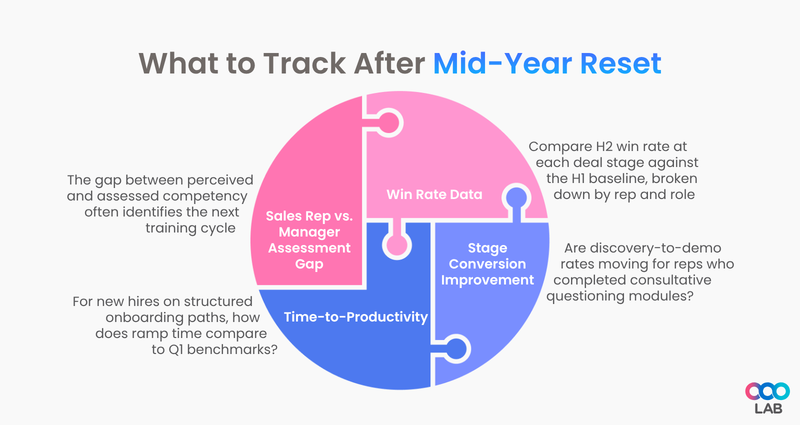
**What to track after your mid-year reset:**
- **Win rate delta:** Compare H2 win rate at each deal stage against the H1 baseline, broken down by rep and role
- **Stage conversion improvement:** Are discovery-to-demo rates moving for reps who completed consultative questioning modules?
- **Time-to-productivity:** For new hires on structured onboarding paths, how does ramp time compare to Q1 benchmarks?
- **Rep vs. manager assessment gap:** The gap between perceived and assessed competency often identifies the next training cycle
Connect your LMS analytics dashboard to your CRM pipeline. When learning activity maps to pipeline movement, the training budget conversation becomes straightforward. Your Q3 pipeline review becomes the proof.
## **How a Professional Development LMS Makes This Playbook Repeatable**
A [**professional development LMS**](https://www.thelearningos.com/) with role-based pathways, AI coaching, and real-time analytics turns a one-time reset into a permanent operating rhythm. LearningOS supports over 250,000 learners across 23 countries, holds SOC 2 Type 2 and ISO 27001:2022 certification, and cuts training time by 40–60%.
## **Your Q3 Window Is Still Open**
H1 results don't have to define the rest of the year. Audit your skill gaps now, assign role-specific training, and layer in AI coaching, and Q3 can still close as a different team than the one that opened it.
**_Ready to see AI roleplay and assessment in action?_** [**_Book a free Skill Quotient OS demo_**](https://www.thelearningos.com/skill-quotient-ai) **_and watch your team's training performance shift._**
### **About Us**
At OOOLAB (pronounced "uːlæb"), our mission is to make complex learning operations simple. We aim to positively impact the lives of over 1,000,000 learners and educators by the end of 2026. OOOLAB's LearningOS provides educational institutions and corporate enterprises with an all-in-one solution to create and deliver engaging learning experiences.
- Dedicated success manager
- Personalized setup
- Ongoing assistance
**Learn more at** [**thelearningos.com**](https://www.thelearningos.com/)
## FAQs
Q: What is a mid-year sales training reset?
A: A mid-year sales training reset is a structured process where sales leaders audit H1 performance data, identify specific skill gaps at the rep and team level, and deploy targeted training interventions before Q3 pipeline pressure peaks. Unlike ad hoc coaching, it's driven by data - win rates, deal velocity, objection patterns - and measured against a clear outcome: improved Q3 performance.
Q: How do you identify skill gaps in a sales team?
A: The most reliable method is to cross-reference pipeline data with rep-level performance. Pull win rates by deal stage, discovery-to-demo conversion rates, and objection loss patterns from call recordings. Map each gap to a skill category - consultative questioning, negotiation, value framing - rather than defaulting to generic content. A competency-based enterprise LMS can automate much of this mapping and surface gaps at scale.
Q: How does AI improve sales training outcomes?
A: AI sales coaching delivers personalised, scenario-based practice in real time - without requiring a manager to be present. Reps rehearse objection handling, discovery, and negotiation in simulated environments with scored feedback after each session. According to Highspot's State of Sales Enablement Report 2025, B2B companies using AI coaching are 20% more likely to improve revenue outcomes, and AI-guided coaching improves win rates by 36%.
Q: What should a Q3 sales training plan include?
A: A strong Q3 plan starts with a gap audit from H1 data, followed by role-specific learning paths tied to those gaps. It should include AI-powered roleplay for skill practice, manager coaching focused on deal strategy rather than basics, and analytics that connect training completion to pipeline metrics. Deploying in June gives approximately 60 days to embed new behaviours before Q3 deals close.
Q: How long does it take to see results from sales training?
A: Results vary by training depth and measurement approach. LearningOS clients typically see positive ROI within 6–12 months of implementation, including $3.5 return on every dollar invested. For a mid-year reset specifically, measurable shifts in win rate and deal velocity are often visible within 60–90 days - when training is tied to real gap data and includes AI-powered practice rather than content consumption alone.
---
This blog is powered by Superblog. Visit https://superblog.ai to know more.
---
## GenAI Co-Pilots in Your LMS: A Practical Deployment Guide for L&D Leaders
Author: Thuy Tran
Author URL: https://blog.thelearningos.com/author/thuy-tran
Published: 2026-07-07
Category: Enterprise
Category URL: https://blog.thelearningos.com/category/enterprise
Meta Title: GenAI Co-Pilot in Your AI LMS: Guide for L&D Leaders | LearningOS
Meta Description: Deploy a GenAI co-pilot in your AI LMS: 4 key capabilities, a 3-step framework, and governance essentials for L&D leaders - powered by LearningOS.
Tags: corporate-training/, AI/, LearningandDevelopment
Tag URLs: corporate-training/ (https://blog.thelearningos.com/tag/corporate-training), AI/ (https://blog.thelearningos.com/tag/ai), LearningandDevelopment (https://blog.thelearningos.com/tag/learninganddevelopment)
URL: https://blog.thelearningos.com/genai-co-pilot-ai-lms-corporate-training-guide
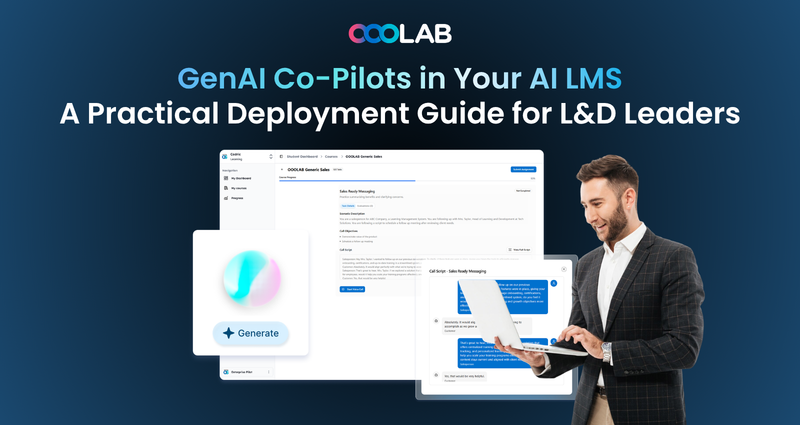
A BCG Henderson Institute experiment, reported in [Harvard Business Review (Sept 2025)](https://hbr.org/2025/09/how-gen-ai-could-transform-learning-and-development), showed that GenAI-powered tutoring can deliver personalized, engaging training at scale, a result simply not achievable with traditional LMS content delivery. At the same time, 87% of L&D teams already use AI in some form.
The problem is no longer awareness. Most L&D leaders can list AI features. Few have a deployment plan that turns those features into measurable outcomes. This guide explores GenAI co-pilots in corporate training: what they are, how they work, and how to deploy them with confidence.
## **What Is a GenAI Co-Pilot in an Enterprise LMS?**
A GenAI co-pilot is an AI layer inside your [enterprise LMS](https://www.thelearningos.com/) that generates, personalises, and iterates on training content in real time, working alongside your L&D team rather than replacing it. Two capabilities are often conflated under the "AI" label, and the distinction matters.
GenAI features handle content generation: auto-drafting modules, writing assessments, and translating content. Adaptive AI features adjust the experience based on what a learner actually does, including sequencing content, scaling difficulty, and identifying skill gaps. A well-architected [AI LMS](https://www.thelearningos.com/) combines both. Conflating them leads to misaligned expectations and underused platforms.
By 2026, over 60% of enterprise applications are expected to embed GenAI to augment workflows. _(Source:_ [_Gartner, Oct 2025_](https://www.gartner.com/en/newsroom/press-releases/2025-10-21-gartner-unveils-top-predictions-for-it-organizations-and-users-in-2026-and-beyond) _)_ The organisations that get ahead understand what each capability is doing inside their platform, not just that it exists.
## **The 4 Capabilities That Drive Real Training Impact**
These four capabilities are where [AI-powered LMS](https://www.thelearningos.com/) platforms deliver measurable business value, each mapping to a specific L&D problem worth solving.
### **Automated course creation**
GenAI compresses the content assembly cycle dramatically. Point the co-pilot at a compliance document, sales playbook, or product brief and it produces a structured course framework: objectives, module outlines, knowledge checks, and a summary assessment. Instructional designers review and approve. They stop being content factories and start being quality directors.
### **Personalised learning paths**
Personalised learning boosts engagement by 67% and retention by 56% compared to standard programmes. (Source: McKinsey, 2024) Adaptive AI inside your capability LMS makes this achievable at scale, using role, performance history, and behavioural signals to surface the right content at the right moment.
### **Scenario-based assessments**
Multiple-choice quizzes measure recall. They do not measure whether a learner can handle a difficult customer or close a complex deal under pressure. GenAI creates realistic, branching [AI sales roleplay](https://www.thelearningos.com/skill-quotient-ai) scripts for the situations learners will actually face. Skill Quotient OS, OOOLAB's AI roleplay and assessment tool, generates, delivers, and scores these interactions at enterprise scale.
### **Real-time analytics and feedback loops**
The platform surfaces skill gaps as they emerge, flags learners at risk of falling behind, and suggests content adjustments before a problem becomes a retention issue. Managers get dashboards showing competency and skill progression, not just module completion rates.
**_Bring your Training and Learning to a new height._** [**_Book a Free Demo_**](https://www.thelearningos.com/book-intro) **_with LearningOS._**
## **How to Deploy a GenAI Co-Pilot: A 3-Step Framework for L&D Leaders**
Most GenAI deployments stall not because the technology fails, but because the rollout lacks structure. This three-step framework gives your team a clear path from pilot to programme - with the evidence to scale.
1. **Audit and align.** Identify the 2–3 use cases where GenAI will have the fastest measurable business impact. Onboarding, compliance refreshers, and sales enablement are the most common starting points because they have clear timelines, defined audiences, and existing content to build from. Map each use case to a specific competency and skill gap in your current training programme before selecting features or platforms.
2. **Pilot and measure.** Launch a single-team pilot with a defined success baseline. Before the pilot begins, agree on the metrics that will determine whether you expand: time-to-competency, assessment score improvement, course completion rate, and manager satisfaction scores all work well. The data you collect in a 60-day pilot is more persuasive to a CFO than any vendor case study.
3. **Scale and iterate.** Use pilot results to build the business case for organisation-wide rollout. Your [learning & development LMS](https://www.thelearningos.com/) should feed real-time analytics back into every iteration - not just confirm that learners completed modules. LearningOS clients report 40–60% less training time and $3.50 ROI on every dollar invested. _(Source: LearningOS client outcomes)_ Those are the numbers that make the scale conversation straightforward.
**_Read more_**
**>>\>** [**_10 Surprising Ways an LMS Can Revolutionize Your Corporate Training_**](https://blog.thelearningos.com/how-an-lms-revolutionize-corporate-training)
**>>\>** [**_Enterprise Learning in 2026: LMS vs. LXP - and Why the Best Platforms Deliver Both_**](https://blog.thelearningos.com/lms-vs-lxp-enterprise-learning-platform)
## **Governance, Quality Control, and the Human-in-the-Loop**
GenAI output requires human review, always. Your governance framework should cover 4 areas before going live:
1. **Content accuracy checks** where SME review and sign-off for every AI-generated module
2. **Bias audits** for scenario-based content
3. **Data privacy confirmation** in which your LMS vendor proves they hold valid SOC 2 Type 2 and ISO 27001 certifications
4. **Human-in-the-loop approval workflows** that treat AI-authored content with the same rigour as human-authored content

Gartner predicts that through 2026, 50% of global organisations will require "AI-free" assessments to guard against critical-thinking atrophy. _(Source:_ [_Gartner, Oct 2025_](https://www.gartner.com/en/newsroom/press-releases/2025-10-21-gartner-unveils-top-predictions-for-it-organizations-and-users-in-2026-and-beyond) _)_ That is an argument for intentional design. Your governance framework should specify which assessments remain unassisted and why.
**_Read more_**
**>>\>** [**_How can Learning Enterprises Prevent Student Churn with LMS?_**](https://blog.thelearningos.com/how-to-prevent-student-churn-for-enterprises)
**>>>** [**_Data Security and Privacy in Enterprise LMS_**](https://www.thelearningos.com/enterprise-knowledge/data-security-and-privacy-in-enterprise-lms-safeguarding-sensitive-information)
## **Is AI Replacing L&D Professionals?**
The anxiety is real: 43% of L&D leaders worry AI could entirely replace their roles. _(Source:_ [_LearnUpon State of L&D Report, 2025_](https://markets.financialcontent.com/winslow/article/bizwire-2025-9-16-learnupon-2025-state-of-learning-and-development-report-ai-and-employee-well-being-drive-strategic-l-and-d-transformation) _)_ The evidence points the other way. 72% of L&D professionals say the function will thrive by adapting, and 58% report that AI gives L&D more strategic influence inside their organisations. _(Source: Synthesia AI in L&D Report, 2026)_
The shift is a shift in role, not a replacement. AI automates the tactical layer: drafting content, building quiz banks, scheduling nudges. L&D professionals move up to what AI cannot reach: learning architecture, stakeholder alignment, outcome validation, and ethical oversight. A strong [professional development LMS](https://www.thelearningos.com/) gives those professionals the infrastructure to do exactly that.
## **Conclusion**
GenAI co-pilots have moved from feature announcements to operational infrastructure. The organisations closing skill gaps fastest in 2026 are the ones that deployed thoughtfully, with clear use cases, structured governance, and a human team that knows how to get the best from the technology.
Your AI LMS is only as effective as the strategy behind it. Start with one high-impact use case, measure it rigorously, and build from there.
**_Not sure where to start?_** [**_Book a free session_**](https://www.thelearningos.com/book-intro) **_with our team and we'll map out a solution built around your training goals._**
### **About Us**
At OOOLAB (pronounced "uːlæb"), our mission is to make complex learning operations simple. We aim to positively impact the lives of over 1,000,000 learners and educators by the end of 2026. OOOLAB's LearningOS provides educational institutions and corporate enterprises with an all-in-one solution to create and deliver engaging learning experiences.
- Dedicated success manager
- Personalized setup
- Ongoing assistance
**Learn more at** [**thelearningos.com**](http://thelearningos.com)
## FAQs
Q: What is a GenAI co-pilot in an LMS?
A: A GenAI co-pilot is an AI layer built into a learning management system that generates training content, including courses, assessments, scenario scripts, and personalised feedback, on demand. It works alongside your L&D team by accelerating content creation and adapting learning experiences based on each learner's performance and role. Unlike a standard LMS feature set, a GenAI co-pilot actively assists the design process rather than simply delivering pre-built content.
Q: How is GenAI different from adaptive AI in corporate training?
A: GenAI creates content: course modules, quiz questions, and feedback text from a prompt or source document. Adaptive AI responds to learner behaviour: it adjusts the sequence, difficulty, and pacing of a learning path based on real-time performance signals. A well-built AI LMS uses both. Knowing which is which helps L&D leaders evaluate platforms more accurately and set realistic learner outcomes.
Q: What tasks can a GenAI co-pilot automate in my LMS?
A: A GenAI co-pilot can automate course structure generation from existing documents, assessment and quiz creation, scenario-based roleplay script development, content translation, and personalized feedback text. It can also analyse learner performance data to recommend content adjustments and flag skill gaps before they affect business outcomes. The highest-value automation targets are onboarding programmes, compliance refreshers, and sales enablement content.
Q: How long does it take to see ROI from an AI-powered LMS?
A: LearningOS clients typically report positive ROI within 6–12 months of deployment, with a platform-wide average of $3.50 returned on every dollar invested. The fastest ROI tends to come from use cases with high content volume and frequent update cycles. Time-to-competency reductions of 40–60% are common once adaptive learning paths are fully configured.
Q: How do I govern AI-generated content in my LMS?
A: Start with four baseline requirements: an SME review and sign-off process for every AI-generated module before publishing; a bias audit for scenario-based content; confirmation that your LMS vendor holds SOC 2 Type 2 and ISO 27001 certifications; and an approval workflow that treats AI-authored content with the same rigour as human-authored content. Beyond the basics, consider designating certain assessments as AI-free. Gartner projects that 50% of global organisations will require this by 2026 to protect critical-thinking skills.
---
This blog is powered by Superblog. Visit https://superblog.ai to know more.
---
## Training That Proves Its Worth: Connecting L&D Programs to Measurable Business Outcomes
Author: Thuy Tran
Author URL: https://blog.thelearningos.com/author/thuy-tran
Published: 2026-07-03
Category: Instructional Design
Category URL: https://blog.thelearningos.com/category/instructional-design
Meta Title: Connecting L&D Programs to Business Outcomes | LearningOS
Meta Description: Prove training ROI to leadership with a practical L&D framework that maps programs to revenue, retention, productivity, and compliance outcomes.
Tags: learning-analytics/, Enterprise-LMS/, LearningandDevelopment
Tag URLs: learning-analytics/ (https://blog.thelearningos.com/tag/learning-analytics), Enterprise-LMS/ (https://blog.thelearningos.com/tag/enterprise-lms), LearningandDevelopment (https://blog.thelearningos.com/tag/learninganddevelopment)
URL: https://blog.thelearningos.com/training-roi-business-outcomes-ld-framework
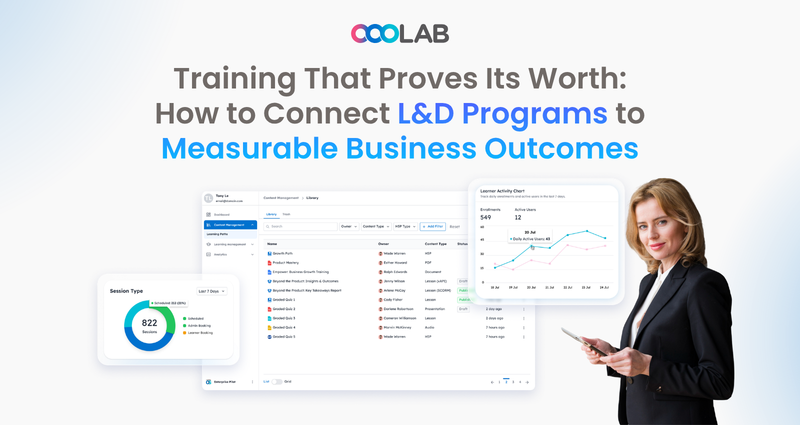
Companies that invest in learning and development are 79% more likely to meet their business goals ( _Source: Project Management Institute_). And yet, when budget season arrives, L&D teams are often the first to face scrutiny - because they struggle to speak in the language of the people holding the purse strings.
The problem is not a lack of data. Most [enterprise LMS](https://www.thelearningos.com/platform/what-is-learning-os) platforms generate more training data than teams know what to do with. The problem is tracking the wrong things. Completion rates tell you whether employees opened a course - not whether they are selling more, staying longer, or making fewer mistakes. This article explores how to map L&D programs to measurable business outcomes, using a practical framework and the language executives respond to, supported by data-driven insights.
## **Why L&D Measurement Fails to Prove Business Impact**
Most L&D measurement fails because it tracks activity, not outcomes. Only 13% of companies evaluate the ROI of their L&D programs, despite 92% of employees reporting that training positively influences their engagement ( _Source: LinkedIn Workplace Learning, 2025_). That gap is a measurement strategy problem, not a technology problem.
The three most common failure points are predictable:
1. **Tracking course completions instead of behavior change**: knowing 400 employees finished a compliance module tells you nothing about whether compliance incidents have decreased.
2. **Measuring learner satisfaction instead of time-to-proficiency**: a high satisfaction score on an onboarding course does not mean new hires are productive faster.
3. **Reporting training volume instead of performance KPIs**: hours of training delivered is a cost metric dressed up as an impact metric.
The fix is not more data. It is better-aligned data, traced back to a specific business goal.
**_Read more_** **>>>** [**_How Can an LMS Help Automate My Learning Operations?_**](https://blog.thelearningos.com/lms-learning-operation-automation)
**>>>** [**_Blended Learning Explained: How It Works and Why It's So Effective_**](https://blog.thelearningos.com/benefits-of-blended-learning)
## **The Business Outcome Framework: Mapping Training to KPIs**
Before opening your LMS dashboard, you need a mapping layer that connects each training program to a specific business goal. Use this table before a program launches to align stakeholders, and after delivery to structure your reporting.
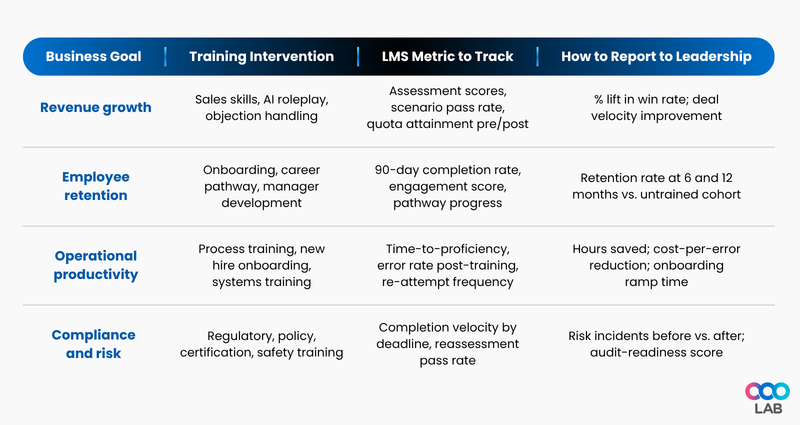
The discipline is in step one: identify the business goal before content is built. When training is designed backward from a business goal, measurement becomes straightforward. When it is designed forward from a content brief, measurement becomes guesswork.
**_Bring your Training and Learning to a new height._** [**_Book a Free Demo_**](https://www.thelearningos.com/book-intro) **_with LearningOS._**
## **Training ROI by Business Outcome**
### **Revenue Performance**
Companies with structured sales training programs achieve 78% quota attainment vs. 63% for non-adopters _(Source: RAIN Group)_. That 15-point gap is a training gap. [**Skill Quotient OS**](https://www.thelearningos.com/skill-quotient-ai), OOOLAB's AI-powered roleplay and assessment tool, generates the competency data that bridges training completion to revenue outcomes.
### **Employee Retention**
90% of employees are more likely to stay at a company that invests in their professional growth ( _Source: LinkedIn Workplace Learning, 2025_). Track 6-month and 12-month retention rates of employees who completed structured pathways against those who did not. LearningOS clients report 30-50% higher employee retention after deploying structured learning pathways.

### **Operational Productivity**
Organizations that align L&D programs around measurable skills see up to 40% higher productivity ( _Source: McKinsey_). LearningOS clients report 40-60% less training time required to reach the same proficiency levels, translating directly into reduced labor costs. Track error rate post-training to build the second half of your productivity ROI story.
### **Compliance and Risk Reduction**
Non-compliance costs are not abstract. The metrics that matter are completion velocity by deadline, reassessment pass rate, and audit trail completeness. LearningOS is SOC 2 Type 2, ISO 27001, and GDPR certified, with the audit trail built in, not bolted on.
**_Read more_**
**>>>** [**_6 Best Practices for Effective Learning Design_**](https://blog.thelearningos.com/6-best-practices-for-effective-learning-design)
**>>\>** [**_Tips and LMS Features for Delivering Effective Feedback_**](https://blog.thelearningos.com/tips-and-lms-features-that-deliver-feedbacks-that-scales-learning)
**>>\>** [**_Incredible Benefits of Mobile Microlearning for Employee Development_**](https://blog.thelearningos.com/benefits-mobile-microlearning-for-employee-development)
## **How to Present Training ROI to the C-Suite**
To present training ROI to the C-suite, reframe every learning metric as a business metric. Replace _completion rate_ with _employees certified and deployment-ready._ Replace _satisfaction score_ with _onboarding-related attrition reduction at 90 days._
Organizations using LMS platforms report 42% higher ROI on training compared to traditional methods ( _Source: eLearning Industry_). LearningOS clients report an average $3.5 return on every dollar invested, typically realized within 6-12 months. When you present those figures alongside cohort data from your LMS, training stops looking like a cost center.
The teams that survive budget scrutiny are not the ones with the most sophisticated training programs. They are the ones who walk into a budget meeting with a one-page summary that connects every training investment to a line on the P&L.
**Learning Language**
**Business Language**
85% completion rate
340 employees certified and deployment-ready
Learner satisfaction: 4.2/5
Net reduction in onboarding-related attrition at 90 days
12-hour course reduced to 6-hour blended format
Estimated $X saved in lost productivity across 500 employees
Assessment pass rate improved by 22%
Post-training error rate
down 31% in Q3
## **Start Measuring What Actually Matters**
The L&D teams that earn credibility with leadership are not the ones with the most content. They are the ones who can show, with data, how training moved a business number. Start with one program. Pick one business goal from the table above. Configure your LMS to track the corresponding metrics. Pull the before/after at 90 days. That one data point, presented in business language, is worth more to your budget than a hundred satisfaction surveys.
**_Curious what an all-in-one LMS actually looks like in practice?_** [**_Book a walkthrough_**](https://www.thelearningos.com/book-intro) **_\- no commitment, just clarity._**
### **About Us**
At OOOLAB (pronounced "uːlæb"), our mission is to make complex learning operations simple. We aim to positively impact the lives of over 1,000,000 learners and educators by the end of 2026. OOOLAB's LearningOS provides educational institutions and corporate enterprises with an all-in-one solution to create and deliver engaging learning experiences.
- Dedicated success manager
- Personalized setup
- Ongoing assistance
**Learn more at** [**thelearningos.com**](https://www.thelearningos.com/)
## FAQs
Q: What L&D metrics does the C-suite care about?
A: C-suite leaders care about metrics that connect directly to business performance: revenue impact (win rate, deal velocity), employee retention rates, operational productivity (time-to-proficiency, error rate reduction), and compliance incident frequency. Completion rates and satisfaction scores are internal L&D metrics — they are not meaningful to a CFO or COO without a clear line to one of those business outcomes.
Q: How do you calculate training ROI?
A: The standard formula is: (Financial benefit from training minus cost of training) divided by cost of training, multiplied by 100. The practical challenge is isolating the financial benefit. An LMS closes this gap by connecting training completion data to downstream performance data — for example, correlating sales training completion with post-training quota attainment pulled from your CRM.
Q: What is a good ROI for corporate training?
A: Industry benchmarks put the average return on training investment at approximately 3x. LearningOS clients report $3.5 returned for every dollar invested, typically realized within 6-12 months of deployment. The figure varies by industry and program type: compliance training ROI is typically realized in risk cost avoidance, while sales training ROI is most visible in revenue metrics.
Q: How does an LMS measure training effectiveness?
A: An LMS measures training effectiveness by centralizing completion data, assessment scores, time-to-proficiency, and learner engagement metrics in a single dashboard. When integrated with HRIS or CRM systems, it connects those learning metrics to downstream business performance, making it possible to correlate a completed sales training module with the following quarter's win rate.
Q: What is the difference between training outputs and training outcomes?
A: Training outputs are activity metrics: courses completed, hours logged, learners enrolled. Training outcomes are the downstream business results those activities were designed to influence: faster onboarding, higher retention, lower compliance risk, improved sales performance. The L&D teams that earn C-suite confidence are the ones who report outcomes, not outputs, and who have the LMS data to back them up.
---
This blog is powered by Superblog. Visit https://superblog.ai to know more.
---
## IQ, EQ, and SQ: Skill Quotient as the New Workforce Metric
Author: Thuy Tran
Author URL: https://blog.thelearningos.com/author/thuy-tran
Published: 2026-06-29
Category: Enterprise
Category URL: https://blog.thelearningos.com/category/enterprise
Meta Title: IQ, EQ, and SQ: Why Skill Quotient Matters Now | LearningOS
Meta Description: IQ measures cognitive potential. EQ measures relational skill. Neither predicts job performance. Discover why Skill Quotient is the metric that does.
Tags: Enterprise-LMS/, SkillQuotient
Tag URLs: Enterprise-LMS/ (https://blog.thelearningos.com/tag/enterprise-lms), SkillQuotient (https://blog.thelearningos.com/tag/skillquotient)
URL: https://blog.thelearningos.com/iq-eq-sq-skill-quotient-workforce-metric
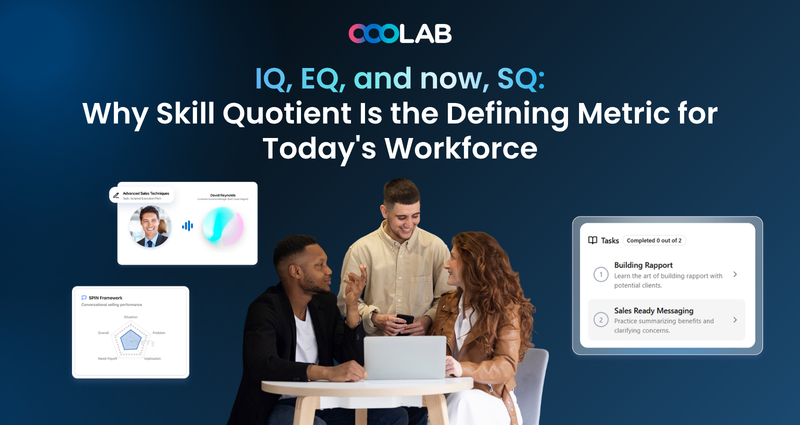
For most of the last century, two metrics ruled talent decisions. IQ shaped hiring and academic selection for decades. EQ followed in the 1990s, shifting the conversation toward relational skills and leadership potential. Neither solved the problem L&D leaders still face today.
Around 85% of employers now use skills-based hiring _(Source: TestGorilla, State of Skills-Based Hiring Report, 2024)_. Yet most have no consistent way to measure whether employees can actually perform the role once trained. They're spending on training, but not measuring whether that investment is building the capabilities the business requires.
That's the gap [**Skill Quotient (SQ)**](https://www.thelearningos.com/skill-quotient-ai) is designed to close: the third pillar of talent intelligence, sitting alongside IQ and EQ to answer the question both of them miss.
## **What Does IQ Actually Measure - and Where Does It Stop?**
IQ measures cognitive processing speed, working memory, pattern recognition, and logical reasoning. Meta-analyses by Schmidt and Hunter found general mental ability is the single best predictor of job training success across occupations, with validity coefficients ranging from .30 for low-complexity roles to .70 or higher for complex professional jobs. That's a strong signal about learning potential. It is not a signal about applied performance.
IQ tells you how quickly someone absorbs new information. It does not tell you whether they'll close a deal under pressure or run an onboarding cohort without support. Once employees pass the cognitive threshold for a given role, IQ stops differentiating high performers from average ones.
As a development metric, IQ offers almost nothing. You can't train it up. [**Skill Quotient**](https://www.thelearningos.com/skill-quotient-ai), unlike IQ, is fully buildable through structured learning.
## **What EQ Added - and the Gap It Left**
Emotional intelligence entered business in 1995 through Daniel Goleman's landmark framework, defining five constructs: self-awareness, self-regulation, motivation, empathy, and social skill. For leadership development and customer-facing roles, EQ brought what IQ ignored entirely. Meta-analytic evidence shows the correlation between EQ and job performance is approximately .29, real but modest _(Source: Journal of Organizational Behavior, 2010)_. In high-emotional-labour roles, EQ contributes. But it still doesn't answer whether someone can execute the function.
EQ tells you how a sales rep manages rejection. It does not tell you whether they can structure a discovery call or navigate a six-month enterprise procurement cycle. That predictive gap is exactly what Skill Quotient is built to address.
The cost of that gap is now visible at scale. According to the World Economic Forum's Future of Jobs Report 2025, 63% of employers identify skills gaps as their primary barrier to business transformation. Not a shortage of intelligence or emotional maturity. A shortage of practical, applicable capability.
## **Defining Skill Quotient: The Third Pillar of Talent Intelligence**
[**Skill Quotient (SQ)**](https://www.thelearningos.com/skill-quotient-ai) is a measurable indicator of an individual's job-relevant capabilities: what they can currently do, how fast they build new skills, and how effectively they apply them under real conditions. SQ is a direct, trainable measure of whether your people can do what the role requires.
### **What Is the Difference Between IQ, EQ, and SQ at Work?**
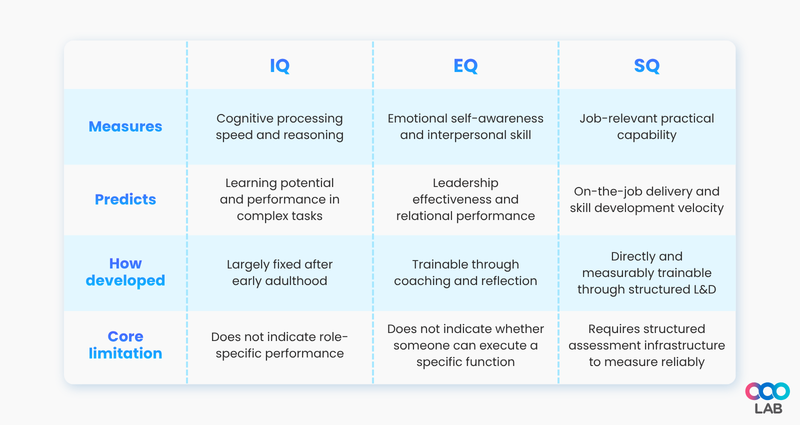
SQ operates across three dimensions: current capability (skills demonstrably held today, verified by assessment); development velocity (how fast new skills are acquired); and applied performance (how effectively skills translate under real conditions).
The WEF's Future of Jobs Report 2025 finds employers expect 39% of workers' core skills to change by 2030, while 50% of the workforce has completed training as part of L&D strategies, up from 41% in 2023. More training is happening. SQ answers whether it's converting into measurable capability.
**_Read more_** >>> [**_What Is Skill Quotient In HR_**](https://www.thelearningos.com/enterprise-knowledge/what-is-skill-quotient-in-hr) >>> [**_Skill Quotient vs. IQ - Why Skills Matter More_**](https://www.thelearningos.com/enterprise-knowledge/skill-quotient-vs-iq-why-skills-matter-more) >>> [**_Redefining Talent Assessment with Skill Quotient_**](https://www.thelearningos.com/enterprise-knowledge/redefining-talent-assessment-with-skill-quotient)
## **Measuring Skill Quotient in Your Organisation**
SQ is a composite picture built from multiple data points. Four steps get you there.
**Step 1 - Map Role-Based Competency Frameworks**
Define what skilled performance looks like at each stage for each role. Without this baseline, your assessments have nothing to measure against.
**Step 2 - Run Structured Skill Assessments Through a** [**Capability LMS**](https://www.thelearningos.com/enterprise-knowledge/capability-lms-to-bridge-skill-gaps)
Establish pre-training baselines and track post-training scores over time. That delta is your first SQ data point.
**Step 3 - Use AI-Powered Scenario Assessments**
Static tests measure recall. Real SQ requires demonstration under pressure. OOOLAB's [**Skill Quotient OS**](https://www.thelearningos.com/skill-quotient-ai) delivers AI roleplay scenarios that generate structured evidence of applied capability, not just completion data.
**Step 4 - Track Development Velocity Over Time**
SQ is not a snapshot - it's a trajectory. A [**Professional Development LMS**](https://www.thelearningos.com/) with built-in progress tracking converts assessment data into ongoing capability curves. It shows not just where someone is today but how fast they're developing. That velocity data enables your L&D team to identify which interventions are working and where investment needs to shift.
**Step 5 - Calibrate With Manager Observation**
Quantitative LMS data combined with structured manager input produces the most reliable SQ read. It closes the gap between what training records show and what the job actually demands.
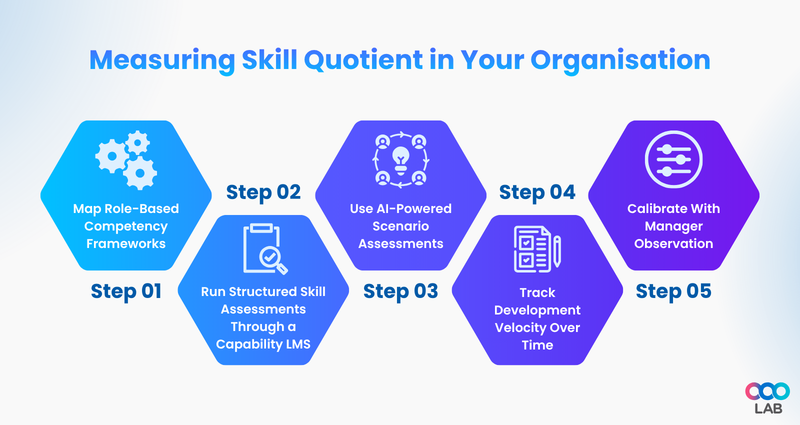
**_Bring your Training and Learning to a new height._** [**_Book a Free Demo_**](https://www.thelearningos.com/book-intro) **_with LearningOS._**
## **Why the Enterprise LMS Is the Infrastructure Layer for SQ**
An [**enterprise LMS**](https://www.thelearningos.com/) built for Skill Quotient tracking generates the capability data organisations need to make defensible decisions about development, promotion readiness, and skills gap closure. Four features work together: personalised learning pathways aligned to each employee's capability baseline; role-based assessment modules creating structured evidence at each development stage; manager calibration tools connecting platform data with real-world observation; and skills gap reporting surfacing the delta between current and required capability.
[McKinsey research](https://www.mckinsey.com/capabilities/people-and-organizational-performance/our-insights/beyond-hiring-how-companies-are-reskilling-to-address-talent-gaps) finds companies aligning L&D around skills see up to 40% greater productivity. Over 90% of employees say they're more likely to stay at a company that invests in their growth _(Source: LinkedIn Workplace Learning Report, 2025)_. When training builds demonstrable capability tied to career progression, it becomes meaningful rather than obligatory.
LearningOS clients building SQ measurement into their programmes report 40-60% less training time, 30-50% higher employee retention, and $3.5 return on every dollar invested in L&D.
**_Read more_** >>\> [**_10 Reasons Why Blended Learning is the Future of Corporate Training_**](https://blog.thelearningos.com/blended-learning-in-corporate-training) >>\> [**_Enterprise Learning in 2026: LMS vs. LXP - and Why the Best Platforms Deliver Both_**](https://blog.thelearningos.com/lms-vs-lxp-enterprise-learning-platform)

## **Conclusion**
IQ told organisations who could think. EQ told them who could connect. Skill Quotient tells them who can deliver, and whether training is building that capability over time.
The WEF confirms skills gaps are the single largest barrier to business transformation today. That makes SQ a present-tense operational priority. The organisations that close the gap will be those that move from measuring potential and personality to measuring practical capability, and build the infrastructure to develop it deliberately.
_Not sure where your organisation sits on the SQ readiness curve?_ [**_Book a free session_**](https://www.thelearningos.com/book-intro) **_with our team and we'll map out a solution built around your training goals._**
### **About Us**
At OOOLAB (pronounced "uːlæb"), our mission is to make complex learning operations simple. We aim to positively impact the lives of over 1,000,000 learners and educators by the end of 2026. OOOLAB's LearningOS provides educational institutions and corporate enterprises with an all-in-one solution to create and deliver engaging learning experiences.
- Dedicated success manager
- Personalized setup
- Ongoing assistance
**Learn more at** [**thelearningos.com**](https://www.thelearningos.com/)
## FAQs
Q: What is Skill Quotient (SQ) and how is it different from IQ and EQ?
A: Skill Quotient (SQ) is a measurable indicator of an individual's job-relevant capabilities: what they can do in their role, how fast they build new skills, and how effectively they apply them under real conditions. IQ predicts learning potential; EQ predicts relational and leadership effectiveness. SQ is the only metric that directly assesses and tracks practical applied capability, and unlike IQ, it is fully trainable through structured L&D.
Q: How do you measure Skill Quotient in the workplace?
A: SQ is measured through a combination of role-based competency frameworks, structured LMS assessments, AI-powered scenario evaluation, and manager observation. The process begins with a pre-training baseline assessment and tracks development velocity over time. Tools such as OOOLAB's Skill Quotient OS add an applied performance layer by generating structured evidence of how skills hold up under real working conditions.
Q: What is the difference between IQ, EQ, and SQ at work?
A: IQ measures cognitive processing and reasoning; it is largely fixed after early adulthood and useful as a hiring filter. EQ measures emotional self-awareness and interpersonal skill; it is trainable through coaching and relevant for high-emotional-labour roles. SQ measures job-relevant practical capability; it is directly trainable through L&D and the most reliable predictor of whether an individual can perform a specific role under real conditions.
Q: What is a Capability LMS and how does it support SQ development?
A: A Capability LMS is a learning management system designed to track, assess, and develop job-relevant skills against defined role competencies, not just log completions. It combines personalised learning pathways, role-based assessments, skills gap reporting, and manager calibration to generate structured SQ data over time. LearningOS operates as a full Capability LMS, combining content management, assessment, and real-time analytics in a single platform.
Q: Why are skills gaps still growing if organisations are already investing in training?
A: Most organisations measure training activity, completions and hours logged, rather than training outcomes. Completing a course is not the same as building a skill. Without an SQ measurement framework, organisations cannot determine whether their L&D investment is converting into capability improvement. The WEF's Future of Jobs Report 2025 finds that even as 50% of the workforce has completed training, employers still expect 39% of core skills to change by 2030. More training without better measurement produces the same skills gap at greater cost.
---
This blog is powered by Superblog. Visit https://superblog.ai to know more.
---
## AI Sales Roleplay: The Missing Link Between Training Investment and Revenue Results
Author: Thuy Tran
Author URL: https://blog.thelearningos.com/author/thuy-tran
Published: 2026-06-24
Category: Sales Training
Category URL: https://blog.thelearningos.com/category/sales-training
Meta Title: AI Sales Roleplay: Enterprise B2B Training | LearningOS
Meta Description: AI Sales Roleplay measures the gap between practice and real sales calls, connecting both to quota attainment, win rate, and revenue results.
Tags: Enterprise-LMS/, sales-training/, AIroleplay
Tag URLs: Enterprise-LMS/ (https://blog.thelearningos.com/tag/enterprise-lms), sales-training/ (https://blog.thelearningos.com/tag/sales-training), AIroleplay (https://blog.thelearningos.com/tag/airoleplay)
URL: https://blog.thelearningos.com/ai-sales-roleplay-b2b-sales-training-revenue
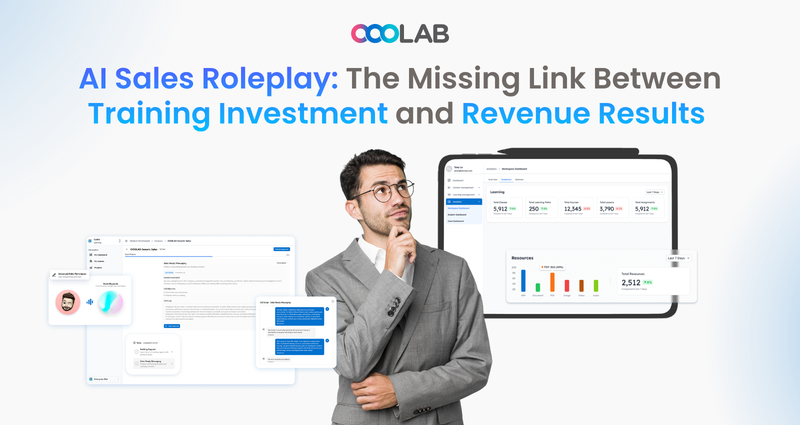
> **_Why do some reps consistently outperform despite having the same training, playbook, and manager?_**
The reality is: training isn't the problem; the practice is. And so is the lack of visibility into how that practice translates to real calls.
[**AI Sales Roleplay**](https://www.thelearningos.com/skill-quotient-ai) uses artificial intelligence to simulate buyer conversations, giving reps scored practice before a live deal is on the line. The same AI can also analyse a rep's real calls, measuring the gap between rehearsal and reality - the gap that decides whether training spend shows up in revenue. Reps lose up to 70% of training content within 24 hours without active recall (Source: Ebbinghaus Forgetting Curve, via DemandNexus, 2026).
This article covers both gaps - and the business outcomes that follow when you close them.
## **The Practice Gap - and the Gap Underneath It**
Reps can pass every assessment and still revert to old habits when a real buyer pushes back. Without reinforcement, the forgetting curve erases up to 90% of training content within 30 days _(Source: Richardson Sales Performance)_. RAIN Group's research shows companies with formal sales training see 78% quota attainment versus 63% without - a gap closed by structured practice, not better content.
But there's a second, rarely measured gap: rehearsal score versus real-call performance. A rep can ace a practice scenario and still freeze live, because rehearsal and reality aren't the same test. Closing the first gap without measuring the second tells you a rep _can_ perform under simulated pressure - not whether they're doing it on calls that close revenue.
**_Read more_** >>\> [**_The Benefits of Role-Playing in Sales Training and How to Implement It_**](https://blog.thelearningos.com/benefits-of-sales-training-and-how-to-implement-it)
## **How AI Sales Roleplay and Real Call Analysis Close Both Gaps**
[**AI Sales Roleplay**](https://www.thelearningos.com/skill-quotient-ai) closes the first gap through repetition at scale, instant competency scoring, and adaptive scenario variation - mechanisms quarterly, manager-led roleplay can't match. Teams using AI-powered training are 35% more likely to report higher average deal size _(Source: Highspot, 2025)_, and structured AI roleplay drives 11–28% win rate improvement _(Source: Hyperbound AI, 2025)_.
The second gap needs real calls scored on the same framework - objection handling, discovery depth, deal progression - producing two comparable numbers: a practice score and a live-call score. A wide gap signals confidence, not skill. A narrow gap with low scores both ways means the rep needs more reps. Without measuring both, the two problems get identical, ineffective coaching.
**_Ready to see AI roleplay and assessment in action?_** [**_Book a free demo_**](https://www.thelearningos.com/book-intro) **_and watch your team's training performance shift._**

## **The Revenue Results - and Why the Gap Predicts Them**
Enterprise teams implementing **AI Sales Roleplay** report 30% faster ramp times, 15–20% higher quota attainment in year one _(Source: Gartner, 2025)_, and 11–28% win rate improvement _(Source: Hyperbound AI, 2025)_. High-performing teams using structured AI coaching are 2.4x more likely to protect quota attainment through end-of-quarter pressure _(Source: Salesforce State of Sales)_.
A shrinking practice-to-performance gap predicts these numbers before the quarter closes, not after. Reps whose live scores track their practice scores convert pipeline more predictably - linking the gap directly to quota attainment, win rate, and cycle length.
## **What Effective AI Sales Roleplay Requires - and How Skill Quotient OS Delivers It**
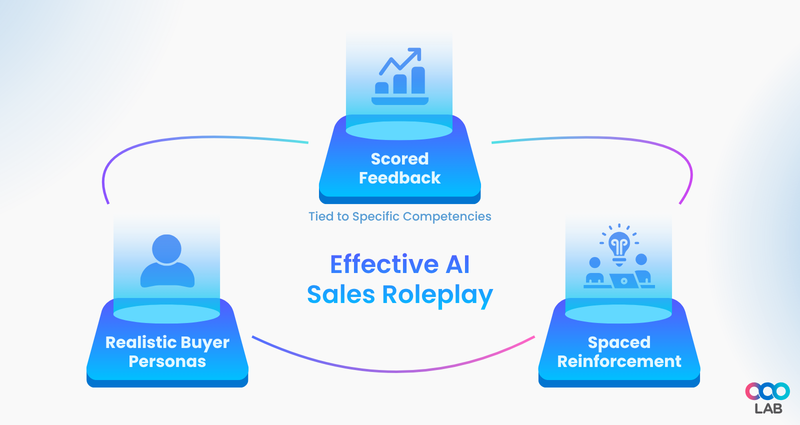
Four components separate programmes that move revenue from those generating activity reports: realistic, adaptive buyer personas; scored feedback tied to specific competencies; spaced reinforcement across multiple sessions; and real call analysis scored on that same framework.
[**Skill Quotient OS**](https://www.thelearningos.com/skill-quotient-ai) \- OOOLAB's AI roleplay and call analysis platform - is built around all four, putting rehearsal and live-call scores side by side. The biggest quota uplift comes from the middle 60% of the team - skilled but under-practiced - a cohort AI scales to in a way human-only coaching cannot _(Source: Gartner, 2025)_. **LearningOS supports 250,000+ learners across 23 countries.**
**_Read more_** >>\> [**_Building Confidence in Your Sales Team Through Training and Development_**](https://blog.thelearningos.com/building-confidence-in-your-sales-team-through-training-and-development)
## **Measuring the Programme Against Revenue**

Connect [**AI Sales Roleplay**](https://www.thelearningos.com/skill-quotient-ai) directly to revenue using five metrics: the practice-to-performance gap (the leading indicator), quota attainment rate, sales cycle length, win rate by cohort, and ramp time to first deal. Only 17% of organisations currently measure training ROI (Source: Sales Management Association / Training Industry Research). If you can't connect practice and real-call performance to pipeline outcomes, you're running a schedule, not a strategy.
## **Conclusion**
**AI Sales Roleplay** isn't a feature upgrade on your LMS - it's a structural shift toward continuous, scored practice measured against real call performance. The teams closing more deals in 2026 are the ones who can see where rehearsal and reality diverge - and close that gap first.
See how [**Skill Quotient OS**](https://www.thelearningos.com/skill-quotient-ai) \- OOOLAB's AI roleplay and call analysis platform - converts training investment into quota attainment.
### **About Us**
At OOOLAB (pronounced "uːlæb"), our mission is to make complex learning operations simple. We aim to positively impact the lives of over 1,000,000 learners and educators by the end of 2026. OOOLAB's LearningOS provides educational institutions and corporate enterprises with an all-in-one solution to create and deliver engaging learning experiences.
- Dedicated success manager
- Personalized setup
- Ongoing assistance
**Learn more at** [**thelearningos.com**](https://www.thelearningos.com/)
## FAQs
Q: How does AI Sales Roleplay improve quota attainment for enterprise B2B teams?
A: AI Sales Roleplay closes the practice gap - the distance between what reps learn and what they execute under pressure - by giving reps high-volume, scored practice against realistic buyer personas. Gartner's 2025 research found organisations using AI in sales training see a 15–20% increase in quota attainment within the first year.
Q: What is the practice-to-performance gap, and how is it measured?
A: It's the difference between how a rep scores in AI roleplay practice and how they score when the same competency framework - objection handling, discovery depth, deal progression - is applied to their real sales calls. A wide gap signals a confidence issue; a narrow gap with a low score on both sides signals a genuine skill gap, and the distinction changes which coaching intervention actually works.
Q: Why is traditional sales roleplay not enough to close the practice gap?
A: Traditional manager-led roleplay is infrequent, inconsistent across managers, and limited to one rep at a time. Reps lose up to 90% of training content within 30 days without reinforcement. AI roleplay removes all three constraints by delivering consistent, scored practice at scale.
Q: How do I measure ROI on an AI Sales Roleplay programme?
A: Measure ROI using five metrics: the practice-to-performance gap (the leading indicator), quota attainment rate, win rate by cohort, sales cycle length, and ramp time to first deal. Avoid measuring completion or satisfaction scores - they track activity, not performance change.
Q: How does AI Sales Roleplay integrate with an enterprise LMS and existing sales enablement tools?
A: Effective platforms connect practice data and real-call analysis with broader learning pathways, surfacing skill gaps for managers and feeding performance data into reporting dashboards. Skill Quotient OS is built within the LearningOS platform, so practice scores, real-call scores, and coaching outputs sit alongside the full learner record.
---
This blog is powered by Superblog. Visit https://superblog.ai to know more.
---
## Enterprise Learning in 2026: LMS vs. LXP - and Why the Best Platforms Deliver Both
Author: Thuy Tran
Author URL: https://blog.thelearningos.com/author/thuy-tran
Published: 2026-06-17
Category: SaaS
Category URL: https://blog.thelearningos.com/category/saas
Meta Title: LMS vs. LXP for Enterprise: Why You Need Both | LearningOS
Meta Description: Understand the core differences between LMS and LXP, why the best enterprise platforms now deliver both, and how to choose the right architecture
Tags: LXP/, Enterprise-LMS/, AI/, LearningandDevelopment
Tag URLs: LXP/ (https://blog.thelearningos.com/tag/lxp), Enterprise-LMS/ (https://blog.thelearningos.com/tag/enterprise-lms), AI/ (https://blog.thelearningos.com/tag/ai), LearningandDevelopment (https://blog.thelearningos.com/tag/learninganddevelopment)
URL: https://blog.thelearningos.com/lms-vs-lxp-enterprise-learning-platform
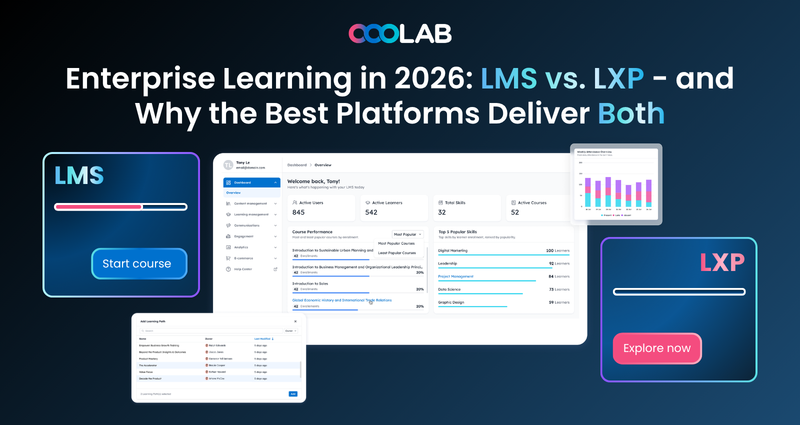
Only 16% of companies currently use an LXP - despite mounting evidence that a standard LMS alone no longer meets modern learner expectations. The technical skills half-life has dropped to just 2.5 years. L&D teams can't afford separate platforms to bridge that gap.
The conversation in 2026 isn't LMS or LXP. It's whether organisations still need to choose between them. This article explores the core differences, where each falls short, and what a genuinely unified solution looks like.
## What Is an Enterprise LXP?
An Enterprise LXP - or Learning Experience Platform - is a learner-driven system that uses AI to surface personalised content and enable self-directed development. Unlike an LMS, it recommends training based on role, behaviour, and goals rather than assigning it. The LXP market reached $3.74 billion in 2025, growing at 33.79% compound annually (Source: Business Research Insights, 2026).
## What Is the Difference Between an LMS and an LXP?
The core difference is control. An LMS is admin-led: it assigns, tracks, and reports on structured programmes. An LXP is learner-led: it recommends personalised content based on individual behaviour. An LMS handles what the organisation requires; an LXP supports what the learner chooses.
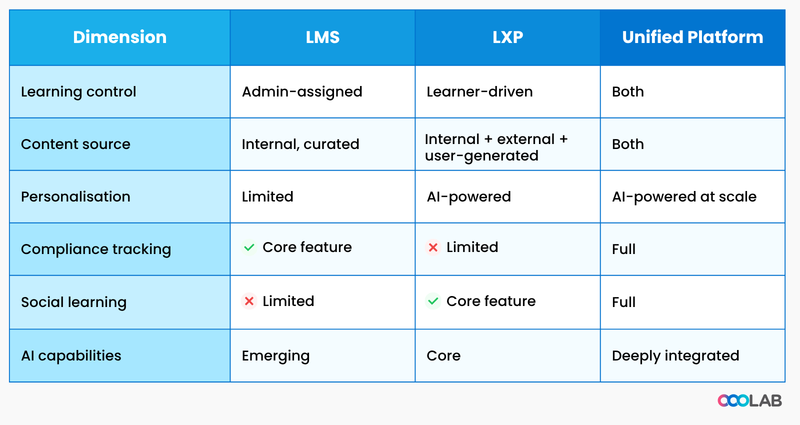
Neither is better. They serve different purposes. The problem starts when organisations need both and try to run them as separate systems.
## Why Running Both Separately Creates More Problems Than It Solves
74% of organisations say linking learning to performance is a top priority (Source: Docebo, 2026). Running a separate LMS and LXP works directly against that. When compliance tracking and personalised recommendations sit in different systems, learner data fragments, admins manage duplicate reports, and the connection between training and performance breaks down.
49% of L&D professionals report that their executives are concerned employees lack the skills to execute business strategy (Source: Docebo, 2026). A two-platform stack makes that gap slower to diagnose - not faster.
_**Read more**_
**_>>\>_** [**_5 Reasons Why you should choose a SaaS for your LMS_**](https://blog.thelearningos.com/5-reasons-why-you-should-choose-saas-for-your-lms/)
**_>>\>_** [**_How to Leverage LXP Learning Analytics to Increase ROI_**](https://blog.thelearningos.com/how-to-leverage-lxp-learning-analytics-to-increase-roi/)
## The Case for a Unified Learning Platform
Personalised learning boosts engagement by 67% and retention by 56% (Source: McKinsey, 2024). Delivering that at enterprise scale requires a structured delivery layer and an AI-powered discovery engine working from one learner record.

That's the architecture behind LearningOS: a single platform combining a CMS, LMS, Virtual Learning Environment, and Mobile Learner Portal - one dataset, one admin interface, one continuous learner journey. LearningOS clients report $3.5 ROI on every dollar invested, 40-60% less training time, and 30–50% higher employee retention.
Running two platforms doesn't double your capability. It halves your visibility into what your workforce actually knows.
_**Read more**_
_**>>\> [The Future of AI LMS: Personalized Learning at Scale](https://www.thelearningos.com/enterprise-knowledge/trends-scalable-ai-lms-in-personalized-learning)**_
_**>>\> [From Data to Insights: How AI LMS Improves Learning Outcomes](https://www.thelearningos.com/enterprise-knowledge/how-ai-lms-transforms-data-to-actionable-learning-insights)**_
## 5 Features Every Unified LMS and LXP Platform Needs
A platform that genuinely replaces both needs five capabilities working from a single learner record: structured course delivery and compliance tracking; AI-powered personalised content recommendations based on role and skill gaps; a unified learner profile across all activity; analytics connecting learning to business outcomes - not just completion rates; and mobile-first access across iOS, Android, and desktop.

_**Bring your Training and Learning to a new height. [Book a Free Demo](https://www.thelearningos.com/book-intro) with LearningOS.**_
## LXP, LMS, or Both? A Decision Framework
Most enterprises need both - the question is whether to manage them separately or unify them. Four questions determine your architecture: Is your primary need compliance, upskilling, or both? Are employees engaging voluntarily beyond mandatory content? Do your platforms share a single learner record? Does your training data connect to business performance?
Compliance-only: your existing LMS may suffice. Upskilling-only: LXP capabilities are essential. Both present: a unified platform handling structured delivery and AI-powered personalisation from one learner record is the right answer for most enterprise organisations.
## Conclusion
The LMS vs. LXP debate is dissolving. In 2026, what matters is one platform, one learner record, and analytics that connect training to real business outcomes. Organisations that resolve this through consolidation - not by adding a second platform - are seeing measurably better results.
### About Us
At OOOLAB (pronounced "uːlæb"), our mission is to make complex learning operations simple. We aim to positively impact the lives of over 1,000,000 learners and educators by the end of 2026. OOOLAB's LearningOS provides educational institutions and corporate enterprises with an all-in-one solution to create and deliver engaging learning experiences.
- Dedicated success manager
- Personalized setup
- Ongoing assistance
Learn more at [thelearningos.com](https://www.thelearningos.com/)
## FAQs
Q: What is the difference between an LMS and an LXP?
A: An LMS assigns and tracks structured training - compliance courses, onboarding, and certifications. An LXP uses AI to recommend personalized content based on learner behaviour and goals. Core difference: an LMS pushes learning onto employees; an LXP pulls them toward what's relevant.
Q: Do I need both an LMS and an LXP for enterprise training?
A: Most enterprises need both capabilities - but not two separate platforms. Running them in parallel creates data silos and admin overhead that a single unified platform resolves from one learner record.
Q: What is an Enterprise LXP and how does it work?
A: An Enterprise LXP recommends personalised training through AI, analysing each employee's role, behaviour, and skill gaps to surface relevant content - internal, external, or peer-generated - making it effective for continuous upskilling at scale.
Q: What is Learning in the Flow of Work, and how does it relate to LMS and LXP?
A: Learning in the Flow of Work embeds skill-building directly into daily tasks. It requires compliance tracking and personalised recommendations to run from the same learner record - something separate platforms can't deliver cleanly.
Q: What features should a unified enterprise learning platform include?
A: Compliance tracking and structured delivery, AI-powered content recommendations, a single unified learner record, analytics connecting training to business outcomes, and mobile-first access across iOS, Android, and desktop.
---
This blog is powered by Superblog. Visit https://superblog.ai to know more.
---
## Effective Onboarding Strategies for New Sales Hires: Setting Them Up for Success
Author: Nga Tran
Author URL: https://blog.thelearningos.com/author/nga-tran
Published: 2024-09-10
Category: Sales Training
Category URL: https://blog.thelearningos.com/category/sales-training
Meta Title: Effective Onboarding Strategies for New Sales Hires: Setting Them Up for Success
Meta Description: it’s about setting the stage for long-term success by providing new salespeople with the tools, knowledge, and confidence they need to excel.
Tags: Enterprise-LMS/, corporate-training/, sales-training/, upsales/
Tag URLs: Enterprise-LMS/ (https://blog.thelearningos.com/tag/enterprise-lms), corporate-training/ (https://blog.thelearningos.com/tag/corporate-training), sales-training/ (https://blog.thelearningos.com/tag/sales-training), upsales/ (https://blog.thelearningos.com/tag/upsales)
URL: https://blog.thelearningos.com/effective-onboarding-strategies-for-new-sales-hires-setting-them-up-for-success
Bringing a new sales hire onboard is a critical moment for any organization. A well-structured onboarding process can make a significant difference in how quickly and effectively new hires integrate into the team, understand their role, and begin contributing to the company's success. Effective onboarding isn’t just about administrative tasks and orientation; it’s about setting the stage for long-term success by providing new salespeople with the tools, knowledge, and confidence they need to excel. Here’s a comprehensive guide to creating an effective onboarding strategy for new sales hires.

## I. Understanding the Importance of Effective Onboarding
An effective onboarding process is crucial for several reasons:
### 1\. Accelerates Time to Productivity:
A structured onboarding program helps new hires become productive faster by providing them with a clear roadmap of what’s expected and how to achieve it.
### 2.Improves Retention Rates:
Employees who experience a well-organized onboarding process are more likely to stay with the company long-term. It creates a positive first impression and fosters a sense of belonging.
### 3\. Enhances Job Satisfaction:
Proper onboarding helps new hires feel valued and supported, which can significantly boost their job satisfaction and motivation.
## II. Key Components of an Effective Onboarding Strategy
To set new sales hires up for success, consider integrating the following components into your onboarding strategy:
### 1\. Pre-boarding Preparation
The onboarding process should begin before the new hire’s first day. Pre-boarding activities can help new employees feel welcomed and prepared:
\- Welcome Package: Send a welcome package with company swag, an onboarding schedule, and key information about the first day. This helps new hires feel valued and excited.
\- Access to Resources: Provide access to necessary tools and systems ahead of time, such as email accounts, CRM systems, and internal communication platforms.
-Introduction to Team Members: Share a team directory or introductory video so new hires can familiarize themselves with their colleagues before starting.
### 2\. Structured Orientation Program
The first week should include a comprehensive orientation program to introduce new hires to the company and its culture:
\- Company Overview: Provide an overview of the company’s history, mission, values, and organizational structure. Understanding the bigger picture helps new hires align their goals with the company’s vision.
\- Sales Process and Tools: Explain the sales process, key sales methodologies, and how to use sales tools and software. This foundational knowledge is critical for new hires to start selling effectively.
\- Compliance and Procedures: Review company policies, compliance requirements, and any relevant procedures to ensure new hires understand their responsibilities and adhere to company standards.
### 3\. Role-Specific Training
Sales hires need role-specific training to excel in their positions. Focus on:
\- Product Training: Provide in-depth training on your products or services, including features, benefits, and unique selling points. Salespeople must be experts in what they’re selling to build credibility with prospects.
\- Sales Techniques: Train new hires on your company’s preferred sales techniques and strategies. This might include consultative selling, objection handling, and negotiation skills.
\- Customer Personas: Educate new hires about your target customer personas, including their pain points, needs, and how your product or service addresses these issues.
### 4\. Mentorship and Shadowing
Assigning a mentor or buddy can significantly ease the transition for new hires:
\- Mentorship Program: Pair new hires with experienced salespeople who can offer guidance, answer questions, and provide insights into the company’s sales practices.
\- Shadowing Opportunities: Allow new hires to shadow experienced sales team members to observe effective sales techniques and client interactions. This hands-on experience is invaluable for understanding the practical application of training.
### 5\. Setting Clear Expectations and Goals
New hires should have a clear understanding of their roles and performance expectations:
\- Role Clarity: Define the specific responsibilities of the sales position and how they align with the team’s goals.
\- Performance Metrics: Establish key performance indicators (KPIs) and sales targets. Make sure new hires know how their performance will be measured and what they need to achieve.
\- Regular Check-Ins: Schedule regular one-on-one meetings with new hires to review their progress, address any challenges, and provide feedback. This helps them stay on track and feel supported.
### 6\. Feedback and Continuous Improvement
An effective onboarding process includes opportunities for feedback and continuous improvement:
\- Solicit Feedback: Regularly ask new hires for feedback on their onboarding experience. This helps identify areas for improvement and ensures the process remains effective.
\- Adjust and Evolve: Use feedback and performance data to refine and enhance your onboarding strategy. Continuous improvement ensures that the process remains relevant and effective.
**Ready to take your Sales Training to the next level?**
[Start Now](https://www.thelearningos.com/sales-training-and-enablement)
_**>>\> Read more:**_ **[Addressing declining retail foot traffic issue](https://blog.thelearningos.com/addressing-declining-retail-foot-traffic-strategies-for-success/)**
_**>>\> Read more:**_ [**A guide to teaching sales rep positive response**](https://blog.thelearningos.com/navigating-objections-a-guide-to-teaching-sales-reps-effective-responses/)
_**>>\> Read more:**_ **[Why is employee upskilling non-negotiable for business success](https://blog.thelearningos.com/employee-upskilling-with-lms/)**
## III. Creating a Positive Onboarding Experience
A positive onboarding experience sets the tone for new hires and can influence their long-term success:
\- Foster a Welcoming Environment: Make new hires feel welcomed and included from day one. Encourage team members to introduce themselves and engage with new hires.
\- Provide Resources and Support: Ensure new hires have access to all the resources and support they need to succeed. This might include training materials, a knowledge base, and access to relevant contacts.
\- Celebrate Milestones: Recognize and celebrate milestones, such as completing training modules or achieving early successes. This reinforces a sense of accomplishment and boosts morale.
## IV. Conclusion
An effective onboarding strategy is essential for setting new sales hires up for success. By investing in a well-structured onboarding program, you accelerate their time to productivity, improve retention rates, and enhance job satisfaction. Key components include pre-boarding preparation, structured orientation, role-specific training, mentorship, clear expectations, and continuous feedback. Creating a positive onboarding experience helps new hires feel valued and supported, setting them on the path to achieving their full potential.
In the competitive world of sales, a strong start can make all the difference. By implementing these effective onboarding strategies, you ensure that new sales hires are well-equipped to contribute to your company’s success and drive exceptional sales performance.
---
This blog is powered by Superblog. Visit https://superblog.ai to know more.
---
## Building Confidence in Your Sales Team Through Training and Development
Author: Nga Tran
Author URL: https://blog.thelearningos.com/author/nga-tran
Published: 2024-09-09
Category: Sales Training
Category URL: https://blog.thelearningos.com/category/sales-training
Meta Title: Building Confidence in Your Sales Team Through Training and Development
Meta Description: This blog will explore how you can build confidence in your sales team through targeted training and development strategies. Confidence is the key to success.
Tags: Enterprise-LMS/, corporate-training/, sales-training/, role-play/
Tag URLs: Enterprise-LMS/ (https://blog.thelearningos.com/tag/enterprise-lms), corporate-training/ (https://blog.thelearningos.com/tag/corporate-training), sales-training/ (https://blog.thelearningos.com/tag/sales-training), role-play/ (https://blog.thelearningos.com/tag/role-play)
URL: https://blog.thelearningos.com/building-confidence-in-your-sales-team-through-training-and-development
In today’s competitive business landscape, a confident sales team is often the difference between closing a deal and losing a client. Confidence isn’t just about having a strong personality; it’s about being well-prepared, knowledgeable, and skilled in the art of selling. For many organizations, the key to cultivating this confidence lies in effective training and development programs. This blog will explore how you can build confidence in your sales team through targeted training and development strategies.

## I. Understanding the Importance of Confidence in Sales
Confidence in sales is crucial for several reasons:
### 1\. Customer Trust:
A confident salesperson instills trust in potential clients. When sales representatives exude confidence, customers are more likely to believe in the product or service being offered.
### 2\. Handling Rejection:
Sales involves rejection. Confident salespeople are better equipped to handle setbacks without losing motivation or enthusiasm.
### 3\. Effective Communication:
Confidence enhances communication skills, making it easier for salespeople to articulate the value proposition and address customer concerns.
## II. Training Programs to Boost Confidence
To build confidence in your sales team, a well-rounded training program is essential. Here are some key elements to consider:
### 1\. Product Knowledge Training
Why It Matters: Confidence often stems from competence. Salespeople who thoroughly understand the products or services they’re selling can more effectively answer questions, address concerns, and highlight benefits.
Implementation: Develop comprehensive training modules that cover every aspect of your products or services. Include features, benefits, potential objections, and competitive advantages. Utilize various formats, such as workshops, online courses, and hands-on demonstrations, to cater to different learning styles.
### 2\. Sales Skills Development
Why It Matters: Sales techniques and strategies are fundamental to success. A confident salesperson knows how to engage prospects, handle objections, and close deals effectively.
Implementation: Focus on core sales skills such as active listening, persuasive communication, and negotiation. Incorporate role-playing exercises and real-world scenarios to practice these skills. Consider bringing in external experts or coaches for specialized training sessions.
### 3\. Soft Skills Training
Why It Matters: Confidence is not solely about knowing your product or sales tactics; it’s also about interpersonal skills. Salespeople need to build rapport, handle difficult conversations, and manage their time effectively.
Implementation: Offer training that covers emotional intelligence, conflict resolution, and time management. Encourage self-reflection and provide feedback to help salespeople improve their soft skills.
**Ready to take your Sales Training to the next level?**

[**Start Now**](https://www.thelearningos.com/sales-training-and-enablement)
_**>>\> Read more:**_ **[Addressing declining retail foot traffic issue](https://blog.thelearningos.com/addressing-declining-retail-foot-traffic-strategies-for-success/)**
_**>>\> Read more:**_ [**A guide to teaching sales rep positive response**](https://blog.thelearningos.com/navigating-objections-a-guide-to-teaching-sales-reps-effective-responses/)
_**>>\> Read more:**_ **[Why is employee upskilling non-negotiable for business success](https://blog.thelearningos.com/employee-upskilling-with-lms/)**
### 4\. Regular Feedback and Coaching
Why It Matters: Continuous improvement is key to maintaining and growing confidence. Regular feedback helps salespeople understand their strengths and areas for improvement, which can boost their confidence over time.
Implementation: Implement a structured feedback process, including one-on-one coaching sessions and performance reviews. Provide constructive feedback and set actionable goals. Recognize and celebrate achievements to reinforce positive behaviors.
## III. Creating a Supportive Environment
Building confidence is not just about training; it’s also about creating a supportive environment that fosters growth and learning. Here’s how you can enhance this aspect:
### 1\. Encourage a Growth Mindset
Why It Matters: A growth mindset encourages individuals to view challenges as opportunities for learning and improvement rather than as setbacks.
Implementation: Promote a culture where mistakes are seen as learning opportunities. Encourage your sales team to share experiences and learn from each other. Provide resources and support for personal and professional development.
### 2\. Provide Access to Resources
Why It Matters: Salespeople need the right tools and resources to succeed. Access to relevant materials and technologies can boost their confidence and effectiveness.
Implementation: Equip your sales team with up-to-date sales collateral, CRM tools, and market research. Ensure they have access to ongoing training resources and industry news.
### 3\. Foster Collaboration and Teamwork
Why It Matters: Confidence can be bolstered by working in a collaborative environment where team members support each other.
Implementation: Encourage teamwork through collaborative projects, regular team meetings, and knowledge-sharing sessions. Create opportunities for peer mentoring and cross-functional collaboration.
## IV. Measuring the Impact
To ensure your training and development efforts are effective, it’s important to measure their impact on your sales team’s confidence and performance. Here’s how you can assess the effectiveness of your programs:
### 1\. Monitor Sales Performance Metrics
Why It Matters: Improved confidence should translate into better sales performance.
Implementation: Track key performance indicators (KPIs) such as conversion rates, average deal size, and sales cycle length. Analyze these metrics to identify trends and areas for improvement.
### 2\. Conduct Surveys and Feedback Sessions
Why It Matters: Direct feedback from your sales team can provide insights into their confidence levels and the effectiveness of training programs.
Implementation: Use surveys, interviews, and feedback sessions to gather input from your sales team. Ask about their confidence levels, training experiences, and areas where they feel they need additional support.
### 3\. Evaluate Training Outcomes
Why It Matters: Assessing the outcomes of your training programs helps determine their effectiveness and areas for enhancement.
Implementation: Measure changes in knowledge, skills, and confidence levels before and after training. Use assessments, quizzes, and performance reviews to evaluate the impact of training programs.
## V. Conclusion
Building confidence in your sales team through training and development is a strategic investment that pays off in enhanced performance and stronger customer relationships. By focusing on comprehensive product knowledge, essential sales skills, soft skills, and a supportive environment, you can cultivate a confident, capable sales force that drives success. Regular feedback and measurement of outcomes will help you refine your approach and ensure that your team continues to grow and thrive. Remember, a confident sales team is not only more effective but also more resilient, motivated, and engaged—qualities that are essential for achieving long-term success.
---
This blog is powered by Superblog. Visit https://superblog.ai to know more.
---
## How to Add Gamification into Your Sales Training Curriculum
Author: Nga Tran
Author URL: https://blog.thelearningos.com/author/nga-tran
Published: 2024-09-06
Category: Sales Training
Category URL: https://blog.thelearningos.com/category/sales-training
Meta Title: How to Gamification into Your Sales Training Curriculum
Meta Description: Incorporating gamification into sales training is transforming how organizations engage and develop their sales teams. Let's find out more in this blog
Tags: gamification/, Enterprise-LMS/, corporate-training/, sales-training/
Tag URLs: gamification/ (https://blog.thelearningos.com/tag/gamification), Enterprise-LMS/ (https://blog.thelearningos.com/tag/enterprise-lms), corporate-training/ (https://blog.thelearningos.com/tag/corporate-training), sales-training/ (https://blog.thelearningos.com/tag/sales-training)
URL: https://blog.thelearningos.com/how-to-gamification-into-your-sales-training-curriculum
Incorporating gamification into sales training is transforming how organizations engage and develop their sales teams. By introducing game-like elements into training programs, businesses can enhance motivation, improve knowledge retention, and create a more enjoyable learning experience. This blog will explore the benefits of gamification in sales training and provide practical strategies for implementation.

## I. What is Gamification in Sales Training?
Gamification refers to the application of game mechanics in non-game contexts, such as training and education. In sales training, this involves integrating elements like points, badges, leaderboards, and challenges to motivate and engage sales representatives. As noted by Centrical, "Sales training gamification involves applying game-like elements to the sales training process" \[2\]. This approach taps into both intrinsic and extrinsic motivators, making the learning experience more interactive and enjoyable.
_**>>\> Read more:**_ [**A guide to teaching sales rep positive response**](https://blog.thelearningos.com/navigating-objections-a-guide-to-teaching-sales-reps-effective-responses/)
_**>>\> Read more:**_ **[Why is employee upskilling non-negotiable for business success](https://blog.thelearningos.com/employee-upskilling-with-lms/)**
_**>>\> Read more:**_ **[10 ways that an LMS can revolutionize your corporate training](https://blog.thelearningos.com/how-an-lms-revolutionize-corporate-training/)**
**>** _**>\> Read more:**_ [**5 essential sales techniques every sales rep should master**](https://blog.thelearningos.com/5-essential-sales-training-techniques-every-new-rep-should-master/)
_**>>\> Read more:**_ **[What is the distinction between LMS and LXP](https://blog.thelearningos.com/distinction-between-lms-and-lxp/)**
_**>>\> Read more:**_ **[The Role of Emotional Intelligence in Effective Sales Training: Enhancing Client Relationships and Boosting Success](https://blog.thelearningos.com/the-role-of-emotional-intelligence-in-effective-sales-training/)**
II. Benefits of Gamification in Sales Training
### 1\. Increased Engagement
One of the most significant advantages of gamification is its ability to boost engagement among sales reps. Traditional training methods often lead to boredom and disengagement. By contrast, gamified training transforms learning into an exciting challenge. According to Gradual.io, "Gamification can turn the learning process into an engaging pastime" \[1\]. This heightened engagement can lead to better participation rates and a more enthusiastic approach to learning.

### 2\. Improved Knowledge Retention
Studies show that employees forget a substantial portion of what they learn shortly after training sessions. However, gamification helps combat this "forgetting curve." By incorporating quizzes, challenges, and interactive elements, sales reps are more likely to retain information. As highlighted by Spinify, "Gamification increases engagement by providing incentives for learners to pay attention and complete tasks" \[4\]. This approach not only makes learning fun but also reinforces knowledge retention.
### 3\. Fostering Healthy Competition
Sales teams thrive on competition, and gamification leverages this natural inclination. Leaderboards and point systems can create a sense of friendly rivalry among team members, motivating them to improve their performance. As noted by Second Nature AI, "Dynamic leaderboards can kindle a spirit of friendly competition" \[5\]. This competitive element encourages sales reps to strive for excellence, ultimately benefiting the organization.
### 4\. Immediate Feedback
Gamified training can provide instant feedback, allowing sales reps to understand their performance in real-time. This immediate feedback loop is crucial for motivation and improvement. For example, after completing a training module or simulation, sales reps can receive a performance summary highlighting their strengths and areas for improvement. This approach mirrors the feedback mechanisms found in video games, where players receive instant results after completing a task.
### 5\. Enhanced Collaboration
Gamification can also promote collaboration among team members. By incorporating team-based challenges or group competitions, sales reps can work together to achieve common goals. This collaborative spirit fosters a supportive environment where team members can learn from one another and share best practices. As noted in eLearning Industry, "Gamification will improve collaboration between workers" \[3\].
**Ready to take your Sales Training to the next level?**

[**Start NOW**](https://www.thelearningos.com/sales-training-and-enablement)
## II. Strategies for Incorporating Gamification into Sales Training
### 1\. Define Clear Objectives
Before implementing gamification, it's essential to establish clear training objectives. Identify the skills and knowledge areas that need improvement and design gamified elements that align with these goals. For example, if the goal is to enhance product knowledge, create quizzes and challenges that test reps on key features and benefits.
### 2\. Use Rewards and Recognition
Incorporate a rewards system that recognizes achievements and milestones. This could include points for completing training modules, badges for mastering specific skills, or even tangible rewards for top performers. As Dmitry Baraishuk, CTO at Belitsoft, states, "Gamification protects learners against procrastination" by providing incentives for engagement \[1\].
### 3\. Create Interactive Simulations
Simulations are a powerful tool in gamified training. They allow sales reps to practice real-world scenarios in a controlled environment. For instance, create role-playing exercises where reps must navigate customer objections or close a sale. This hands-on approach helps reinforce learning and builds confidence.
### 4\. Implement a Leaderboard
A leaderboard can serve as a visual representation of progress and performance. By displaying the rankings of sales reps based on their training achievements, you can foster a competitive atmosphere that encourages participation. Ensure that the leaderboard is updated regularly to maintain engagement.
### 5\. Incorporate Bite-Sized Learning
Breaking training content into smaller, manageable segments can enhance engagement and retention. Gamification works best when learners can complete short modules and receive immediate feedback. This approach allows sales reps to absorb information more effectively and prevents overwhelm.
### 6\. Utilize Technology
Leverage technology to facilitate gamified training. Online platforms and mobile apps can provide access to training materials, track progress, and deliver instant feedback. This flexibility allows sales reps to engage in training at their convenience, making it easier to fit into their schedules.
## III. Conclusion
Incorporating gamification into your sales training curriculum can revolutionize how your team learns and develops. By increasing engagement, improving knowledge retention, fostering healthy competition, and providing immediate feedback, gamified training creates a dynamic learning environment that benefits both sales reps and the organization.
As businesses continue to adapt to changing market conditions, embracing innovative training methods like gamification will be essential for maintaining a competitive edge. By implementing these strategies, organizations can create a more effective and enjoyable sales training experience that empowers their teams to achieve greater success.
**About us**
At OOOLAB (pronounced 'uːlæb'), our mission is to make complex learning operations simple. We aim to positively impact the lives of over 1,000,000 learners and educators by the end of 2026.
OOOLAB's LearningOS provides educational institutions and corporate enterprises with an all-in-one solution to create and deliver engaging learning experiences.
Reach out to us at: [**Linkedin**](https://www.linkedin.com/company/ooolab/?viewAsMember=true) **,** [**FaceBook**](https://www.facebook.com/ooolab.edu)
---
This blog is powered by Superblog. Visit https://superblog.ai to know more.
---
## Navigating Objections: A Guide to Teaching Sales Reps Effective Responses
Author: Nga Tran
Author URL: https://blog.thelearningos.com/author/nga-tran
Published: 2024-09-06
Category: Sales Training
Category URL: https://blog.thelearningos.com/category/sales-training
Meta Title: A Guide to Teaching Sales Reps Effective Responses
Meta Description: This guide aims to equip sales representatives with effective strategies and responses to common objections, ensuring they can handle these challenges
Tags: Enterprise-LMS/, corporate-training/, employee-upskilling/, sales-training/, upsales/
Tag URLs: Enterprise-LMS/ (https://blog.thelearningos.com/tag/enterprise-lms), corporate-training/ (https://blog.thelearningos.com/tag/corporate-training), employee-upskilling/ (https://blog.thelearningos.com/tag/employee-upskilling), sales-training/ (https://blog.thelearningos.com/tag/sales-training), upsales/ (https://blog.thelearningos.com/tag/upsales)
URL: https://blog.thelearningos.com/navigating-objections-a-guide-to-teaching-sales-reps-effective-responses
Navigating objections in sales is a critical skill that can significantly impact a salesperson's success. This guide aims to equip sales representatives with effective strategies and responses to common objections, ensuring they can handle these challenges with confidence and professionalism.

## I. Understanding Sales Objections
Sales objections are concerns or hesitations expressed by potential customers during the sales process. They can stem from various factors, including budget constraints, satisfaction with current solutions, or uncertainty about the product's value. Recognizing that objections are a natural part of the sales conversation is essential. As Steve Bryerton, Vice President of Sales at ZoomInfo, states, "We should relish objections... they mean the prospect is taking you seriously" \[3\].
## II. Common Types of Sales Objections
Understanding the types of objections that may arise can help sales reps prepare effective responses. Common categories include:
\- Price Objections: Concerns about the cost of the product or service.
\- Competitor Comparisons: Prospects may express preference for a competitor's offering.
\- Timing Issues: Potential customers might indicate that it's not the right time for a purchase.
\- Skepticism About Value: Doubts regarding the product's effectiveness or fit for their needs.
By categorizing objections, sales reps can develop tailored responses that address specific concerns.
**Ready to take your Sales Training to the next level?**

[**Start NOW**](https://www.thelearningos.com/sales-training-and-enablement)
_**>>\> Read more:**_ **[Addressing declining retail foot traffic issue](https://blog.thelearningos.com/addressing-declining-retail-foot-traffic-strategies-for-success/)**
_**>>\> Read more:**_ **[Why is blended learning the future of corporate training](https://blog.thelearningos.com/blended-learning-in-corporate-training/)**
_**>>\> Read more:**_ **[Why is employee upskilling non-negotiable for business success](https://blog.thelearningos.com/employee-upskilling-with-lms/)**
_**>>\> Read more:**_ **[10 ways that an LMS can revolutionize your corporate training](https://blog.thelearningos.com/how-an-lms-revolutionize-corporate-training/)**
**>** _**>\> Read more:**_ [**5 essential sales techniques every sales rep should master**](https://blog.thelearningos.com/5-essential-sales-training-techniques-every-new-rep-should-master/)
_**>>\> Read more:**_ **[What is the distinction between LMS and LXP](https://blog.thelearningos.com/distinction-between-lms-and-lxp/)**
_**>>\> Read more:**_ **[The Role of Emotional Intelligence in Effective Sales Training: Enhancing Client Relationships and Boosting Success](https://blog.thelearningos.com/the-role-of-emotional-intelligence-in-effective-sales-training/)**
_**>>\> Read more:**_ **[How Can an LMS Encourage Students to Return to the Classroom?](https://blog.thelearningos.com/how-an-lms-encourages-students-to-go-to-class/)**
_**>>\> Read more:**_ **[5 Reasons Why you should choose a SaaS for your LMS](https://blog.thelearningos.com/5-reasons-why-you-should-choose-saas-for-your-lms/)**
## III. Strategies for Handling Objections
Effective objection handling involves a structured approach. Here are key strategies to teach sales representatives:

### 1\. Active Listening and Empathy
Sales reps must practice active listening to fully understand the prospect's concerns. This involves giving the customer full attention, avoiding interruptions, and asking clarifying questions. As noted in a recent article, "Agents can build trust, rapport, and credibility by genuinely seeking to understand prospects’ concerns" \[2\]. Demonstrating empathy can create a collaborative atmosphere, making it easier to address objections.
### 2\. Encourage and Question
When faced with an objection, the first step is to encourage the prospect to elaborate on their concerns. This can be done by asking open-ended questions such as, "Can you tell me more about why you feel this way?" This approach not only gathers more information but also shows the prospect that their opinion is valued \[5\].
### 3\. Confirm Understanding
After gathering information, it's crucial to restate the objection to ensure clarity. For example, a sales rep might say, "It sounds like budget constraints are your main concern. Have I understood that correctly?" This step reinforces that the salesperson is listening and allows for any necessary corrections \[5\].
### 4\. Address the Concern
Once the objection is clearly understood, the sales rep can provide a thoughtful response. This should focus on the value of the product or service, addressing the specific concern raised. For instance, if a prospect mentions price, the sales rep might highlight the return on investment (ROI) or the unique benefits of their offering \[4\].
### 5\. Check for Understanding
After addressing the objection, it's essential to check in with the prospect. A simple question like, "Does that address your concern, or is there anything else you'd like to discuss?" can help gauge whether the prospect is satisfied with the response and ready to move forward \[5\].
## IV. Role-Playing and Continuous Learning
Incorporating role-playing exercises into training programs can significantly enhance a sales rep's ability to handle objections. Simulated sales conversations allow reps to practice their responses in a safe environment, receive feedback, and refine their techniques. Continuous learning about product updates and industry trends is also vital, as it ensures that sales reps are well-equipped to respond to evolving customer concerns \[2\].
## V. Building a Culture of Collaboration
Creating a culture that encourages collaboration among sales team members can further enhance objection handling. Sharing experiences and strategies can lead to a collective understanding of common objections and effective responses. As noted in a guide on objection handling, "Pick your colleagues’ brains and document their advice on dealing with common types of prospect objections" \[1\].
## VI. Conclusion
Navigating objections is an integral part of the sales process. By equipping sales representatives with effective strategies, fostering a culture of continuous learning, and emphasizing the importance of empathy and active listening, organizations can enhance their sales teams' ability to respond to objections effectively. As sales professionals refine their skills in handling objections, they will not only improve their closing rates but also build stronger relationships with their clients.
In the words of sales expert Jessica Rogers, "You never want to tell them that they’re wrong... I always think about how I can make them feel like they’re right, validated, that their concerns are good" \[3\]. This approach will not only help in overcoming objections but also in establishing trust and rapport with potential customers.
**About us**
At OOOLAB (pronounced 'uːlæb'), our mission is to make complex learning operations simple. We aim to positively impact the lives of over 1,000,000 learners and educators by the end of 2026.
OOOLAB's LearningOS provides educational institutions and corporate enterprises with an all-in-one solution to create and deliver engaging learning experiences.
Reach out to us at: [**Linkedin**](https://www.linkedin.com/company/ooolab/?viewAsMember=true) **,** [**FaceBook**](https://www.facebook.com/ooolab.edu)
---
This blog is powered by Superblog. Visit https://superblog.ai to know more.
---
## The Benefits of Role-Playing in Sales Training and How to Implement It
Author: Nga Tran
Author URL: https://blog.thelearningos.com/author/nga-tran
Published: 2024-08-29
Category: Sales Training
Category URL: https://blog.thelearningos.com/category/sales-training
Meta Title: The Benefits of Role-Playing in Sales Training and How to?
Meta Description: Sales training can be a game-changer for teams looking to boost performance. One of the most effective methods to elevate sales skills is role-playing.
Tags: corporate-development/, Enterprise-LMS/, corporate-training/, sales-training/
Tag URLs: corporate-development/ (https://blog.thelearningos.com/tag/corporate-development), Enterprise-LMS/ (https://blog.thelearningos.com/tag/enterprise-lms), corporate-training/ (https://blog.thelearningos.com/tag/corporate-training), sales-training/ (https://blog.thelearningos.com/tag/sales-training)
URL: https://blog.thelearningos.com/benefits-of-sales-training-and-how-to-implement-it
Sales training can be a game-changer for teams looking to boost performance, but it's not always easy to know where to start. One of the most effective methods to elevate sales skills is role-playing. This dynamic approach not only helps in honing specific techniques but also enhances overall confidence and adaptability. Here’s a closer look at the benefits of role-playing in sales training and how you can effectively implement it in your team.
## I. Why Role-Playing Works

### 1\. Real-World Practice in a Safe Environment
Role-playing allows sales professionals to practice their pitches and responses in a controlled setting. This simulated environment is ideal for experimenting with different strategies and approaches without the risk of real-world repercussions. It provides a chance to make mistakes, learn from them, and refine techniques before interacting with actual clients.
### 2\. Immediate Feedback and Improvement
One of the greatest advantages of role-playing is the immediate feedback it offers. Trainers and peers can provide constructive critiques on performance, helping individuals recognize their strengths and areas for improvement. This real-time feedback accelerates learning and enables quicker adjustments to sales tactics.

### 3\. Enhanced Communication Skills
Sales success hinges on effective communication. Role-playing helps sales professionals improve their ability to listen actively, respond appropriately, and convey messages persuasively. By practicing different scenarios, individuals can fine-tune their communication skills to better meet the needs and preferences of potential clients.
### 4\. Increased Confidence
Stepping into various sales scenarios through role-playing helps build confidence. When sales professionals repeatedly practice handling objections, closing deals, or navigating complex conversations, they become more self-assured. This increased confidence often translates into improved performance in real sales situations.
### 5\. Better Understanding of Customer Perspectives
Role-playing scenarios can be designed to reflect a range of customer personas and situations. This variety helps sales professionals understand and empathize with different customer perspectives. By playing the role of the customer, they gain insight into common concerns, objections, and needs, which can enhance their ability to tailor their approach.
## II. How to Implement Role-Playing in Sales Training
### 1\. Define Clear Objectives
Before starting role-playing exercises, clearly define what you want to achieve. Are you focusing on improving objection handling, mastering the sales pitch, or enhancing closing techniques? Setting specific goals will guide the design of your role-playing scenarios and ensure that the exercises are aligned with your training objectives.
### 2\. Create Realistic Scenarios
Develop role-playing scenarios that closely mimic real-world situations your sales team encounters. Include common challenges, customer objections, and typical sales interactions. The more realistic and relevant the scenarios, the more effective the training will be in preparing your team for actual sales situations.
**Ready to take your Sales Training to the next level?**

[Start NOW](https://www.thelearningos.com/sales-training-and-enablement)
### 3\. Involve the Whole Team
Encourage participation from all team members to maximize the benefits of role-playing. Everyone should have the opportunity to play both the salesperson and the customer. This not only provides varied perspectives but also fosters a collaborative learning environment where team members can learn from each other.
### 4\. Provide Structured Feedback
Establish a process for delivering feedback that is constructive and supportive. After each role-playing session, hold a debriefing where participants can discuss what went well and what could be improved. Encourage open dialogue and focus on actionable insights that can help individuals refine their skills.
### 5\. Incorporate Technology
Consider using technology to enhance role-playing sessions. Tools like video recordings can be useful for reviewing performances and identifying areas for improvement. Additionally, virtual reality (VR) and simulation software can provide immersive role-playing experiences that closely replicate real sales environments.
### 6\. Schedule Regular Sessions
Make role-playing a regular part of your sales training program. Consistent practice helps reinforce skills and keep them sharp. Schedule periodic role-playing sessions to address emerging challenges, introduce new sales strategies, and ensure that skills remain up-to-date.
### 7\. Celebrate Successes
Acknowledge and celebrate progress and successes achieved through role-playing. Recognize individuals who demonstrate significant improvement or innovative approaches. Celebrating achievements can boost morale and motivation, making the training process more engaging and rewarding.
_**>>\> Read more:**_ **[Addressing declining retail foot traffic issue](https://blog.thelearningos.com/addressing-declining-retail-foot-traffic-strategies-for-success/)**
_**>>\> Read more:**_ **[Why is blended learning the future of corporate training](https://blog.thelearningos.com/blended-learning-in-corporate-training/)**
_**>>\> Read more:**_ **[Why is employee upskilling non-negotiable for business success](https://blog.thelearningos.com/employee-upskilling-with-lms/)**
_**>>\> Read more:**_ **[10 ways that an LMS can revolutionize your corporate training](https://blog.thelearningos.com/how-an-lms-revolutionize-corporate-training/)**
**>** _**>\> Read more:**_ [5 essential sales techniques every sales rep should master](https://blog.thelearningos.com/5-essential-sales-training-techniques-every-new-rep-should-master/)
_**>>\> Read more:**_ **[What is the distinction between LMS and LXP](https://blog.thelearningos.com/distinction-between-lms-and-lxp/)**
_**>>\> Read more:**_ **[The Role of Emotional Intelligence in Effective Sales Training: Enhancing Client Relationships and Boosting Success](https://blog.thelearningos.com/the-role-of-emotional-intelligence-in-effective-sales-training/)**
_**>>\> Read more:**_ **[How Can an LMS Encourage Students to Return to the Classroom?](https://blog.thelearningos.com/how-an-lms-encourages-students-to-go-to-class/)**
_**>>\> Read more:**_ **[5 Reasons Why you should choose a SaaS for your LMS](https://blog.thelearningos.com/5-reasons-why-you-should-choose-saas-for-your-lms/)**
## III. Conclusion
Role-playing is a powerful tool in sales training, offering a myriad of benefits from enhancing communication skills to building confidence. By implementing structured role-playing exercises, providing constructive feedback, and incorporating technology, you can create a dynamic and effective training environment. Embrace the power of role-playing to unlock your sales team's potential and drive greater success in your sales efforts.
Are you ready to take your sales training to the next level? Start incorporating role-playing today and watch your team's performance soar.
**About us**
At OOOLAB (pronounced 'uːlæb'), our mission is to make complex learning operations simple. We aim to positively impact the lives of over 1,000,000 learners and educators by the end of 2026.
OOOLAB's LearningOS provides educational institutions and corporate enterprises with an all-in-one solution to create and deliver engaging learning experiences.
Reach out to us at: [**Linkedin**](https://www.linkedin.com/company/ooolab/?viewAsMember=true) **,** [**FaceBook**](https://www.facebook.com/ooolab.edu)
---
This blog is powered by Superblog. Visit https://superblog.ai to know more.
---
## The Benefits of Role-Playing in Sales Training and How to Implement It
Author: Nga Tran
Author URL: https://blog.thelearningos.com/author/nga-tran
Published: 2024-07-19
Category: Sales Training
Category URL: https://blog.thelearningos.com/category/sales-training
Meta Title: The Benefits of Role-Playing in Sales Training and How to Implement It
Meta Description: If you plan to use role-plays as sales training solution, choose interactive templates that allow you to quickly and cost-effectively create business simulation
Tags: Enterprise-LMS/, corporate-training/, sales-training/
Tag URLs: Enterprise-LMS/ (https://blog.thelearningos.com/tag/enterprise-lms), corporate-training/ (https://blog.thelearningos.com/tag/corporate-training), sales-training/ (https://blog.thelearningos.com/tag/sales-training)
URL: https://blog.thelearningos.com/the-benefits-of-role-playing-in-sales-training-and-how-to-implement
If you're planning to use role-plays as more than just a one-time custom sales training solution, choose interactive templates that allow you to quickly and cost-effectively create business simulations and branching scenarios. Let’s find out what is role playing in this article

## I. What is role-playing
Role-playing is a training technique where participants act out different sales scenarios to practice skills, improve performance, and explore strategies in a controlled environment. It involves assuming specific roles, such as a salesperson and a customer, to navigate various sales situations.
### Key Components of Role-Playing in Sales Training
**Scenario Simulation:**
1. What it is: Participants engage in scripted or improvised scenarios that mimic real-life sales interactions.
2. Examples: Handling objections, closing deals, or conducting a needs analysis.
**Role Assignment:**
1. What it is: Participants are given specific roles, such as a salesperson, customer, or observer.
2. Examples: A trainee might play a sales rep trying to sell a product, while another plays the customer with specific needs or objections.
**Facilitated Feedback:**
1. What it is: After the role-play, trainers or peers provide constructive feedback on performance.
2. Examples: Observers might comment on communication skills, objection handling, or closing techniques.
**Skill Development:**
1. What it is: Role-playing focuses on developing key sales skills.
2. Examples: Active listening, negotiation tactics, and empathy.
**Reflection and Debriefing:**
1. What it is: A discussion after the role-play where participants reflect on what went well and what could be improved.
2. Examples: Reviewing successful strategies or identifying areas for improvement.
**Ready to take your Sales Training to the next level?**

[Start NOW](https://www.thelearningos.com/sales-training-and-enablement)
## II. Benefits of role-playing in sales training
### 1\. Role-playing for customer insights and skill development
Role-playing enables salespeople to experience the customer's viewpoint, enhancing their empathy and understanding. By mimicking real sales scenarios, they can uncover the challenges customers encounter, which helps in crafting effective questions, solutions, and relationships.
Role-playing also provides a structured environment for salespeople to practice and perfect their skills, build confidence, and improve their performance through repeated efforts and feedback.
### 2\. The need for consistent practice
To achieve the best results, role-playing must be a consistent practice. Just as athletes train regularly, salespeople need to engage in role-playing frequently to keep their skills sharp and to foster continuous improvement.
### 3\. Building team unity
Role-playing serves as a bonding activity for sales teams, creating a unified approach to sales strategies. Through these exercises, team members build camaraderie, share knowledge, and support one another, which strengthens the team.
### 4\. Embracing discomfort for growth
Although role-playing can be uncomfortable at first, embracing this challenge is essential for personal growth. Sales professionals should view these experiences as opportunities for development, pushing beyond their comfort zones to enhance their skills.
### 5\. Feedback and coaching for improvement
Constructive feedback and coaching are crucial for maximizing the benefits of role-playing. Salespeople should seek out feedback from various sources to identify areas for growth and to refine their sales techniques. Ongoing coaching helps address weaknesses and build on strengths for continuous performance improvement.
_**>>\> Read more:**_ **[Addressing declining retail foot traffic issue](https://blog.thelearningos.com/addressing-declining-retail-foot-traffic-strategies-for-success/)**
_**>>\> Read more:**_ **[Why is blended learning the future of corporate training](https://blog.thelearningos.com/blended-learning-in-corporate-training/)**
_**>>\> Read more:**_ **[Why is employee upskilling non-negotiable for business success](https://blog.thelearningos.com/employee-upskilling-with-lms/)**
_**>>\> Read more:**_ **[10 ways that an LMS can revolutionize your corporate training](https://blog.thelearningos.com/how-an-lms-revolutionize-corporate-training/)**
**>** _**>\> Read more:**_ [5 essential sales techniques every sales rep should master](https://blog.thelearningos.com/5-essential-sales-training-techniques-every-new-rep-should-master/)
_**>>\> Read more:**_ **[What is the distinction between LMS and LXP](https://blog.thelearningos.com/distinction-between-lms-and-lxp/)**
_**>>\> Read more:**_ **[The Role of Emotional Intelligence in Effective Sales Training: Enhancing Client Relationships and Boosting Success](https://blog.thelearningos.com/the-role-of-emotional-intelligence-in-effective-sales-training/)**
_**>>\> Read more:**_ **[How Can an LMS Encourage Students to Return to the Classroom?](https://blog.thelearningos.com/how-an-lms-encourages-students-to-go-to-class/)**
_**>>\> Read more:**_ **[5 Reasons Why you should choose a SaaS for your LMS](https://blog.thelearningos.com/5-reasons-why-you-should-choose-saas-for-your-lms/)**
## III. Steps for conducting a successful role-play sessions
### 1\. Identify the problems to success
Begin by presenting a hypothetical problem that participants might encounter in their roles. Ensure everyone understands the issue and the goals of the role-play. Engage in a discussion to help participants explore potential solutions.
### 2. Outline a Detailed Scenario
Develop a realistic and detailed scenario for the role-play. Describe the situation thoroughly, using examples that are relevant to the participants’ jobs, such as handling a difficult client or launching a new product.
### 3\. Assign Roles to Participants
Assign different roles to participants for the role-play, such as the main characters in the scenario and those who will observe and provide feedback. Clearly define the roles to help participants act out the situation effectively.
### 4\. Conduct the Role-Play Exercise
Guide participants through the role-play, encouraging them to try various strategies for managing the scenario. Offer suggestions or let them create their own solutions, and involve observers to provide feedback on the performance.
### 5\. Discuss and Review Performance
After the role-play, lead a discussion to review what happened during the exercise. Ask participants to explain their actions and reflect on the outcomes, helping them gain insights that can be applied in real work situations.
## IV. What is LearningOS
### An All-In-One Sales Training Solution
Our platform is designed for dynamic hybrid sales training.
- Implement a flexible sales training program with instructor-led sessions, online or offline, 24/7.
- Assign engaging interactive and practical eLearning accessible anytime, anywhere.
- Get clear overviews of employee analytics to see who's hitting targets.
- Effortlessly share important resources internally and save time and effort.
## V. Conclusion
Conduct role-play training on a regular basis to help participants continually develop their communication and problem-solving abilities. After each session, encourage participants to reflect on their performance and document their strengths and areas for improvement related to the scenario. Reviewing these reflections will help you assess their progress and make informed decisions for future training.
## **About us**
At OOOLAB (pronounced 'uːlæb'), our mission is to make complex learning operations simple. We aim to positively impact the lives of over 1,000,000 learners and educators by the end of 2026.
OOOLAB's LearningOS provides educational institutions and corporate enterprises with an all-in-one solution to create and deliver engaging learning experiences.
Reach out to us at: [**Linkedin**](https://www.linkedin.com/company/ooolab/?viewAsMember=true) **,** [**FaceBook**](https://www.facebook.com/ooolab.edu)
---
This blog is powered by Superblog. Visit https://superblog.ai to know more.
---
## Adapting Your Sales Training for Different Generations Now
Author: Nga Tran
Author URL: https://blog.thelearningos.com/author/nga-tran
Published: 2024-07-18
Category: Sales Training
Category URL: https://blog.thelearningos.com/category/sales-training
Meta Title: Adapting Your Sales Training for Different Generations Now
Meta Description: One of the major challenges in talent management for sales organizations today is effectively handling a multi-generational workforce.
Tags: Enterprise-LMS/, corporate-training/, hybrid-learning/, employee-upskilling/, sales-training/
Tag URLs: Enterprise-LMS/ (https://blog.thelearningos.com/tag/enterprise-lms), corporate-training/ (https://blog.thelearningos.com/tag/corporate-training), hybrid-learning/ (https://blog.thelearningos.com/tag/hybrid-learning), employee-upskilling/ (https://blog.thelearningos.com/tag/employee-upskilling), sales-training/ (https://blog.thelearningos.com/tag/sales-training)
URL: https://blog.thelearningos.com/adapting-your-sales-training-for-different-generations-in-the-workplace
One of the major challenges in talent management for sales organizations today is effectively handling a multi-generational workforce. For the first time in history, businesses are faced with the challenge of managing five different generations working together.
Each generation brings its own set of values, beliefs, and preferences to the workplace. Factors like delayed retirements and the rising levels of higher education mean that older employees are often supervised by younger ones, blurring the traditional generational hierarchy in many companies.
A significant area where this generational diversity can present difficulties is in training and developing employees. Let’s explore how organizations can create a successful sales training strategy that addresses the needs of a multi-generational workforce.

I. Get to know your 5 generations
Here’s an overview of the five generations that are currently part of the workforce:
\- **Traditionalists** — Individuals born before 1945. While many have retired, a number are still active in the workforce. They are known for their strong work ethic and respect for authority, though they might find technology challenging.
\- **Baby Boomers** — Born between 1946 and 1964, many Baby Boomers are nearing retirement age. They grew up during a time of significant social change and are characterized by their competitive nature, optimism, adaptability, and consumer-driven mindset.
\- **Generation X** — Those born between 1965 and 1980. This generation is still a significant part of the workforce and is known for their technological savvy, independence, and emphasis on achieving a work/life balance.
\- **Millennials** — Born between 1981 and 1997. Millennials are marked by their ease with technology, adaptability, progressive social views, and a strong preference for teamwork.
\- **Generation Z** — Individuals born after 1997. Although they make up a smaller segment of the workforce, they are highly educated, tech-savvy, and proficient with social media.
**Ready to take your Sales Training to the next level?**

[**Start NOW**](https://www.thelearningos.com/sales-training-and-enablement)
## II. Training methods
Since around 2015, Millennials have been the predominant generation in the workplace, and it is expected that they will make up 75% of the workforce by 2025. As Generation Z continues to enter the job market, Traditionalists will gradually retire, making it essential to adopt forward-thinking approaches to your sales training strategies.
Embracing technology-based training methods is a wise choice for meeting the needs of the modern workforce. However, it's also important to recognize that Baby Boomers and Traditionalists, who are accustomed to more conventional, in-person training methods, may benefit more from these traditional approaches.
Training Magazine reports that while Generation X generally prefers to work independently, Millennials thrive in team environments. To address these diverse preferences, your training program should incorporate a mix of traditional classroom instruction and innovative, technology-driven techniques, and regularly update the methods used.
Sales Training doesn't have to be hard
Take it the next level with us
[Start NOW](https://www.thelearningos.com/sales-training-and-enablement)
_**>>\> Read more:**_ **[Addressing declining retail foot traffic issue](https://blog.thelearningos.com/addressing-declining-retail-foot-traffic-strategies-for-success/)**
_**>>\> Read more:**_ **[Why is blended learning the future of corporate training](https://blog.thelearningos.com/blended-learning-in-corporate-training/)**
_**>>\> Read more:**_ **[Why is employee upskilling non-negotiable for business success](https://blog.thelearningos.com/employee-upskilling-with-lms/)**
_**>>\> Read more:**_ **[10 ways that an LMS can revolutionize your corporate training](https://blog.thelearningos.com/how-an-lms-revolutionize-corporate-training/)**
**>** _**>\> Read more:**_ [**5 essential sales techniques every sales rep should master**](https://blog.thelearningos.com/5-essential-sales-training-techniques-every-new-rep-should-master/)
_**>>\> Read more:**_ **[The role of Emotional Intelligence (EI) in effective Sales](https://blog.thelearningos.com/the-role-of-emotional-intelligence-in-effective-sales-training/)**
_**>>\> Read more:**_ **[What is the distinction between LMS and LXP](https://blog.thelearningos.com/distinction-between-lms-and-lxp/)**
## III. Cross-gen collaboration
One of the most effective talent management strategies for addressing generational differences in training and coaching is to incorporate cross-generational teamwork. For instance, group training activities can combine the structured format preferred by Baby Boomers with the collaborative environment that Millennials enjoy.
Additionally, the practice of reverse mentoring has gained popularity, where younger employees teach older colleagues about the latest technologies, while older employees share their experience and knowledge in return. This mutual exchange helps bridge gaps and can ease the discomfort of younger managers instructing more senior team members.
In essence, the generational divide in the workplace does not have to be a barrier to effective training. By offering diverse training methods, adapting to the needs of different age groups, and fostering intergenerational collaboration, sales leaders can create a learning environment where all employees benefit and grow together.
## IV. Benefits of customized training
One of the most successful approaches for managing generational differences in training and coaching is to implement cross-generational teamwork. For example, group training sessions can blend the structured learning preferred by Baby Boomers with the collaborative experiences that Millennials find engaging.
Moreover, reverse mentoring has become a popular strategy, where younger employees teach older colleagues about modern technologies, while the older employees provide their valuable experience and insights in return. This reciprocal learning process helps bridge generational gaps and can ease any tension that might arise from younger managers guiding more experienced team members.
Ultimately, the generational divide in the workplace doesn’t need to hinder effective training. By employing a range of training techniques, adapting to the preferences of different age groups, and promoting collaboration between generations, sales leaders can foster a learning environment where employees of all ages can thrive and support each other's growth.
## V. What is LearningOS
### An All-In-One Sales Training Solution
Our platform is designed for dynamic hybrid sales training.
- Implement a flexible sales training program with instructor-led sessions, online or offline, 24/7.
- Assign engaging interactive and practical eLearning accessible anytime, anywhere.
- Get clear overviews of employee analytics to see who's hitting targets.
- Effortlessly share important resources internally and save time and effort.
## VI. Conclusion
Grasping the characteristics of each generation will simplify the training process. You can design tailored training programs for different age groups and encourage intergenerational collaboration. We hope you find this information useful. Catch you in the next blog.
## **About us**
At OOOLAB (pronounced 'uːlæb'), our mission is to make complex learning operations simple. We aim to positively impact the lives of over 1,000,000 learners and educators by the end of 2026.
OOOLAB's LearningOS provides educational institutions and corporate enterprises with an all-in-one solution to create and deliver engaging learning experiences.
Reach out to us at: [**Linkedin**](https://www.linkedin.com/company/ooolab/?viewAsMember=true) **,** [**FaceBook**](https://www.facebook.com/ooolab.edu)
---
This blog is powered by Superblog. Visit https://superblog.ai to know more.
---
## The Role of Emotional Intelligence in Sales Training
Author: Nga Tran
Author URL: https://blog.thelearningos.com/author/nga-tran
Published: 2024-07-17
Category: Sales Training
Category URL: https://blog.thelearningos.com/category/sales-training
Meta Title: The Role of Emotional Intelligence in Sales Training
Meta Description: Emotional Intelligence (EI) is increasingly recognized as a vital component of effective sales training.Let's find out the role of EI in Sales Training.
Tags: Enterprise-LMS/, corporate-training/, hybrid-learning/, sales-training/
Tag URLs: Enterprise-LMS/ (https://blog.thelearningos.com/tag/enterprise-lms), corporate-training/ (https://blog.thelearningos.com/tag/corporate-training), hybrid-learning/ (https://blog.thelearningos.com/tag/hybrid-learning), sales-training/ (https://blog.thelearningos.com/tag/sales-training)
URL: https://blog.thelearningos.com/the-role-of-emotional-intelligence-in-effective-sales-training
Emotional Intelligence (EI) is increasingly recognized as a vital component of effective sales training. At its core, EI equips sales professionals with the skills to forge deeper connections with clients, cultivate trust, and ultimately achieve greater sales success. While technical knowledge and strategic acumen are essential for a career in sales, EI offers the interpersonal skills that can transform how sales professionals engage with clients, paving the way for long-lasting business relationships. Let's find out the role of EI in **[Sales Training](https://blog.thelearningos.com/what-is-sales-training/)**.

## I. Understanding the impact of Emotinal Intelligence in Sales Training
### 1\. Self-Awareness
One of the most significant contributions of EI to sales training is the enhancement of self-awareness. Sales professionals who are self-aware can recognize and understand their own emotions, strengths, and weaknesses. This self-awareness enables them to reflect on their sales techniques and identify areas for improvement. For instance, if a salesperson recognizes that they tend to become defensive during objections, they can work on developing more constructive responses. By addressing these personal growth areas, they can refine their approach to better serve clients and enhance their effectiveness in the sales process.
### 2\. Empathy
Another crucial element of EI in sales training is empathy. [Empathy](https://www.interaction-design.org/literature/topics/empathy) allows sales professionals to put themselves in their clients’ shoes, understanding their needs, motivations, and concerns from the client’s perspective. When salespeople demonstrate empathy, they can tailor their sales strategies to address specific client concerns and preferences. For example, a salesperson who empathizes with a client’s budget constraints might propose a flexible payment plan or a cost-effective solution, thereby increasing the chances of closing the deal. Empathy also helps in building genuine relationships, where clients feel valued and understood rather than just being sold to.
### 3\. Relationship Management
Effective relationship management is another area where EI proves indispensable. Sales professionals with high EI are adept at handling complex interpersonal dynamics and maintaining positive relationships even in challenging situations. They navigate conflicts with diplomacy, resolve misunderstandings with tact, and build rapport that can lead to sustained business relationships. For instance, if a client is unhappy with a service or product, a salesperson with strong EI can manage the situation by acknowledging the client’s frustration, addressing their concerns, and working towards a satisfactory resolution, thereby preserving the relationship and potentially even strengthening it.
_**>>\> Read more:**_ **[Top sales training book you should read](https://blog.thelearningos.com/the-top-sales-training-books-to-read-for-professional-development/)**
_**>>\> Read more:**_ **[Addressing declining retail foot traffic issue](https://blog.thelearningos.com/addressing-declining-retail-foot-traffic-strategies-for-success/)**
_**>>\> Read more:**_ **[Why is blended learning the future of corporate training](https://blog.thelearningos.com/blended-learning-in-corporate-training/)**
_**>>\> Read more:**_ **[Why is employee upskilling non-negotiable for business success](https://blog.thelearningos.com/employee-upskilling-with-lms/)**
Close more deals with more effective Sales Training
Let us help you
[Start NOW](https://www.thelearningos.com/sales-training-and-enablement)
### 4\. Communication skills
Communication is the linchpin of successful sales interactions, and EI significantly enhances this skill. Sales professionals who possess high EI are not only adept at articulating their messages clearly but also excel at active listening. This means they are fully engaged in conversations, paying attention to verbal and non-verbal cues, and responding thoughtfully. Effective communicators can adjust their style based on the client’s preferences, whether that means adopting a formal tone or a more conversational approach. By aligning their communication style with the client’s expectations, sales professionals can foster a more comfortable and productive dialogue.
**Ready to take your Sales Training to the next level?**

[**Start NOW**](https://www.thelearningos.com/sales-training-and-enablement)
### 5\. Incorporating Emotional Intelligence into Sales Training Programs
Integrating EI into sales training programs involves several strategies to ensure that sales professionals can develop and apply these skills effectively. Training programs should emphasize self-awareness exercises, such as reflective journaling or feedback sessions, which help salespeople understand their emotional responses and areas for growth. Empathy can be nurtured through role-playing scenarios where salespeople practice understanding and addressing client concerns from different perspectives.
Relationship management skills can be developed through workshops that focus on conflict resolution techniques and strategies for maintaining positive client interactions. Communication skills can be honed through activities that promote active listening and effective message delivery, such as communication skills workshops and peer feedback sessions.
Additionally, ongoing coaching and mentoring are essential to reinforce the principles of EI in real-world sales situations. Experienced sales leaders can model EI behaviors and provide guidance to less experienced sales professionals, helping them apply what they have learned in training to their day-to-day interactions with clients.
_**>>\> Read more:**_ **[Addressing declining retail foot traffic issue](https://blog.thelearningos.com/addressing-declining-retail-foot-traffic-strategies-for-success/)**
_**>>\> Read more:**_ **[Why is blended learning the future of corporate training](https://blog.thelearningos.com/blended-learning-in-corporate-training/)**
_**>>\> Read more:**_ **[Why is employee upskilling non-negotiable for business success](https://blog.thelearningos.com/employee-upskilling-with-lms/)**
_**>>\> Read more:**_ **[10 ways that an LMS can revolutionize your corporate training](https://blog.thelearningos.com/how-an-lms-revolutionize-corporate-training/)**
**>** _**>\> Read more:**_ [5 essential sales techniques every sales rep should master](https://blog.thelearningos.com/5-essential-sales-training-techniques-every-new-rep-should-master/)
### 6\. The benefits of Emotional Intelligence in Sales Training
The incorporation of EI into sales training offers numerous benefits. Sales professionals who are emotionally intelligent are better equipped to build strong, trusting relationships with clients. This trust is crucial for securing sales and fostering long-term partnerships. High EI also contributes to a more positive sales experience for both clients and sales professionals, leading to greater job satisfaction and career fulfillment.
Moreover, sales professionals who develop high EI are often more resilient in the face of setbacks and challenges. They can navigate difficult situations with a balanced emotional perspective, maintain their motivation, and continue to strive for success despite obstacles.
## II. Conclusion
In summary, Emotional Intelligence is a cornerstone of effective sales training. By focusing on self-awareness, empathy, relationship management, and communication skills, EI training empowers sales professionals to build stronger client relationships and achieve greater success in their careers. Integrating EI into sales training programs not only enhances individual sales techniques but also fosters a more fulfilling and prosperous career path for sales professionals. Embracing EI as a key component of sales training can lead to lasting improvements in how salespeople connect with clients and drive business growth.
Incorporating EI into sales training strategies is not merely an option but a necessity for those seeking to excel in the competitive world of sales. By focusing on these emotional and interpersonal skills, sales professionals can significantly enhance their effectiveness and career satisfaction, ultimately leading to more successful and rewarding professional experiences.
## **About us**
At OOOLAB (pronounced 'uːlæb'), our mission is to make complex learning operations simple. We aim to positively impact the lives of over 1,000,000 learners and educators by the end of 2026.
OOOLAB's LearningOS provides educational institutions and corporate enterprises with an all-in-one solution to create and deliver engaging learning experiences.
Reach out to us at: [**Linkedin**](https://www.linkedin.com/company/ooolab/?viewAsMember=true) **,** [**FaceBook**](https://www.facebook.com/ooolab.edu)
## What is LearningOS?
### An All-In-One Sales Training Solution
Our platform is designed for dynamic hybrid sales training.
- Implement a flexible sales training program with instructor-led sessions, online or offline, 24/7.
- Assign engaging interactive and practical eLearning accessible anytime, anywhere.
- Get clear overviews of employee analytics to see who's hitting targets.
- Effortlessly share important resources internally and save time and effort.
****
---
This blog is powered by Superblog. Visit https://superblog.ai to know more.
---
## The Top Sales Training Books to Read for Professional Development
Author: Nga Tran
Author URL: https://blog.thelearningos.com/author/nga-tran
Published: 2024-07-15
Category: Sales Training
Category URL: https://blog.thelearningos.com/category/sales-training
Meta Title: The Top Sales Training Books to Read for Professional Development
Meta Description: Here’s a comprehensive list of top sales training books to read for professional development, along with brief descriptions to help you choose the best ones
Tags: Enterprise-LMS/, corporate-training/, hybrid-learning/, sales-training/, mobile-microlearning/
Tag URLs: Enterprise-LMS/ (https://blog.thelearningos.com/tag/enterprise-lms), corporate-training/ (https://blog.thelearningos.com/tag/corporate-training), hybrid-learning/ (https://blog.thelearningos.com/tag/hybrid-learning), sales-training/ (https://blog.thelearningos.com/tag/sales-training), mobile-microlearning/ (https://blog.thelearningos.com/tag/mobile-microlearning)
URL: https://blog.thelearningos.com/the-top-sales-training-books-to-read-for-professional-development
Whether you're a seasoned sales professional or just starting out, reading the right books can provide valuable insights and techniques to enhance your skills and boost your career. Here’s a comprehensive list of top **[sales training](https://blog.thelearningos.com/what-is-sales-training/)** books to read for professional development, along with brief descriptions to help you choose the best ones for your needs.

### Please check this out as a reference.
1."The Challenger Sale: Taking Control of the Customer Conversation" by Matthew Dixon and Brent Adamson
\- Description: This book introduces the concept of the "Challenger" sales model, which emphasizes teaching, tailoring, and taking control of the sales conversation to differentiate yourself from competitors and drive customer decisions.
2\. "Spin Selling" by Neil Rackham
\- \*\*Description:\*\* Neil Rackham’s SPIN Selling technique focuses on understanding customer needs through Situation, Problem, Implication, and Need-Payoff questions. It's based on extensive research and offers a structured approach to complex sales.
3\. "To Sell Is Human: The Surprising Truth About Moving Others" by Daniel H. Pink
\- Description:Daniel Pink explores the art and science of selling in this book, offering a fresh perspective on the human side of sales and providing practical strategies for persuading others.
_**>>\> Read more:**_ **[Addressing declining retail foot traffic issue](https://blog.thelearningos.com/addressing-declining-retail-foot-traffic-strategies-for-success/)**
_**>>\> Read more:**_ **[Why is blended learning the future of corporate training](https://blog.thelearningos.com/blended-learning-in-corporate-training/)**
_**>>\> Read more:**_ **[Why is employee upskilling non-negotiable for business success](https://blog.thelearningos.com/employee-upskilling-with-lms/)**
_**>>\> Read more:**_ **[10 ways that an LMS can revolutionize your corporate training](https://blog.thelearningos.com/how-an-lms-revolutionize-corporate-training/)**
**>** _**>\> Read more:**_ [**5 essential sales techniques every sales rep should master**](https://blog.thelearningos.com/5-essential-sales-training-techniques-every-new-rep-should-master/)
_**>>\> Read more:**_ **[Tips and LMS Features for Delivering Effective Feedback that Scales Learning](https://blog.thelearningos.com/tips-and-lms-features-that-deliver-feedbacks-that-scales-learning/)**
**Ready to take your Sales Training to the next level?**

[**Start NOW**](https://www.thelearningos.com/sales-training-and-enablement)
4\. "Sell with a Story: How to Capture Attention, Build Trust, and Close the Sale" by Paul Smith
\- Description: Paul Smith emphasizes the power of storytelling in sales. This book provides techniques for crafting and delivering stories that resonate with customers and drive sales.
5\. "New Sales. Simplified.: The Essential Handbook for Prospecting and New Business Development" by Mike Weinberg
\- Description:Mike Weinberg offers practical advice for sales professionals looking to improve their prospecting and business development efforts, with actionable strategies and real-world examples.
6\. "Sell or Be Sold: How to Get Your Way in Business and in Life" by Grant Cardone
\- Description: Grant Cardone provides high-energy sales techniques and motivational advice. This book focuses on sales strategies and the mindset required for success in both business and personal life.
7\. "The Sales Development Playbook: Build Repeatable Pipeline and Accelerate Growth with Inside Sales" by Trish Bertuzzi
\- Description: Trish Bertuzzi’s book is a comprehensive guide to building and scaling a successful sales development team, offering practical tips and strategies for generating leads and increasing sales.
8\. "Pitch Anything: An Innovative Method for Presenting, Persuading, and Winning the Deal" by Oren Klaff
\- Description: Oren Klaff introduces the STRONG method for pitching ideas and deals. This book provides techniques for capturing attention, managing objections, and closing deals effectively.
9\. "The Ultimate Sales Machine: Turbocharge Your Business with Relentless Focus on 12 Key Strategies" by Chet Holmes
\- Description: Chet Holmes outlines 12 essential strategies for transforming your sales and marketing efforts. This book offers a holistic approach to improving sales performance and achieving long-term success.
10\. "Go-Givers Sell More: A Little Story About What Really Matters in Business" by Bob Burg and John David Mann
\- Description: A follow-up to "The Go-Giver," this book emphasizes the principle of giving value and building relationships as the foundation for successful sales and business growth.
11\. "Sell Like Crazy: How to Get As Many Clients, Sales, and Profits As You Can Handle" by Sabri Suby
\- Description: Sabri Suby provides a no-nonsense approach to sales and marketing with practical, actionable strategies for generating leads, closing deals, and growing your business.
12\. "The Psychology of Selling: Increase Your Sales Faster and Easier Than You Ever Thought Possible" by Brian Tracy
\- Description: Brian Tracy delves into the psychological aspects of selling, offering techniques for understanding customer behavior, overcoming objections, and closing sales.
13\. "The Little Red Book of Selling: 12.5 Principles of Sales Greatness" by Jeffrey Gitomer
\- Description: Jeffrey Gitomer’s book offers straightforward and practical advice for becoming a successful salesperson. The principles are easy to understand and apply to various sales situations.
14\. "The Art of Selling: A Practical Guide for Successful Selling" by William G. Bower
\- Description: A classic text that covers fundamental sales techniques and strategies, offering practical advice for improving sales skills and achieving better results.
15\. "Customer Centric Selling: Sales Strategies to Build Stronger Customer Relationships" by Michael T. Bosworth and John R. Holland
\- Description: This book focuses on a customer-centric approach to selling, providing strategies for building relationships and aligning your sales efforts with customer needs and preferences.
16\. "Sell with Confidence: The Science of Getting More Sales and Building Better Relationships" by David J.P. Fisher
\- Description: David Fisher offers a scientific approach to sales, focusing on building confidence, understanding client needs, and developing effective sales strategies.
17\. "Closing Techniques (That Really Work!)" by Stephan Schiffman
\- Description: Stephan Schiffman provides practical techniques for closing sales, with actionable tips and strategies for overcoming obstacles and finalizing deals.
18\. "The Art of the Sale: Learning from the Masters About the Business of Life" by Philip Delves Broughton
\- Description: This book explores the art of sales through the lens of various successful sales professionals, offering insights and lessons from their experiences.
19\. "No B.S. Sales Success: The Ultimate No Holds Barred Guide to Getting Real Results from Your Sales Efforts" by Dan S. Kennedy
\- Description: Dan Kennedy presents a no-frills approach to sales success, with practical advice and strategies for achieving real results in sales.
20\. "Sales EQ: How Ultra High Performers Leverage Sales-Specific Emotional Intelligence to Close the Complex Deal" by Jeb Blount
\- Description: Jeb Blount explores the role of emotional intelligence in sales, offering strategies for developing and applying EQ to manage complex sales situations and close deals.
These books offer a range of perspectives and techniques to help you refine your sales skills, develop effective strategies, and achieve success in your sales career.
Take your Sales Training to the next level
Learn everywhere you want
[Learn more](https://www.thelearningos.com/sales-training-and-enablement)
### Where to Get These Books
\- Local Bookstores: Check the sales or business sections.
\- Online Retailers: Websites like \[Amazon\](https://www.amazon.com), \[Barnes & Noble\](https://www.barnesandnoble.com), and \[Book Depository\](https://www.bookdepository.com) often have these books available.
\- E-Books and Audiobooks: Platforms like \[Kindle\](https://www.amazon.com/Kindle-eBooks/), \[Audible\](https://www.audible.com), and \[Apple Books\](https://www.apple.com/apple-books/) offer digital and audio versions.
## Conclusion
Reading these books will help you enhance your sales techniques, improve your approach to clients, and achieve greater success in your sales career. Please apply what you learn to the real world.
## What is LearningOS?
### An All-In-One Sales Training Solution
Our platform is designed for dynamic hybrid sales training.
- Implement a flexible sales training program with instructor-led sessions, online or offline, 24/7.
- Assign engaging interactive and practical eLearning accessible anytime, anywhere.
- Get clear overviews of employee analytics to see who's hitting targets.
- Effortlessly share important resources internally and save time and effort.
## **About us**
At OOOLAB (pronounced 'uːlæb'), our mission is to make complex learning operations simple. We aim to positively impact the lives of over 1,000,000 learners and educators by the end of 2026.
OOOLAB's LearningOS provides educational institutions and corporate enterprises with an all-in-one solution to create and deliver engaging learning experiences.
Reach out to us at: [**Linkedin**](https://www.linkedin.com/company/ooolab/?viewAsMember=true) **,** [**FaceBook**](https://www.facebook.com/ooolab.edu)
---
This blog is powered by Superblog. Visit https://superblog.ai to know more.
---
## 5 Essential Sales Training Techniques Every New Rep Should Master
Author: Nga Tran
Author URL: https://blog.thelearningos.com/author/nga-tran
Published: 2024-07-12
Category: Sales Training
Category URL: https://blog.thelearningos.com/category/sales-training
Meta Title: 5 Essential Sales Training Techniques Every New Rep Should Master
Meta Description: how can salespeople stay consistently at the top of their performance?.there is a list of 5 essential sales training techniques every new rep should master.
Tags: Enterprise-LMS/, corporate-training/, hybrid-learning/, sales-training/
Tag URLs: Enterprise-LMS/ (https://blog.thelearningos.com/tag/enterprise-lms), corporate-training/ (https://blog.thelearningos.com/tag/corporate-training), hybrid-learning/ (https://blog.thelearningos.com/tag/hybrid-learning), sales-training/ (https://blog.thelearningos.com/tag/sales-training)
URL: https://blog.thelearningos.com/5-essential-sales-training-techniques-every-new-rep-should-master
Closing every single deal is every sales rep’s dream. However, it is not the way it works. Maybe in another universe, this would be possible.
Learning new sales skills is tough, even for the best sellers, especially when it comes to mastering essential selling techniques. With a vast amount to learn and limited time, how can salespeople stay consistently at the top of their performance?
Below here, there is a list of 5 essential **[sales training](https://blog.thelearningos.com/what-is-sales-training/)** techniques every new rep should master. Let's check them out.

## I. Different approaches to sales
Sales can be approached in various ways, but the most prevalent methods can be categorized into transactional selling, solution selling, consultative selling, and provocative selling. Each method offers distinct advantages for different types of businesses and products.
These popular sales approaches have been developed into formal sales methodologies, which help ensure that salespeople understand how to interact with customers throughout every phase of the buying process.
## II. How to improve sales skills and techniques
### 1\. Create Urgency Against the Status Quo
The status quo is like the Death Star in sales, capable of derailing deals in an instant. However, it isn’t invincible—knowing how to exploit its vulnerabilities can help you overcome it.
The most effective tool you have against the status quo is creating urgency. If you’ve identified your buyer’s problem using the previous technique, you can link your solution—and its benefits—to a specific business goal the buyer wants to achieve. By leveraging the timeline for that goal, you can foster a sense of urgency to prompt the buyer to act.
For instance, if you’re selling marketing automation software to a company with a user conference scheduled in six months, you can generate urgency by demonstrating how your platform will provide access to more customer data, drive additional registrations, and increase engagement. With the conference approaching and clear advantages laid out, the buyer will have fewer reasons to delay the decision.
If you want to take your sales training to the next level, **[contact us NOW](https://www.thelearningos.com/sales-training-and-enablement)**
**Ready to take your Sales Training to the next level?**

[**Start NOW**](https://www.thelearningos.com/sales-training-and-enablement)
_**>>\> Read more:**_ **[Addressing declining retail foot traffic issue](https://blog.thelearningos.com/addressing-declining-retail-foot-traffic-strategies-for-success/)**
_**>>\> Read more:**_ **[Why is blended learning the future of corporate training](https://blog.thelearningos.com/blended-learning-in-corporate-training/)**
_**>>\> Read more:**_ **[Why is employee upskilling non-negotiable for business success](https://blog.thelearningos.com/employee-upskilling-with-lms/)**
_**>>\> Read more:**_ **[10 ways that an LMS can revolutionize your corporate training](https://blog.thelearningos.com/how-an-lms-revolutionize-corporate-training/)**
_**>>\> Read more:**_ **[How can Learning Enterprises Prevent Student Churn?](https://blog.thelearningos.com/how-to-prevent-student-churn-for-enterprises/)**
_**>>\> Read more:**_ **[How Can an LMS Encourage Students to Return to the Classroom?](https://blog.thelearningos.com/how-an-lms-encourages-students-to-go-to-class/)**
### 2\. Know what makes you special
In sales, you’re only as strong as your weakest link, and competitors will look to exploit those weaknesses to gain an advantage, creating doubts in your buyer’s mind about your product, company, or sales strategy.
To counteract this, it’s essential to understand not only your own product but also the competition. In mature markets, many features or services may be common across offerings, so sellers must be aware of what makes their product stand out and the unique value it offers to buyers.
Take the marketing automation example: while a feature like changing the background color might be a unique aspect of your software, it may not be particularly valuable to customers. A more compelling differentiator could be a marketing best-practices dashboard that provides insights from anonymized, aggregated customer data—something that delivers significant value and can easily persuade buyers to make a decision.
### 3\. Sell the Problem, not The Solution
If someone tried to sell you something you didn’t need, you probably wouldn’t buy it. Yet many salespeople assume that buyers are already ready to make a purchase, which is often not the case.
For buyers to feel motivated to buy, they need a compelling reason. Therefore, sales reps should focus on identifying and understanding the problems buyers are facing before introducing their solution. This approach demands a deep understanding of your buyer’s needs and the obstacles hindering their organization’s growth. Some questions to ask to uncover these problems include:
\- What are your business goals for the next six months?
\- What steps or strategies are you using to achieve these goals?
\- What challenges might prevent you from reaching these objectives?
\- What could help you achieve these goals more effectively?
Once you grasp the problems your buyer is experiencing, you can then demonstrate how your product addresses these challenges and offers unique benefits.
Want to crush sales quota quarter by quarter?
Take your Sales Training seriously
[Start NOW](https://www.thelearningos.com/sales-training-and-enablement)
### 4\. Keep Virtual Interaction Engaging
Virtual selling has been around for a while, but enduring hours of web conferencing calls is a relatively new challenge. With the increasing risk of Zoom fatigue, it’s crucial for reps to make calls both informative and engaging.
To keep buyers’ attention during virtual meetings, you can employ several techniques. First, make sure your camera is on—this encourages buyers to turn theirs on as well. Second, throughout the call, actively seek buyers’ feedback with questions like, “Does that make sense?” or “How do you think this feature addresses your needs?” This fosters a more interactive conversation.
Lastly, use mirroring to respond to buyer comments. A technique from Chris Voss’s book \*Never Split the Difference\*Mirroring involves repeating the buyer’s statement with an inquisitive tone, which prompts them to elaborate. For example, if a buyer says, “I’m worried about the integrations,” you might reply, “Worried about the integrations?” This technique helps keep the conversation dynamic and encourages the buyer to be more engaged.
### 5\. Negotiate Live
Negotiation can be the deciding factor in whether a deal is successful or not. Experienced buyers are adept at low balling offers, expressing doubts, and keeping their true intentions hidden. To prevent excessive discounts and maintain control, it’s essential to handle negotiations in real-time.

When negotiations occur over email, you lose the advantage of observing the buyer’s body language, which can reveal whether their concerns about price are genuine or just a tactic to secure a better deal. Additionally, email exchanges can lead to disjointed conversations and increase the risk of buyers disengaging or disappearing entirely.
If buyers insist on discussing price via email, reply with something like, “I’d be happy to go over pricing on a call,” and provide available times for a conversation. Taking a firm stance demonstrates confidence and helps you steer the negotiation process more effectively.
## III. Conclusion
Using these techniques, you’ll set yourself up to exceed not only this month’s quota but also to consistently surpass your targets in the future.
To advance your path to sales mastery, check out our comprehensive guide to sales training and coaching. It’s packed with tips and strategies to help you perfect every sales skill you encounter.
**About us**
At OOOLAB (pronounced 'uːlæb'), our mission is to make complex learning operations simple. We aim to positively impact the lives of over 1,000,000 learners and educators by the end of 2026.
OOOLAB's LearningOS provides educational institutions and corporate enterprises with an all-in-one solution to create and deliver engaging learning experiences.
Reach out to us at: [**Linkedin**](https://www.linkedin.com/company/ooolab/?viewAsMember=true) **,** [**FaceBook**](https://www.facebook.com/ooolab.edu)
---
This blog is powered by Superblog. Visit https://superblog.ai to know more.
---
## What is sales training? The benefits of sales training
Author: Nga Tran
Author URL: https://blog.thelearningos.com/author/nga-tran
Published: 2024-07-11
Category: Sales Training
Category URL: https://blog.thelearningos.com/category/sales-training
Meta Title: What is sales training? The benefits of sales training
Meta Description: Sales training is crucial to the growth of every business. Therefore, organizations need to take this seriously. So what exactly is sales training?
Tags: Enterprise-LMS/, hybrid-learning/, employee-upskilling/, sales-training/, upsales/
Tag URLs: Enterprise-LMS/ (https://blog.thelearningos.com/tag/enterprise-lms), hybrid-learning/ (https://blog.thelearningos.com/tag/hybrid-learning), employee-upskilling/ (https://blog.thelearningos.com/tag/employee-upskilling), sales-training/ (https://blog.thelearningos.com/tag/sales-training), upsales/ (https://blog.thelearningos.com/tag/upsales)
URL: https://blog.thelearningos.com/what-is-sales-training
To grow in the foreseeable future, a strong sales team is indispensable for any business. If you’re concerned that your sales team isn’t up to the challenge and may not be able to drive your growth, it might be necessary to make some adjustments. Instead of giving up on them too soon, you can offer them sales training to help them learn new skills and become more effective. So what exactly is sales training? The benefits of sales training? Let’s find out more in this article.

## I. What is sales training?
Sales training is a structured program designed to develop the skills, knowledge, and techniques necessary for individuals or teams to effectively sell products or services. This training can cover a wide range of topics and methods, tailored to different levels of experience and industry needs. Here’s a detailed breakdown of what sales training involves:
- Product knowledge
- Sales techniques
- Customer relationship management (CRM)
- Sales strategy and planning
- Communication skills
- Sales process management
- Motivation and mindset
## II. Types of sales training and methods of delivery
Sales training can be various and delivered in many methods. Therefore, sales training can be done at any place, at any time, to meet a variety of needs. Hybrid learning is a popular and largely chosen nowadays.
### 1\. Types of sales training
- Onboarding Training: For new salespeople to learn the basics of the job, the company’s products, and initial sales techniques.
- Specialized Training: Focused on specific aspects of sales, such as negotiation skills, advanced sales strategies, or industry-specific knowledge.
- Ongoing Training: Regular sessions for experienced salespeople to refine their skills, learn new techniques, or adapt to market changes.
### 2\. Methods of delivery
- Workshops and Seminars: In-person or virtual events led by experts.
- One-on-One Coaching: Personalized training sessions with a sales coach.
- Role-Playing Exercises: Simulated sales scenarios for practice and feedback.
- Sales Simulations: Interactive environments to practice sales techniques in a controlled setting.
- Online Courses: Self-paced or instructor-led courses available via e-learning platforms.
**Ready to take your Sales Training to the next level?**

[**Start NOW**](https://www.thelearningos.com/sales-training-and-enablement)
_**>>\> Read more:**_ **[Addressing declining retail foot traffic issue](https://blog.thelearningos.com/addressing-declining-retail-foot-traffic-strategies-for-success/)**
_**>>\> Read more:**_ **[Why is blended learning the future of corporate training](https://blog.thelearningos.com/blended-learning-in-corporate-training/)**
_**>>\> Read more:**_ **[Why is employee upskilling non-negotiable for business success](https://blog.thelearningos.com/employee-upskilling-with-lms/)**
_**>>\> Read more:**_ **[10 ways that an LMS can revolutionize your corporate training](https://blog.thelearningos.com/how-an-lms-revolutionize-corporate-training/)**
## III. Benefits of sales training and coaching
Sales training is vital for organizations that want to grow their revenue and meet their business targets. Here are five advantages of sales training and coaching that your executives need to understand.
### 1\. Boost revenue
Achieving deal closures and enhancing the company’s financial results is the ultimate goal for every organization, emphasizing the need for sales training. Sales training aids sales reps in developing the skills and knowledge necessary for better sales performance.
With more training, sales reps learn to identify and qualify leads, build rapport with potential clients, address objections, close deals, and manage accounts more effectively. These improved competencies enable them to close more deals, leading to increased revenue for the business.
Can't close deals?
Say no more. Sales training might be the best thing that happens to you
[Learn More](https://www.thelearningos.com/sales-training-and-enablement)
### 2\. Deliver deep product knowledge and understanding
Nothing can replace the value of sales agents who deeply understand the products they are selling and the complete benefits these solutions provide. Sales training helps your team develop this thorough knowledge, making them more effective representatives for your company.

When sales reps have a better grasp of their organization’s products, services, and values, they gain confidence. This increased confidence leads to more successful sales conversations and builds stronger customer relationships. Well-informed sales agents can focus on the most pertinent features for each prospect, customizing their approach to the audience’s needs.
### 3\. Close high-value deals frequently
Skilled sales reps can shorten the sales cycle by effectively identifying prospects’ needs and offering solutions that address those needs. With the right sales training, reps can build trust with prospects and expedite the closing of deals.
Furthermore, comprehensive sales training enhances sales teams’ confidence to reach out to higher-ranking prospects. Although calls with senior leaders can lead to more significant deals, sales reps may find them challenging unless they feel adequately trained and prepared for such interactions.
### 4\. Maintain a competitive edge
To remain competitive in a busy market, sales training is vital for organizations. Teams that excel in sales skills and knowledge are better positioned to outperform their competitors, gain new business, and increase revenue.
A standardized sales process taught through training ensures that all reps convey the same core messages during sales conversations. This consistency helps maintain high quality throughout the sales process, creates a uniform brand image, and builds trust with prospects, resulting in better business performance.
### 5\. Provide a good customer experience
Sales training programs equip sales reps with the skills needed to effectively communicate and build meaningful relationships with prospects and customers. Reps who receive high-quality training are better at personalizing their sales approach, which helps establish stronger connections with customers.
These training programs also teach reps how to develop and sustain long-term relationships with customers. By focusing on customer needs and offering ongoing support, reps can build loyalty, increase customer lifetime value, and drive repeat business and referrals, which ultimately boosts revenue.
## IV. Conclusion
Sales training serves as the foundation for revenue growth, and every organization must approach it with the seriousness it deserves. Ongoing sales training is necessary to ensure that all sales reps remain competent and effective. We hope this article has helped you grasp the concept of sales training and its benefits. Now it’s time to elevate your sales team to new heights.
**About us**
At OOOLAB (pronounced 'uːlæb'), our mission is to make complex learning operations simple. We aim to positively impact the lives of over 1,000,000 learners and educators by the end of 2026.
OOOLAB's LearningOS provides educational institutions and corporate enterprises with an all-in-one solution to create and deliver engaging learning experiences.
Reach out to us at: [**Linkedin**](https://www.linkedin.com/company/ooolab/?viewAsMember=true) **,** [**FaceBook**](https://www.facebook.com/ooolab.edu)
---
This blog is powered by Superblog. Visit https://superblog.ai to know more.
---
## Addressing Declining Retail Foot Traffic: Strategies for Success
Author: Nga Tran
Author URL: https://blog.thelearningos.com/author/nga-tran
Published: 2024-07-04
Category: Enterprise
Category URL: https://blog.thelearningos.com/category/enterprise
Meta Title: Addressing Declining Retail Foot Traffic: Strategies for Success
Meta Description: According to Palexy AI’s report, consumer visits per store have dropped from 5.6K in May 2022 to 3.4K in May 2024, reaching a two-year low.
Tags: Enterprise-LMS/, sales-training/, retails/, upsales/
Tag URLs: Enterprise-LMS/ (https://blog.thelearningos.com/tag/enterprise-lms), sales-training/ (https://blog.thelearningos.com/tag/sales-training), retails/ (https://blog.thelearningos.com/tag/retails), upsales/ (https://blog.thelearningos.com/tag/upsales)
URL: https://blog.thelearningos.com/addressing-declining-retail-foot-traffic-strategies-for-success
In recent years, Vietnam's retail landscape has experienced a significant shift, marked by a notable decline in foot traffic to stores. According to **[Palexy AI’s report](https://www.linkedin.com/posts/thongdo_vietnam-consumer-demand-activity-7205427751028215808-xqmV/?utm_source=share&utm_medium=member_desktop)**, consumer visits per store have dropped from 5.6K in May 2022 to 3.4K in May 2024, reaching a two-year low. This trend underscores a critical challenge for retailers: how to maintain profitability and sustain growth in an environment where fewer consumers are walking through their doors. Let's find out more with [OOOLAB](https://www.thelearningos.com/) in the article below.

## I. Why should retailers care about declining foot traffic?
The answer lies in the direct correlation between foot traffic, store conversions, and revenues. Simply put, fewer visitors mean fewer opportunities to convert browsing shoppers into paying customers. If retailers fail to adapt and improve their store conversion rates, they risk a corresponding decline in revenues. This reality is already impacting many retailers, highlighting the urgent need for [proactive strategies](https://write.superblog.ai/sites/supername/ooolab/posts/cly6xlqhv009sof7dbyg28vmi/atomictax.com) to mitigate these challenges.

_**>>\> Read more:**_ **[The importance of employee upskilling](https://blog.thelearningos.com/employee-upskilling-with-lms/)**
_**>>\> Read more**_ **:** [What is sales training?](https://blog.thelearningos.com/what-is-sales-training/)
**>** _**>\> Read more:**_ [5 essential sales techniques every sales rep should master](https://blog.thelearningos.com/5-essential-sales-training-techniques-every-new-rep-should-master/)
_**>>\> Read more:**_ [The top sales training books for professional developement](https://blog.thelearningos.com/the-top-sales-training-books-to-read-for-professional-development/)
_**>>\> Read more:**_ **[How can Learning Enterprises Prevent Student Churn?](https://blog.thelearningos.com/how-to-prevent-student-churn-for-enterprises/)**
_**>>\> Read more:**_ **[5 Reasons Why you should choose a SaaS for your LMS](https://blog.thelearningos.com/5-reasons-why-you-should-choose-saas-for-your-lms/)**
## II. What can retailers do to improve their store conversion rates?
Successful retailers are responding to this shift with innovative approaches aimed at maximizing every customer interaction and optimizing sales performance. Here are some key strategies that leading retailers are implementing:
### 1\. Upskilling sales capabilities
Traditionally, frontline store staff may have focused primarily on customer service and order fulfillment. However, in today's retail landscape, there is a growing emphasis on transforming these roles into proactive sales positions. Retailers are investing in training programs that equip their staff with advanced sales techniques. This includes techniques for delighting customers, overcoming objections, and professionally closing sales. By upskilling their sales capabilities, retailers can significantly enhance their conversion rates, thereby offsetting the impact of declining foot traffic on overall revenues.
### 2\. Applying customer-centric approaches
In an era where consumers have more choices and higher expectations, successful retailers are adopting customer-centric approaches. Frontline store staff are encouraged to act as trusted advisors rather than mere order takers. This involves building meaningful connections with shoppers, understanding their needs, and offering personalized recommendations. By focusing on building long-term relationships with customers, retailers can convert casual visitors into loyal patrons who return again and again.
### 3\. Enhancing product knowledge
Product knowledge is crucial for frontline staff to effectively serve as trusted advisors. Retailers are investing in comprehensive training programs to ensure that their employees are well-versed in the features, benefits, and applications of their products. By becoming product experts, frontline staff can confidently recommend solutions that exceed customer expectations and meet their specific needs. This not only enhances the customer experience but also increases the likelihood of closing sales successfully.
## III. Benefits of boosting store conversion rate for retailers
Investing in these strategies is not merely a cost for retailers; it is a strategic investment in their long-term success. The opportunity cost of failing to adapt to changing consumer behaviors and declining foot traffic can be substantial. Well-trained staff who are capable of maximizing every sales opportunity can mitigate the negative impact of reduced foot traffic on revenues. Additionally, investing in training programs can lead to reduced turnover rates among employees, further contributing to operational stability and cost savings.
For instance, some enterprise retail clients have reported significant financial gains from modest improvements in conversion rates. A mere 1% increase in conversion rates has translated into as much as $25 million in additional revenues for some retailers. Moreover, these improvements have also been accompanied by a notable decrease in employee turnover rates, which further enhances operational efficiency and customer satisfaction.
**Implement your LMS for your learning TODAY**

[**Start NOW**](https://www.thelearningos.com/book-intro)
## IV. Conclusion
In conclusion, the challenges posed by declining foot traffic in Vietnam's retail sector require a proactive and strategic response from retailers. By upskilling sales capabilities, adopting customer-centric approaches, and enhancing product knowledge among frontline staff, retailers can effectively navigate these challenges and sustain profitability. The key lies in transforming every customer interaction into an opportunity to build loyalty, drive sales, and ultimately thrive in an increasingly competitive market.
If you are a retailer concerned about declining foot traffic and uncertain about how to proceed, it may be beneficial to explore these strategies further. Investing in your staff's skills and capabilities could be the key to unlocking new growth opportunities and securing your position in the evolving retail landscape.
**About us**
At OOOLAB (pronounced 'uːlæb'), our mission is to make complex learning operations simple. We aim to positively impact the lives of over 1,000,000 learners and educators by the end of 2026.
OOOLAB's LearningOS provides educational institutions and corporate enterprises with an all-in-one solution to create and deliver engaging learning experiences.
Reach out to us at: [**Linkedin**](https://www.linkedin.com/company/ooolab/?viewAsMember=true) **,** [**FaceBook**](https://www.facebook.com/ooolab.edu)
---
This blog is powered by Superblog. Visit https://superblog.ai to know more.
---
## Gamification in Learning: 5 LMS That Make Training Fun
Author: Nga Tran
Author URL: https://blog.thelearningos.com/author/nga-tran
Published: 2024-06-28
Category: Gamification
Category URL: https://blog.thelearningos.com/category/gamification
Meta Title: Gamification in Learning: 5 LMS That Make Training Fun
Meta Description: LMS gamification in hybrid learning refers to the integration of game-like elements and mechanics within LMS to enhance the educational experience.
Tags: gamification/, Enterprise-LMS/, blended-learning/, hybrid-learning/
Tag URLs: gamification/ (https://blog.thelearningos.com/tag/gamification), Enterprise-LMS/ (https://blog.thelearningos.com/tag/enterprise-lms), blended-learning/ (https://blog.thelearningos.com/tag/blended-learning), hybrid-learning/ (https://blog.thelearningos.com/tag/hybrid-learning)
URL: https://blog.thelearningos.com/gamification-in-learning
Any enterprise committed to maintaining competitiveness and delivering superior service must prioritize investments in employee education. However, many organizations struggle with cultivating a culture of learning and inspiring their workforce to engage in educational activities. A significant challenge often stems from uninspiring educational content, such as lengthy, monotonous lectures or repetitive PowerPoint presentations, which fail to captivate learners.
To enhance engagement and elevate motivation among learners, [one effective strategy is gamification](https://www.interaction-design.org/literature/topics/gamification)—a suite of **[Learning Management System (LMS)](https://www.thelearningos.com/solutions/enterprise-lms)** functionalities that integrates elements of game design into online educational modules. Features like achievements, progression levels, badges, and educational games can transform the learning experience into an engaging and memorable endeavor.
This comprehensive guide offers insights and strategies to master the art of gamification in education, enabling organizations to foster a dynamic learning environment and maximize employee development effectively.
## I. What is LMS gamification in hybrid learning
LMS gamification in hybrid learning refers to the integration of game-like elements and mechanics within Learning Management Systems (LMS) to enhance the educational experience in a hybrid learning environment. Hybrid learning combines traditional face-to-face instruction with online learning components, making it crucial to maintain engagement and motivation among learners who may be accessing content both in-person and remotely.

LMS gamification in hybrid learning leverages game design principles to create an immersive and effective learning environment that accommodates the diverse needs and preferences of modern learners. It aims to optimize engagement, motivation, and learning outcomes in both physical and virtual learning spaces.
_**>>\> Read more**_ **:** [**Benefits and awesome features of LMS gamification**](https://blog.thelearningos.com/benefits-of-lms-gamification/)
**_>>\> Read more:_ [Why is blended learning the future of corporate training](https://blog.thelearningos.com/blended-learning-in-corporate-training/)**
**_>>\> Read more:_** [**10 surprising ways that an LMS can revolutionze your business' corporate training**](https://blog.thelearningos.com/how-an-lms-revolutionize-corporate-training/)
## II. Key gamification elements
At its essence, gamification encompasses four fundamental components:
1\. A challenge or objective that defines what learners must achieve to succeed.
2\. Obstacles or hurdles that learners must navigate to reach the goal.
3\. Incentives or rewards that learners earn as they overcome obstacles and accomplish objectives.
4\. Game rules that govern how learners interact with the gamified experience.
By integrating elements of enjoyment, playfulness, openness, creativity, and challenge from games into professional contexts rather than just entertainment, gamification enhances the learning process, making it more engaging.
Incorporating gamification into workplace environments enhances engagement and improves retention of learning. When learners are actively engaged and find enjoyment in the learning process, they are more likely to retain the material over a longer period.
**Implement your LMS for your learning TODAY**

[**Start NOW**](https://www.thelearningos.com/book-intro)
## III. Top 5 gamification LMS softwares
### 1\. Docebo
Docebo is a cloud-based learning management system that enables organizations to develop, deploy, and oversee online training and educational initiatives efficiently. Noteworthy attributes include AI-driven content tagging for personalized learning experiences, robust social learning capabilities, and gamification features aimed at enhancing engagement. It also offers comprehensive analytics to monitor learner advancement and evaluate the effectiveness of training programs.
Highlighted functionalities include:
\- Badges, points, and accolades
\- Tracking of learner progress
\- Leaderboards and competitive events
\- Rewards marketplace
### 2\. iSpring learn
iSpring Learn serves as a versatile LMS for companies, supporting various learning needs such as onboarding, sales training, and monitoring employee performance.
A significant advantage of iSpring Learn is its integrated tools for creating learning content. The platform allows users, regardless of their expertise in learning experience design, to efficiently develop courses, assessments, and other educational materials.
Highlighted features include:
\- Points awarded for attending webinars
\- Pre-installed collection of badges
\- Review of points and badges accessible in the reports section
### 3\. LearningOS
LearningOS is #1 Enterprise LMS for effective hybrid learning. It is an All-in-One platform transforming knowledge into actionable capabilities that drive business results. In general, LearningOS is an innovative platform comprising all essential tools for enterprise hybrid learning.
Take your business to the next level with LearningOS for Enterprises. LearningOS automates your manual learning experiences and allows you to deliver delightful learning. Scale up and focus on creating effective and engaging learning experiences.
Key features:
- **Content Management System (CMS)**
- **Learning Management System (LMS)**
- **Virtual Learning Environment (VLE)**
- **Separate learning and admin portals**
### 4\. GoSkills
GoSkills is an internet-based learning platform providing courses and training in a wide array of business and personal skills. Users can explore content covering topics like project management, leadership, and data analysis. While access to the platform itself is free, courses require purchase.
Highlighted Features:
\- Time-tracking objectives
\- Daily progress streaks
\- Customized incentives
### 5\. SAP Litmos
SAP Litmos is a cloud-based learning management system designed for creating and administering online training courses. It emphasizes rapid deployment and customization, and includes integrated tools for content creation.
Key Features:
\- Points and badges system
\- Level assignments
\- Team and global leaderboards
## IV. Conclusion
While gamification may add an element of fun, its impact is serious business. A well-crafted gamification strategy can significantly increase learner engagement, improve retention of knowledge, and cultivate a culture of continuous learning within your organization, ultimately leading to improved business outcomes.
To effectively engage and motivate your learners, consider adopting an LMS that supports gamification. A learning platform equipped with built-in gamification elements such as badges, points, and leaderboards automates the process, allowing you to enjoy the benefits with minimal effort.
OOOLAB offers a range of gamification features right out of the box. **[Schedule a demo today](https://www.thelearningos.com/book-intro)** to explore these capabilities firsthand!
---
This blog is powered by Superblog. Visit https://superblog.ai to know more.
---
## A Step-by-Step Guide to Implementing Blended Learning in Your School
Author: Nga Tran
Author URL: https://blog.thelearningos.com/author/nga-tran
Published: 2024-06-21
Category: Learning
Category URL: https://blog.thelearningos.com/category/learning
Meta Title: A Step-by-Step Guide to Implementing Blended Learning in Your School
Meta Description: Blended teaching goes beyond a mere trend; it represents a significant method that can greatly improve both teaching and learning. How to implement?
Tags: Enterprise-LMS/, blended-learning/, hybrid-learning/, online-learning, mobile-microlearning/
Tag URLs: Enterprise-LMS/ (https://blog.thelearningos.com/tag/enterprise-lms), blended-learning/ (https://blog.thelearningos.com/tag/blended-learning), hybrid-learning/ (https://blog.thelearningos.com/tag/hybrid-learning), online-learning (https://blog.thelearningos.com/tag/online-learning), mobile-microlearning/ (https://blog.thelearningos.com/tag/mobile-microlearning)
URL: https://blog.thelearningos.com/blended-learning-in-school
Blended teaching goes beyond a mere trend; it represents a significant method that can greatly improve both teaching and learning. Wondering how to introduce it effectively into your classroom? This article aims to offer educators a practical roadmap for embracing blended teaching.
## I. What is blended learning
Blended learning in schools combines traditional face-to-face classroom teaching with online learning activities. It integrates technology and digital media into the learning process, allowing students to have some control over time, place, path, and/or pace of their learning. This approach typically involves a mix of in-person instruction, self-paced learning modules, virtual discussions, and other digital resources to enhance the educational experience.
Blended learning integrates traditional, in-person classroom instruction with online learning components. It acknowledges the value of direct teacher interaction while leveraging digital resources to enrich learning and deepen understanding.
Imagine a situation where a teacher shares a video link for students to view at home, followed by students sharing their feedback via email, paving the way for dynamic classroom discussions. This represents merely one instance of its application.
Examples of blended learning are flipped classroom, rotation model, hybrid course, online discussion and collaboration and interactive multimedia resources,...

_**>>\> Read more:**_ **[How to implement blended training in corporate training](https://blog.thelearningos.com/blended-learning-in-corporate-training/)**
_**>>>Read more:**_ **[What is blended learning](https://blog.thelearningos.com/benefits-of-blended-learning/)**
_**>>\> Read more:**_ **[How enrichment centers skyrocket student success with the right LMS](https://blog.thelearningos.com/skyrocket-student-success-with-lms-for-enrichment-center/)**
_**>>\> Read more:**_ **[Choose the Right Content Authoring Tools to Scale your E-Learning Business](https://blog.thelearningos.com/content-authoring-for-elearning-business/)**
_**>>\> Read more:**_ **[Tips and LMS Features for Delivering Effective Feedback that Scales Learning](https://blog.thelearningos.com/tips-and-lms-features-that-deliver-feedbacks-that-scales-learning/)**
## II. Benefits of blended learning in school
Blended learning offers several benefits in school settings:
**1\. \*\*Flexibility\*\***: Students can learn at their own pace and access materials at convenient times, accommodating different learning styles and schedules.
**2\. \*\*Personalization\*\*:** Teachers can tailor learning experiences to individual student needs, providing targeted instruction and support.
**3\. \*\*Increased Engagement\*\*:** Integrating digital tools and multimedia can make learning more interactive and engaging for students.
**4\. \*\*Accessibility\*\*:** Blended learning can provide access to a wider range of resources and expertise beyond the physical classroom.
**5\. \*\*Improved Collaboration\*\*:** Online platforms can facilitate collaboration among students and between students and teachers, fostering communication and teamwork skills.
**6\. \*\*Data-Driven Instruction\*\*:** Digital tools often provide data on student progress and performance, enabling teachers to make informed decisions about instructional strategies.
**7\. \*\*Preparation for the Future\*\*:** Using technology in learning prepares students for digital literacy and skills required in higher education and the workforce.
**8\. \*\*Cost Efficiency\*\*:** Blended learning can potentially reduce costs associated with traditional classroom materials and resources.

The All-in\_One LMS
Bring your learning to the new height with LearningOS
[Start TODAY](https://www.thelearningos.com/book-intro)
## III. Implementing blended learning in school
### Step 1: Evaluate Your Resources
Technology
Ensure you have the essential technology, such as computers, tablets, or smartboards, needed to support online learning.
Internet Connectivity
Verify that both you and your students have reliable internet access, which is vital for the online aspect of blended teaching.
### Step 2: Select the Appropriate Model
Rotation Model
Students switch between online and face-to-face instruction at scheduled intervals.
Flex Model
Online learning serves as the primary mode of instruction, supplemented by face-to-face sessions as required.
Flipped Classroom
Students review online materials ahead of class, allowing for interactive activities during face-to-face sessions.
### Step 3: Curate Educational Materials
Digital Resources
Choose or create online content like videos, quizzes, and readings that align with your curriculum.
Classroom Activities
Plan interactive activities, group discussions, or projects that complement the online resources.
### Step 4: Develop a Timetable
Create a weekly or monthly schedule detailing when online and in-person activities will take place. Allocate time for assessments and feedback.
### Step 5: Prepare and Train
Teacher Preparation
Become proficient with the technology and online platforms you'll use for teaching.
Student Orientation
Conduct a session to help students navigate and engage with the online components.
### Step 6: Execute and Monitor
Pilot Launch
Begin with a small group of students to gauge the effectiveness of your blended teaching strategy.
Monitor Progress
Use analytics and assessments to track student advancement and make necessary adjustments.
### Step 7: Seek Feedback and Refine
Collect input from students and colleagues to pinpoint areas for enhancement. Implement changes as needed to improve your approach over time.
**Implement your LMS for your learning TODAY**

[**Start NOW**](https://www.thelearningos.com/book-intro)
## IV. Conclusion
Introducing blended teaching into your classroom might appear challenging, but with thoughtful preparation and implementation, it can enhance your students' learning experiences significantly. By using this practical guide, you'll be on the path to establishing a more interactive, tailored, and efficient educational setting.
**About us**
At OOOLAB (pronounced 'uːlæb'), our mission is to make complex learning operations simple. We aim to positively impact the lives of over 1,000,000 learners and educators by the end of 2026.
OOOLAB's LearningOS provides educational institutions and corporate enterprises with an all-in-one solution to create and deliver engaging learning experiences.
Reach out to us at: [**Linkedin**](https://www.linkedin.com/company/ooolab/?viewAsMember=true) **,** [**FaceBook**](https://www.facebook.com/ooolab.edu)
---
This blog is powered by Superblog. Visit https://superblog.ai to know more.
---
## 10 Reasons Why Blended Learning is the Future of Corporate Training
Author: Nga Tran
Author URL: https://blog.thelearningos.com/author/nga-tran
Published: 2024-06-20
Category: Enterprise
Category URL: https://blog.thelearningos.com/category/enterprise
Meta Title: 10 Reasons Why Blended Learning is the Future of Corporate Training
Meta Description: Blended learning has become the core of corporate training. Therefore, implementing blended learning is essential. Let's found out more in this article.
Tags: Enterprise-LMS/, corporate-training/, blended-learning/, hybrid-learning/, employee-upskilling/
Tag URLs: Enterprise-LMS/ (https://blog.thelearningos.com/tag/enterprise-lms), corporate-training/ (https://blog.thelearningos.com/tag/corporate-training), blended-learning/ (https://blog.thelearningos.com/tag/blended-learning), hybrid-learning/ (https://blog.thelearningos.com/tag/hybrid-learning), employee-upskilling/ (https://blog.thelearningos.com/tag/employee-upskilling)
URL: https://blog.thelearningos.com/blended-learning-in-corporate-training
In the past two years, the distinction between traditional and online training has become less clear as many companies have embraced a remote-first approach. The term 'hybrid' is increasingly popular and poised to embrace transformations that will shape the future of work environments and practices. The hybrid or blended learning approach is familiar to learning and development teams in different industries, serving as a crucial framework to support businesses in achieving success and growth.
As hybrid work culture continues to evolve, remote workers need to actively participate in, enhance, and adapt through efficient eLearning initiatives. Employees who possess appropriate skills and attitudes have the capability to fulfill customer requirements and achieve organizational objectives. Blended learning has demonstrated its value as a cost-efficient strategy to address the shifting priorities of leaders in learning and development.

## I. What is blended learning?
**[Blended learning](https://blog.thelearningos.com/benefits-of-blended-learning/)** is an educational approach that combines traditional face-to-face classroom instruction with online learning activities. It integrates various learning modalities and resources to create a cohesive learning experience. Typically, in a blended learning environment, students have some control over time, place, path, and/or pace of their learning. This approach aims to leverage the strengths of both in-person and online learning to enhance engagement, flexibility, and effectiveness in education and training contexts.
Blended learning is fundamentally about flexibility. It leverages digital platforms to enable employees to access training materials at their own convenience and location. This approach also emphasizes the importance of in-person sessions for meaningful interactions with instructors and peers, promoting collaboration, teamwork, and deeper understanding of the content.
The 70:20:10 framework represents an optimal blended learning model for upskilling and reskilling efforts. It proposes that learners acquire knowledge and skills through a mix of on-the-job experiences, social interactions, and formal learning opportunities.
_**>>\> Read more:**_ **[Self-paced learning: Empowering employees to upskill at their own pace.](https://blog.thelearningos.com/self-paced-learning-empowering-employees-to-upskill/)**
_**>>\> Read more:**_ **[Benefits of mobile microlearning for employee development](https://blog.thelearningos.com/benefits-mobile-microlearning-for-employee-development/)**
_**>>\> Read more:**_ **[10 ways LMS can revolutionize your corporate training](https://blog.thelearningos.com/how-an-lms-revolutionize-corporate-training/)**
## II. The purpose of blended learning
Blended learning accommodates learners of different skill levels by allowing them to progress at their own preferred pace. It enables fast learners to advance quickly and gives struggling learners the flexibility to learn at their own speed, with personalized support available when they encounter difficulties. In contrast, traditional classrooms typically impose a uniform pace of instruction, leading to disengagement among quick learners and challenges for those needing extra help. The scalability of blended learning ensures effective instruction at all levels, preparing every learner to succeed by acquiring the necessary skills essential for excelling in their roles.
## III. Different types of blended learning
There are several types of blended learning models, each with distinct characteristics. The selection of a model depends on factors such as institutional goals, learner requirements, available resources, and the level of technological infrastructure. These include:
**1\. Rotation Model:** Learners move between different learning stations or modalities, including face-to-face instruction, online learning, small group activities, and individual assignments. For instance, learners might switch from a physical classroom to online activities or workstations. This model facilitates personalized learning experiences, flexible pacing, and varied content delivery.
**2\. Flex Model:** Learning primarily occurs online, allowing learners to control the timing, location, and speed of their studies. They access instructional materials and complete assignments remotely, often with support from an on-site facilitator. The flex model enables personalized learning tailored to diverse learner needs and schedules.
**3\. Self-Blend Model:** Learners supplement traditional face-to-face classes with additional online courses or resources, such as an online language course outside their regular curriculum. This model supports exploration and customization based on learners' interests and learning objectives.
**4\. Online Lab Model:** Learners engage primarily in online learning but have access to a physical space like a computer lab or learning center for instructor support or collaborative work with peers. This model combines the convenience of online learning with in-person interaction and assistance.
**5\. Flipped Classroom Model:** Traditional instruction sequence is reversed where learners first learn new content online through videos, readings, or interactive modules. Classroom time is then used for discussions, projects, and activities that reinforce and apply what they've learned. This model promotes active learning and deeper understanding through collaborative efforts and direct engagement with the instructor.
**6\. Enriched Virtual Model:** Most learning happens online, with occasional face-to-face sessions for additional support, collaborative projects, or hands-on activities. The online component offers flexibility for learners to progress independently, while in-person sessions provide social interaction and personalized guidance.
**Implement your LMS for your corporate training TODAY**

[**Start NOW**](https://www.thelearningos.com/book-intro)
## IV. How do companies set up blended learning for [corporate training](https://www.thelearningos.com/industries/corporate-training)
To begin implementing blended learning, organizations can follow these steps:
**1\. Evaluate needs:** Identify training needs and areas where performance can be improved.
**2\. Establish objectives:** Define clear goals that align with the organization's strategic objectives.
**3\. Choose delivery methods:** Select a combination of online and offline approaches.
**4\. Develop content:** Create or curate engaging and relevant learning materials.
**5\. Design learning paths:** Plan structured sequences of activities and assessments.
**6\. Utilize an [LMS](https://www.thelearningos.com/):** Implement a learning management system to manage and track content delivery.
**7\. Offer support:** Provide resources, mentoring, and technical assistance as needed.
**8\. Assess and refine:** Continuously evaluate effectiveness and make adjustments for improvement.
## V. Conclusion
Every organization should adopt a blended learning approach to maximize their workforce potential and overall success. By combining traditional instructor-led training (ILT) with methods like social learning, online videos, and VR/AR, learning becomes more effective, personalized, and accessible. Blended learning is particularly beneficial for diverse teams working from various locations and possessing different skill sets, offering a versatile solution for L&D initiatives.
### **About us**
At OOOLAB (pronounced 'uːlæb'), our mission is to make complex learning operations simple. We aim to positively impact the lives of over 1,000,000 learners and educators by the end of 2026.
OOOLAB's LearningOS provides educational institutions and corporate enterprises with an all-in-one solution to create and deliver engaging learning experiences.
Reach out to us at: [**Linkedin**](https://www.linkedin.com/company/ooolab/?viewAsMember=true) **,** [**FaceBook**](https://www.facebook.com/ooolab.edu)
---
This blog is powered by Superblog. Visit https://superblog.ai to know more.
---
## Self-Paced Learning: Empowering Employees to Upskill
Author: Nga Tran
Author URL: https://blog.thelearningos.com/author/nga-tran
Published: 2024-06-12
Category: Enterprise
Category URL: https://blog.thelearningos.com/category/enterprise
Meta Title: Self-Paced Learning: Empowering Employees to Upskill
Meta Description: the ability to adapt and upskill is paramount. With Self-Paced Learning, we empower employees to take control of their own growth journey, offering flexibility
Tags: corporate-development/, Enterprise-LMS/, hybrid-learning/, employee-upskilling/, self-paced-learning/
Tag URLs: corporate-development/ (https://blog.thelearningos.com/tag/corporate-development), Enterprise-LMS/ (https://blog.thelearningos.com/tag/enterprise-lms), hybrid-learning/ (https://blog.thelearningos.com/tag/hybrid-learning), employee-upskilling/ (https://blog.thelearningos.com/tag/employee-upskilling), self-paced-learning/ (https://blog.thelearningos.com/tag/self-paced-learning)
URL: https://blog.thelearningos.com/self-paced-learning-empowering-employees-to-upskill
In today's rapidly evolving work landscape, the ability to adapt and upskill is paramount. With Self-Paced Learning, we empower employees to take control of their own growth journey, offering flexibility and autonomy like never before. In this innovative approach, individuals can learn at their own speed, mastering new skills and knowledge precisely when they need them. Join us as we explore the transformative potential of Self-Paced Learning in empowering employees to thrive in an ever-changing world."
## I. What is self-paced learning
Self-paced learning is an educational approach that allows individuals to progress through material at their own speed, without the constraints of a fixed schedule or predetermined timeline. In self-paced learning, learners have the flexibility to set their own pace, choosing when and how much time to dedicate to each topic or lesson. This method accommodates diverse learning styles and preferences, enabling individuals to delve deeper into areas where they need more time or breeze through material they already understand.

Self-paced learning often utilizes a variety of resources, such as online courses, textbooks, videos, and interactive modules, to provide learners with the flexibility to access content whenever and wherever they choose. It empowers individuals to take ownership of their learning journey, fostering independence, self-discipline, and motivation. Additionally, self-paced learning can be particularly beneficial in professional settings, allowing employees to acquire new skills and knowledge while balancing work and other responsibilities.
_**>>\> Read more:**_ **[Benefits of blended learning. How does it work?](https://blog.thelearningos.com/benefits-of-blended-learning/)**
_**>>\> Read more:**_ **[Benefits of mobile microlearning for employee development](https://blog.thelearningos.com/benefits-mobile-microlearning-for-employee-development/)**
_**>>\> Read more:**_ **[Mobile microlearning, the training method you can't ignore](https://blog.thelearningos.com/microlearning-and-its-benefits/)**
_**>>\> Read more:**_ **[The importance of employee upskilling](https://blog.thelearningos.com/employee-upskilling-with-lms/)**
_**>>\> Read more:**_ [**The ultimate guide to choosing the right LMS for employee upskilling**](https://blog.thelearningos.com/lms-for-hybrid-and-online-education/)
II. Benefits of self-paced learning
Self-paced learning offers a multitude of benefits for both learners and organizations:
**1\. \*\*Flexibility\*\*:** Learners can access course materials at any time and from any location, accommodating diverse schedules and preferences. This flexibility allows individuals to balance their learning with work, family, and other commitments.
**2\. \*\*Customization\*\*:** Self-paced learning allows individuals to tailor their learning experience to their specific needs, interests, and learning styles. Learners can focus on areas where they need the most improvement or skip over material they already understand, maximizing efficiency and effectiveness.
**3\. \*\*Autonomy\*\*:** Learners have greater control over their learning process, empowering them to take ownership of their education and pursue their goals independently. This autonomy fosters self-motivation, self-discipline, and a sense of responsibility for one's own learning.
**4\. \*\*Individualized Pace\*\*:** With self-paced learning, individuals can progress through material at a pace that is comfortable and effective for them. This personalized approach ensures that learners have sufficient time to master concepts and skills, leading to deeper understanding and retention.
**5\. \*\*Reduced Pressure\*\*:** Without the pressure of strict deadlines or rigid schedules, learners can approach their studies with less stress and anxiety. This freedom from time constraints allows individuals to focus on learning for its own sake, leading to a more positive and enjoyable learning experience.
**6\. \*\*Accessibility\*\*:** Self-paced learning can be accessed remotely, making education more accessible to individuals regardless of their location or physical limitations. This accessibility opens up learning opportunities to a wider audience, including those who may not have access to traditional educational resources.
**7\. \*\*Cost-Effectiveness\*\*:** For organizations, self-paced learning can be a cost-effective training solution, as it eliminates the need for expensive in-person training sessions or dedicated instructors. Online courses and resources can be accessed repeatedly without additional cost, allowing organizations to train large numbers of employees efficiently.
Level up your employee upskilling self-paced learning
Let us help you
[Book Intro](https://www.thelearningos.com/book-intro)
## III. Disadvantages of self-paced learning

### 1\. Overwhelm and procrastination
The freedom of autonomy can occasionally have negative consequences. Without clear deadlines or a structured framework, learners may struggle with procrastination or become overwhelmed by the multitude of choices available, leading to analysis paralysis.
### 2\. Isolation and lack of peer interaction
In traditional classrooms, the energy often comes from group interactions, discussions, and learning from peers. However, self-paced training can sometimes feel solitary, lacking the collaborative aspect that enriches the learning experience.
### 3\. Inconsistent quality of resources
The wide array of digital learning resources, although advantageous, can also pose challenges. Not all materials maintain the same level of quality, which may result in gaps or inconsistencies in learning experiences.
### 4\. Lack of motivation and accountability
Without the oversight of an instructor or the influence of peer pressure, motivation may decline. The lack of immediate accountability can occasionally hinder progress and result in a loss of momentum.
## IV. Implementing self-paced learning into the corporate world
Embracing self-paced training aligns seamlessly with this evolved corporate mindset. Here's how companies can leverage its potential:
### 1\. Tailored learning journeys
Recognizing the unique traits and ambitions of each employee, businesses can develop customized training modules akin to the personalized experiences offered by PLG tools. This approach ensures that every employee interacts with content that resonates with them, enhancing overall skill development.
### 2\. Efficient knowledge scaling
Unlike traditional training methods that rely on synchronized schedules, self-paced training breaks free from such constraints. Whether it's onboarding new team members or enhancing the skills of a department, the content remains consistently available, enabling businesses to expand operations without logistical hurdles.
### 3\. Promoting a culture of lifelong learning
Modern workplaces prioritize continuous growth. By integrating self-paced modules, employees are empowered to take control of their development journey. They can delve into areas of interest, revisit complex topics, or explore related subjects at their own pace, fostering a culture where learning is self-directed and valued.
### 4\. Measurable progress and feedback mechanism
Similar to the analytics and feedback mechanisms in PLG, self-paced training platforms provide detailed insights. This enables businesses to assess training effectiveness, identify areas for improvement, and adapt based on tangible data, ensuring that the training ecosystem remains adaptable and responsive.
In the larger narrative of corporate evolution, self-paced training represents more than just a phase; it signifies a fundamental shift. As businesses confidently navigate the future, mirroring the agility of Product Led Growth, integrating such training methodologies ensures they not only keep pace with change but drive it forward.
_**>>\> Read more:**_ **[10 surprising ways an LMS can revolutionize your corporate training.](https://blog.thelearningos.com/how-an-lms-revolutionize-corporate-training/)**
_**>>\> Read more:**_ **[How is AI transforming corporate training](https://blog.thelearningos.com/how-ai-transform-corporate-training/)**
**Implement your LMS TODAY**

[**Start NOW**](https://www.thelearningos.com/book-intro)
Have you custom LMS implemented today to get the best results out of self-paced learning?
## V. Tips for implementing self-paced learning successfully
Much like a product thrives when seamlessly integrated into a user's routine, self-paced training flourishes when smoothly incorporated into a learner's journey. Drawing inspiration from Product Led Growth dynamics and astute product marketing tactics, here's how to unlock the full potential of self-paced training:
### 1\. Choosing the right platform
In the expansive realm of e-learning, your chosen platform serves as your guiding light. Think of it akin to a product's user interface: it can either enhance or detract from the user experience. Invest effort into understanding your target audience, assessing scalability needs, and exploring the customization options of different platforms. Platforms like **[LearningOS](https://www.thelearningos.com/)** have set benchmarks with their user-centric designs and data-driven insights. Emulate their approach by selecting a platform that's both adaptable and effective.
### 2\. Curating compelling content
Just as a meticulously designed product stands out with appealing packaging, the substance of your training modules is paramount to engagement. Utilize interactive multimedia, visual aids, and real-life scenarios to make learning impactful and immersive. Remember, in a self-paced setup, the content is the driving force behind learning. Ensure it captivates learners and keeps them invested.
### 3\. Offering strong support & guidance
Leaving a user to navigate a product's features alone mirrors a learner lost in a sea of self-paced content. Provide consistent guidance through AI-driven chatbots, comprehensive FAQs, or mentor-led support sessions. A robust support system serves as a safety net, preventing learners from feeling isolated.
### 4\. Regular updates & refinements
Just as Product Marketers continually refine their strategies based on feedback and market shifts, regularly update your training materials. Stay abreast of industry advancements, technological innovations, and user input to keep your content relevant and effective.
To orchestrate a symphony of success with self-paced training, every element—from content to support features—must harmonize seamlessly. By melding Product Led Growth principles with effective learning strategies, one can create a transformative learning experience that drives results.
## VI. Conclusion
Self-paced training isn't merely a passing fad; it represents the future of education. This learning approach, akin to the agile structures found in contemporary products, provides customization and adaptability, rendering it essential in our constantly changing world. Hopefully, this article brings some valuable insights which helps your business with employee upskilling.
**About us**
At OOOLAB (pronounced 'uːlæb'), our mission is to make complex learning operations simple. We aim to positively impact the lives of over 1,000,000 learners and educators by the end of 2026.
OOOLAB's LearningOS provides educational institutions and corporate enterprises with an all-in-one solution to create and deliver engaging learning experiences.
Reach out to us at: [**Linkedin**](https://www.linkedin.com/company/ooolab/?viewAsMember=true) **,** [**FaceBook**](https://www.facebook.com/ooolab.edu)
****
****
---
This blog is powered by Superblog. Visit https://superblog.ai to know more.
---
## Blended Learning Explained: How It Works and Why It's So Effective
Author: Nga Tran
Author URL: https://blog.thelearningos.com/author/nga-tran
Published: 2024-06-11
Category: Learning
Category URL: https://blog.thelearningos.com/category/learning
Meta Title: Blended Learning Explained: How It Works and Why It's So Effective
Meta Description: The effectiveness of blended learning is a topic that intrigues both educators and those pondering the merits of blended scotch. Let's find out more.
Tags: corporate-elearning/, elearning-solutions/, Enterprise-LMS/, blended-learning/, hybrid-learning/
Tag URLs: corporate-elearning/ (https://blog.thelearningos.com/tag/corporate-elearning), elearning-solutions/ (https://blog.thelearningos.com/tag/elearning-solutions), Enterprise-LMS/ (https://blog.thelearningos.com/tag/enterprise-lms), blended-learning/ (https://blog.thelearningos.com/tag/blended-learning), hybrid-learning/ (https://blog.thelearningos.com/tag/hybrid-learning)
URL: https://blog.thelearningos.com/benefits-of-blended-learning
The effectiveness of blended learning is a topic that intrigues both educators and those pondering the merits of blended scotch. Just like scotch, its success hinges on finding the right mix. Therefore, we must delve into what constitutes blended learning, what elements are combined, in what ratios, and why it has garnered significant interest over the last decade. In this article, let’s find out more about blended learning, the benefits of blended learning and why it's so effective.

## I. What is blended learning
Blended learning integrates traditional, in-person classroom instruction with online learning components. It acknowledges the value of direct teacher interaction while leveraging digital resources to enrich learning and deepen understanding.
Imagine a situation where a teacher shares a video link for students to view at home, followed by students sharing their feedback via email, paving the way for dynamic classroom discussions. This represents merely one instance of its application.
Examples of blended learning are flipped classroom, rotation model, hybrid course, online discussion and collaboration and interactive multimedia resources,...
_**>>\> Read more:**_ **[What is mobile microlearning?](https://blog.thelearningos.com/microlearning-and-its-benefits/)**
_**>>\> Read more: [Benefits of mobile microlearning for employee development](https://blog.thelearningos.com/benefits-mobile-microlearning-for-employee-development/)**_
**_>>\> Read more:_ [The ultimate guide to choosing the right LMS for online and hybrid education](https://blog.thelearningos.com/lms-for-hybrid-and-online-education/)**
_**>>\> Read more:**_ **[The Role of Emotional Intelligence in Effective Sales Training: Enhancing Client Relationships and Boosting Success](https://blog.thelearningos.com/the-role-of-emotional-intelligence-in-effective-sales-training/)**
## **II. Benefits of blended learning**
### 1\. Flexibility
Teachers have increased flexibility in delivering synchronous or asynchronous online instruction and providing learning materials. Similarly, learners have the freedom to engage with the material at their own pace, selecting the learning styles that best suit their preferences.
### 2\. Effectiveness
Studies indicate that blended learning methods have demonstrated the ability to improve the quality and efficiency of valuable learning experiences. Utilizing communication tools like email, discussion forums, or chat platforms fosters interaction between instructors and learners, promoting engagement and facilitating collaborative learning opportunities.
### 3\. Personalization
Within a blended learning setting, educators gain deeper understanding of students' advancement and promptly pinpoint areas needing improvement through online learning aids. Consequently, this facilitates the customization of learning experiences and the adoption of techniques that cater more effectively to individual needs and preferences.
### 4\. Greater reach
With a blended learning approach, there's a notable reduction in face-to-face teaching. Typically, around 30 to 70 percent of the instruction occurs online, enabling educators to broaden their scope and accommodate a larger number of students.
### 5\. Reduced cost
One of the significant benefits of blended learning is the reduction in expenses for educational institutions and organizations. Costs related to travel, venue rentals for events, and printing learning materials are minimized, resulting in substantial savings through digital learning.
Start Blended Learning Today
It is easier than you think. Just 1 CLICK away
[Start NOW](https://www.thelearningos.com/book-intro)
## III. Models of blended learning
### 1\. Face - to - face model
This approach combines conventional classroom instruction with online learning resources. It resembles a typical classroom setting where the teacher plays a central role, yet digital tools are used as supplementary aids to enhance comprehension, offer extra practice, or introduce creative teaching techniques.
The smooth incorporation of technology not only accommodates various learning preferences but also equips students with the digital skills essential for navigating the contemporary landscape.
### 2\. Online driver model
This model contrasts with traditional in-person learning, as it relies entirely on digital delivery of training. It incorporates both synchronous elements, such as live webinars and peer-to-peer sessions, and asynchronous components, like self-paced eCourses. Typically, live face-to-face meetings are not required in the online driver model, though they can be arranged if needed.
In this approach, students primarily interact with their courses through online platforms, accessing lessons, assignments, and resources from any location with internet access. The physical classroom and teacher serve a supportive function, offering additional assistance or clarification as required.
### 3\. Rotation model
This method offers a dynamic learning experience where students move through various learning stations following a predetermined schedule. These stations encompass a range of learning techniques, including teacher-led instruction, group tasks, individual online learning, and practical exercises.
The rotation model provides a structured yet adaptable approach to education, accommodating the diverse needs and learning preferences of students in a single classroom. It effectively merges the advantages of traditional teaching with the personalized and interactive elements of digital learning.
### 4\. Flipped classroom
This model revolutionizes the conventional educational setup by flipping the roles of classroom and home-based learning tasks. In this fresh approach, students initially encounter new material outside the classroom, often through video lectures or assigned readings. Consequently, classroom time is utilized for interactive pursuits like discussions, projects, and hands-on activities. This inversion facilitates a more profound and hands-on engagement with the subject matter during school hours, as students put their acquired knowledge into practice with the guidance of their teacher.
### 5\. Flex model
The flex model embodies a student-centric method, with the bulk of instruction conducted online, granting students autonomy over the speed and direction of their learning. It fosters a flexible learning atmosphere wherein students usually engage with tailored online platforms, supplemented by in-person assistance from teachers when required. In this setup, teachers assume a coaching role, offering advice and assistance rather than delivering direct instruction.
### 6\. Individual rotation model
In contrast to broader rotation models that guide all students through a predetermined sequence of learning stations or tasks, the individual rotation model permits students to rotate based on a personalized schedule crafted by the teacher. This schedule is tailored to each student's learning pace, requirements, and preferences, guaranteeing that they interact solely with material pertinent to their individual needs.
## IV. LearningOS - Learning Management System
[**LearningOS**](https://www.thelearningos.com/platform/what-is-learning-os) helps to automate all learning operations and launch branded learning products and services globally through our all-in-one solution.
LearningOS is #1 Enterprise LMS for effective blended learning. An All-in-One platform transforming knowledge into actionable capabilities that drive business results.
**Implement your LMS TODAY**

[**Start NOW**](https://www.thelearningos.com/book-intro)
Have you custom LMS implemented today to get the best results out of mobile microlearning.
**About us**
At OOOLAB (pronounced 'uːlæb'), our mission is to make complex learning operations simple. We aim to positively impact the lives of over 1,000,000 learners and educators by the end of 2026.
OOOLAB's LearningOS provides educational institutions and corporate enterprises with an all-in-one solution to create and deliver engaging learning experiences.
Reach out to us at: [**Linkedin**](https://www.linkedin.com/company/ooolab/?viewAsMember=true) **,** [**FaceBook**](https://www.facebook.com/ooolab.edu)
---
This blog is powered by Superblog. Visit https://superblog.ai to know more.
---
## Incredible Benefits of Mobile Microlearning for Employee Development
Author: Nga Tran
Author URL: https://blog.thelearningos.com/author/nga-tran
Published: 2024-05-31
Category: Learning
Category URL: https://blog.thelearningos.com/category/learning
Meta Title: Incredible Benefits of Mobile Microlearning for Employee Development
Meta Description: Explore the advantages of mobile microlearning, anticipate potential challenges, and learn strategies for developing economical effective microlearning training
Tags: online-learning, employee-upskilling/, sales-training/, microlearning/, mobile-microlearning/
Tag URLs: online-learning (https://blog.thelearningos.com/tag/online-learning), employee-upskilling/ (https://blog.thelearningos.com/tag/employee-upskilling), sales-training/ (https://blog.thelearningos.com/tag/sales-training), microlearning/ (https://blog.thelearningos.com/tag/microlearning), mobile-microlearning/ (https://blog.thelearningos.com/tag/mobile-microlearning)
URL: https://blog.thelearningos.com/benefits-mobile-microlearning-for-employee-development
The contemporary lifestyle has compressed the time individuals have for various activities. Lengthy training programs are no longer practical; they have progressively lost relevance, consuming excessive time and yielding counterproductive results. Conversely, mobile microlearning offers the opportunity to accomplish precise learning goals within shorter durations. It allows employees to efficiently address knowledge deficiencies and enhance their skills. If you're considering integrating microlearning videos into your business strategy, it's crucial not to overlook essential information.
Explore the advantages of mobile microlearning, anticipate potential challenges, and learn strategies for developing economical yet effective microlearning training modules to enhance the quality of online training in this article

## I. What is mobile microlearning
Mobile microlearning is a modern educational approach that utilizes mobile technology to deliver bite-sized learning content to users. It involves breaking down learning material into small, easily digestible chunks, typically in the form of videos, quizzes, flashcards, or interactive modules, which learners can access on their smartphones or tablets anytime, anywhere.
_**>>\> Read more:**_ **[Mobile microlearning, the training method you can't ignore](https://blog.thelearningos.com/microlearning-and-its-benefits/)**
_**>>\> Read more:**_ **[AI is transforming corporate training. This is what you need to know](https://blog.thelearningos.com/how-ai-transform-corporate-training/)**
_**>>\> Read more:**_ **[Microlearning in education](https://blog.thelearningos.com/benefits-of-microlearning/)**
## II. Mobile microlearning for employees
Microlearning for employees is a strategy that delivers short, focused bursts of learning content to help them acquire specific skills or knowledge quickly and efficiently. Unlike traditional lengthy training programs, microlearning breaks down information into smaller, digestible chunks, typically in the form of short videos, quizzes, or interactive modules. This approach is well-suited for the modern workforce, which often has limited time and attention spans.

Mobile microlearning offers several benefits for employees:
**\*\*Time Efficiency\*\*:** Employees can engage in microlearning modules during short breaks or downtime, making the most of their available time.
**\*\*Flexibility\*\*:** Learners can access microlearning content anytime, anywhere, using various devices like smartphones, tablets, or computers, allowing for greater flexibility in learning schedules.
**\*\*Retention\*\*:** Short, focused learning sessions enhance information retention as employees can concentrate on specific topics without feeling overwhelmed.
**\*\*Relevance\*\*:** Microlearning content is tailored to address specific learning objectives or skill gaps relevant to employees' roles, ensuring the learning is directly applicable to their work.
**\*\*Engagement\*\*:** Interactive elements such as quizzes, simulations, or gamification make microlearning more engaging and enjoyable for employees, increasing motivation to participate and learn.
Employers can implement microlearning for various purposes, including onboarding new employees, continuous skills development, compliance training, product knowledge updates, and more. By leveraging microlearning, organizations can foster a culture of continuous learning, improve employee performance, and stay competitive in a rapidly evolving business landscape.
Optimize mobile microlearning with the right LMS TODAY
It is just 1 Click away
[Book intro](https://www.thelearningos.com/)
## III. Benefits of mobile microlearning in business
### 1\. Enhance knowledge retention
Microlearning offers concise informational segments that enhance the mind's ability to process information efficiently. This tailored approach ensures employees receive precisely the knowledge they require, eliminating unnecessary repetition. Corporate learners can effectively assimilate and remember the information before progressing to subsequent training tasks or modules.
### 2\. Facilitate easy mobile training
Every microlearning video lasts just a few minutes, enabling corporate learners to engage in short modules or units during their free moments. This approach enhances learning efficiency by facilitating "learning on the go," allowing individuals to optimize their study time.
### 3\. Bridge performance gap
Microlearning videos concentrate on singular tasks, skills, or concepts, enabling corporate learners to efficiently address performance gaps. By targeting specific areas for improvement, individuals can avoid the need to endure lengthy and irrelevant online training sessions.
### 4\. Boost morale and encourage corporate training
Microlearning provides immediate satisfaction by enabling employees to swiftly complete training and gain the necessary skills or knowledge, which boosts their motivation. This encourages corporate learners to actively pursue additional microlearning opportunities.
### 5\. Provide cost-efficient solution to online training
Microlearning empowers digital learning managers to craft top-tier eLearning scenarios, online presentations, or tutorials within budget constraints. These endeavors incur only a fraction of the costs associated with producing comprehensive online training courses.
Additionally, microlearning content is more condensed and succinct, necessitating less instructional design and development time, a significant advantage in any project.
**Implement your LMS TODAY**

[**Start NOW**](https://www.thelearningos.com/book-intro)
Have you custom LMS implemented today to get the best results out of mobile microlearning.
## III. Conclusion
In summary, mobile microlearning provides a versatile and efficient method for providing ongoing learning opportunities that suit the preferences and routines of contemporary learners. We trust that this information has been beneficial. Incorporating mobile microlearning into your practices can significantly enhance your business growth by 200%.
**About us**
At OOOLAB (pronounced 'uːlæb'), our mission is to make complex learning operations simple. We aim to positively impact the lives of over 1,000,000 learners and educators by the end of 2026.
OOOLAB's LearningOS provides educational institutions and corporate enterprises with an all-in-one solution to create and deliver engaging learning experiences.
Reach out to us at: [**Linkedin**](https://www.linkedin.com/company/ooolab/?viewAsMember=true) **,** [**FaceBook**](https://www.facebook.com/ooolab.edu)
---
This blog is powered by Superblog. Visit https://superblog.ai to know more.
---
## Mobile Microlearning: The Game-Changing Training Method
Author: Nga Tran
Author URL: https://blog.thelearningos.com/author/nga-tran
Published: 2024-05-31
Category: Learning
Category URL: https://blog.thelearningos.com/category/learning
Meta Title: Mobile Microlearning: The Game-Changing Training Method
Meta Description: Microlearning has surged in popularity lately, and rightfully so. It's a tactic tailored to suit the demands of contemporary learners.Let's find out what it is?
Tags: elearning-solutions/, Enterprise-LMS/, corporate-training/, sales-training/, microlearning/
Tag URLs: elearning-solutions/ (https://blog.thelearningos.com/tag/elearning-solutions), Enterprise-LMS/ (https://blog.thelearningos.com/tag/enterprise-lms), corporate-training/ (https://blog.thelearningos.com/tag/corporate-training), sales-training/ (https://blog.thelearningos.com/tag/sales-training), microlearning/ (https://blog.thelearningos.com/tag/microlearning)
URL: https://blog.thelearningos.com/microlearning-and-its-benefits
Microlearning has surged in popularity lately, and rightfully so. It's a tactic tailored to suit the demands of contemporary learners. Additionally, L&D experts can leverage this approach to tackle typical training hurdles like time limitations and catering to remote workers. So what exactly is **[microlearning](https://blog.thelearningos.com/benefits-of-microlearning/)**? What are the benefits of microlearning? What are the best microlearning applications? Let's find out in this article with us
## I. What is microlearning
Microlearning is an educational approach that delivers small, focused units of learning content to learners. Typically, these units are designed to be short in duration, often ranging from a few minutes to around 15 minutes. The aim of microlearning is to provide quick and targeted learning experiences that can be easily consumed and retained by learners, often addressing specific learning objectives or skills. This method is well-suited for modern learners who prefer bite-sized, on-demand learning experiences that fit into their busy schedules.
To help you have a better understanding of microlearning, let's find out more about benefits of microlearning
_**>>\> Read more:**_ **[What are the benefits and disadvantages of self-paced learning?](https://blog.thelearningos.com/benefits-and-disadvantages-of-self-paced-learning/)**
_**>>\> Read more:**_ **[Efficient learning at scale: The benefits of customizing your LMS](https://blog.thelearningos.com/benefits-of-customized-lms/)**
_**>>\> Read more:**_ **[4 learning analytics that tell you your students need support](https://blog.thelearningos.com/k-12-lms-4-learning-analytics-that-tell-you-your-students-need-support/)**
## II. Top benefits of microlearning
### 1\. Increase engagement
Microlearning courses captivate learners for several reasons. Typically comprising multiple concise modules, each containing brief bursts of educational content, this format is tailored to engage contemporary learners. Today's learners, accustomed to consuming short snippets of content on their mobile devices daily, juggle busy schedules and are prone to distraction; indeed, most lose focus after just 20 minutes.

This method of training adopts a delivery style familiar to most learners, characterized by visual appeal and memorability. Each module focuses on a singular topic, enriched with multimedia elements to provide context. Furthermore, this format facilitates easy integration of training into employees' packed schedules. Recent research reveals that 50% of participants expressed willingness to engage in more training if sessions were shorter.
### 2\. Agile
Microlearning stands out as an exceptionally flexible Learning and Development (L&D) approach. Compared to conventional eLearning formats, these modules can be developed and deployed swiftly due to their concise and targeted nature. Consequently, organizations employing this strategy gain the capability to expedite the creation and launch of their training initiatives compared to traditional methods.
Furthermore, microlearning modules offer the advantage of being easily recyclable, reusable, and adaptable. Their inherent design allows for minor adjustments, enabling them to be repurposed for different topics or departments within an organization. This versatility proves invaluable for organizations with diverse employee training needs across various departments. Moreover, it serves as a significant asset for industries subject to frequent changes in regulations, procedures, and standards, enabling swift adaptation of training materials to maintain a competitive edge.
### 3\. [Maximize ROI](https://blog.thelearningos.com/how-to-leverage-lxp-learning-analytics-to-increase-roi/)
Leveraging this learning approach represents a prime method to optimize your training and development budget. Microlearning modules incur lower costs for creation and implementation compared to numerous other L&D training methodologies. Additionally, they accelerate time-to-competency and enhance knowledge retention, resulting in heightened efficiency and greater value for your investment.
Moreover, thanks to the agile structure of microlearning and its capability for content reuse, less time and money are required for development endeavors.
Maximize your ROI with the custom LMS
We are here to help
[**Book Intro**](https://www.thelearningos.com/book-intro)
### 4\. Improve flexibility
Microlearning modules, ranging from 3 to 10 minutes each, offer a significant benefit to employees with packed schedules. Allocating a brief period for training is much simpler than committing to longer sessions. In essence, many find it more manageable to integrate multiple microlearning sessions into their schedules compared to dedicating an hour or more to training at once.
### 5\. Increase accessibility
The majority of Learning Management Systems currently employed for microlearning are designed to be mobile responsive. This feature allows learners to access modules on various devices such as smartphones, tablets, laptops, and desktop computers. This enhanced accessibility eliminates obstacles to training, empowering employees to choose the device that suits their preferences.
This flexibility proves particularly valuable for remote workers and dispersed teams, who might be on the move or have restricted access to technology. By maximizing accessibility, you increase the likelihood of employee engagement in the training program.
## III. Applications of microlearning
### 1\. Compliance
Microlearning enables you to efficiently provide compliance training and refreshers that employees can easily recall, all while seamlessly fitting into their hectic workday schedules.
### 2\. Soft skills
This training style is excellent for presenting simulations that establish context, aiding learners in grasping soft skills subjects like conflict resolution and effective communication more effectively.
### 3\. Behavioral changes
Microlearning serves as an effective delivery approach for training targeted at behavioral change. For instance, when encouraging employees to embrace newly launched software, microlearning can efficiently provide concise, comprehensible tutorials that seamlessly integrate into their packed schedules.
**Implement your LMS TODAY**

[**Start NOW**](https://www.thelearningos.com/book-intro)
Have you custom LMS implemented today to get the best results out of microlearning.
## IV. Conclusion
Microlearning stands out as one of the most impactful learning methodologies. To facilitate its effectiveness, it's crucial to integrate a suitable Learning Management System (LMS). We trust that this article enhances your understanding of microlearning, its advantages, and its practical applications. Armed with this knowledge, you can effectively implement microlearning within your business operations.
**About us**
At OOOLAB (pronounced 'uːlæb'), our mission is to make complex learning operations simple. We aim to positively impact the lives of over 1,000,000 learners and educators by the end of 2026.
OOOLAB's LearningOS provides educational institutions and corporate enterprises with an all-in-one solution to create and deliver engaging learning experiences.
Reach out to us at: [**Linkedin**](https://www.linkedin.com/company/ooolab/?viewAsMember=true) **,** [**FaceBook**](https://www.facebook.com/ooolab.edu)
---
This blog is powered by Superblog. Visit https://superblog.ai to know more.
---
## AI is Transforming Corporate Training: Here's What You Need to Know
Author: Nga Tran
Author URL: https://blog.thelearningos.com/author/nga-tran
Published: 2024-05-24
Category: Learning
Category URL: https://blog.thelearningos.com/category/learning
Meta Title: AI is Transforming Corporate Training: Here's What You Need to Know
Meta Description: It is common that enterprises apply AI into their corporate training. Let's find out how AI is transforming corporate training for the better.
Tags: interactive-learning/, Enterprise-LMS/, corporate-training/, AI/, sales-training/
Tag URLs: interactive-learning/ (https://blog.thelearningos.com/tag/interactive-learning), Enterprise-LMS/ (https://blog.thelearningos.com/tag/enterprise-lms), corporate-training/ (https://blog.thelearningos.com/tag/corporate-training), AI/ (https://blog.thelearningos.com/tag/ai), sales-training/ (https://blog.thelearningos.com/tag/sales-training)
URL: https://blog.thelearningos.com/how-ai-transform-corporate-training
AI revolutionizes corporate training by customizing learning experiences, cutting expenses, and evaluating performance data. It adapts training to individual requirements, boosts involvement, and anticipates obstacles, establishing a fresh benchmark for cultivating a culture of ongoing learning and development. It is common that enterprises apply AI into their corporate training. Let's find out how AI is transforming corporate training for the better.

## I. The current landscape of corporate training
Corporate training involves a wide range of educational initiatives designed to improve employees' skills in the workplace. These programs, spanning from orienting new staff to refining the abilities of existing ones, play a vital role in fostering continuous learning and career advancement. However, conventional training approaches such as lectures, readings, and tests frequently fail to engage learners effectively or provide tailored learning opportunities.
_**>>\> Read more:**_ **[How does an LMS revolutionize your corporate training?](https://blog.thelearningos.com/how-an-lms-revolutionize-corporate-training/)**
_**>>\> Read more:**_ **[Why is employee upskilling important to businesses?](https://blog.thelearningos.com/employee-upskilling-with-lms/)**
## II. The impact of AI on corporate training
In the current fiercely competitive business environment, corporate training has reached an unparalleled significance. It's not merely about acquainting employees with organizational regulations anymore; it's about equipping them with the expertise and capabilities necessary for exceptional performance, innovation, and career progression. Nonetheless, conventional training approaches frequently struggle to adapt to the evolving requirements of contemporary businesses. This is where Artificial Intelligence (AI) emerges as a revolutionary force, revolutionizing and enriching corporate training. In this extensive manual, we'll embark on an illuminating exploration of AI's transformative capacity in corporate training.

_**>>\> Read more:**_ **[The guide to choosing an LMS for online and hybrid education](https://blog.thelearningos.com/lms-for-hybrid-and-online-education/)**
_**>>\> Read more:**_ **[How to implement your LMS in 12 easy steps](https://blog.thelearningos.com/enterprise-lms-implementation-in-12-steps/)**
## III. How is AI changing corporate training?
### 1\. Chatbot and virtual assistants
Imagine having a virtual aide always on standby, ready to lend a hand whenever required. AI-powered chatbots and virtual assistants fulfill precisely that role. They respond to inquiries, guide employees to pertinent training resources, and are accessible through multiple platforms, enhancing the convenience of learning. Additionally, these virtual aides operate round the clock, guaranteeing that employees can seek assistance at their utmost convenience.
### 2\. Interactive learning with VR
Virtual Reality (VR) simulations provide employees with the chance to hone their skills in critical scenarios without real-world consequences. Sectors such as healthcare, production, and aviation have greatly profited from this innovation. These simulations enable learners to interact with material in a practical manner, fostering a more profound comprehension of intricate ideas.
### 3\. Personalization
Envision a training regimen that adapts to the distinct needs of every employee. AI achieves this by assessing individual requisites and preferences, enabling learners to access training tailored precisely to their specific requirements. This personalized approach to training substantially boosts the retention and practical application of knowledge in professional settings.
### 4\. Adaptive learning platform
AI-driven adaptive learning platforms dynamically modify course content and learning speed, tailoring the experience to suit each learner's needs effectively. By analyzing learners' strengths, weaknesses, and preferences, these platforms guarantee that the material is neither overly complex nor overly simplistic for each individual. This flexibility results in improved learning results and heightened engagement.
### 5\. Data analytics
With the assistance of AI, data analytics empowers organizations to enhance their training methodologies through the collection and analysis of data concerning employee performance and learning advancement. This methodical analysis facilitates ongoing enhancements by pinpointing both the strengths and weaknesses within training schemes. Additionally, it empowers organizations to make educated decisions concerning employee growth, concentrating on areas necessitating enhancement while leveraging existing strengths.
**Implement your LMS TODAY**

[**Book NOW**](https://www.thelearningos.com/book-intro)
IV. Key benefits of integrating AI into corporate training
### 1\. Continuous learning
AI-powered learning platforms provide immediate access to a variety of training materials, enabling employees to learn when it suits them and stay current. This round-the-clock availability ensures that learning can adapt to an employee's timetable, fostering a culture of continuous learning and development.
### 2\. Data-driven decision making
By scrutinizing training records, organizations can make well-informed decisions regarding employee development, enhancing the efficiency and efficacy of training initiatives. Insights derived from data analysis facilitate the creation of more precise and impactful training programs, catering to the individual needs and shortcomings of employees.
### 3\. Enhanced engagement
Virtual Reality (VR) simulations, chatbots, and virtual assistants transform learning into an engaging experience, thereby boosting information retention. Training programs become more appealing and participative when they incorporate interactive elements, encouraging employees to actively engage with the material.
### 4\. Cost efficiency
AI-driven training tools offer scalable and budget-friendly solutions, cutting down on the time and financial investments typically required by conventional training approaches. This affordability means that even small and medium-sized enterprises can deliver top-notch training to their workforce.
Are you looking for an LMS to automate your corporate training?
Look no more. We are here to help
[**Start NOW**](https://www.thelearningos.com/book-intro)
## V. Conclusion
In summary, AI is reshaping corporate training, rendering it more efficient, tailored, and prosperous. Integrating AI into workplaces isn't merely a fleeting trend; it represents a strategic investment in employee development. AI is reshaping how organizations approach training, enabling them to unleash the full potential of their staff.
As the corporate training landscape undergoes rapid evolution, AI leads the charge in this transformation. It ensures that training remains efficient, immersive, and impactful for employees amidst an ever-changing, technology-driven environment. The future of corporate training is now propelled by AI. Embrace it to empower your workforce and gain a competitive advantage in today's dynamic corporate arena.
**About us**
At OOOLAB (pronounced 'uːlæb'), our mission is to make complex learning operations simple. We aim to positively impact the lives of over 1,000,000 learners and educators by the end of 2026.
OOOLAB's LearningOS provides educational institutions and corporate enterprises with an all-in-one solution to create and deliver engaging learning experiences.
Reach out to us at: [**Linkedin**](https://www.linkedin.com/company/ooolab/?viewAsMember=true) **,** [**FaceBook**](https://www.facebook.com/ooolab.edu)
---
This blog is powered by Superblog. Visit https://superblog.ai to know more.
---
## 10 Surprising Ways an LMS Can Revolutionize Your Corporate Training
Author: Nga Tran
Author URL: https://blog.thelearningos.com/author/nga-tran
Published: 2024-05-21
Category: Enterprise
Category URL: https://blog.thelearningos.com/category/enterprise
Meta Title: 10 Surprising Ways an LMS Can Revolutionize Your Corporate Training
Meta Description: The integration of LMS into training programs is widespread. This adoption offers undeniable benefits that companies readily exploit to their advantage.
Tags: corporate-development/, Enterprise-LMS/, corporate-training/, employee-upskilling/, turnover-rate/
Tag URLs: corporate-development/ (https://blog.thelearningos.com/tag/corporate-development), Enterprise-LMS/ (https://blog.thelearningos.com/tag/enterprise-lms), corporate-training/ (https://blog.thelearningos.com/tag/corporate-training), employee-upskilling/ (https://blog.thelearningos.com/tag/employee-upskilling), turnover-rate/ (https://blog.thelearningos.com/tag/turnover-rate)
URL: https://blog.thelearningos.com/how-an-lms-revolutionize-corporate-training
In the contemporary corporate landscape, the integration of **[LMS](https://www.thelearningos.com/)** into training programs is widespread. This adoption offers undeniable benefits that companies readily exploit to their advantage. **[A Learning Management System (LMS)](https://www.thelearningos.com/platform/what-is-learning-os)** is a software tool designed to deliver online learning to both students in academic settings and employees within companies. Additionally, it can monitor their advancement, assess their performance, and generate reports for managerial review. Service providers specializing in training management guarantee that employees undergo thorough training and oversee their development throughout the process.

Moreover, the LMS aids in recognizing exceptional talent within the organization and supports their professional growth by offering additional online courses to enhance their skills, thus contributing to the organization's overall effectiveness. Let's find out in this article 10 ways an LMS can revolutionize your corporate training.
## I. What is corporate training?
**[Corporate training](https://www.thelearningos.com/industries/corporate-training)** refers to the process of educating employees within a company to enhance their skills, knowledge, and competencies related to their job roles or professional development. This training can cover a wide range of topics, including job-specific skills, leadership development, compliance with regulations, customer service, communication skills, and technology proficiency, among others.
The primary goal of corporate training is to improve employee performance, productivity, and overall organizational effectiveness. It can be delivered through various methods such as workshops, seminars, online courses, on-the-job training, mentoring, and coaching.
_**>>\> Read more:**_ **[The importance of employee upskilling in business](https://blog.thelearningos.com/employee-upskilling-with-lms/)**
_**>>\> Read more:**_ **[Why do you need an Enterprise LMS for GROWTH](https://blog.thelearningos.com/enterprise-lms-for-growth/)**
## II. Benefits of corporate training
Corporate training offers a multitude of benefits for both employees and the organization as a whole:
- Enhanced Skills and Knowledge: Training programs provide employees with opportunities to develop new skills, acquire knowledge, and stay updated on industry trends and best practices.
- Increased Productivity: Well-trained employees are more efficient and effective in their roles, leading to higher productivity levels within the organization.
- Improved Employee Performance: Training helps employees perform their jobs better, leading to higher job satisfaction and reduced errors or mistakes.
- Employee Engagement and Retention: Investing in training demonstrates a commitment to employee development, which can increase engagement and loyalty among staff, ultimately reducing turnover rates.
- Adaptability to Change: Training programs help employees adapt to changes in technology, processes, or industry standards, enabling the organization to remain competitive and agile in a rapidly evolving business environment.
- Talent Development and Succession Planning: Corporate training identifies and nurtures high-potential employees, preparing them for future leadership roles and ensuring a pipeline of skilled talent within the organization.
- Consistency and Standardization: Training ensures that all employees receive consistent information and adhere to standardized procedures, promoting uniformity in processes and quality of work.
- Compliance and Risk Mitigation: Training on regulatory requirements and compliance measures helps organizations mitigate risks associated with legal or ethical violations and ensures adherence to industry standards.
- Innovation and Creativity: Training programs foster a culture of continuous learning and innovation, encouraging employees to think creatively and contribute fresh ideas to the organization.
- Competitive Advantage: Organizations that invest in employee development through corporate training gain a competitive edge by having a skilled and knowledgeable workforce capable of driving business success.
Are you looking for an Enterprise LMS
Look no more. We offer extra perks for enterprises
[Book NOW](https://www.thelearningos.com/book-intro)
## III. How does an LMS revolutionize your corporate training
### 1\. Accessibility
An LMS enables trainees to reach their courses and modules from any location and at any hour. As these courses are available online, trainees can engage with them according to their own schedules, alleviating the need to synchronize timings, dates, and physical training venues. With an LMS in place, numerous employees can undergo training simultaneously, overcoming issues related to time zone disparities or travel constraints. This capability proves especially advantageous for multinational offices.
_**>>\> Read more: [How does an LMS automate your learning operations?](https://blog.thelearningos.com/lms-learning-operation-automation/)**_
_**>>\> Read more:**_ **[How does an LMS help with learning administrative work?](https://blog.thelearningos.com/5-top-features-of-an-lms-to-reduce-administrative-workload/)**
### 2\. Cost saving
Implementing an LMS for employee training can significantly diminish an organization's training expenses. By utilizing Learning Management Systems, companies can economize on costs associated with trainers, venue rentals, materials, and travel expenses. These savings allow organizations to allocate funds to other projects or bolster their profits.

In some cases, the steep expenses linked with employee training lead organizations to forgo such programs, hindering employees from realizing their full potential in the workplace. However, training is crucial for enhancing productivity, and with the affordability of LMS, it becomes a viable option for organizations aiming to maximize workforce development.
### 3\. Progress tracking
LMS software monitors the progress of individual students, assesses their performance, and scrutinizes their historical data, all for the management's advantage. Progress and evaluation reports are regularly dispatched to management, ensuring they stay informed about their employees' training endeavors. This functionality aids management in identifying promising talent, offering additional training opportunities to refine their skills, and facilitating promotion decisions.
Moreover, evaluation reports empower management to intervene when necessary, providing feedback or assistance to trainees as they navigate their lessons and courses.
### 4\. Course management
The LMS provides [**management**](https://blog.thelearningos.com/streamline-your-courses-3-top-features-of-content-management-systems-cms/) with total authority over the courses available, granting them the ability to modify or adjust the courses as needed. This flexibility empowers management to include or remove courses based on their training objectives. Courses can be adapted in response to employees' progress and training evaluations, allowing management to incorporate additional courses deemed advantageous or introduce supplementary modules for in-depth training within a course.
### 5\. Lower employee churn rate
Studies indicate that employees are prone to resign from a company if they do not receive any form of training or opportunities for learning within the organization. Offering training to employees and facilitating their growth and development within the company can effectively reduce employee turnover rates. When employees perceive opportunities for learning and advancement within the organization, they are less likely to leave, resulting in decreased attrition rates.
**Implement your LMS TODAY**
[**Start TODAY**](https://www.thelearningos.com/book-intro)
****
## IV. Conclusion
In conclusion, integrating an LMS into your corporate training is crucial for elevating your training programs. With its array of exceptional features, an LMS enhances learner engagement and facilitates the creation of more insightful learning materials.
If you haven't already implemented an LMS, it's imperative to do so without delay.
**About us**
At OOOLAB (pronounced 'uːlæb'), our mission is to make complex learning operations simple. We aim to positively impact the lives of over 1,000,000 learners and educators by the end of 2026.
OOOLAB's LearningOS provides educational institutions and corporate enterprises with an all-in-one solution to create and deliver engaging learning experiences.
Reach out to us at: [**Linkedin**](https://www.linkedin.com/company/ooolab/?viewAsMember=true) **,** [**FaceBook**](https://www.facebook.com/ooolab.edu)
---
This blog is powered by Superblog. Visit https://superblog.ai to know more.
---
## Why Upskilling Your Employees is Non-Negotiable for Business Success
Author: Nga Tran
Author URL: https://blog.thelearningos.com/author/nga-tran
Published: 2024-05-17
Category: Enterprise
Category URL: https://blog.thelearningos.com/category/enterprise
Meta Title: Why Upskilling Your Employees is Non-Negotiable for Business Success
Meta Description: Upskilling employees is crucial for business success. Learn why investing in your workforce's skills is non-negotiable and how to implement effective training
Tags: elearning-solutions/, Enterprise-LMS/, blended-learning/, hybrid-learning/, employee-upskilling/
Tag URLs: elearning-solutions/ (https://blog.thelearningos.com/tag/elearning-solutions), Enterprise-LMS/ (https://blog.thelearningos.com/tag/enterprise-lms), blended-learning/ (https://blog.thelearningos.com/tag/blended-learning), hybrid-learning/ (https://blog.thelearningos.com/tag/hybrid-learning), employee-upskilling/ (https://blog.thelearningos.com/tag/employee-upskilling)
URL: https://blog.thelearningos.com/employee-upskilling-with-lms
Staying abreast of technological progress poses a dilemma for businesses regardless of their size or structure. While technology presents promising prospects for business growth, it also generates skill shortages, notably in industries like manufacturing, healthcare, and construction, which have a pronounced need for skilled labor.
To address this challenge and retain their existing workforce, employers must adopt strategies. Among these, the capacity to upskill employees stands out as pivotal. This involves a company's commitment to training and enhancing the skill sets of its workforce, granting it a substantial edge in an ever more technology-centric environment. Let's find out about the benefits of employee upskilling.
## I. What is employee upskilling

Employee upskilling refers to the process of providing additional training, education, or development opportunities to existing employees to enhance their skills, knowledge, and capabilities. This could involve offering courses, workshops, seminars, online training programs, mentorship, or on-the-job training to help employees acquire new skills relevant to their current roles or future career progression within the organization.
Upskilling initiatives are designed to ensure that employees remain competitive in their roles, adapt to technological advancements, industry changes, and evolving job requirements. By investing in employee upskilling, organizations aim to improve productivity, innovation, employee satisfaction, and retention, ultimately contributing to the overall success and competitiveness of the business.
## II. Benefits of employee upskilling
Upskilling your employees is essential for business success for several reasons:
### **1\. Adaptability to Change**
In today's fast-paced world, industries are constantly evolving due to technological advancements and changing market dynamics. Upskilling equips employees with the knowledge and skills necessary to adapt to these changes effectively, ensuring that your business remains competitive and resilient.
### **2\. Increased Productivity**
Employees who are proficient in the latest tools, technologies, and methodologies are likely to be more productive. Upskilling enhances their efficiency and effectiveness in performing their roles, leading to improved performance and output for your business.
### **3\. Employee Engagement and Retention**
Investing in the development of your employees demonstrates that you value their growth and professional advancement. This fosters a sense of loyalty and commitment among your workforce, reducing turnover rates and the associated costs of recruitment and onboarding.
### **4\. Innovation and Creativity**
Upskilling encourages employees to think critically and creatively, enabling them to contribute innovative ideas and solutions to organizational challenges. A skilled workforce is better equipped to identify opportunities for improvement and drive innovation within your business.

### **5\. Enhanced Customer Satisfaction**
Employees who are well-trained and knowledgeable can provide better customer service and support. Upskilling enables them to understand customer needs more effectively, leading to higher levels of customer satisfaction and loyalty.
_**>>\> Read more:**_ **[Choose the Right Content Authoring Tools to Scale your E-Learning Business](https://blog.thelearningos.com/content-authoring-for-elearning-business/)**
### **6\. Future-Proofing Your Business**
By investing in upskilling now, you are preparing your workforce for the future. As job roles evolve and new technologies emerge, having a skilled workforce ensures that your business can adapt and thrive in the face of uncertainty.
## III. How does an Learning Management System (LMS) support employee upskilling?
1. **[Centralized Learning Platform](https://blog.thelearningos.com/enterprise-lms-for-growth/)**: **[An LMS](https://www.thelearningos.com/)** provides a centralized platform where employees can access a wide range of learning materials, including courses, videos, documents, and quizzes. This makes it convenient for employees to engage in upskilling activities from anywhere, at any time.
2. **Personalized Learning Paths**: LMS platforms often offer the ability to create personalized learning paths tailored to individual employee needs and career goals. Employees can receive recommendations for courses and training modules based on their job roles, skill gaps, and learning preferences, allowing them to focus on areas relevant to their professional development.
3. **Flexible Learning Options**: LMS platforms support various learning formats, such as self-paced courses, instructor-led training, webinars, and microlearning modules. This flexibility enables employees to choose the learning methods that best suit their schedules and preferences, promoting engagement and participation in upskilling activities.
4. **Progress Tracking and Reporting**: LMS systems track employees' progress and performance in their upskilling efforts, allowing both employees and managers to monitor their development over time. Managers can generate reports to assess the effectiveness of upskilling programs, identify areas for improvement, and make data-driven decisions to support employee development initiatives.
5. **Certification and Credential Management**: Many LMS platforms offer features for managing certifications and credentials obtained through upskilling programs. Employees can earn badges, certificates, or other credentials upon completion of courses or training modules, providing tangible recognition of their newly acquired skills and knowledge.
6. **Integration with HR Systems**: LMS platforms often integrate with HR systems, such as performance management and talent development software, to streamline administrative tasks related to employee upskilling. This integration allows HR professionals to align upskilling initiatives with broader talent management strategies and ensure that employee development efforts support organizational goals.
_**>>\> Read more:**_ **[Tips and LMS Features for delivering effective feedback that scales learning](https://blog.thelearningos.com/tips-and-lms-features-that-deliver-feedbacks-that-scales-learning/)**
_**>>\> Read more:**_ **[The ultimate guide to choosing an LMS for online and hybrid education](https://blog.thelearningos.com/lms-for-hybrid-and-online-education/)**
_**>>\> Read more:**_ **[How enrichment centers can skyrocket student success with the right LMS](https://blog.thelearningos.com/skyrocket-student-success-with-lms-for-enrichment-center/)**
**Customize and utilize your LMS today**
[**Start Now**](https://www.thelearningos.com/book-intro)
## IV. Conclusion
Overall, upskilling your employees is not just an option; it's a strategic imperative for ensuring the long-term success and sustainability of your business in today's rapidly changing business landscape.
With an LMS serves as a powerful tool for supporting employee upskilling by providing a flexible, accessible, and personalized learning environment that empowers employees to enhance their skills and knowledge continuously.
**About us**
At OOOLAB (pronounced 'uːlæb'), our mission is to make complex learning operations simple. We aim to positively impact the lives of over 1,000,000 learners and educators by the end of 2026.
OOOLAB's LearningOS provides educational institutions and corporate enterprises with an all-in-one solution to create and deliver engaging learning experiences.
Reach out to us at: [**Linkedin**](https://www.linkedin.com/company/ooolab/?viewAsMember=true) **,** [**FaceBook**](https://www.facebook.com/ooolab.edu)
---
This blog is powered by Superblog. Visit https://superblog.ai to know more.
---
## The Ultimate Guide to Choosing an LMS for Online and Hybrid Education
Author: Nga Tran
Author URL: https://blog.thelearningos.com/author/nga-tran
Published: 2024-05-15
Category: LMS
Category URL: https://blog.thelearningos.com/category/lms
Meta Title: The Ultimate Guide to Choosing an LMS for Online and Hybrid Education
Meta Description: The comprehensive guide to selecting an LMS for online and hybrid education. Learn about key features, benefits, and best practices for implementation.
Tags: Enterprise-LMS/, corporate-training/, hybrid-learning/, online-learning
Tag URLs: Enterprise-LMS/ (https://blog.thelearningos.com/tag/enterprise-lms), corporate-training/ (https://blog.thelearningos.com/tag/corporate-training), hybrid-learning/ (https://blog.thelearningos.com/tag/hybrid-learning), online-learning (https://blog.thelearningos.com/tag/online-learning)
URL: https://blog.thelearningos.com/lms-for-hybrid-and-online-education
The increasing need for hybrid and remote work setups has led organizations globally to seek adaptable approaches for training and educating individuals. Therefore, incorporating hybrid learning into your company's **[LMS](https://www.thelearningos.com/)** is essential in 2024. However, choosing an LMS that is suitable for online and hybrid education is crucial to your business. Then how to choose **the right LMS for online and hybrid learning**? Let's find out more in this article

## I. What is hybrid learning?
Hybrid learning is a versatile educational method allowing learners to participate in classes either in person or virtually, simultaneously. This approach offers learners the freedom to choose their preferred mode of attendance without constraints. Particularly during the pandemic, this flexibility has addressed numerous challenges in both education and corporate training.
Furthermore, hybrid learning enables learners to access course materials beyond the physical classroom, at their own convenience. Additionally, instructors can teach both in-person and virtual learners concurrently, employing tools like video conferencing.
_**>>\> Read more:**_ **[How did we transform learning experience of 30000 learners?](https://blog.thelearningos.com/apollo-english-case-study/)**
## II. What is online learning
Online learning, also known as e-learning, is an educational approach that primarily takes place over the internet or through digital platforms. It involves the delivery of educational content, instruction, and interaction between teachers and students via digital tools and technologies. Online learning can encompass a wide range of activities, including watching pre-recorded lectures, participating in virtual discussions, completing assignments digitally, and taking assessments online.

It offers flexibility in terms of when and where learning takes place, often allowing students to study at their own pace and fit their education around other commitments. Online learning has become increasingly popular in recent years due to its accessibility, convenience, and the growing availability of digital resources and learning platforms.
## III. How does LMS help with eLearning?
An LMS plays a crucial role in facilitating eLearning by providing a centralized platform for the administration, delivery, and management of online learning activities. Here's how an LMS helps with eLearning:
- [Content Management](https://www.thelearningos.com/services/content-digitization): LMS platforms allow educators to upload, organize, and distribute learning materials such as documents, videos, presentations, and quizzes.
- Access Control: LMS systems offer access control features, ensuring that only authorized users (students, instructors, administrators) can access specific content or features.
- Learning Delivery: LMS platforms deliver learning content to students asynchronously or synchronously, enabling them to engage with course materials at their own pace or in real-time.
- Assessment and Evaluation: LMS systems facilitate the creation and administration of assessments, quizzes, and assignments. They also automate grading processes and provide feedback to students.
- Communication and Collaboration: LMS platforms typically include communication tools such as discussion forums, messaging systems, and video conferencing capabilities, fostering interaction and collaboration among students and instructors.
- Progress Tracking: LMS systems track students' progress and performance, allowing instructors to monitor their engagement, completion rates, and performance on assessments.
- Personalization and Adaptability: Some LMS platforms offer features for personalized learning, allowing instructors to tailor content and learning pathways to individual students' needs and preferences.
- Administrative Functions: LMS systems include administrative tools for course enrollment, user management, reporting, and analytics, streamlining administrative tasks for instructors and administrators.
_**>>\> Read more:**_ **[How can an LMS help to automate my learning experience](https://blog.thelearningos.com/lms-learning-operation-automation/)**
_**>>\> Read more:**_ **[How does LMS help to reduce administrative work](https://blog.thelearningos.com/5-top-features-of-an-lms-to-reduce-administrative-workload/)**
The All-in-One Learning Platform
Automate the day-to-day and inspire effective learning at scale
[Free Demo](https://www.thelearningos.com/book-intro)
## IV. LMS selection criteria for hybrid/online learning
Selecting an LMS for hybrid or online learning requires careful consideration of several key criteria to ensure it meets the needs of both learners and instructors. Here are some important factors to consider:
- Flexibility and Compatibility: The LMS should support both in-person and virtual learning environments seamlessly, accommodating various formats such as live sessions, recorded lectures, discussion forums, and interactive activities.
- Accessibility and Usability: Ensure the LMS is user-friendly and accessible to all learners, including those with disabilities. It should be compatible with different devices and screen sizes to facilitate learning from anywhere.
- [Content Management](https://blog.thelearningos.com/streamline-your-courses-3-top-features-of-content-management-systems-cms/): Look for an LMS that enables easy creation, organization, and sharing of multimedia content, including videos, presentations, documents, and interactive materials.
- Communication and Collaboration Tools: The LMS should include robust communication features such as messaging, discussion forums, and video conferencing capabilities to facilitate interaction and collaboration among students and instructors.
- Assessment and Feedback: Choose an LMS with flexible assessment tools for creating quizzes, assignments, and exams. It should support various question types, automated grading, and provide timely feedback to learners.
- Integration and Interoperability: Consider whether the LMS can integrate with other systems and tools used in your organization, such as video conferencing platforms, content repositories, and learning analytics tools.
- [Analytics and Reporting](https://blog.thelearningos.com/k-12-lms-4-learning-analytics-that-tell-you-your-students-need-support/): Look for an LMS that provides comprehensive analytics and reporting capabilities to track learner progress, engagement, and performance. This data is valuable for assessing the effectiveness of the learning experience and identifying areas for improvement.
- Security and Privacy: Ensure the LMS prioritizes data security and privacy, with features such as role-based access controls, encryption, and compliance with relevant regulations such as GDPR or FERPA.
- Support and Training: Evaluate the level of support and training provided by the LMS vendor, including documentation, user guides, tutorials, and technical support services to assist both instructors and learners.
- Scalability and Customization: Consider whether the LMS can scale to accommodate growing numbers of users and courses. Additionally, look for customization options to tailor the platform to your organization's specific needs and branding requirements.
**Customize and utilize your LMS today**

[**Start Now**](https://www.thelearningos.com/book-intro)
## V. Key features of LMS for hybrid/online learning
Selecting an LMS for hybrid or online learning requires careful consideration of several key criteria to ensure it meets the needs of both learners and instructors. Here are some important factors to consider:
### 1\. Virtual classroom
The virtual classroom feature of an LMS is a crucial component for facilitating real-time, interactive online learning experiences.
The virtual classroom feature of an LMS enables educators to deliver engaging and interactive online learning experiences, fostering collaboration, communication, and active participation among learners in real-time.
### 2\. Learning path
The learning path feature in an LMS (Learning Management System) enables instructors to design and deliver structured learning experiences tailored to the needs and goals of learners.
Overall, the learning path feature in an LMS empowers instructors to design coherent, personalized learning journeys that guide learners towards achieving their learning objectives effectively and efficiently.
### 3\. Reporting and analytics
The reporting and analytics feature of an LMS (Learning Management System) provides valuable insights into learner engagement, progress, and performance, enabling instructors and administrators to make data-driven decisions and optimize the learning experience.
Overall, the reporting and analytics feature of an LMS empowers instructors and administrators with actionable insights and data-driven decision-making capabilities to enhance the effectiveness, efficiency, and impact of online learning initiatives.
VI. Conclusion
When selecting the appropriate LMS for hybrid or online learning, numerous factors require careful consideration. We trust that the information provided in the article is both valuable and enlightening, enabling you to make the optimal choice for your business's LMS needs.
**About us**
At OOOLAB (pronounced 'uːlæb'), our mission is to make complex learning operations simple. We aim to positively impact the lives of over 1,000,000 learners and educators by the end of 2026.
OOOLAB's LearningOS provides educational institutions and corporate enterprises with an all-in-one solution to create and deliver engaging learning experiences.
Reach out to us at: [**Linkedin**](https://www.linkedin.com/company/ooolab/?viewAsMember=true) **,** [**FaceBook**](https://www.facebook.com/ooolab.edu)
---
This blog is powered by Superblog. Visit https://superblog.ai to know more.
---
## Tips and LMS Features for Delivering Effective Feedback
Author: Nga Tran
Author URL: https://blog.thelearningos.com/author/nga-tran
Published: 2024-05-13
Category: LMS
Category URL: https://blog.thelearningos.com/category/lms
Meta Title: Tips and LMS Features for Delivering Effective Feedback
Meta Description: Choosing the best LMS in 2023? Look for these 10 essential features to ensure your platform supports engaging, effective learning experiences for students.
Tags: Enterprise-LMS/, effective-feedback-tools/
Tag URLs: Enterprise-LMS/ (https://blog.thelearningos.com/tag/enterprise-lms), effective-feedback-tools/ (https://blog.thelearningos.com/tag/effective-feedback-tools)
URL: https://blog.thelearningos.com/tips-and-lms-features-that-deliver-feedbacks-that-scales-learning
> "Organizations that prioritize feedback in their training programs see a 12.5% increase in productivity post-intervention, demonstrating the tangible benefits of a feedback-driven approach to employee development" - Administrate

Effective feedback is crucial for the success of any learning program. [Enterprise LMS systems](https://www.thelearningos.com/solutions/enterprise-lms) can excel in enhancing this process through its features such as Gradebooks, Session Feedback Cards, Learning Analytics, and Custom Notifications. These tools not only facilitate better communication and data analysis but also significantly improve the feedback loop, leading to improved educational outcomes and increased productivity in corporate settings.
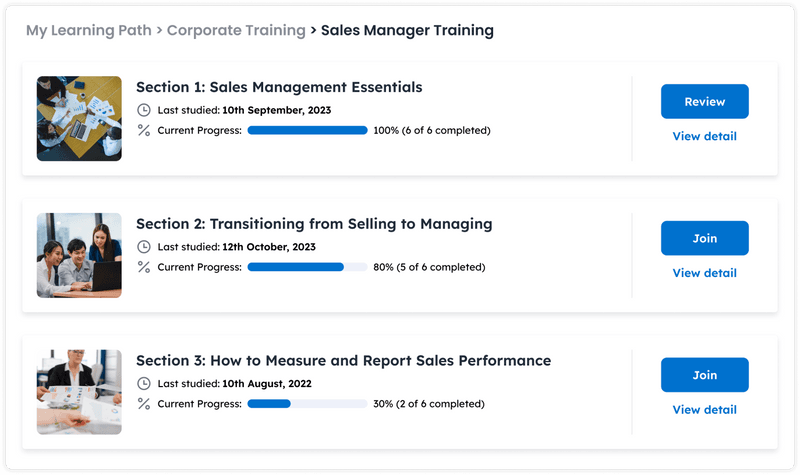
Use your LMS to Give Learners Meaningful Feedback
Feedback in education is multifaceted, involving various strategies and styles. According to Bartol & Martin, "Feedback is the receiver’s basic response to the interpreted message." Feedback is the learner's initial attempt to act on what has been understood. And it’s important to get feedback right, first time.
Meaningful feedback should be motivational, personal, and actionable, as opposed to being discouraging, general, and unspecific.
_**>>\> Read more:**_ **[4 learning analytics that tell your students need support.](https://blog.thelearningos.com/k-12-lms-4-learning-analytics-that-tell-you-your-students-need-support/)**
_**>>\> Read more:**_ **[Benefits of microlearning that teachers love](https://blog.thelearningos.com/benefits-of-microlearning/)**
_**>>\> Read more:**_ **[How can an LMS automate the learning experience](https://blog.thelearningos.com/lms-learning-operation-automation/)**
_**>>\> Read more:**_ **[The benefits of role-play in sales training and how to implement it](https://blog.thelearningos.com/the-benefits-of-role-playing-in-sales-training-and-how-to-implement/)**
## Challenges in E-Learning Environments
Delivering feedback in e-Learning settings presents unique challenges compared to traditional classroom environments.
- Classroom vs. E-Learning: Feedback in classrooms is often direct and verbal, with real-time communication. In contrast, e-Learning typically involves more indirect and written feedback, with passive correspondence.
- Using an LMS for Feedback: An LMS can bridge these gaps by allowing for personalized, motivational feedback that is both timely and frequent, but more often than not, delivering feedback using an LMS, is complicated, time-consuming and much feedback goes undelivered, or unread.
## **4 Feature for Effective Feedback**
There are an abundance of unique features for LearningOS, but 4 of them standout that streamline and optimize your feedback for all kinds of learners.
> "57% of employees prefer receiving constructive feedback over praise, indicating a strong desire for actionable insights that can lead to professional growth and improved performance" - Virtual Speech
### **Gradebook**
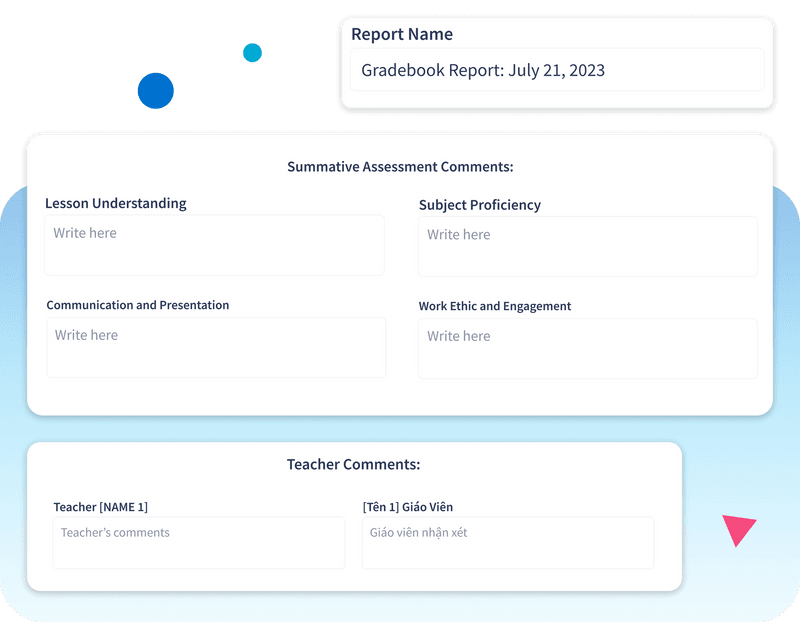
The _Gradebook_ in LearningOS offers a comprehensive view of learner progress and engagement, with features for monitoring attendance, tracking goals, automated and manual scoring of assignments, and allocating reward coins. This tool is crucial for identifying learning gaps and customizing feedback and instructional strategies, thereby enhancing both educational and corporate training effectiveness.
### Session Feedback Cards
These cards document key aspects of each learning session, including the materials covered, class performance, individual contributions, and challenges encountered. This documentation is vital for reflecting on each session and planning future strategies, ensuring feedback is specific and tailored to each learner's needs.
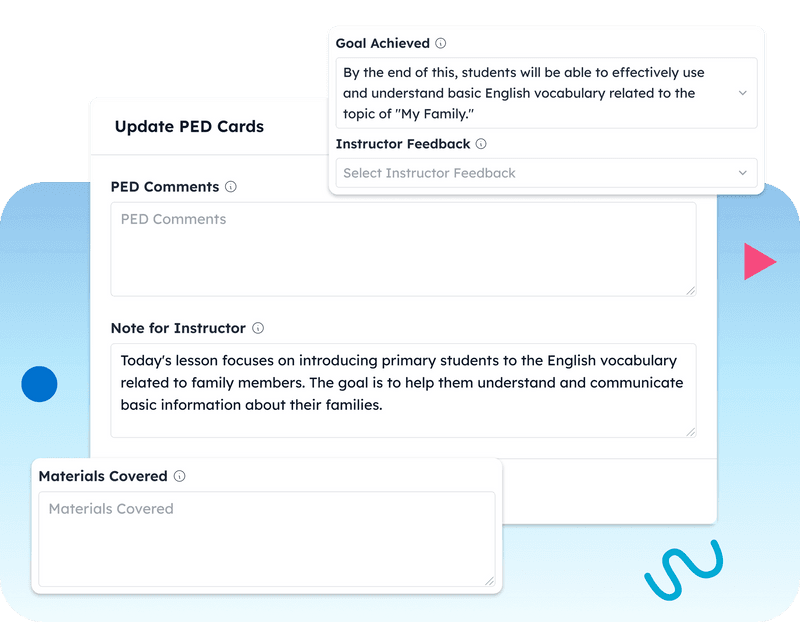
**** Learning Analytics
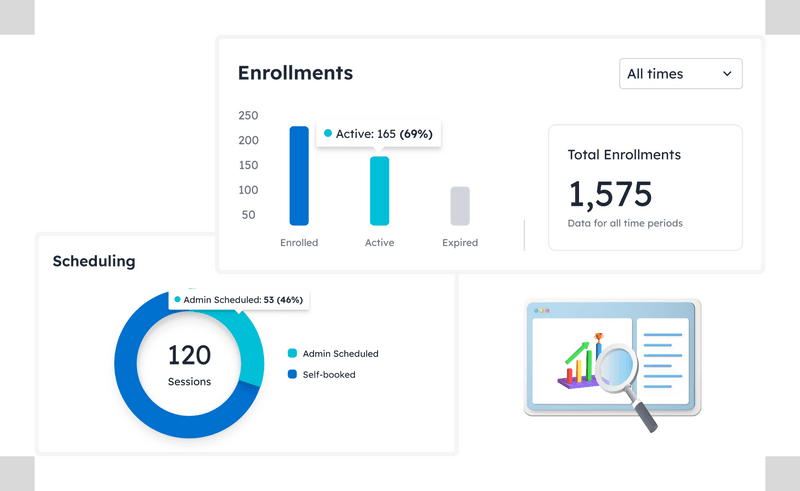
LearningOS provides [precise analytics](https://www.thelearningos.com/platform/learner-portal), allowing educators and trainers to pinpoint [important metrics](https://blog.thelearningos.com/how-to-leverage-lxp-learning-analytics-to-increase-roi/) such as engagement levels and completion rates. This enables the creation of more effective, personalized feedback, improving learner outcomes in various settings.
### Custom Notifications
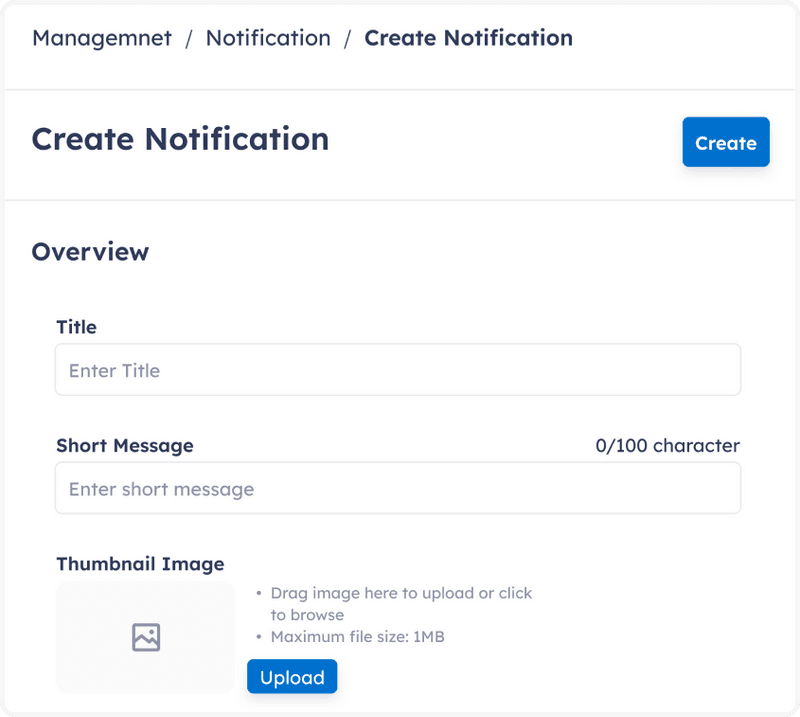
With mobile compatibility, these notifications keep all users—students, instructors, and parents—engaged and informed. They remind students of their responsibilities, alert instructors about updates, and keep parents involved in their child's educational progress.
### Uploading Existing Rubrics

The new feature for uploading existing rubrics allows educators, HR managers, and L&D professionals to integrate their performance rubrics into LearningOS. This feature supports a variety of file types and seamlessly integrates with the system’s content management module. It enables the application of concise rubric frameworks to any mode of eLearning, including interactive videos, enhancing the assessment and feedback process.
## Benefits of Effective Feedback with an Enterprise LMS
1. Enhanced Skills and Knowledge: Directly contributes to skill and knowledge enhancement, crucial for both academic success and professional development.
2. Increased Productivity: By focusing on specific improvement areas, feedback leads to higher productivity, essential for organizational growth.
3. Scaling [Organizational Learning](https://www.thelearningos.com/industries/corporate-training): LearningOS supports the expansion of learning processes within organizations efficiently, crucial for adapting to dynamic market conditions.
4. Driving Business Growth and Innovation: Enhanced productivity and skills foster a high-performance culture that drives business growth and innovation.
## Conclusion
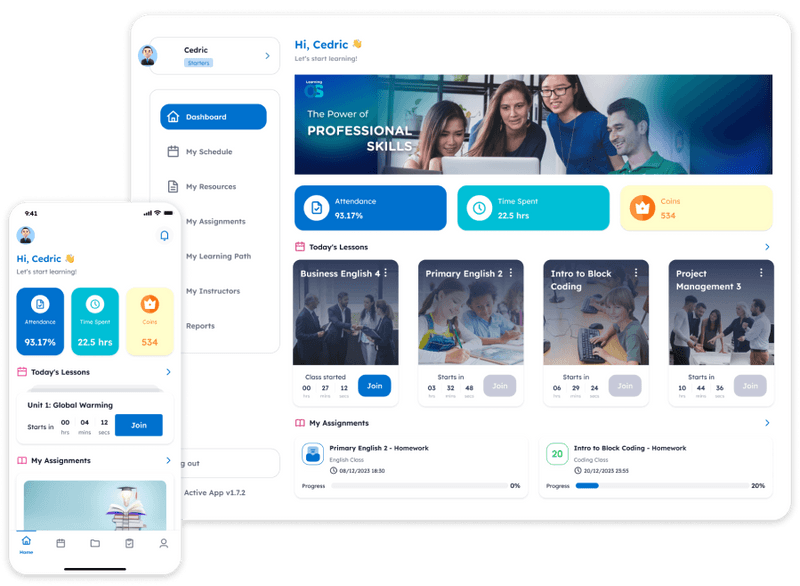
[LearningOS by OOOLAB](https://www.thelearningos.com/solutions/enterprise-lms) significantly enhances the feedback mechanism, making it more effective and impactful across various settings. By integrating tools like Gradebooks and Session Feedback Cards, our [Enterprise LMS](https://blog.thelearningos.com/enterprise-lms-for-growth/) ensures that feedback is not only delivered efficiently but also contributes to continuous learning and improvement in both educational institutions and corporate environments.
FAQ
### What specific strategies does LearningOS recommend for creating personalized feedback?
Admin can use Learning analytics and the Gradebook feature to tailor feedback perfectly for each learner. By analyzing performance and engagement data, instructors can pinpoint exactly where a learner might need a nudge or a nod. Plus, Session Feedback Cards capture individual efforts and hurdles, making feedback not just personalized but genuinely helpful.
### How does LearningOS facilitate feedback in asynchronous learning environments? ****
LearningOS keeps learners in the loop with timely _Custom Notifications_ and mobile-friendly access. Whether it’s a progress update or a gentle reminder, learners can stay on top of their game anytime, anywhere. Also, the platform’s discussion forums and peer feedback tools make learning interactive and engaging, ensuring that everyone stays connected, even from afar.
Give Effective Feedback From The Get-Go!
Use LearningOS for your learning needs.
[Book Intro](https://www.google.com)
---
This blog is powered by Superblog. Visit https://superblog.ai to know more.
---
## How Centers Can Skyrocket Student Success With The Right LMS
Author: Nga Tran
Author URL: https://blog.thelearningos.com/author/nga-tran
Published: 2024-05-07
Category: LMS
Category URL: https://blog.thelearningos.com/category/lms
Meta Title: How Centers Can Skyrocket Student Success With The Right LMS
Meta Description: Discover how enrichment centers can leverage the right LMS to enhance student success, streamline operations, and deliver exceptional educational experiences.
Tags: learning-center/, Enterprise-LMS/, blended-learning/, hybrid-learning/
Tag URLs: learning-center/ (https://blog.thelearningos.com/tag/learning-center), Enterprise-LMS/ (https://blog.thelearningos.com/tag/enterprise-lms), blended-learning/ (https://blog.thelearningos.com/tag/blended-learning), hybrid-learning/ (https://blog.thelearningos.com/tag/hybrid-learning)
URL: https://blog.thelearningos.com/skyrocket-student-success-with-lms-for-enrichment-center
As the desire for contemporary and tailored education increases, staying updated on students' progress and enhancing their learning skills through conventional teaching methods has become challenging. Aligning educators' understanding with that of their students has become increasingly difficult. Despite ongoing attempts to enhance teaching methods, it's impractical to closely monitor each student and provide individualized attention to those in need.

The constraints of traditional teaching methods in meeting these changing expectations have diminished the significance of discovering inventive solutions that connect traditional and contemporary educational approaches. Presently, both parents and students are increasingly searching for an educational setting that provides enriched learning experiences, ongoing progress monitoring, and interactive participation. Within this framework, **[Learning Management Systems (LMSs)](https://www.thelearningos.com/platform/what-is-learning-os)** have surfaced as platforms that empower educational institutions to revolutionize their teaching techniques and adjust to the demands of modern learners. Therefore, with the right LMS implementation, enrichment centers can skyrocket student success.
Contents
- [I. What is LMS for an enrichment center?](#i-what-is-lms-for-an-enrichment-center)
- [1\. Course creation](#1-course-creation)
- [2\. Online assessments](#2-online-assessments)
- [3\. Dashboard](#3-dashboard)
- [4\. Virtual classrooms](#4-virtual-classrooms)
- [II. How can LMS help](#ii-how-can-lms-help)
- [1\. Blended learning](#1-blended-learning)
- [2\. Gamification](#2-gamification)
- [3\. Analytics](#3-analytics)
- [4\. Increasing productivity](#4-increasing-productivity)
- [III. Benefits of utilizing LMS for enrichment centers](#iii-benefits-of-utilizing-lms-for-enrichment-centers)
- [1\. Course availability](#1-course-availability)
- [2\. Communication board](#2-communication-board)
- [3\. Reporting to parents](#3-reporting-to-parents)
- [4\. Performance analytics](#4-performance-analytics)
- [IV. Different types of LMS for education](#iv-different-types-of-lms-for-education)
- [1\. Saas LMS ( Cloud- based)](#1-saas-lms-cloud-based)
- [2\. Installed LMS](#2-installed-lms)
- [3\. Open-source LMS](#3-open-source-lms)
- [4\. Custom-built LMS](#4-custom-built-lms)
- [V. Conclusion](#v-conclusion)
-
## I. **What is LMS for an enrichment center?**
**[A Learning Management System (LMS)](https://www.thelearningos.com/)** is a software utilized by educational institutions to enrich, oversee, and strategize the learning journey for students. It streamlines online learning and allows for measurable progress monitoring. An educational LMS provides a range of features tailored specifically for academic purposes, such as:
Learning Management System is crucial to every enrichment center
### 1\. Course creation
Instructors can create courses by uploading content, timeline and assigning assignments.
### 2\. Online assessments
Instructors can generate numerous online tests and assessments without the need for manual grading. An educational LMS automates the assessment procedure, assigning grades to students automatically.
### 3\. Dashboard
Learning Management Systems (LMSs) offer personalized dashboards for both instructors and students. Students can monitor and analyze their academic development, along with reviewing their performance in particular assessments via their dashboards. Instructors can evaluate their students' progress by utilizing the dashboard.
### 4\. Virtual classrooms
Virtual learning environments empower educators to structure online classrooms and distribute course materials to students. This grants students the flexibility to access course content at their convenience while upholding a collaborative learning atmosphere.
## II. How can LMS help
The importance of LMS is inevitable. Therefore, LMS has become so popular in the education industry. Let's find out how enrichment centers can utilize LMS to enhance student performance and productivity. Here are some examples:
### 1\. Blended learning
Blended learning merges online education with traditional classroom methods, enhancing the overall learning system and providing extra advantages. It boosts student productivity, rendering the learning process more captivating compared to conventional approaches. Additionally, it enables students to engage in online study, offering flexibility and convenience.
_**>>\> Read more: [How can an LMS automate my learning operation](https://blog.thelearningos.com/lms-learning-operation-automation/)**_
**_>>\> Read more: [How can an LMS encourage students to return to the classroom](https://blog.thelearningos.com/how-an-lms-encourages-students-to-go-to-class/)_**
**_>>\> Read more:_ [Self-Paced Learning: Empowering Employees to Upskill at Their Own Speed](https://blog.thelearningos.com/self-paced-learning-empowering-employees-to-upskill/)**
### 2\. Gamification
Gamification is such a great tool to create quizzes, challenges and interactive videos which enhance students engagement and interaction. LearningOS gamification tool helps to customize digital currency as well. Students are able to choose from coins, stars, or gold and allocate upon completion of activities, homework, and assessments.
_**>>\> Read more: [The features and benefits of LMS gamification](https://blog.thelearningos.com/benefits-of-lms-gamification/)**_
### 3\. Analytics
Analytics within Learning Management Systems (LMS) refer to the tools and capabilities that allow educators and administrators to gather, analyze, and interpret data related to student engagement, performance, and learning outcomes.
### 4\. Increasing productivity
Embracing a fresh teaching approach and acquainting oneself with the accompanying software and features can pose challenges. Ensuring the seamless integration of a Learning Management System (LMS) hinges on selecting a platform that is intuitive and user-friendly. The LMS should cater to students across all age groups and be effortless for educators to navigate. Conducting workshops to educate students, parents, and teachers about the LMS's functionalities, advantages, and its role in achieving educational objectives is imperative.
Adhering to these considerations is essential to unlock the full potential of the LMS and foster a conducive educational environment for both instructors and students.
The All-in-One Learning Platform
Automate the day-to-day and inspire effective learning at scale
[Free Demo](https://www.thelearningos.com/book-intro)
## III. Benefits of utilizing LMS for enrichment centers
Here is the list of benefits of LMS that makes LMS different from traditional way of learning and teaching
### 1\. Course availability
In traditional teaching, not all students have access to comprehensive course materials in a centralized location, and neither students nor educators can tailor learning paths on an individual basis. Conversely, with an LMS, you have the flexibility to organize and store content as desired. Through an LMS, students gain access to the entire curriculum in one location, and instructors can customize learning paths for each student individually.
### 2\. Communication board
With Student portal and Instructor portal, an LMS provides both educators and students with a platform for open discussions. Through discussion forums, students can pose questions via chat, which can be answered by the educator and fellow students. These forums are accessible to everyone and can be revisited at any time for reference on the same topic.
### 3\. Reporting to parents
An LMS offers instructors the flexibility to review a student's profile and utilize analytics to assess their performance and identify areas for improvement. Instructors can tailor distinct learning paths for individual students and provide timely performance reports to parents, a task that is nearly unfeasible through traditional teaching methods. Additionally, parents have access to their child's profile, allowing them to monitor their performance whenever they wish.
### 4\. Performance analytics
Tracking the performance of every student poses a challenge for educators. However, an LMS facilitates the identification and support of low-performing students, offering them the chance to enhance their performance.
_**>>\> Read more: [4 learning statistics that tell your students need support](https://blog.thelearningos.com/k-12-lms-4-learning-analytics-that-tell-you-your-students-need-support/)**_
## IV. Different types of LMS for education
### 1\. Saas LMS ( Cloud- based)
Users can effortlessly set up and deploy the SaaS LMS and upload content to prepare it for students. Numerous educational institutions choose SaaS LMSs for their simplicity in usage and administration.
### 2\. Installed LMS
For institutions placing a premium on security, an installed LMS presents an optimal solution. Data can be stored on the institution's server, affording users the option to leverage their current server infrastructure or develop a bespoke LMS tailored to the institution's requirements.
### 3\. Open-source LMS
**[Open-source LMS](https://blog.thelearningos.com/h5p-and-its-application/)** software is freely available for everyone to use. This option is suitable for institutions that want to create a custom LMS without starting from scratch.
### 4\. Custom-built LMS
A bespoke LMS is crafted for educational institutions with significant financial resources and a precise vision of their desired LMS appearance and functionality. It can be created by an internal team or contracted out to a development team.
_**>>\> Read more: [Fast track your enterprise LMS implementation in 12 steps](https://blog.thelearningos.com/enterprise-lms-implementation-in-12-steps/)**_
**Customize and utilize your LMS today**
****
[**Start Now**](https://www.thelearningos.com/book-intro)
V. Conclusion
This article explores the impact of Learning Management Systems (LMSs) on reshaping education, highlighting their capacity to improve learning experiences and results. It outlines the advantages of integrating an LMS in educational settings, such as easy access to course materials, fostering collaborative learning via discussion forums, efficient communication with parents, and utilizing performance analytics to monitor individual progress.
**About us**
At OOOLAB (pronounced 'uːlæb'), our mission is to make complex learning operations simple. We aim to positively impact the lives of over 1,000,000 learners and educators by the end of 2026.
OOOLAB's LearningOS provides educational institutions and corporate enterprises with an all-in-one solution to create and deliver engaging learning experiences.
Reach out to us at: [**Linkedin**](https://www.linkedin.com/company/ooolab/?viewAsMember=true) **,** [**FaceBook**](https://www.facebook.com/ooolab.edu)
###
---
This blog is powered by Superblog. Visit https://superblog.ai to know more.
---
## Which LMS boosts student performance best in 2024?
Author: Nga Tran
Author URL: https://blog.thelearningos.com/author/nga-tran
Published: 2024-04-29
Category: LMS
Category URL: https://blog.thelearningos.com/category/lms
Meta Title: Which LMS boosts student performance best in 2024?
Meta Description: which LMS reigns supreme in boosting student performance in 2024? In this exploration, we will dive into the intricacies of Canvas, Blackboard, and LearningOS
Tags: learningos/, Enterprise-LMS/, Student-performance,, corporate-training/
Tag URLs: learningos/ (https://blog.thelearningos.com/tag/learningos), Enterprise-LMS/ (https://blog.thelearningos.com/tag/enterprise-lms), Student-performance, (https://blog.thelearningos.com/tag/student-performance), corporate-training/ (https://blog.thelearningos.com/tag/corporate-training)
URL: https://blog.thelearningos.com/lms-for-student-performance-boosting-in-2024
In the ever-evolving landscape of education technology, the **Learning Management System (LMS)** plays a pivotal role in shaping the learning experience for students worldwide. As we step into 2024, the quest for the ideal LMS intensifies, with educators and institutions seeking platforms that not only facilitate seamless course delivery but also enhance student performance.

Canvas, Blackboard, and LearningOS - three giants in the realm of LMS, each vying for the title of the ultimate catalyst for academic success. With their array of features, user-friendly interfaces, and promise of innovative pedagogical tools, these platforms have revolutionized the way education is delivered and consumed. However amidst the competition, the burning question remains: which LMS reigns supreme in boosting student performance in 2024? In this comprehensive exploration, we will dive into the intricacies of Canvas, Blackboard, and LearningOS, dissecting their features and the unique value propositions they bring to the table.
## I. Product Overview
### 1\. Blackboard
Blackboard is a commonly-used Learning Management System (LMS) which has been a cornerstone of digital education for decades. At its core, Blackboard serves as a centralized hub where educators can create, manage, and deliver course content to students, fostering an interactive and engaging experience. From posting assignments and announcements to facilitating discussions and administering assessments, Blackboard offers a plethora of functionalities designed to streamline the educational process.
Blackboard Learn is tailored to 4 different markets: K-12, higher education, business and government. Blackboard Learn offers the same features to 4 markets which includes assignments/testing, discussion boards, messaging systems, user learning profile and virtual classrooms.
### 2\. Canvas
Canvas, an innovative Learning Management System (LMS) created in 2011, stands as a beacon of modernity in the realm of digital education. Developed by Instructors, Canvas has swiftly risen to prominence, captivating educators and students alike with its intuitive interface, robust features, and commitment to enhancing the learning experience.
With the focus on K-12 and higher education, one of Canvas's standout features is its emphasis on communication and collaboration. Through built-in tools such as discussion boards, messaging systems, and collaborative documents, Canvas fosters meaningful interactions between students and instructors, cultivating a sense of community and engagement within the virtual classroom.
### 3\. LearningOS
[LearningOS](https://www.thelearningos.com/platform/what-is-learning-os), crafted by [OOOLAB](https://www.thelearningos.com/ooolab), is a comprehensive platform tailored by educators for educators, specifically addressing the needs of enrichment organizations. It provides a trio of invaluable services: Content Management System (CMS), Learning Management System (LMS), and Virtual Learning Environment (VLE), all aimed at optimizing learning operations within organizations.
With a suite of exceptional tools including Content Authoring, Scheduling and Booking, and Personalized Pathway, LearningOS has garnered the trust of numerous educators, learners, and organizations alike. It stands as a trusted ally for streamlining learning processes and enhancing educational experiences.
## II. What are the main differences amongst Blackboard, Canvas and LearningOS
Let's go over some of the main features of these 3 LMS and see how each of them differentiate from others.
### 1\. Reporting and Analytics
**Blackboard**
Apart from Blackboard Analytics, which enables both administrators and learners to gauge their performance in a particular class or program, there are two additional solutions geared towards aiding higher education institutions in tracking various metrics such as enrollment, financial aid, and accreditation. These solutions include Blackboard Intelligence, which serves as a business intelligence tool, and Blackboard Assessment and Accreditation.
**Canvas**
Canvas LMS has introduced a fresh feature named New Analytics through LTI, enabling educators to monitor course grades, weekly engagement rates, and attendance through visual graphs or data tables. For more sophisticated functionalities, Instructor's Elevate K-12 Analytics (formerly known as Videri) software amalgamates real-time data from various sources such as School Information Systems (SIS), learning management systems, and attendance records into a unified platform.
**LearningOS**
LearningOS offers a comprehensive range of analytics tailored for online and hybrid learning, including widely-used metrics. Additionally, we provide the option for custom learning analytics for an extra cost. Student users can view analytics pertinent to their learning progress, while administrators enjoy access to supplementary analytics. Reports are promptly updated on our cloud-based LMS platform. Furthermore, all analytics data can be easily downloaded in a .csv file format, containing user data for all LearningOS users.
Learning analytics help instructors and students keep track of progress
**Bottom Line**
Although all three LMS offer similar analytic features, LearningOS and Blackboard allow learners to measure their course performance while Canvas does not
_**>>\> Read more: [K-12 LMS: 4 Learning Analytics that tell you your students need support](https://blog.thelearningos.com/k-12-lms-4-learning-analytics-that-tell-you-your-students-need-support/)**_
_**>>\> Read more: [Self-Paced Learning: Empowering Employees to Upskill at Their Own Speed](https://blog.thelearningos.com/self-paced-learning-empowering-employees-to-upskill/)**_
### 2\. eLearning
**Blackboard**
Engaging in eLearning via Blackboard entails accessing educational content, participating in discussions, submitting assignments, and interacting with instructors and peers through the Blackboard platform. This digital learning environment facilitates remote learning by providing a central hub where course materials, resources, and communication tools are easily accessible.
eLearning is becoming popular nowadays
Students enrolled in eLearning courses on Blackboard can navigate through their courses, access multimedia content, and complete assignments at their own pace. They can engage in discussions with classmates and instructors through forums and messaging features, fostering collaboration and interaction despite physical distance.
**Canvas**
Engaging in eLearning through Canvas offers students and instructors a dynamic and intuitive platform for remote education. Within Canvas, students have access to course materials, assignments, discussions, and collaboration tools, all organized in a user-friendly interface.
Students participating in eLearning on Canvas can easily navigate through their courses, access multimedia content such as videos and presentations, and interact with their peers and instructors through discussion boards and messaging features. Canvas facilitates asynchronous learning, allowing students to engage with course materials and complete assignments at their own pace while still fostering communication and collaboration.
**LearningOS**
LearningOS provides robust eLearning resources designed to create engaging and tailored learning environments. Notably, it boasts a potent content authoring feature, **[H5P Course Creator](https://h5p.org/)**, seamlessly integrated into the platform. With this tool, users can incorporate interactive content directly into their courses, offering a wide array of interactive elements, activity options, assessments, and content management capabilities.
Students engaged in eLearning by LearningOS can effortlessly explore their courses, accessing a variety of multimedia resources like videos and presentations. They can also communicate with peers and instructors using discussion boards and messaging tools. LearningOS supports different learning styles, including asynchronous, blended, and self-paced learning, enabling students to interact with course materials and finish assignments at their convenience while still promoting communication and collaboration.
_**>>\> Read more: [What is H5P and How can it help YOU](https://blog.thelearningos.com/h5p-and-its-application/)**_
**_>>\> Read more: [Transforming Apollo English's learning experience for over 30,000 learners with eLearning](https://blog.thelearningos.com/apollo-english-case-study/)_**
**Bottom Line**
All these three LMS have tools to support eLearning. Nowadays, eLearning plays an important role in the education industry. Therefore, LMS implementation is the backbone of any educational institution.
### **3\. Content Digitization**
**Blackboard**
Blackboard excels in digitizing and managing educational content, providing a comprehensive platform for instructors to create, organize, and deliver course materials in a digital format. Through Blackboard, instructors can upload various types of content such as documents, presentations, videos, and multimedia resources, making them easily accessible to students.
**Canvas**
In Canvas, instructors can easily upload various types of content, including documents, presentations, videos, and multimedia resources, making them accessible to students from anywhere with an internet connection. The platform offers intuitive tools for organizing content, allowing instructors to structure courses into modules, units, or topics for efficient navigation.
**LearningOS**
LearningOS aids in converting learning materials into digital formats, enhancing accessibility and improving the learning experience for students. It particularly focuses on digitizing content for **[enrichment](https://blog.thelearningos.com/enrichment-centers-white-label-their-lms/)** and corporate training purposes. By transforming non-interactive resources into engaging content, LearningOS revitalizes learning materials. Moreover, it centralizes all physical resources for streamlined access and breathes new life into corporate training initiatives.
**Bottom Line**
All these LMS allow educators to upload content digitally. However, LearningOS specifically focuses on digitizing content for enrichment and corporates.
**Freshen up your content, let's talk about digitizing your sources**
[Learn More](https://www.thelearningos.com/services/content-digitization)
### 4\. Automation
**Blackboard**
Blackboard Learn offers various automation features to streamline administrative tasks and enhance the teaching and learning experience. Here are some common automation features found in Blackboard Learn such as Course Copy and Templates, Adaptive Release, Assignment and Test Developments, Grading Rubrics, Discussion Board Management,...
Automation gives instructors and learners more freedom
**Canvas**
Canvas offers several automation features to streamline administrative tasks and improve the teaching and learning experience. Here are some key automation features available in Canvas LMS such as: Scheduler, Module Requirements and Prerequisites, Quiz and Assessment Setting, and Integration with External Tools,...
**LearningOS**
LearningOS leverages automation solutions to streamline learning operations for management, administrators, and instructors.
- Through cloud-based content management, teams can collaboratively upload, organize, and oversee content.
- The platform also empowers educators with proactive teaching methods through content delivery features.
- Scheduling and Booking tools simplify class and schedule management for administrators and instructors.
- Content Authoring is facilitated through the integration of H5P, enabling swift and effortless content creation without the need for coding.
By automating various processes, LearningOS reduces time and expenses, unlocks potential revenue streams, and elevates user engagement and retention.
_**>>\> Read more: [How can an LMS help automate my learning operations?](https://blog.thelearningos.com/lms-learning-operation-automation/)**_
**Bottom Line**
LearningOS surpasses the other two LMSs by excelling in cloud-based content management and incorporating H5P integration, while all of them provide automation tools for easing administrative tasks.
The All-in-One Learning Platform
Automate the day-to-day and inspire effective learning at scale
[Free Demo](https://www.thelearningos.com/book-intro)
### 5\. Gamification
**Blackboard**
Blackboard Learn, like many learning management systems, supports gamification features to enhance student engagement and motivation. While Blackboard Learn does not have built-in gamification features as robust as some other platforms, instructors can still incorporate gamification elements into their courses using various tools and techniques. Here are some ways gamification can be implemented in Blackboard Learn: Badges and Achievements, Leaderboards, Points and Rewards, Quests or Missions, …..
**Canvas**
Canvas LMS provides several options for incorporating gamification elements into courses to enhance student engagement and motivation. Here are some ways gamification can be implemented in Canvas: Badges and Certificates, Points and Leaderboards, Mastery Paths, Collaborative Activities, Progress Tracking, Assignments,....
**LearningOS**
Gamification within LearningOS encompasses diverse content formats, ranging from quizzes and challenges to interactive videos, and it enables the integration of third-party tools.
In addition to standard automation functions found in other LMS platforms, LearningOS introduces customizable digital currency. Users have the flexibility to select from various options like coins, stars, or gold, which they can allocate upon finishing tasks, homework, or assessments. Administrators have the capability to establish a reward shop where students can utilize their earned currency. This shop can be stocked with educational resources or corporate merchandise. These two standout automation capabilities distinguish LearningOS from other LMS offerings.
**Bottom Line**
Within these three LMSs, gamification is implemented. LearningOS introduces unique features like customizable digital currency and a reward shop, which are relatively unexplored by many developers in this field.
_**>>\> Read more: [The Benefits and awesome features of LMS gamification](https://blog.thelearningos.com/benefits-of-lms-gamification/)**_
## III. Conclusion
Below, you'll find a comparison of Blackboard, Canvas, and LearningOS. We hope this overview assists you in selecting the optimal LMS to suit your requirements. As we enter 2024, the importance of digitally revolutionizing teaching and learning cannot be overstated. The advantages it brings are numerous, benefiting learners, educators, and even the business aspects involved.
If you find this article helpful, please explore additional content on our [OOOBlog](https://blog.thelearningos.com/)
\-\-\---------------------
## **About us**
At OOOLAB (pronounced 'uːlæb'), our mission is to make complex learning operations simple. We aim to positively impact the lives of over 1,000,000 learners and educators by the end of 2026.
OOOLAB's LearningOS provides educational institutions and corporate enterprises with an all-in-one solution to create and deliver engaging learning experiences.
Reach out to us at: [**Linkedin**](https://www.linkedin.com/company/ooolab/?viewAsMember=true), [**FaceBook**](https://www.facebook.com/ooolab.edu)
### ****
##
---
This blog is powered by Superblog. Visit https://superblog.ai to know more.
---
## xAPI: A Data-Driven Approach for High-Impact Enterprise LMS Learning
Author: Nga Tran
Author URL: https://blog.thelearningos.com/author/nga-tran
Published: 2024-04-12
Category: LMS
Category URL: https://blog.thelearningos.com/category/lms
Meta Title: xAPI: A Data-Driven Approach for High-Impact Enterprise LMS Learning
Meta Description: Imagine effortlessly tracking the who, what, when, and where of your learners' progress... That’s what xAPI can do, but it’s an underutilized tool in education.
Tags: personalized-learning/, Enterprise-LMS/, xAPI/
Tag URLs: personalized-learning/ (https://blog.thelearningos.com/tag/personalized-learning), Enterprise-LMS/ (https://blog.thelearningos.com/tag/enterprise-lms), xAPI/ (https://blog.thelearningos.com/tag/xapi)
URL: https://blog.thelearningos.com/xapi-for-enterprise-lms-learning
## xAPI: A Data-Driven Approach for High-Impact Enterprise LMS Learning
Imagine effortlessly tracking the who, what, when, and where of your learners' progress...
That’s what xAPI can do, but it’s an underutilized tool in education.
SCORM has long been the standard for eLearning, however it's limited to tracking courses within a Learning Management System (LMS). In contrast, xAPI is a flexible framework that recognizes learning can happen anytime, anywhere, and on any device.
With the emergence of enhanced data analysis with AI, xAPI's role within LMS ecosystems is back in the spotlight. Its granular way of recording precise data is enabling educational enterprises to improve instructional design, optimize delivery, and boost learning outcomes more efficiently.
Let’s take a look at this versatile tool.
## How does xAPI work?
Experience API (xAPI) formerly known as Tin Can API is an eLearning standard that captures information about learning experiences in virtual learning environments.
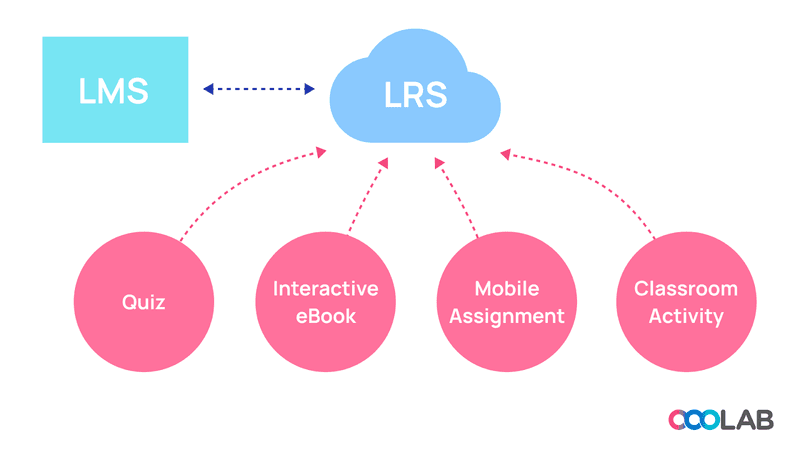
This information is collected in the form of xAPI statements which allow us to learn exactly who did something and what they did. These simple statements consist of three key components: the actor (usually the learner), the verb (the action taken), and the object (the activity or experience). [Learning platforms with xAPI capabilities](https://blog.thelearningos.com/enterprise-lms-for-growth/) have a built-in or third-party Learning Record Store (LRS), which captures these statements about learning experiences when they occur.
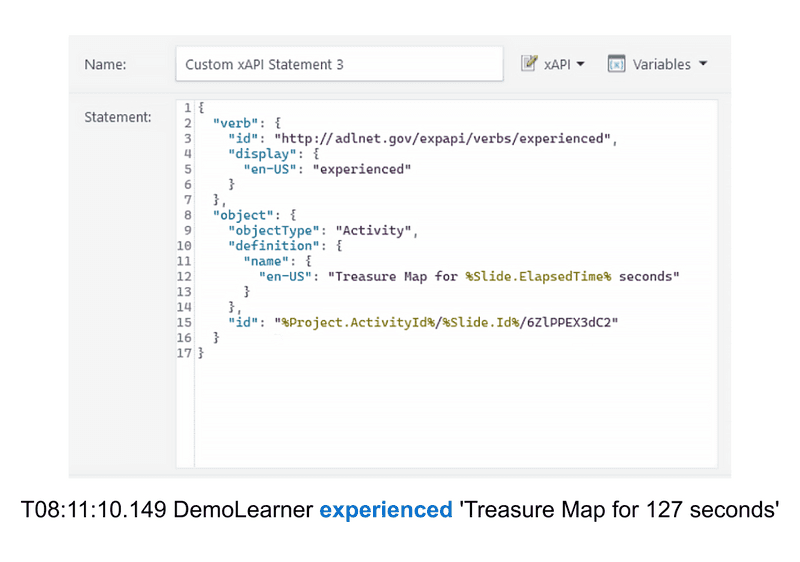
Popular content authoring tool [Articulate Storyline](https://www.articulate.com/360/storyline/), among others, allows eLearning developers to generate xAPI statements.
The example above captures the "actor" (in this case it’s a default ID from storyline), the "verb" experienced (the action the learner took), and the "object" which is the activity named Treasure Map – a learning resource. The statement suggests the learner engaged with the activity leading educators to presume the learner is ready for that particular class tomorrow.
Over time, this steady flow of information paints a bigger picture of personal learning journeys. It opens the door for tracking and analysis beyond what a traditional LMS and SCORM can do.
### What are some practical uses of xAPI data collection?
Whether you’re an educational or [corporate enterprise](https://www.thelearningos.com/industries/corporate-training), you can use your LMS to compile neat sets of xAPI statements. And organizations can collect data points from different types of sources, not just from eLearning modules. It could be external videos, supplementary reading materials (like PDFs or interactive eBooks), or third-party games (assuming they've been set up to send xAPI statements).
xAPI aggregates data for each individual learner, creating personalized datasets.
Aggregating this kind of data in the LRS means educational and corporate organizations can monitor progress, engagement levels, and areas where learners may need additional support.
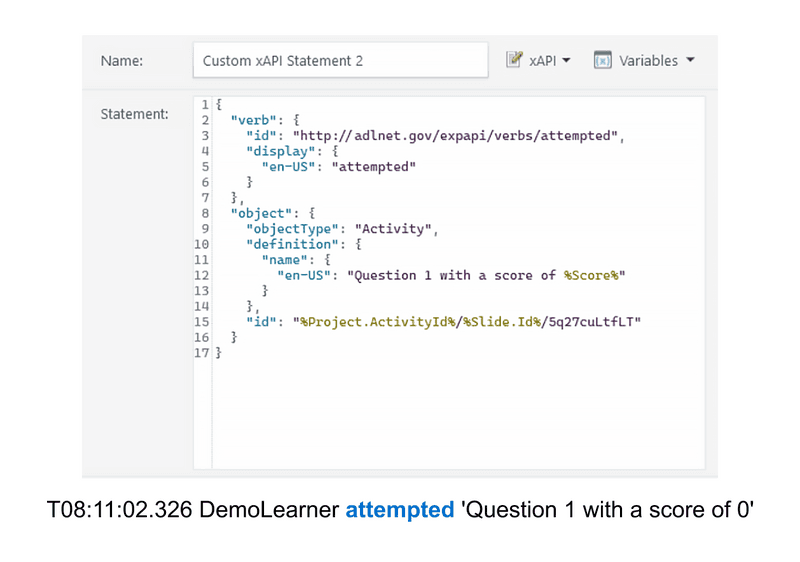
In the example above, the data shows how the learner attempted an activity. If the LMS had a condition where the activity wasn't completed after multiple attempts, you could configure your LMS to trigger a notification. This would allow educators or administrators to proactively reach out.
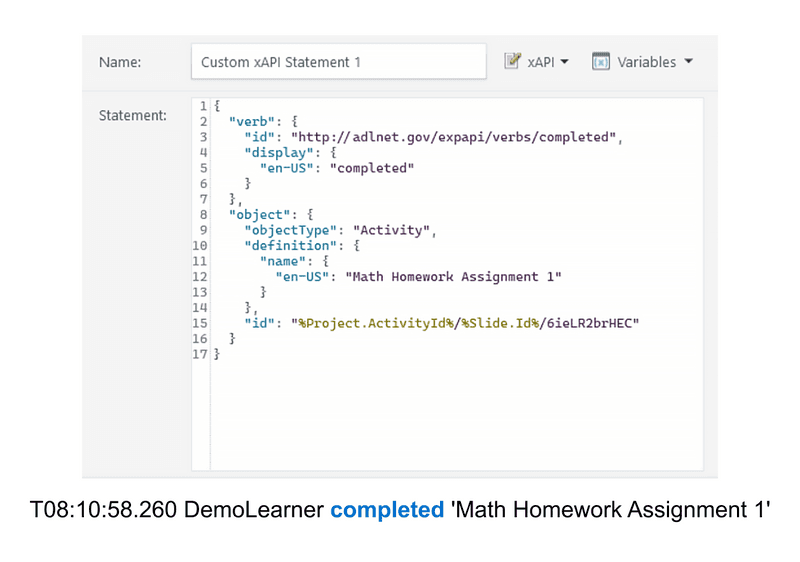
Having received additional support, the learner went on to complete the Math Assignment.
Statements about learning can be tracked across third-party (xAPI optimized) platforms and this data helps feed the intuitive nature of educators in classrooms and workplaces. The information provides a practical context and offers impactful opportunities for performance analysis, evaluation, and intervention.
### How can I use xAPI data to improve overall learning outcomes?
Organizations thrive when they use xAPI data to identify patterns and trends in group behavior. By collecting data on a wide range of learning experiences educators and corporate trainers can [improve learning outcomes](https://blog.thelearningos.com/how-to-leverage-lxp-learning-analytics-to-increase-roi/) across the board.
To improve overall completion rates educators might use xAPI data to see which module has the highest average completion time. Companies can then ask their instructional design team to revise that particular module so learners can work through it more proficiently.
One particularly valuable insight allows administrators to monitor how frequently employees access learning resources and support tools while performing routine tasks. xAPI statements can be customized to link learning resources to specific tasks and include data on the frequency and timing of resource access. Frequent use of support resources during routine tasks may indicate knowledge gaps that additional training could address to improve proficiency.
xAPI empowers all industries to continuously improve learning programs and outcomes based on high-impact insights.
### Can I create my own xAPI optimized content?
Most eLearning authoring tools allow organizations to create content that supports xAPI statements, making it easier to track learner interactions. Authors can create custom statements and embed them within the content. Content developers can also embed statements in content with more complex interactivity such as immersive XR environments, iframes, or digital twins.
### How can educators use xAPI for live teaching and training sessions?
Another benefit of xAPI is that it allows educators in any setting to track learner interactions in real-time. For example, during a live corporate training session, the instructor can have employees interact with xAPI-enabled content, like polls, interactive videos, and web resources. As learners engage with the content, the instructor can access their xAPI statements on a real-time dashboard. Here we are able to see custom-built visualizations for the data such as graphs and diagrams.
The advantage here is that, by monitoring real-time data, the instructor can gauge learner understanding, identify areas of confusion, and adjust their teaching approach immediately. For example, if data shows learners are spending too much time working through a specific concept, it gives the instructor a chance to intervene and provide additional explanation. Or, if certain support resources are frequently accessed, the instructor can prioritize those points in more depth.
This real-time responsive approach takes delivering live or online classes to another level and allows educators to get the most out of their sessions.
### What is the future of xAPI, now that AI is here?
AI is well suited to analyzing performance data and has an intricate knowledge of existing learning frameworks. xAPI's data could provide a solid basis for incorporating an AI strategy into an organization’s learning operations. Ideally it would be able to identify problematic patterns in large cohorts of students with little to no prompting.
It could potentially help educators give more targeted feedback and pave the way for a more powerful adaptive learning approach. Will the onset of AI make xAPI data increasingly important? Only time will tell.
### What’s next for educators?
There is a growing demand for [robust educational technology](https://www.thelearningos.com/) that supports data-driven learning experiences. LMS systems with xAPI functionality enrich the system's capabilities by tracking diverse learning experiences and centralizing data. By moving beyond the limitations of SCORM, [educators can create more responsive, intuitive, and impactful teaching and learning experiences.](https://www.thelearningos.com/platform/content-authoring-tools)
With xAPI data, educators can validate their instructional strategies and make data-driven decisions to improve learning outcomes.
---
This blog is powered by Superblog. Visit https://superblog.ai to know more.
---
## Fast Track your Enterprise LMS Implementation (In 12 Steps)
Author: Nga Tran
Author URL: https://blog.thelearningos.com/author/nga-tran
Published: 2024-04-04
Category: LMS
Category URL: https://blog.thelearningos.com/category/lms
Meta Title: Fast Track your Enterprise LMS Implementation (In 12 Steps)
Meta Description: Choosing and implementing the right Enterprise LMS is a significant challenge faced by organizations across the globe. Here are 12 steps to implement your LMS
Tags: learningos/, corporate-elearning/, saas/, Enterprise-LMS/, custom-made-courses/
Tag URLs: learningos/ (https://blog.thelearningos.com/tag/learningos), corporate-elearning/ (https://blog.thelearningos.com/tag/corporate-elearning), saas/ (https://blog.thelearningos.com/tag/saas), Enterprise-LMS/ (https://blog.thelearningos.com/tag/enterprise-lms), custom-made-courses/ (https://blog.thelearningos.com/tag/custom-made-courses)
URL: https://blog.thelearningos.com/enterprise-lms-implementation-in-12-steps
## Fast Track your [Enterprise LMS](https://blog.thelearningos.com/enterprise-lms-for-growth/) Implementation (In 12 Steps)
...with OOOLAB
Choosing and implementing the right Enterprise LMS is a significant challenge faced by organizations across the globe.
It's a decision you've really got to think through...
This guide is designed to simplify your Enterprise LMS implementation process and ensure a smooth transition for all departments.
Let's get started...
## The Planning Phase: Define Your Project
### Step 1: Identify Your Enterprises Goals and Objectives
In this step you’ll need to assess your organization's learning needs and objectives. Determine your target industry and research the common pain points with traditional LMS implementation.
Identify your main objectives for implementing an _Enterprise LMS_:
🮖 Centralize content authoring and management.
🮖 Reduce training costs by filtering out ineffective training and employees.
🮖 Increase revenue by sourcing top talent and investing in high-performing individuals.
🮖 Launch new educational products to increase revenues.
🮖 Automate delivery of content.
🮖 Increase engagement and knowledge retention.
🮖 Other
( _Write Down_) \_\_\_\_\_\_\_\_\_\_\_\_\_\_\_\_\_\_\_\_\_\_\_\_\_\_\_\_\_\_\_\_
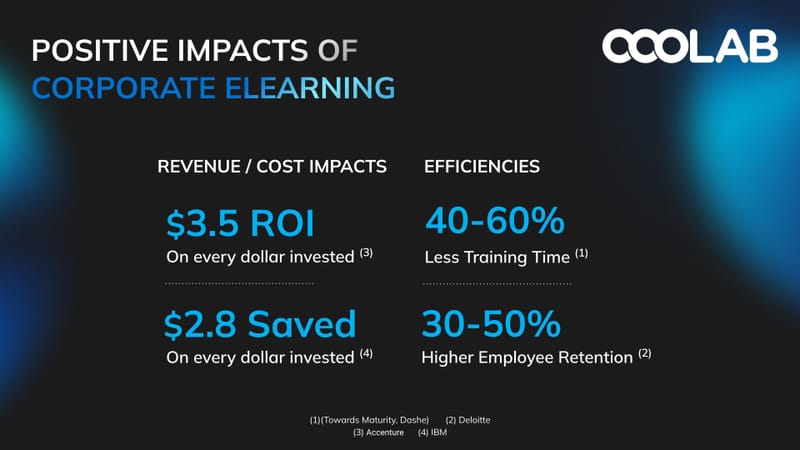
Corporate eLearning Stats
Step 2: Prioritize Your Requirements and Rank Features and Functionalities
This step ensures that critical needs are addressed first and helps make informed decisions when selecting an Enterprise LMS.
🮖 Note down specific requirements your Enterprise LMS must have to meet your organization's goals.
_i.e must be mobile compatible since most users will learn on mobile devices._
\\_\\_\\_\_\_\_\_\_\_\_\_\_\_\_\_\_\_\_\_\_\_\_\_\_\_\_\_\_\_\_\_\_\_\_\_\_\_\_\_\_\_\_\_\_\_\_\_\_\_\_\_\_\_\_\_\_\_\_\_\_\_\_\_\_\_\_\_\_\_\_\_\_\_\_\_\_\_\_\_\_\_\_
\\_\\_\\_\_\_\_\_\_\_\_\_\_\_\_\_\_\_\_\_\_\_\_\_\_\_\_\_\_\_\_\_\_\_\_\_\_\_\_\_\_\_\_\_\_\_\_\_\_\_\_\_\_\_\_\_\_\_\_\_\_\_\_\_\_\_\_\_\_\_\_\_\_\_\_\_\_\_\_\_\_\_\_
Now list any features and functionalities you perceive an LMS should have to meet these requirements:
_i.e Content Authoring Tools_
(1) \_\_\_\_\_\_\_\_\_\_\_\_\_\_\_\_\_\_\_\_
\\_\\_\\_\_\_\_\_\_\_\_\_\_\_\_\_\_\_\_\_\_\_\_\_
\\_\\_\\_\_\_\_\_\_\_\_\_\_\_\_\_\_\_\_\_\_\_\_\_
\\_\\_\\_\_\_\_\_\_\_\_\_\_\_\_\_\_\_\_\_\_\_\_\_
\\_\\_\\_\_\_\_\_\_\_\_\_\_\_\_\_\_\_\_\_\_\_\_\_
Now number them based on their perceived importance and their potential impact on your overall goals.
**Top Tip:** Take into account the viewpoints and insights from stakeholders and department leaders.
### Step 3: Align your Business Case with the Goals of the Organization
🮖 Schedule a meeting with stakeholders and discuss the positive impact the new LMS will have on your current learning operations.
🮖 Present an LMS case study similar to one in your industry and demonstrate how the LMS has transformed their operations.
**Top Tip:** Demonstrate [real examples of ROI](https://blog.thelearningos.com/how-to-leverage-lxp-learning-analytics-to-increase-roi/) to get buy-in from business partners.
Step 4: Choose an LMS
🮖 Create a shortlist of different LMS platforms that can meet your organization's goals and stakeholder requirements.
Consider:
\- A user-friendly design with [gamification](https://blog.thelearningos.com/benefits-of-lms-gamification/) elements to encourage learner engagement and adoption.
\- Scalability to accommodate growth and evolving needs.
\- Compatibility with existing systems like HR software and CRMs.
\- Data security and compliance with relevant laws and industry standards.
🮖 Choose an [LMS provider](https://elearningindustry.com/directory/elearning-software/learningos) and contact them.
**Top Tip:** Pick a software provider (Saas) with proven experience. They'll better understand and meet your needs and offer a smooth implementation.
## The Build Phase: Make Decisions for Specific Processes and People
**Warning!** This phase is complex and time-consuming, but remember you're not alone. LMS specialists are always available to offer advice for every step.
### ** Step 5: Put Together an Implementation Team**
OOOLAB's CEOs at Google Accelerator
🮖 Form a dedicated implementation team with stakeholders from IT, HR, and L&D.
🮖 Identify and define roles and responsibilities for each person on the team. Some roles include project lead (e.g. Head of L\\&D), communication coordinator, or learning experience manager.
### Step 6: Set Time Frames
🮖 Develop a comprehensive launch plan with timelines, milestones, and responsibilities
🮖 Talk to a provider about setting realistic time frames. Discuss factors that may affect deadlines such as the number of custom integrations, tailored functionality, and in-house content curation.
**Top Tip:** LMS implementation can take anywhere from 1-12 months. Choose an LMS that has an easy learning curve for everyone involved.
### Step 7: Content Development
🮖 Audit existing content and resources for compatibility with SCORM, XAPI, AICC, and LTI.
**Choose 1:**
🮖 Make a plan to build a curriculum from scratch using content authoring tools.
**_OR_**
🮖 Make a deal with a [content developer](https://www.thelearningos.com/services/custom-course-development) for new dynamic content suitable for live classes, online classes, or self-study eLearning courses.
**Top Tip:** Reduce licensing expenses and save time with OOOLAB's interactive curriculum development services.
### Step 8: Migration, Integration and Customization
By completing this step, organizations can ensure their Enterprise LMS serves as an [all-in-one solution](https://www.thelearningos.com/platform/what-is-learning-os) that integrates seamlessly with their existing infrastructure.
🮖 Migrate all your existing content on your new CMS (Content Management System).
🮖 Integrate your LMS with other systems, such as your CRM, ERP, or HRIS.
🮖 [Customize](https://www.thelearningos.com/platform/white-labeling-and-branding) the look and feel to match your organization's branding
🮖 Set up user roles and permissions to control access to features and content.
## The Launch Phase: Analyze and Evaluate your New LMS
### Step 9: Testing and Quality Assurance
Nominate employees to test-drive the Enterprise LMS. Ensure all features and functionalities work as intended.
🮖 Test for compatibility across different devices, browsers, and operating systems.
🮖 Identify and fix any bugs, glitches, or usability issues.
**Top Tip:** The IT experts from your provider will help guide you through this step.
### Step 10: User Training
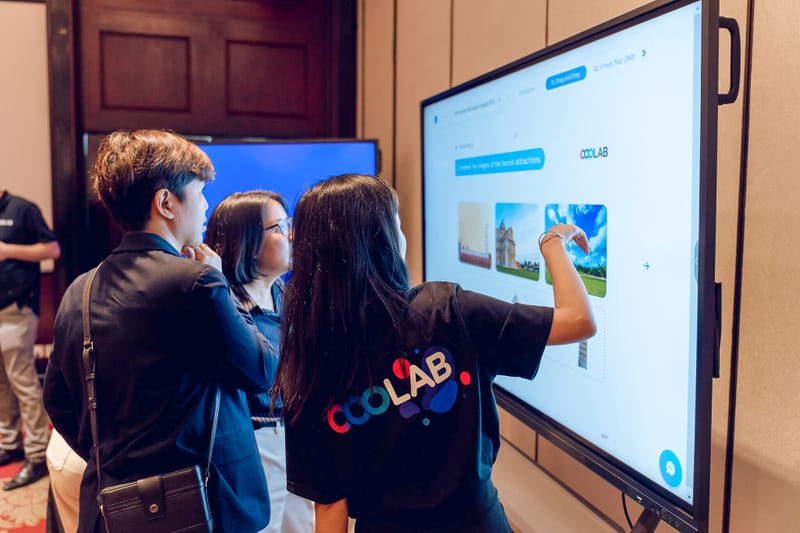
**Don’t skip** this section because it is essential for ensuring that administrators, instructors, and learners can effectively utilize all the features and functionalities of the Enterprise LMS, maximizing the return on investment and achieving the organization's learning objectives.
🮖 Provide comprehensive training to administrators, instructors, and learners on how to use the LMS effectively.
**Top Tip:** Offer tutorials, guides, and support resources to help users navigate the system.
### Step 11: Build Momentum for your Launch
🮖 Promote the launch of your new LMS.
Discuss what you hope to achieve on social media channels like [LinkedIn](https://www.linkedin.com/company/ooolab/mycompany/?viewAsMember=true), showcasing how the Enterprise LMS will enhance [employee skills](https://vir.com.vn/ooolab-highlights-urgent-need-for-upskilling-109805.html), drive business growth, and create a culture of continuous learning.
### Step 12: Monitoring, Maintenance and Improvement
🮖 Set-up regular check-ins with your software provider.
🮖 Get regular feedback from users, administrators, and departments leaders.
🮖 Track learning outcomes, celebrate achievements, and identify the impact of the LMS on your overall goals and objectives.
**Top Tip:** Set up a feedback channel on your workspace so that users, instructors, and department leaders can adjust learning programs accordingly.
I know your enterprise really wants to fast-track all areas of your Enterprise LMS implementation and deployment...
**...but there's 1 more step.**
🮖 Get in touch with an [OOOLAB](https://www.thelearningos.com/ooolab)
**Tailored Onboarding and Founder-Led Support**
OOOLAB's technology supports 120,000 users globally, yet we provide a personalized implementation experience. Our CEOs and business development team work directly with you to understand your specific needs, ensuring our product perfectly fits your organization and employees.
OOOLAB Team - Vietnam Office
[LearningOS](https://www.thelearningos.com/) is a scalable Enterprise LMS solution that automates day-to-day tasks and enables you to build and deliver effective training programs that inspire and drive growth.
Transition to LearningOS, on your schedule, one ‘✔’ at a time.
Get a learning platform that scales!
[Book Intro](https://www.thelearningos.com/book-intro)
FAQ
**What are some specific examples of how integrating an LMS with other enterprise systems like CRM, ERP or HRIS can enhance effectiveness and ROI?**
Integrating an LMS with a CRM allows tracking sales training and certifications directly in the CRM, giving managers visibility into team readiness. HRIS integration enables automatic new hire enrollment into onboarding and user profile syncing. ERP integration allows training costs and budgets to flow between systems. Benefits include reduced duplicate data entry, a more complete view of employee learning, and tying training directly to performance.
**What are the key differences between SCORM, xAPI, AICC and LTI standards and how do you determine which ones matter most for your needs?**
SCORM focuses on packaging and launching self-paced eLearning content. xAPI tracks data on a wider range of learning experiences. AICC is a legacy standard for aviation training. LTI integrates third-party content into learning platforms.To decide which matter most, consider your content needs. SCORM support is key for existing SCORM content. xAPI matters for tracking various learning activities. AICC is only needed for older AICC content. LTI helps plug in external content.
**What are some best practices for internally promoting an LMS launch to drive strong employee adoption and engagement?**
Clearly explain the benefits of the LMS to employees, such as easier access to development. Get executive sponsors and managers to promote usage. Recruit learning champions as early adopters to help peers. Incentivize initial training completion, such as with a prize drawing.Use multiple channels like email, intranets and meetings to build awareness. Create buzz with a themed launch campaign. Make initial login and navigation easy. Provide training via webinars, tutorials and guides. Offer channels for questions and feedback. Measure and report on adoption to identify groups needing extra outreach.
[**Book Intro**](https://www.thelearningos.com/book-intro)
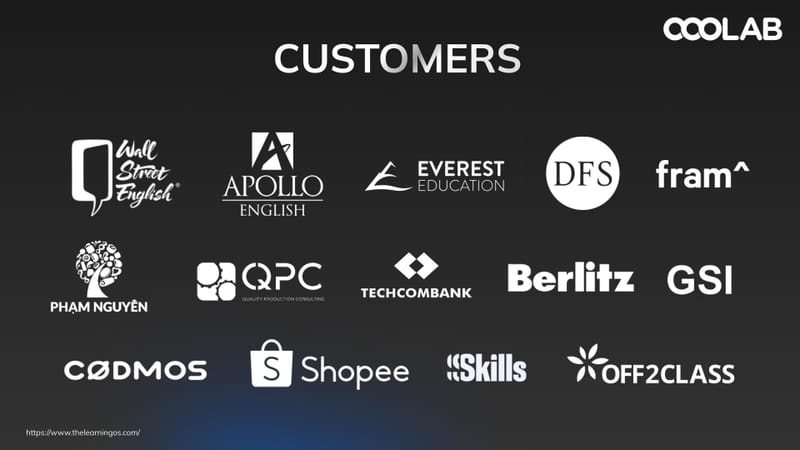
---
This blog is powered by Superblog. Visit https://superblog.ai to know more.
---
## The Super Benefits and Awesome Features of LMS Gamification
Author: Nga Tran
Author URL: https://blog.thelearningos.com/author/nga-tran
Published: 2024-03-04
Category: Gamification
Category URL: https://blog.thelearningos.com/category/gamification
Meta Title: The Super Benefits and Awesome Features of LMS Gamification
Meta Description: Proper gamification strategy makes sure your learning efforts are effective and worth your while. With LMS systems, learning at scale is as efficient as ever.
Tags: elearning-solutions/, gamification/, H5P/, Enterprise-LMS/
Tag URLs: elearning-solutions/ (https://blog.thelearningos.com/tag/elearning-solutions), gamification/ (https://blog.thelearningos.com/tag/gamification), H5P/ (https://blog.thelearningos.com/tag/h5p), Enterprise-LMS/ (https://blog.thelearningos.com/tag/enterprise-lms)
URL: https://blog.thelearningos.com/benefits-of-lms-gamification
“Hey honey, how was your day at school?”
My mother used to ask me everyday, and my reply was … ‘boring’.
These days, my wife asks, “Hey honey, how was your day at work?”
And my answer is usually “pretty good”.
Truth is, I’m a lot more motivated at my current job than I ever was at school. It feels like I’m actually learning more at work than I did in formal education…and I believe gamification is the reason for this.
If you’re currently an educator in an after-tutoring school business, or a learning and development manager in a corporate enterprise setting, it’s in everyone's best interests to be in a loop of continuous learning.
Proper gamification strategy makes sure your learning efforts are effective and worth your while. Thankfully, there’s always something new to learn, and with [Enterprise LMS systems](https://blog.thelearningos.com/enterprise-lms-for-growth/), learning at scale is as efficient as ever.
### What are the benefits of implementing gamification strategy?
There’s massive potential here for me to drop about twenty pages worth of notable gamification statistics, but that’d be unfair. In order to play fair, here’s just a few of the biggies.
For corporate training 90% of employees reported that gamification made them more [productive](https://engageforsuccess.org/productivity/how-gamification-positively-impacts-engagement-productivity/) at work, while 60% of employees noticed an increase in workplace engagement.
Businesses have noticed that [employee turnover](https://mambo.io/blog/benefits-of-gamification) rates have dropped and they’ve also managed to reduce day-to-day task lag which led to increased efficiency and, consequently, revenue.
For educational enterprises, gamification strategy is usually a holistic approach to learning that not only makes education more engaging, motivating, and enjoyable but also promotes essential soft skills and cognitive development, critical thinking, collaboration, and a lifelong love of learning.
All of the above directly promote student achievement and have a positive effect on student enrollments, student referrals, while reducing student churn.
If you’re using an Enterprise LMS to manage your learning operations, then you could benefit massively from the gamification features that modern LMS systems like LearningOS have to offer.
## Top Gamification Features for the Tutoring Industry
"You can’t design a gamified experience only by adding points, badges, and leaderboards to it. Gamification is an art.” -Ali Akhtari
Educational enterprises know that delivering fun engaging learning experiences is paramount to student success, but it’s not easy.
Luckily, the best LMS systems intuitively integrate gamification features that promote best teaching practices.
Below, you’ll find four gamification features that your LMS should have. As a former educator, I’ve learnt that the first one is the most important and the most subtle.
### Feedback Channels
Feedback is absolutely essential when it comes to monitoring, guiding, and encouraging when it comes making sure your gamification strategies are working.
Feedback can come in the form of immediate responses to a user's actions, highlighted by the final scores of quizzes, or the progress bar of an activity, but sometimes it comes in the form of constructive feedback after a piece of personalized homework, assignment, or formal assessment.
Systems like LearningOS can promote continuous and direct communication with opportunities for regular feedback for every learner. This ensures your gamification goals are as effective as possible.
### Customizable Rewards Shop and Currency
LMS like LearningOS allow enterprises to set up an online shop accessible on mobile so students can spend their hard-earned currency. Fill it with educational items or enterprise merchandise. Likewise, the currency in which they earn for fun activities can be customized. Choose from coins, stars, or gold and allocate upon completion of activities, homework, assessments, or class participation.
Tracking Activity and Reward Data
If educators and administrators aren’t tracking who won what, why, and how much all of your hard work is for nought! An LMS system can effortlessly track thousands of students' reward data. Integral if your admin needs to check which gamification strategies are working, and which aren’t. However, the best thing is this data is that it can be illustrated on the learner portal of the students LMS. Giving students access to their own [learning analytics](https://blog.thelearningos.com/how-to-leverage-lxp-learning-analytics-to-increase-roi/) is key to empower them even more.
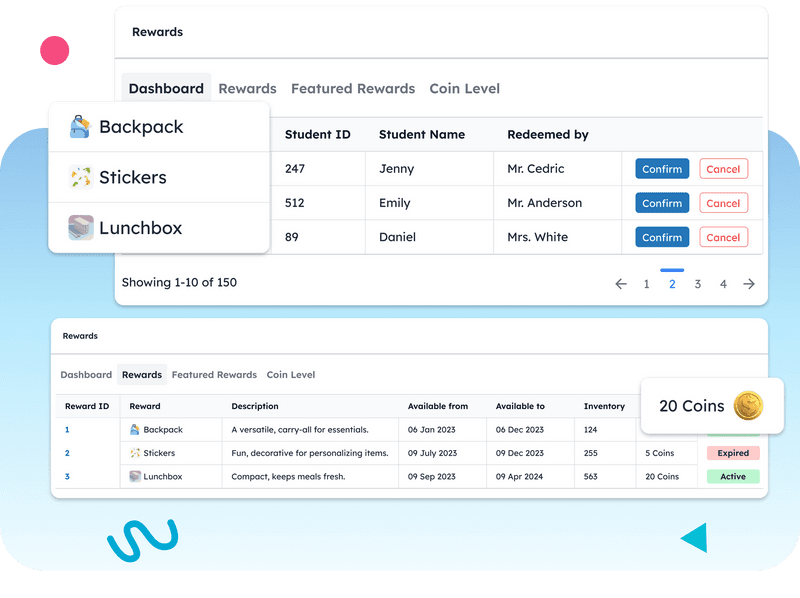
Advertising Banners
LMS systems like LearningOS give educators the chance to upload advertising banners that learners can see every time they log in to their learning platform. These banners are really multi-functional, but in terms of gamification they can effectively be used to notify learners of special time sensitive challenges. The clickable banners can direct students straight to an activity or open up an instructional video, resulting in personalized fun outside the classroom.
## Top Gamification Features for Corporate Training
"Educational games can increase retention rates by 30-60%" ( [elearningindustry.com](http://elearningindustry.com))
In a business environment, gamification often transcends those quirky playful elements associated with K-12, but the strategy is the same, to encourage professional growth and continuous engagement.
Modern LMS systems give business the chance to create an entire learning ecosystem that incorporates all the essential gamification strategies.
Below you’ll find 1 big, and 3 small gamification features that are pivotal for corporate training and professional development.
### Self-Paced eLearning
As you know, a lot of corporate training is often delivered in-house, under the watchful eye of managers, and CEOs. Proven to be expensive, and often ineffective, companies are switching to mobile compatible eLearning to meet their onboarding, compliance training, and upskilling demands.
Corporations that are offering their team self-paced eLearning opportunities empower autonomous learning that has a proven track record of success. Integrate [micro-learning](https://www.thelearningos.com/solutions/microlearning) and gamification techniques into your self-study modules and you’ve got yourself a winning formula.
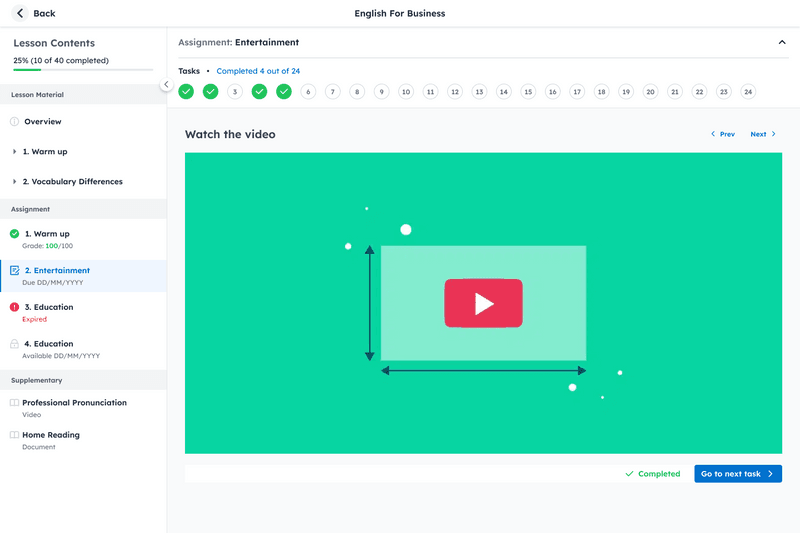
Study at their own pace, anytime and on any device leads to mastery of the subject matter and increases corporate growth.
e-Learning courses are known for their interactive and gamification features like progress bars, badges, leaderboards, and quizzes, but what’s new are features on the LMS that enable administrators to tailor learning paths to each department, primarily focusing on skills companies need to develop.
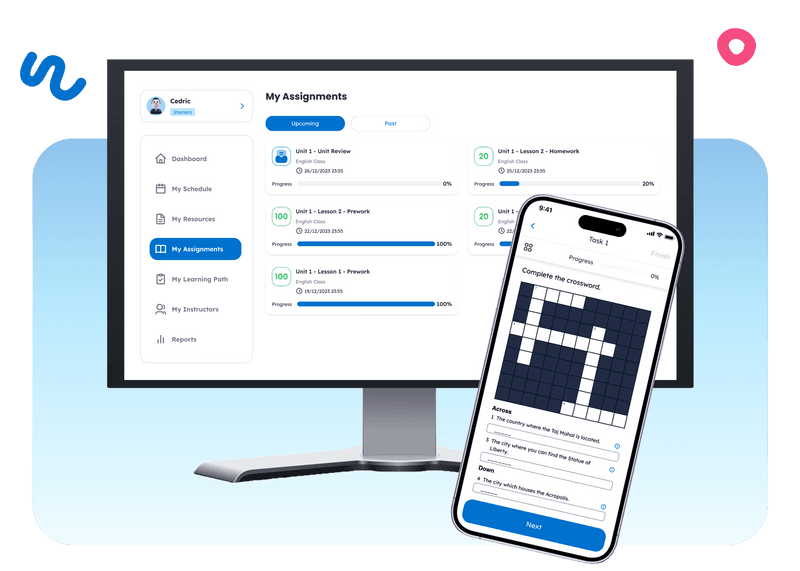
Personalization is a key factor in gamification, it allows companies to create fun motivating microlearning journeys for every employee, using analytics to focus on their strengths and weaknesses.
### Rewards Catalog
Unlike the rewards shop on K-12 LMS, in the workplace, having a rewards catalog makes earning for learning fun for employees. They accrue points by reaching various goals over a longer period of time, and sometimes the rewards are immaterial like time off work, or even cash rewards. Designing a rewards catalog motivates employees making everyone more eager and productive.
### Certificates
Certificates don’t mean much for children at school, but getting certificates for completing courses is a big boost for employees working on professional growth. LMS systems allow companies to upload branded certificates that unlock when employees have completed a training course. Usually in digital form, but employees can print them off if they’ve got a printer handy. Certificates are a fun way to recognize effort and they are still playing a key role in training programs.
### KPI Customization
Best gamification strategies are measured thoroughly. Being able to set your own Key Performance Indicators (KPIs) shows how advanced today's corporate training systems are. Managers can use a dashboard to adjust these KPIs to match what the company wants to achieve. This approach helps fine-tune the training games and activities, making sure they're really helping reach company goals and making the training successful.
### Uploading Existing Resources
Integrating gamification into company training has shown great results. With a modern Learning Management System (LMS), adding external resources is easy. You can turn paper materials into digital formats or upload different types of files. This means that if something was fun and worked well in the past, you can bring it into your LMS today to keep training engaging and effective.
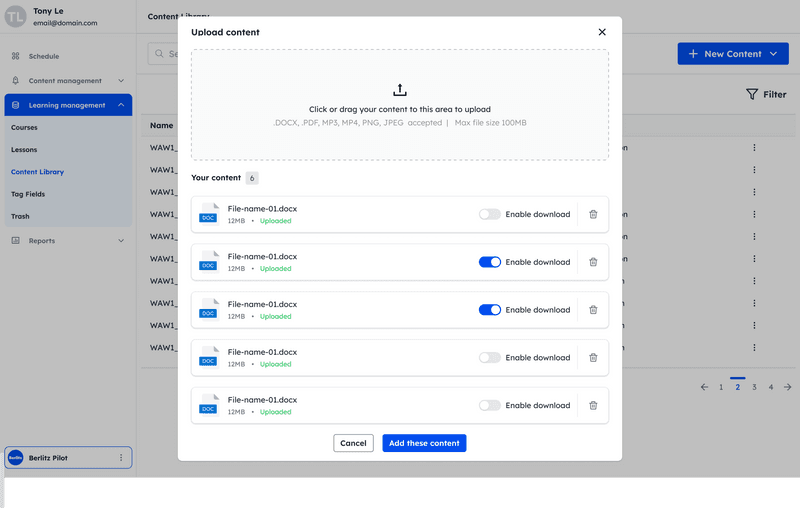
Incorporating these gamification features into corporate training not only makes learning more engaging and rewarding for professionals but also aligns employee development with organizational objectives, ultimately leading to improved performance and productivity.
## LMS Content Authoring Tools
Unique LMS systems integrate [content authoring tools](https://www.thelearningos.com/platform/content-authoring-tools) so that educational or corporate enterprises can take learning into their own hands.
Fully integrated into LearningOS, our [H5P](https://h5p.org/) course creator enables educators to integrate interactive content directly into their courses. Make learning more engaging and effective by creating quizzes, games, and class presentations filled with multimedia.
There are over [50+ activity types](https://blog.thelearningos.com/h5p-and-its-application/) for H5P, some you never knew existed, and classic activity types all learners have become used to using.
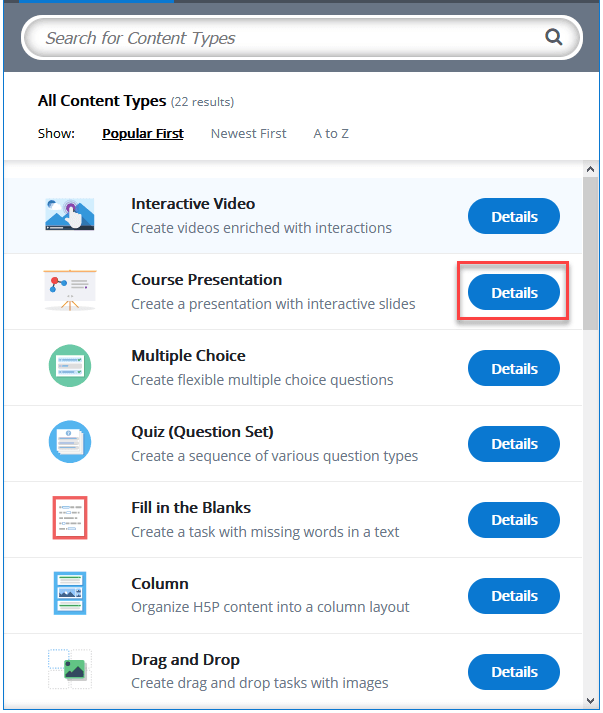
Integrate Third-Party Tools (LTI’s)
LearningOS allows you to embed your favorite third-party tools. Whether you’re enterprise is using Kahoot, Wordwall, Bamboozle, or Quizziz. With an LTI, educators can seamlessly switch between professionally built games, without the learner being aware they’ve even left the LMS.
## Custom-Built Content with Gamification
[Apollo English Vietnam](https://apollo.edu.vn/teach), a pioneer in children’s education knew a thing or two about motivating young learners.
Carefully navigating existing licensing commitments with National Geographical Learning, [OOOLAB’s](https://www.thelearningos.com/ooolab) instructional design team made sure all learning activities were centered around igniting curiosity and aligned a solid gamification strategy.
They developed 10,000 hours' worth of original, interactive, and fun content for primary and secondary students.

[Logibrothers](https://www.linkedin.com/company/logibrothers/about/), have developed an absolutely incredible app called [Codmos](https://play.google.com/store/apps/details?id=io.codmos.android.main&hl=en&gl=US). Helping children in the US, and globally learn how to code by controlling a loveable character named Cody.
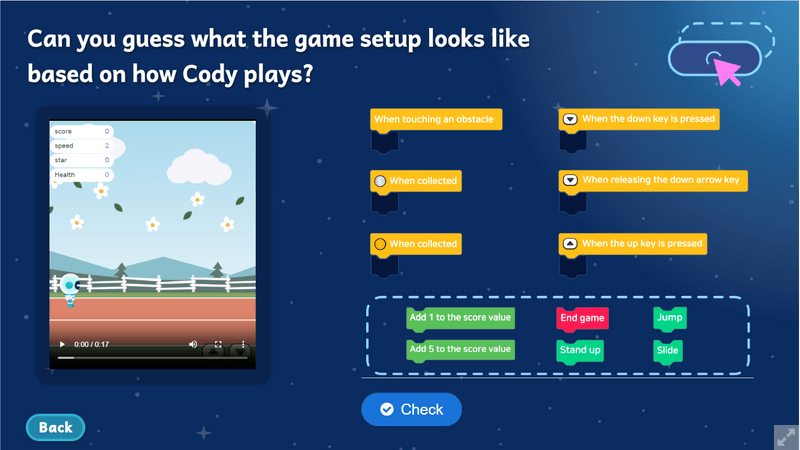
The [custom-built content](https://www.thelearningos.com/services/custom-course-development) for the app has been developed by OOOLAB, expert eLearning providers who started out creating K-12 language learning content and has become highly skilled in developing curriculums for STEM subjects.
Use [LearningOS](https://www.thelearningos.com/platform/what-is-learning-os) to create mobile compatible, multi-language content and assessments that follow your organization's goals and objectives and execute your perfect gamification plan. It shows that the future of gamification doesn't have to be restricted to one dimensional drag and drop and Jeopardy games.
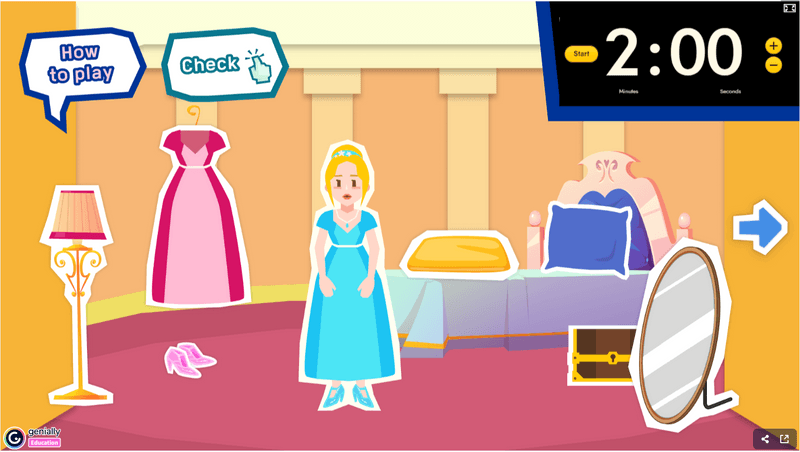
### What is Immersive Gamification? (Honorable Mentions)
As Meta and Apple release their mixed reality headsets, it is becoming increasingly difficult for educators to envision a future in which immersive learning isn't standard practice.

Headspace recently partnering with Meta, Nexus Studios have released [Headspace XR](https://youtu.be/cPVdDxGd_l4?feature=shared), a first-of-its-kind immersive playground for the mind. You’ll need a Quest headset to use it, but as the top commenter @Dr.Drastic\_ says: _Actually seems super dope!_ And I have to agree.
The creators of [Koala GO](https://www.teachwithkoala.com/), winner of best virtual classroom 2023 by [Edtech Impact](https://edtechimpact.com/) have created an immersive minecraft style environment kids can explore and learn by actively and I’ve heard from the grapevine that some of the educators in our team love it!
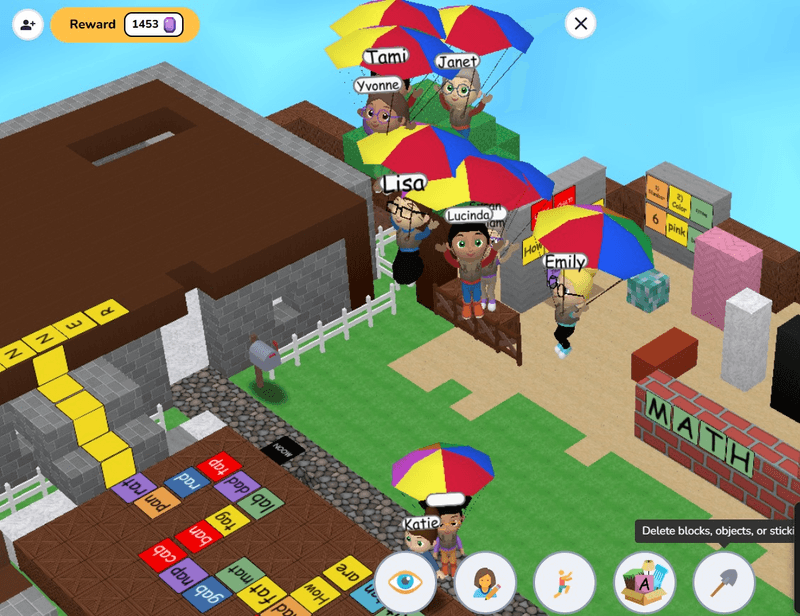
Or take a look at the Minecraft for Education’s new [AI prompt lab](https://www.linkedin.com/posts/playcraftlearn_a-new-resource-for-minecraft-educators-activity-7171190557795446784-KMHU?utm_source=share&utm_medium=member_desktop), which allows you to create engaging lessons and authentic assessments using AI.
Fun, gamified educational software is being developed all the time. It’s worth checking if there’s an LTI / API version you could integrate with your LMS.
## What is LearningOS? - An Epic Conclusion
[LearningOS](https://www.thelearningos.com/platform/what-is-learning-os) is designed to the core to support gamification and help enterprises deliver delightful learning.
Having proven benefits for both corporate training and educational enterprises. It can increase employee productivity, engagement, and retention in the workplace, while promoting soft skills, critical thinking, collaboration, and most importantly a lifelong love of learning.
LearningOS offers a range of rewarding gamification features including customizable rewards shops and currencies, activity and reward tracking, advertising banners for challenges, self-paced learning, personalized learning paths, certificates, and KPI customization.
The platform also integrates powerful content authoring tools like H5P and allows embedding of popular third-party gamification apps.
Combining an intuitive LMS with gamification best practices is a win-win for your learners and your business.
[Chat with OOOLAB](https://www.thelearningos.com/book-intro)
## FAQ
_**How do you measure the long-term impact of gamification on learning outcomes and retention?**_
To measure the long-term impact of gamification on learning outcomes and retention, educators and organizations often employ a combination of performance tracking and feedback mechanisms. It's possible to assess the effectiveness of gamification by analyzing data such as quiz scores, course completion rates, and the application of learned skills over time, along with learner feedback. This approach helps refine gamification elements to better support learning.
_**Can gamification be adapted to suit special needs learning?**_
Sure. Gamification can offer an inclusive experience for all special needs learning. There are many examples, but one example OOOLAB have worked on recently is incorporating interactive story-based games that cater to learners with Autism Spectrum Disorder (ASD). These games can focus on social skills, using characters and scenarios to teach understanding of emotions, facial expressions, and social interactions in a controlled, engaging manner.
_**What are the challenges or downsides of implementing gamification in learning management systems?**_
The biggest and most obvious challenge implementing gamification in learning management systems is making sure gamification elements align with learning objectives and do NOT distract from the educational content. Additionally, the development and maintenance of a gamified LMS require significant resources, which may be a barrier for some organizations.
Save Time, Money, and Deliver!
Get your ideal custom curriculum developed by eLearning specialists by us!
[Contact OOOLAB](https://www.thelearningos.com/book-intro)
---
This blog is powered by Superblog. Visit https://superblog.ai to know more.
---
## What is an Enterprise LMS? And Why You NEED One For Growth.
Author: Nga Tran
Author URL: https://blog.thelearningos.com/author/nga-tran
Published: 2024-02-25
Category: LMS
Category URL: https://blog.thelearningos.com/category/lms
Meta Title: What is an Enterprise LMS? And Why You NEED One For Growth.
Meta Description: An Enterprise LMS is a robust software platform designed to delivery, and manage educational courses and training programs for enterprises.
Tags: LMS/, learningos/, features/, Enterprise-LMS/
Tag URLs: LMS/ (https://blog.thelearningos.com/tag/lms), learningos/ (https://blog.thelearningos.com/tag/learningos), features/ (https://blog.thelearningos.com/tag/features), Enterprise-LMS/ (https://blog.thelearningos.com/tag/enterprise-lms)
URL: https://blog.thelearningos.com/enterprise-lms-for-growth
> “Go big or go home…”
Your business needs a system that handles your ambitions for growth.
Don’t be stuck with an LMS that can’t keep up!
## Introducing Enterprise LMS
An Enterprise Learning Management System (LMS) is a robust software platform designed to facilitate the creation, delivery, and tracking of educational courses and training programs for large organizations.
### What’s the difference between an Enterprise LMS and a regular One?
It’s all about opportunities to scale. Smaller LMS solutions often cater to smaller businesses, in some cases even B2C (business to consumer). You may find that popular systems like Moodle, or Canvas even have limited functionalities compared with the needs of a bigger company.
Major educational and corporate institutions choose an Enterprise LMS because it’s a centralized system developed from scratch to manage complex learning and development processes.
It’s designed to serve a significantly larger number of learners, operating B2B they often enroll thousands of learners.
A versatile system can handle a wide array of learning operations and administrative functions while managing the needs of multiple cohorts of learners.
### An All-In-One Solution for ANY Industry
An Enterprise (LMS) is a dynamic platform capable of powering a diverse range of learning experiences for a wide-range of industries.
This educational technology could power learning for after-school tutoring, corporate training, customer education, vocational instruction, healthcare and many more sectors. An enterprise LMS like this one can serve as a unifying force for all ways of learning.
### What are the main benefits of an Enterprise LMS?
The number one goal of an Enterprise LMS is to **save organizations time and money**, which it can do in many ways.
Its core function is to automate and streamline complicated and time-consuming learning processes, reducing the need for manual oversight on a daily basis, minimizing staff workload and resources.
Beyond this, it also offers improved learning outcomes by maximizing learning opportunities which leads to increased engagement and retention rates which can create better-trained individuals and increased productivity in the workplace or prevent dreaded [student churn](https://blog.thelearningos.com/how-to-prevent-student-churn-for-enterprises/) in an enrichment center.
## What are the core features of an LMS?
Unique features for newer and more innovative systems have been developed around the four core functions of a [CMS / LMS.](https://blog.thelearningos.com/differences-between-lms-and-cms/) These are:
- **Scheduling and Booking**
- **User and Content Management**
- **Lesson Delivery**
- **Tracking and Learner Analytics**
When it comes to Enterprise Learning Management Systems (LMS), the features are meticulously designed with large-scale operations in mind. These features are not just about managing hundreds to thousands of users, but also about ensuring scalability, efficiency, and a seamless learning experience.
Let's dive into some of these features.
### Upload Existing Content
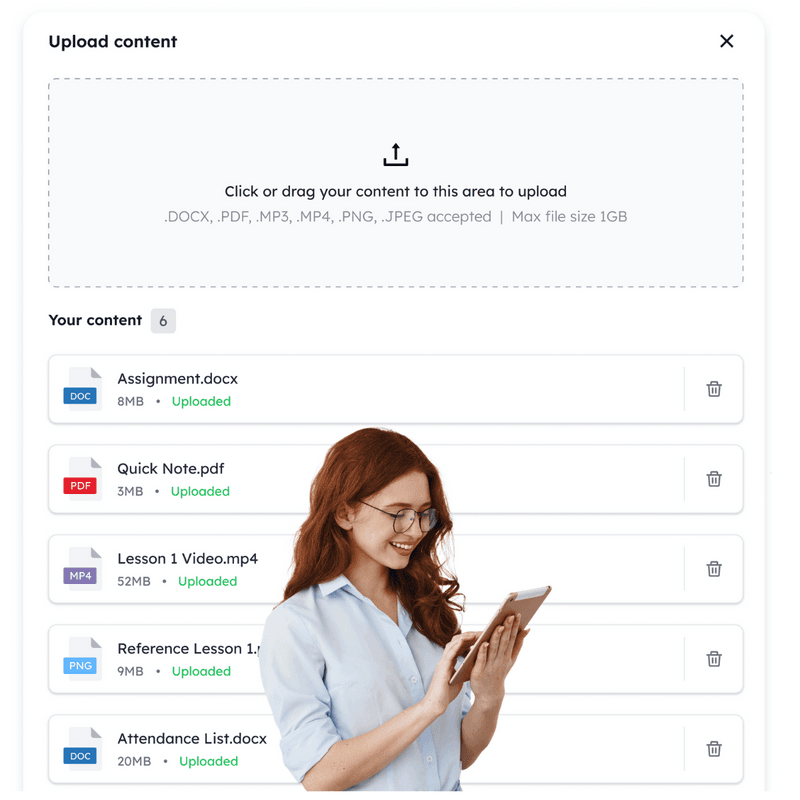
Our LMS supports eLearning standards like SCORM, xAPI, and Storyline, making it a breeze to upload and disseminate existing educational materials. This capability saves time and resources, allowing organizations to leverage their current content effectively and ensure a consistent learning experience across the board.
**\*** _For all things SCORM, xAPI, and Storyline I recommend this_ [Youtube channel](https://www.youtube.com/watch?v=-HyfuK3ytrc)
### **Content Authoring Tools**
Innovative enterprise LMS platforms offer a range of content authoring tools that make it easy to create interactive and engaging microlearning content, such as assessments, games, and multimedia presentations. With tools like [H5P](https://blog.thelearningos.com/h5p-and-its-application/), educators can craft over 50 different types of interactive activities, ensuring that learning is both effective and enjoyable for all use cases.
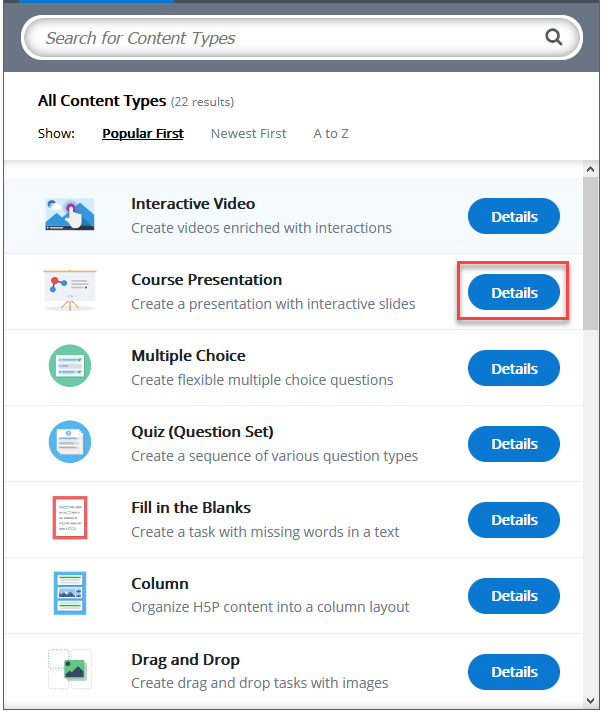
The instructional design team at OOOLAB favorite activity is [Interactive eBook](https://www.linkedin.com/feed/update/urn:li:activity:7100301363766558720). It allows you to compile large amounts of learning content on multiple pages and still allow students to learn in a linear way.
### **White Labeling and Branding**
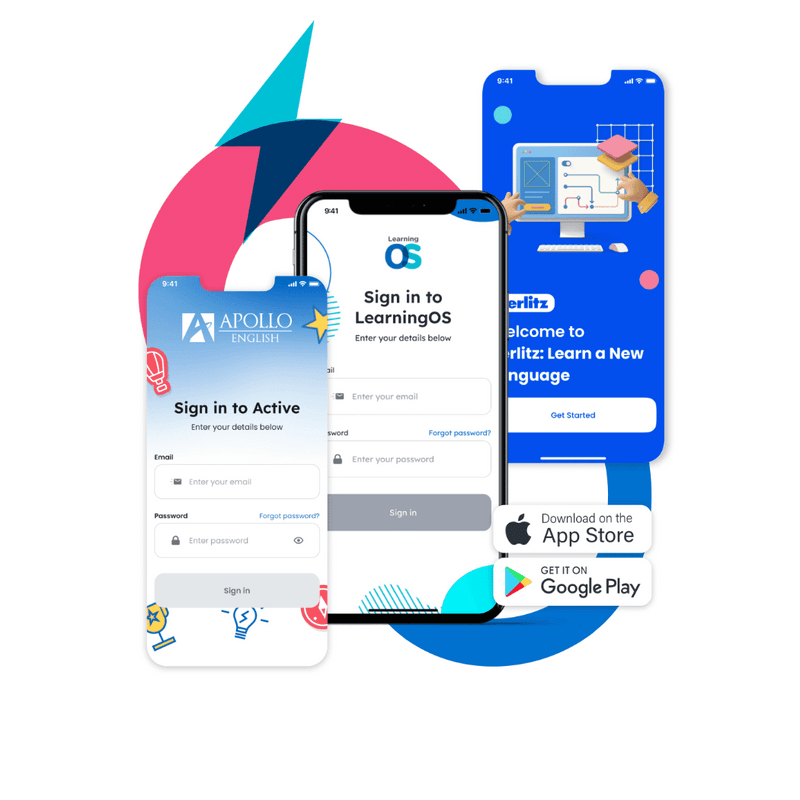
The ability to brand the LMS as your own in-house software presents a unique advantage. White labeling enhances your brand's visibility and ensures a consistent user experience, making the learning platform truly yours. This feature not only strengthens your brand identity but also instills a sense of trust and familiarity among your learners.
### **Video Conferencing**
Integrated with software like Zoom, Kaltura, enterprise LMS can facilitate a wide range of video experiences, from instructor-led training, to online group classes, large webinars and even live-streaming from remote locations. Having a software provider fluent in VC integrations makes learning more accessible and convenient.
### **Course Personalization**
Many content management systems allow for the seamless creation and assignments learning paths. Whether you’d like a specific course structure assigned to a learning group, or individual learners, you can compile your content and assessments based on their learners interests, and learning objectives. This personal touch has been proven to be effective at improving learner engagement.
### **Integrations**
The ability to integrate with other eLearning software, CRM systems, or a LLM is integral to streamline learning operations overall. This interoperability not only simplifies administration and sales tasks, these practical tools enrich the learning ecosystem for everyone involved.
**Gamification**
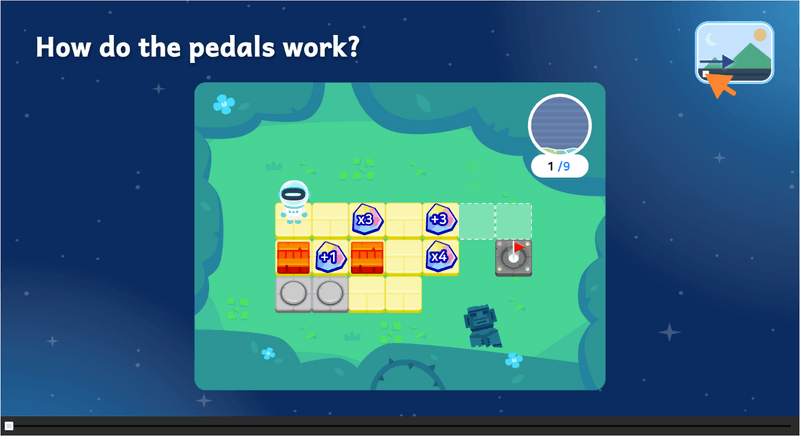
Gamification in Learning Management Systems (LMS) goes beyond just points, badges, and digital rewards; it's a powerful strategy to enhance learning outcomes for learners of all ages. Many LMS interfaces are now designed with gamification strategies in mind. Indeed, avatars and leaderboards do promote a culture of friendly competition and continuous improvement. However, when you incorporate quizzes, interactive simulations, and other engaging activities into your content, you'll drive engagement and motivation even further. These elements make learning more dynamic and can significantly increase the effectiveness of the educational content delivered through the LMS.
### **Course Catalogs**
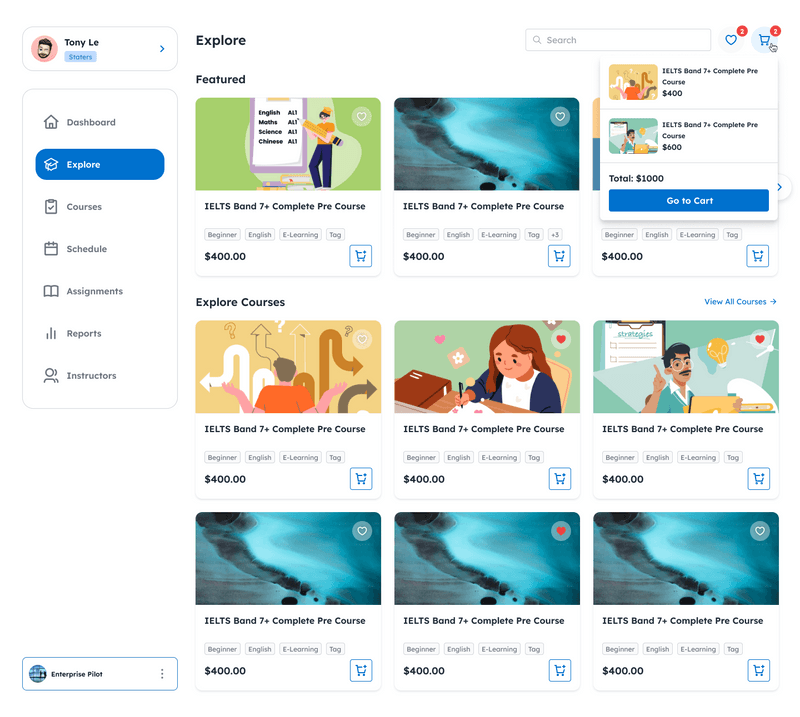
eCommerce capabilities are becoming increasingly available in LMS platforms, the picture above (taken from LearningOS) allows organizations to not only upsell additional courses or expert training sessions but also to tap into new markets entirely.
These features elevate upskilling and learner development, opening up new levels of revenue streams and opportunities for growth. With such functionality, an LMS becomes more than a learning platform; it's a business tool that takes learner engagement and organizational development to new heights.
### **Mobile Compatibility**

An optimized LMS mobile app is incredibly useful for enhancing learning opportunities. When content is mobile-friendly, students and employees can learn flexibly, on their own schedule, from anywhere.
Newer enterprise LMS systems power hybrid and blended learning including self-study eLearning modes! This EdTech can offer an alternative to traditional lessons in the classroom catering to the modern learner's need for convenience and adaptability.
**—-------**
The features above are **just a handful** of what an organization may need to achieve its goals.
Unfortunately, large companies often lack the support needed to identify and prioritize the specific features, or integrations your business requires.
It’s important to [consult an expert](https://www.thelearningos.com/book-intro) to talk about features in detail.
## An Enterprise Use Case at Scale
[Apollo English](https://apollo.edu.vn/teach), a leader in Vietnamese children's education, successfully launched [Apollo Active](https://apps.apple.com/us/app/apollo-active/id1629355010), a blended learning program, powered by [LearningOS - Enterprise LMS](https://www.thelearningos.com/solutions/enterprise-lms) to serve over 30'000 learners across more than 80 tuition centers!

Driven by the need to adapt and stay competitive, LearningOS provided the technological infrastructure, resources, and expertise to transform their learning operations.
This successful case study of innovation, implementation, and growth can be [read here](https://blog.thelearningos.com/apollo-english-case-study/).
### **What is custom eLearning development?**
The cost of educational content for classroom, or training is something often overlooked. Many organizations look into purchasing high-quality custom made curriculums to work alongside their LMS.
[Custom course development](https://www.thelearningos.com/services/custom-course-development) ensures the creation of high-quality, interactive curriculums tailored to your enterprise needs. More cost-effective in the long run, it ensures consistency across educational materials and device types.
Having an Enterprise LMS allows you to upload all main file types and eLearning standards, this means our team of instructional designers can work with your existing content, digitize all of your paper based resources and produce additional high quality content. You can deliver this new and familiar content directly to your learners using our versatile platform.
**Choosing and Implementing the Right LMS**
Before choosing an LMS it’s vital that you align with your organization's educational and training goals. The key is to clearly define these goals, prioritize your requirements, and select an LMS that offers the necessary features and scalability. This approach ensures that the LMS not only meets your current needs but also supports future growth.
For a concise and effective roadmap to selecting and implementing your ideal LMS, refer to our Fast Track Implementation Guide.
**Where can I find reliable reviews for Enterprise LMSs?**
There's a wealth of review sites available for evaluating LMS options. To understand user perspectives on LearningOS and compare it with other enterprise LMS offerings, consider visiting sites like [Capterra](https://www.capterra.com/p/10014273/LearningOS/), which provides a free marketplace to find software based on user reviews and needs, and [eLearning industry](https://elearningindustry.com/directory/elearning-software/learningos), which offers peer reviews, pricing, features, and competitor comparisons.
Conclusion
Selecting LearningOS as your enterprise-grade LMS is a strategic choice and we are committed to helping your organization fully leverage our technology.
We offer tailored support, targeted training for system administrators, a dedicated account manager for clear communication, and continuous technical support.
We ensure a seamless transition to **LearningOS**.
Ready to see the difference our software can make in your organization?
[Book Intro](https://www.thelearningos.com/book-intro)
And take the first step towards transforming your operations.
Or stay on our [blog](https://blog.thelearningos.com/) to learn more about everything EdTech and eLearning.
## **FAQ**
_**How does the cost of implementing an Enterprise LMS compare to the savings and benefits it brings?**_
Implementing an Enterprise LMS can lead to significant cost savings compared to traditional training methods, such as eliminating physical venue costs, travel expenses, and in-person instructor salaries. Additionally, an LMS can streamline training administration and allow unlimited learners to access the system, potentially increasing revenue generation. The investment in an LMS often pays for itself within a year through savings on training costs and other efficiency gains.
**_What are the specific challenges and solutions in migrating from a traditional LMS to an Enterprise LMS?_**
Challenges in migrating to an Enterprise LMS include data loss, downtime, compatibility issues, and additional costs due to unforeseen challenges or extended timelines. Solutions involve engaging with LMS migration experts, documenting the process, conducting pilot migrations, using format conversion tools, and establishing clear communication with stakeholders. Post-migration, thorough testing, user training, and feedback loops are essential.
_**Can you provide examples of how an Enterprise LMS has been customized for unique industry needs?**_
Enterprise LMSs can be customized for various industry needs, such as compliance training in healthcare, external training for customers or association members, and specialized training to attract and retain talent. For instance, an extended enterprise LMS can be used to train franchisees and sales channels globally, while industries like manufacturing and automotive may use LMSs for simulation-based training to improve product knowledge and reduce customer complaints. With a powerful system the use cases for learning are endless!
Let's Go Big Together
Use an Enterprise LMS that can power all your learning operations!
[Get LearningOS](https://www.thelearningos.com/book-intro)
---
This blog is powered by Superblog. Visit https://superblog.ai to know more.
---
## Transforming 30000's Apollo English's Learner Experience
Author: Nga Tran
Author URL: https://blog.thelearningos.com/author/nga-tran
Published: 2023-07-14
Category: Case Study
Category URL: https://blog.thelearningos.com/category/case-study
Meta Title: Transforming 30000's Apollo English's Learner Experience
Meta Description: LearningOS would enable Apollo English to build Apollo Active and manage its existing 30,000 learners, spanning over 80 tuition centers, on one platform.
Tags: Case-Study/, Apollo-English/, Enterprise-LMS/
Tag URLs: Case-Study/ (https://blog.thelearningos.com/tag/case-study), Apollo-English/ (https://blog.thelearningos.com/tag/apollo-english), Enterprise-LMS/ (https://blog.thelearningos.com/tag/enterprise-lms)
URL: https://blog.thelearningos.com/apollo-english-case-study
## A Technology Platform Case Study
### Breaking the Mold
OOOLAB and Apollo English were in agreement about the challenges facing traditional language learning centers. Increased competition from online-only platforms, a demand for more diverse curriculums, and a growing expectation from parents for more personalized learning were all concerns.
In a rapidly changing educational environment Apollo English knew that in order to scale their enterprise and prepare for the future they needed to invest in the latest technologies and teaching approaches.
With over 30 years' experience preparing Vietnamese children for the future Apollo English knew a thing or two about innovation.
Dreaming big, Apollo English conceived Apollo Active. A new and disruptive hybrid and blended learning program.
Apollo Active would offer a unique hybrid and blended learning approach, hosting interactive live lessons, online lessons in a virtual classroom, offline lessons in Apollo English classrooms, and self-study micro-learning modules.
This innovative approach would help Apollo English stay ahead of the competition while maximizing learning opportunities for their students. It was a win-win situation.
They discussed their vision with [OOOLAB](https://www.thelearningos.com/).
### A Platform to Build
Apollo English were interested in licensing LearningOS, OOOLAB’s flagship product.
LearningOS is a flexible learning management system with integrated H5P content authoring tools built specifically for enrichment learning. It would enable Apollo English to build Apollo Active and manage its existing 30,000 learners, spanning over 80 tuition centers, on one platform.
It was the ideal fit for Apollo English.
OOOLAB would provide the technological infrastructure, resources, and expertise needed to create Apollo Active and to support the migration of existing products and students.
### A Walk on the Wild Side
Previously, Apollo English had entered another partnership with leading publisher National Geographic Learning. National Geographic Learning provided Apollo with a groundbreaking primary and secondary education curriculum called Apollo World.

With careful consideration of Apollo’s existing licensing commitments with National Geographical Learning, OOOLAB worked closely with both enterprises to adapt and digitize their entire curriculum for primary and secondary students.
This resulted in over 10,000 hours' worth of original, [interactive and engaging content](https://blog.thelearningos.com/6-best-practices-for-effective-learning-design/) for Apollo Active.
### The Chance to Automate
LearningOS’ all-in-one platform gives Apollo English the chance to automate many areas of their learning operations and reduce costs.
Administrative teams can seamlessly onboard and manage large cohorts of students. Administrators can assign classes, fill out reports, reward learners for good study habits, and distribute course materials for students with easy-to-use drag and drop course management tools.

Cloud-based LMSs like LearningOS allow learning content and administrative data to be stored digitally in the cloud. This eliminates the need for physical storage, reducing maintenance expenses and providing greater accessibility.
### A New Way of Learning
Apollo strives to provide delightful learning experiences for students. With LearningOS’ API and LTI integration capabilities, Apollo instructors can effortlessly navigate multiple platforms without having to login multiple times.
LearningOS seamlessly integrates interactive multimedia, rewards systems, and learning analytics. This offers the chance for curriculums to be filled with a wide range of gamification applications. This allows learners to explore content in a fun and engaging way.
### A Custom Fit
OOOLAB is among a select few education technology companies that offers a [white-labeled LMS](https://blog.thelearningos.com/benefits-of-customized-lms/). White-labeling allows enterprises to personalize certain features, such as logos, brand colors, learning analytics, notifications and advertising banners.
Apollo English wanted learning analytics that accurately measure student progress and achievements.
OOOLAB also provided custom notifications such as lesson reminders and advertising banners that promote events and products.
### Mobile Ready
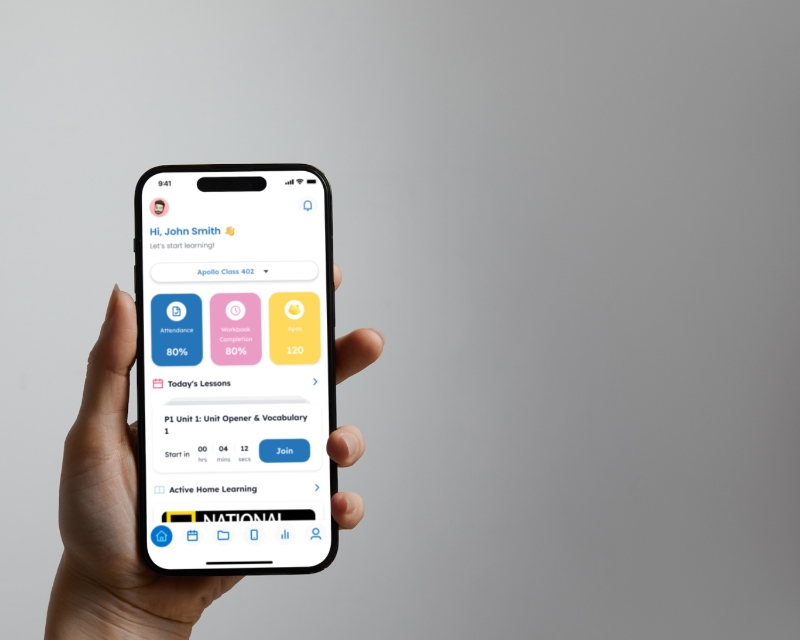
Wishing to increase learner engagement outside of the classroom, Apollo English requested a fully functional and branded mobile app optimized for mobile learning. OOOLAB provided a professional and intuitive app that Apollo Active
users can download directly from iOS and Android. Apollo English students can now access lesson content with full interactivity directly from their smartphones and tablets.
### Dream it, Launch it.
With difficulty predicting tomorrow's learning trends, Apollo English needed a system that expedited the development and launch of new learning products.
LearningOS contains a [H5P content authoring tool](https://blog.thelearningos.com/h5p-and-its-application/). This powerful creator tool allowed Apollo English to create original courses and curriculums, or refine existing ones.
### Student and Parent Experience
Apollo English encourages parents to participate in their child's learning journey. That’s why Apollo Active’s virtual learning environment features both learner and parent profiles.
Learner profiles are intuitively designed to encourage student interaction by containing information on active courses, self-study work, and rewards.
Parents can monitor their child's journey by tracking their progress, accessing performance reports, reviewing class schedules, and communicating directly with Apollo English staff, all from their own dashboard.
## A New Beginning
On Saturday 8th April 2023, Apollo English Vietnam officially launched Apollo Active. This launch was the culmination of hundreds of thousands of hours of effort in partnership with National Geographic Learning, Pure Pacific Music, SENTECHS, and Apollo English Vietnam.

OOOLAB praises Apollo English’ unwavering commitment to children's education. They are truly pioneers in edtech and children’s education.
Apollo Active has transformed the student learning experience and we believe this product will ignite a love of learning in every child.
---
This blog is powered by Superblog. Visit https://superblog.ai to know more.
---
## How Can an LMS Encourage Students to Return to the Classroom?
Author: Nga Tran
Author URL: https://blog.thelearningos.com/author/nga-tran
Published: 2023-07-05
Category: LMS
Category URL: https://blog.thelearningos.com/category/lms
Meta Title: How Can an LMS Encourage Students to Return to the Classroom?
Meta Description: Enrolling students in 1-1 classes, or group sessions, offered by learning and enrichment centers is seen as a more effective way to increase student grades.
Tags: k12-lms, interactive-learning/, LXP/, Enterprise-LMS/
Tag URLs: k12-lms (https://blog.thelearningos.com/tag/k12-lms), interactive-learning/ (https://blog.thelearningos.com/tag/interactive-learning), LXP/ (https://blog.thelearningos.com/tag/lxp), Enterprise-LMS/ (https://blog.thelearningos.com/tag/enterprise-lms)
URL: https://blog.thelearningos.com/how-an-lms-encourages-students-to-go-to-class
## How Can an LMS Encourage Students to Return to the Classroom?
The 21st century has provided many opportunities for students to learn beyond traditional school settings. Enrolling children, or teenagers, in private 1-1 classes, or live group sessions, offered by learning and enrichment centers is seen by many as a prestigious and more effective way to increase student grades.
However, the rise of global digital technology and internet connectivity means traditional tutor centers face tough competition from online learning and [self-study courses](https://blog.thelearningos.com/benefits-and-disadvantages-of-self-paced-learning/). Factors such as the Covid-19 pandemic have contributed to the popularity of online learning and self-study courses. MOOCs, coaching seminars, and gamified learning apps are now a more accessible, flexible, and cost-effective learning choice for many.

As popular as these online courses and programs might be, a 2020 study from Romania found significant limitations to online learning.
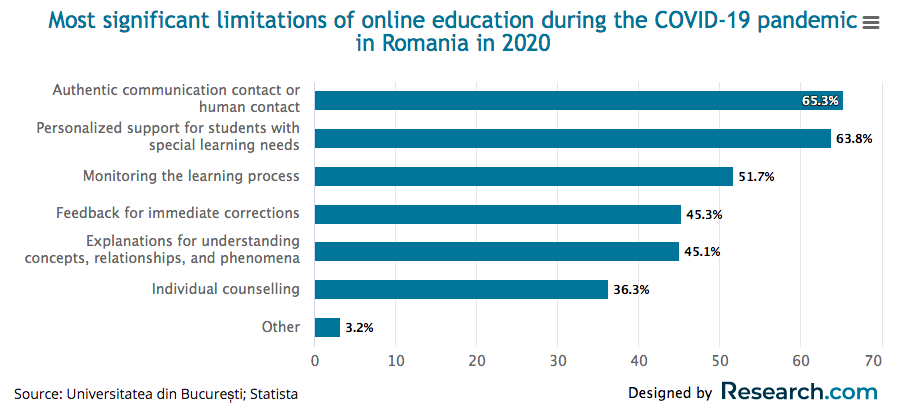
The majority of learners (65.3%) claim that the most significant limitation of online learning is the lack of “genuine communication or human contact.” Another notable constraint was the “difficulties monitoring the learning process.” (51.7%) Source: Universitatea din București; Statista. Learning and enrichment centers can capitalize on two things to set themselves apart.
If you’re the CEO, CFO, or COO of an education enterprise, you may have noticed that student enrollment numbers haven’t reached pre-pandemic levels. But our advice is to hang in there…
While online-only platforms and self-study courses struggle to produce positive results, tutor centers can differentiate themselves by leveraging their unique strengths. Learning and enrichment centers have the incredible advantage of being able to offer in-person authentic, engaging, and effective learning experiences.
In this article we’ll discuss what learning centers can offer to stay competitive. We'll offer practical learning approaches, and discuss how a classroom LMS can facilitate learning.
### Hands-on approach
Live in-person classes can provide hands-on learning experiences for students using virtual labs.

Particularly well suited to STEM subjects, incorporating a virtual lab can simulate real life hands-on experimentation. Instructors can easily explain complex concepts to students through a visual, immersive experience. They can also give immediate feedback when an experiment, or process, doesn’t work as planned.
Humanities can enjoy this level of interactivity too with VR known as 360VR.
With this type of VR, real-world locations are captured with specialist cameras allowing learners to explore historic locations from the comfort of their chair.

Check out this 360 degree tour of Roche Abbey [here](https://immersionvr.co.uk/about-360vr/vr-for-education/):
An LMS can integrate virtual lab simulations and VR modules into course content. Students can access the LMS platform without additional software, except VR headsets. An LMS can also provide interactive teaching notes that can be used side-by-side the simulations.
This approach emphasizes active engagement and practical application of knowledge and provides a much more stimulating experience than passive online instruction. With VR tech having a recent surge in popularity, now's the time to revisit these approaches again.
### **Collaborative Learning**
Innovative video conferencing tools such as breakout rooms, or newer apps such as _Classkick_ and _Applause Studio_ have really enhanced the Zoom group learning experience. However, we still don’t think online group learning substitutes in person collaborative learning.
In a tutor center, instructors can set up peer learning. Students can have uninterrupted discussions in small groups while designing and creating presentations for their peers. This is an effective way to develop additional key soft skills such as problem solving, critical thinking, teamwork and dependability. While also providing an environment for students to showcase unique talents such as [intuitive learning design](https://blog.thelearningos.com/6-best-practices-for-effective-learning-design/), graphic design, or public speaking.

Peer learning encourages students to become integral audience members that offer valuable feedback. Learners also get the chance to observe inspiring presentations on different subjects and make notes on different presentation styles, techniques, and strategies.
Setting up a collaborative learning environment is easy. An LMS can facilitate projects by integrating Microsoft PowerPoint or other presentation tools. Video recordings of presentations can be uploaded thanks to file sharing capabilities. An LMS promotes collaboration outside of the classroom. This allows students to refine their skills before the next session.
### Dynamic Classroom Experiences
Classroom instructors sometimes feel on stage. The instructor doesn’t have to perform, but it’s a great opportunity to use a 1, or 2 hour window to create a meaningful experience. Like a magician, the instructor needs engaging content to keep the students entertained. I’ve found the most effective way to do this is using interactive videos, other multimedia and games.

Interactive videos help students engage directly with the content, assessing as they learn. You can also create choose-your-own-adventure style content to allow for storytelling and decision-making in the class.
Using different types of multimedia, such as soundscapes, podcasts, and animations, can help instructors create thought-provoking discussions. This can help students develop meaningful and memorable connections with the content.
Competitive games in classrooms are a sure-fire way to boost engagement. And it’s easier to allocate teams, leaders, explain rules, and give physical prizes in a more private environment.
All kinds of [interactive content](https://blog.thelearningos.com/h5p-and-its-application/), multimedia, and games can be uploaded to an LMS and embedded in your class content. LMSs can integrate educator favorites such as _Kahoot_, _Wordwall_, and _Quizlet_ and offer seamless transitions between software. Helping you create a dynamic, interactive and engaging classroom experience.
## Conclusion
Learning and enrichment centers have a real chance to create genuine social learning interactions that get students and parents talking. An LMS can facilitate these approaches by integrating exciting virtual tools, presentation tools, and interactive gamified content. This is all while monitoring student progress. This will help them achieve their learning goals quicker and more effectively than online learning.
Incorporate these approaches and soon enough more learners will be encouraged to come back through your door.
**OOOLAB** offer **[LearningOS](https://www.thelearningos.com/)**, an LMS that can streamline learning operations, giving administrators and instructors more time to focus on creating and delivering outstanding learning experiences and gives CEO’s, CFO’s, and COO’s more opportunities to scale.
**[Book a demo](https://thelearningos.com/#form)** with us and see how we can help your enterprise stand out from the crowd.

---
This blog is powered by Superblog. Visit https://superblog.ai to know more.
---
## How Can an LMS Help Automate My Learning Operations?
Author: Nga Tran
Author URL: https://blog.thelearningos.com/author/nga-tran
Published: 2023-06-30
Category: LMS
Category URL: https://blog.thelearningos.com/category/lms
Meta Title: How Can an LMS Help Automate My Learning Operations?
Meta Description: Learning and enrichment centers look for an LMS that automates their learning operations. Automation will ultimately reduce costs, allowing enterprises to scale
Tags: learning-analytics/, online-tools/, cms/, Enterprise-LMS/
Tag URLs: learning-analytics/ (https://blog.thelearningos.com/tag/learning-analytics), online-tools/ (https://blog.thelearningos.com/tag/online-tools), cms/ (https://blog.thelearningos.com/tag/cms), Enterprise-LMS/ (https://blog.thelearningos.com/tag/enterprise-lms)
URL: https://blog.thelearningos.com/lms-learning-operation-automation
## How Can an LMS Help Automate My Learning Operations?
To put it simply, learning and enrichment centers look for an LMS that automates their learning operations. Automation will ultimately reduce costs, allowing enterprises to scale efficiently.
An LMS helps enterprises automate learning operations in four main areas:
- Content authoring
- Content delivery
- Content management
- Scheduling and Booking
Discover how an LMS streamlines these operations, including instances where transitions overlap, while maintaining a smooth learning experience for students.
Also remember that an LMS excels at efficiently tracking these four areas. Enabling enterprises to measure and analyze specific stages with data insights only expedites learning operations even more.
Let’s dive deeper into these processes.
### Content Authoring
Learning and enrichment centers are judged on the learning experiences they provide and the achievements they produce.
When parents enroll their children in a course, they’re not just paying for the teacher's time. They also pay for the content provided by the learning center as a valuable product. The more value the learning content has, the more parents will invest.
Companies can license and use educational materials such as physical student books, interactive e-books, and step-by-step teaching manuals from reputable publishers. Unfortunately, these high-quality learning materials can be astronomically expensive. Many companies design and create their own learning materials internally. Although creating e-learning materials is no easy feat, an LMS can automate this process by providing course creator tools and learning design functionalities.
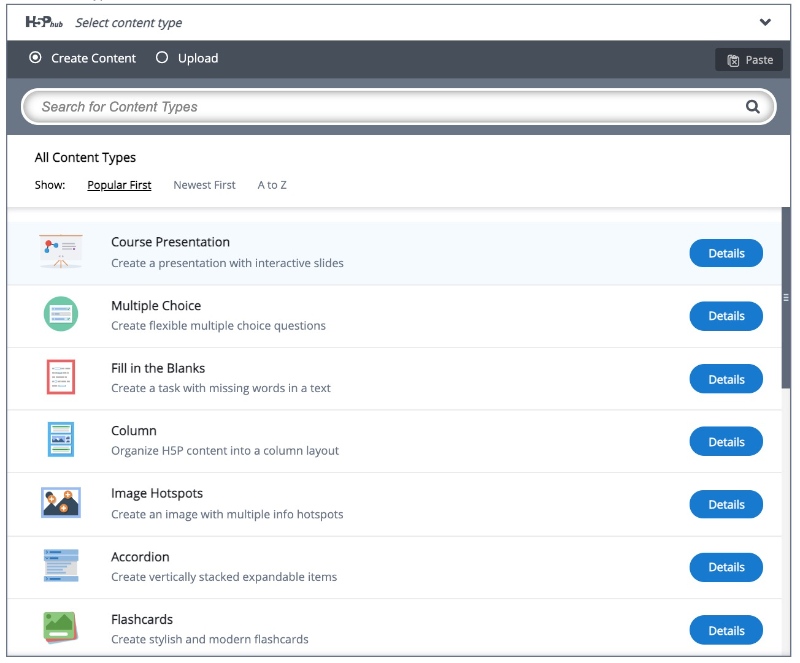
For instance, certain LMSs provide pre-designed course templates that provide learning designers with the framework to create content according to [best practices](https://blog.thelearningos.com/6-best-practices-for-effective-learning-design/). These templates include learning objectives, review sections, and assessments.
After the course structure is in place, [H5P](https://blog.thelearningos.com/h5p-and-its-application/) is a popular interactive content creation tool. It allows users to create and embed all kinds of interactive multimedia content, including quizzes, directly into your course. Content creator tools also include real-time co-authoring, version control, and commenting capabilities, allowing teams to work more productively and collaboratively.
An LMS provides a flexible way to create, reuse, edit, and customize courses. This simplifies the [content authoring](https://blog.thelearningos.com/content-authoring-for-elearning-business/) process. Not to mention the money they save on external resources and licensing fees.
### Content Delivery
After your enterprise has unique content, the next focus is on knowledge transfer. How can your educators deliver this content to your students effectively?
Some traditional teaching methods such as passive instruction can affect class learning pace. These outdated teaching methods slowdown learning and rarely promote active learning. This is where educators can use LMS online learning tools to help teachers integrate gamification techniques and effective [microlearning](https://blog.thelearningos.com/benefits-of-microlearning/) practices.
My favorite is interactive video. It’s an H5P multimedia presentation that allows learners to actively engage with interactive elements such as clickable buttons, hotspots, quizzes, and other engaging features, all embedded over the video content.
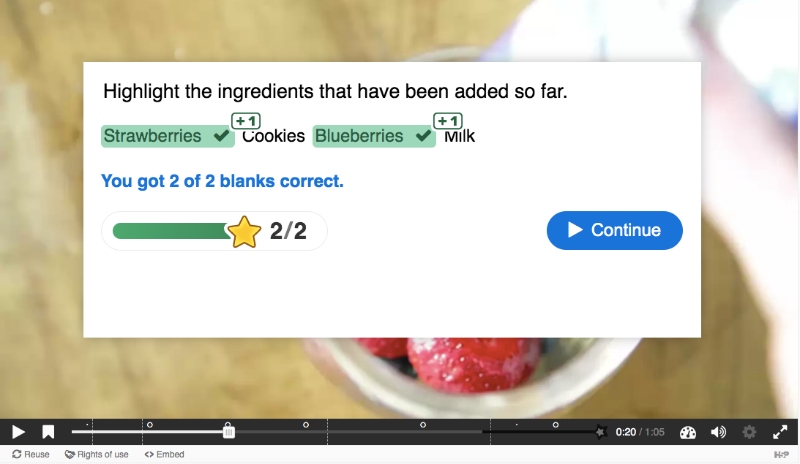
These features prompt learners to interact and respond with the content in real-time.
Using online gamification tools and microlearning techniques allows instructors to automate classroom interactions, increase learning pace, create an active learning environment, and maximize opportunities to create engaging knowledge exchanges.
### Content Management
All-in-one LMS platforms have an integrated Content Management System ( [CMS](https://blog.thelearningos.com/differences-between-lms-and-cms/)). This system handles courses and learning materials outside of a live class using cloud storage. Cloud storage allows teams to upload resources, manage and organize content in a centralized location. Once material is uploaded, a CMS can help teams manage content and automate processes through categorization, tagging, and access control.
Categorizing allows content to be put into logical groups or categories such as subjects, topics, modules. By assigning appropriate categories, learning and enrichment centers can organize and retrieve content efficiently. Tagging is a feature that allows learning designers to attach descriptive keywords or labels to course materials. These tags make searching easier by highlighting key themes, concepts, or keywords familiar to students.
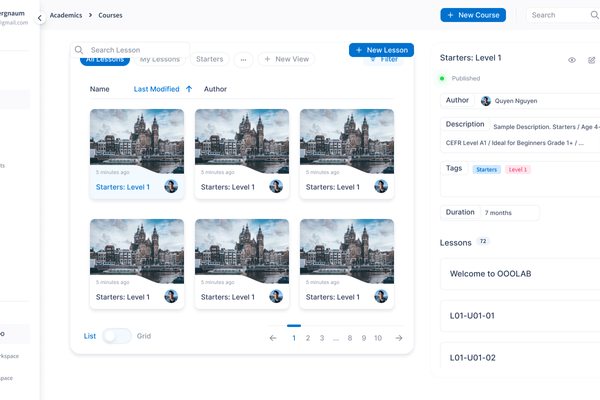
Access control allows your team to decide what your learners can view and set exactly when it becomes available. This helps provide sequential content delivery, which helps learners progress through the course materials in a structured and organized manner.
A CMS offers seamless automation that reduces the need for extensive filing and shelves of lesson plans and student books – essential when dealing with thousands of hours of material.
### Scheduling and Booking
An LMS can automate scheduling and booking processes for learning and enrichment centers in two main ways: self-service registration and automated communication.
Self-service registration offers parents or students access to the LMS portal, browse through the available courses, and register for the ones they prefer. Learning centers may receive video submissions, or assign a placement test before enrolling a student. Both methods reduce the need for time-consuming in-person interviews.
Once a student has been enrolled, an LMS can send automated emails or notifications to parents and students regarding upcoming courses, homework deadlines, payment reminders, and other relevant scheduling information. This eliminates manual communication, keeping large cohorts of learners and parents informed in a timely manner.
The specific lessons available to administration depend on the content your team has created and uploaded to the cloud.
### Tracking
An LMS can track and gather vast amounts of data about how students interact with content. [Learning analytics](https://blog.thelearningos.com/how-to-leverage-lxp-learning-analytics-to-increase-roi/) help enterprises make data-informed decisions about content authoring, content delivery, content management and scheduling and booking processes.
Read more about how your enterprise can benefit from LMS analytics.
## OOOLAB

[OOOLAB](https://www.thelearningos.com/) is an EdTech company specializing in LMS technology. If you're interested in automating your enterprises' learning operations to reduce costs and scale efficiently, chat with our EdTech experts.
Click this [link](https://thelearningos.com/#form):
---
This blog is powered by Superblog. Visit https://superblog.ai to know more.
---
## How do I create Summer Revenue Streams with my LMS?
Author: Nga Tran
Author URL: https://blog.thelearningos.com/author/nga-tran
Published: 2023-06-23
Category: LMS
Category URL: https://blog.thelearningos.com/category/lms
Meta Title: How do I create Summer Revenue Streams with my LMS?
Meta Description: Parents spend money during the summer to compensate for their child’s time away from school. institutions take advantage of this 6-8 week window of opportunity.
Tags: learning-analytics/, LXP/, cms/, Enterprise-LMS/
Tag URLs: learning-analytics/ (https://blog.thelearningos.com/tag/learning-analytics), LXP/ (https://blog.thelearningos.com/tag/lxp), cms/ (https://blog.thelearningos.com/tag/cms), Enterprise-LMS/ (https://blog.thelearningos.com/tag/enterprise-lms)
URL: https://blog.thelearningos.com/how-to-generate-summer-revenue-stream-with-lms
## I. How do I create Summer Revenue Streams with my LMS?
> Schools out for summer - Alice Cooper
Summer holidays are a particularly lucrative time for learning and enrichment centers. Parents are more likely to spend money during the summer to compensate for their child’s time away from compulsory education. And it’s highly recommended your educational institution take advantage of this small, 6-8 week window of opportunity.
### **The Summer Slide**
> Students’ achievement scores declined over summer vacation by one month’s worth of school-year learning. https://www.brookings.edu/research
Summer learning loss, also known as the summer slide, has been a talking point among K-12 educators for decades. It’s a phenomenon where students tend to lose some of the knowledge and skills acquired during the school year due to the extended summer break.

Learning loss is backed by [science](https://www.brookings.edu/blog/brown-center-chalkboard/2023/01/30/is-summer-learning-loss-real-and-does-it-widen-test-score-gaps-by-family-income/#:~:text=Children%20might%20lose%20a%20third,%2C%20or%20they%20might%20not.%E2%80%9D), and should give your learning center all the incentive and justification it needs to create additional learning opportunities for your students. It’s an easy sell to parents who are eager to prevent their children from falling behind. Not only is your institution helping to mitigate learning loss, but you're increasing profits, too.
Read on to learn how to create, launch and sell summer learning products quickly with your Content Management System (CMS) and your Learning Management System (LMS).

Intensive courses and summer camps are courses many parents expect in the calendar year. A summer course can vary in length and price, but they should have defined learning objectives that differ from the student's regular study program. Come up with an exciting theme that weaves its way through each lesson, and creates memorable experiences by designing original activities, rewards, and certificates.
You can advertise the summer course by using [advertising banners on your LMS](https://blog.thelearningos.com/benefits-of-customized-lms/) system. Create a colorful banner with details of the course and a clickable call to action button. Parents should be directed to a booking page or a payment gateway via the banner.
I recommend you advertise and promote in early spring. Create exclusivity by allowing parents of currently enrolled students to pay for the course in advance before other learners.

Some students, especially teenagers, may object to spending summer weeks stuck at a desk. Harder to please students may prefer flexible self-study modules. These carefully designed interactive packages are usually an extension of their current curriculum, focusing on one skill overall. They offer learners the flexibility to set their own learning schedule, and are easily accessible on tablet or mobile devices.
We recommend [content authoring tools such as H5P.](https://blog.thelearningos.com/h5p-and-its-application/) This software contains almost 50 interactive content types and can be integrated into your content management system, allowing your enterprise to create well-designed self-study material.
These packages can be advertised through your LMS's push notifications. Your LMS should already hold information about students based on grade, level, and subject. Leverage this information and craft your push notifications to target specific students (or parents) about self-study modules that appeal to their interests and learning styles. Ensure that each notification includes a button that takes learners directly to a booking form, or payment gateway.



Offering custom summer coaching courses to individual students, or small groups is a worthwhile way to create an additional revenue stream. This highly personalized approach should focus on one specific skill that benefits the learner, such as public speaking, academic writing, or advanced math.
Use your [LMS learning analytics](https://blog.thelearningos.com/k-12-lms-4-learning-analytics-that-tell-you-your-students-need-support/) to find areas that individual students may be struggling with. The student analytics dashboard will give you information on which class assessments students have performed poorly, or failed. In identifying specific areas for improvement, educators can create a highly tailored approach and charge a higher price for this service.
You can also create personalized coupon codes with the students' name to promote your custom coaching. You can use a custom coupon code generator, or create one on your LMS admin dashboard itself. Configure your LMS to automatically apply the discount associated with the coupon code when learners, or parents enter it.


Open-house events have many benefits. They’re an excellent way to build relationships with students, parents, teachers, and management. They’re also an effective way to showcase student achievements and any new facilities, or technology. Most importantly they’re a fantastic way to promote new courses. Use open-house events to promote intensive summer courses, self-study modules, and custom coaching.
Promote your open house by sending personalized emails months before the event. Email marketing applications like _Mailchimp_ can be integrated into the LMS, allowing you to reach thousands of parents easily.
At your learning center’s physical location, many parents may offer to pay for the course on the spot. Set up a seamless way to receive payment and make sure administration can create receipts for customers.


## **II. Conclusion**
As summer approaches, we hope your learning enterprise will take advantage of the revenue streams available. To do this efficiently it’s wise to utilize the power of an [all-in-one LMS system](https://www.thelearningos.com/platform/what-is-learning-os).
Try [LearningOS](https://www.thelearningos.com/) from [OOOLAB](https://www.thelearningos.com/)

It’s the [#1 Learning Experience Platform](https://thelearningos.com/#form) for enrichment learning and contains all the tools you need to create, launch and sell summer learning products quickly.
---
This blog is powered by Superblog. Visit https://superblog.ai to know more.
---
## How can Learning Enterprises Prevent Student Churn with LMS?
Author: Nga Tran
Author URL: https://blog.thelearningos.com/author/nga-tran
Published: 2023-06-14
Category: Enterprise
Category URL: https://blog.thelearningos.com/category/enterprise
Meta Title: How can Learning Enterprises Prevent Student Churn?
Meta Description: Student churn is the problem to all learning centers. Whether students stop learning mid-course, or disappear, it makes the chance of re-enrollment slim.
Tags: VLE/, LXP/, churn-rate/, Enterprise-LMS/
Tag URLs: VLE/ (https://blog.thelearningos.com/tag/vle), LXP/ (https://blog.thelearningos.com/tag/lxp), churn-rate/ (https://blog.thelearningos.com/tag/churn-rate), Enterprise-LMS/ (https://blog.thelearningos.com/tag/enterprise-lms)
URL: https://blog.thelearningos.com/how-to-prevent-student-churn-for-enterprises
## How can Learning Enterprises Prevent Student Churn?
> Two little mice fell in a bucket of cream. The first mouse quickly gave up and drowned. The second mouse wouldn't quit. He struggled so hard that eventually he churned that cream into butter and crawled out. Gentlemen, as of this moment, I am that second mouse. - Frank Abagnale Sr. - _Catch me if you Can_

According to this [article](https://www.rd.com/article/beautiful-word-english-language/), there are many ‘beautiful’ sounding words in the English language such as melancholy, aurora and loquacious (meaning talkative, or chatty), but there are also unpleasant sounding words like churn.
It’s a jarring word that doesn’t roll off your tongue. Even the concept of churn sounds laborious. And for CEOs, CFOs, COOs, and Academic Department Heads the word certainly creates hard-work.
**Student churn** is when students drop out of your learning center. Whether students stop learning mid-course, or disappear right before the end, it makes the chance of re-enrollment pretty slim.
Seeing class sizes shrink a little at the edges may not seem like a problem, but it is.
In fact, decreasing student churn and increasing student retention rates are two of the biggest challenges facing learning enterprises.
For a simple reason:
The cost of acquiring a new student is far more expensive than retaining one.
> Regardless of the monthly or yearly tuition fee, if a student decides to drop out, the cost of acquiring new students will increase in the long run to cover the hidden expenses of that dropout. (questionpro.com/blog/student-churn/)
Learning centers face an uphill struggle to keep student churn rates down and retention rates up. Keep reading to learn how your learning enterprise can be the second mouse and prevent student churn.
Promote lifelong learning
> _Language learning is a lifelong process_ \- Ray Clifford
Enterprises spend a lot of time and money promoting the value of their course to get students through the door. To prevent student churn, it’s imperative for enrichment centers to instill the idea of continuous growth and improvement among learners. If students and parents understand how each course fits into a wider learning journey, they are more likely to re-enroll when one course ends.
You can promote a lifelong learning mindset by making sure all your courses and content have clear and attainable learning objectives. These objectives will help demonstrate how each lesson builds upon the previous one and shows how each class is one tiny piece in a giant puzzle. Use a [Content Management System](https://blog.thelearningos.com/streamline-your-courses-3-top-features-of-content-management-systems-cms/) (CMS) to organize all your courses and classes in an intuitive user-friendly fashion. Using a CMS, learners can view their course progress and access all the learning objectives and goals at the click of a button.
By promoting lifelong learning students and parents will be more willing to buy into the idea of continual study, rather than making one-off payments for courses.

Promoting active engagement
> “It’s not about competing to win, but sharing how you won.” _Daniel Debow - Salesforce_
Teenagers will try to get out doing anything: showering, cleaning their bedroom, and going to extracurricular classes. If the tutor center classes are boring, it’s highly likely they’ll plead with their parents to look for alternatives.
Preventing boredom is a sure-fire way to prevent student churn.
The hardest part of running an enrichment center is creating dynamic and interactive learning experiences that keep students motivated and committed to their learning journey. By using a Virtual Learning Environment (VLE), educators can incorporate tons of interactive content such as snapchat-style multimedia, real time messaging, discussion boards, and even AR and VR experiences.
Keeping an eye on attendance
It’s in everyone’s best interest to keep attendance rates up. A student missing one class is a slippery slope that leads to poor attendance rates.
To stop absences going under the radar, teachers and administrative staff can check attendance among other [useful analytics](https://blog.thelearningos.com/how-to-leverage-lxp-learning-analytics-to-increase-roi/) on the student's LMS dashboard. Innovative systems can even create separate parent profiles, usually at no extra cost, so parents can keep a watchful eye on their child's progress.
Ensuring learners don't get left behind is partly your establishments responsibility. However, some student absences are inevitable. Fortunately your LMS gives students the chance to catch up on missed lessons. Students that were absent from a specific class can access the learning material and sometimes live class recordings from home. Self-study options give students a flexible way to combat schedule disruptions.

### Evaluating proactively
Typically students are given a course evaluation at the end of a course. Unfortunately, if students weren’t satisfied with the course this knowledge is of little use to you now. The chance for re-enrollment is probably out the window.
Your learning center should evaluate proactively before the end of the course. Feedback should be two-way. When educators give feedback to students, they should create the chance for student’s to reciprocate.
You can automate feedback using your LMS. Teachers and admin can distribute surveys and questionnaires across all learning levels. Having all these valuable insights on one screen can help administrators scan the data and identify patterns, concerns, or suggestions that can improve learning operations.
By proactively evaluating the learning experiences you offer, you can deal with issues before they affect that churn rate.

## Next Steps
[Harvard Business School](https://www.forbes.com/sites/forbesagencycouncil/2020/01/29/the-value-of-investing-in-loyal-customers/?sh=306ac50521f6) says increasing retention rate by 5% can increase profits by 25% to 95%!
So it’s vital that your learning enterprise prioritizes keeping students rather than catching them and letting them go.
To effectively implement the strategies above and prevent student churn, you’ll need the latest CMS and LMS technology. You can find it from [OOOLAB](https://www.thelearningos.com/).
Our group of expert edTech developers have created **[LearningOS](https://www.thelearningos.com/platform/what-is-learning-os)**, a sophisticated LMS system helping learning organizations to systematically increase revenue.

And give your enterprise the chance to epitomize the success of that second mouse.
_**>>\> Read more:**_ **[What is sales training?](https://blog.thelearningos.com/what-is-sales-training/)**
_**>>\> Read more**_ **: [How to implement in blended learning in school](https://blog.thelearningos.com/blended-learning-in-school/)**
Book a [demo](https://thelearningos.com/#form).

---
This blog is powered by Superblog. Visit https://superblog.ai to know more.
---
## 6 Best Practices for Effective Learning Design
Author: Nga Tran
Author URL: https://blog.thelearningos.com/author/nga-tran
Published: 2023-05-29
Category: Instructional Design
Category URL: https://blog.thelearningos.com/category/instructional-design
Meta Title: 6 Best Practices for Effective Learning Design
Meta Description: These 5 Best Learning Design Practices enable you to avoid major pitfalls, saving your team time and resources and helping you deliver good experiences.
Tags: elearning-solutions/, interactive-learning/, Enterprise-LMS/, K-12/
Tag URLs: elearning-solutions/ (https://blog.thelearningos.com/tag/elearning-solutions), interactive-learning/ (https://blog.thelearningos.com/tag/interactive-learning), Enterprise-LMS/ (https://blog.thelearningos.com/tag/enterprise-lms), K-12/ (https://blog.thelearningos.com/tag/k-12)
URL: https://blog.thelearningos.com/6-best-practices-for-effective-learning-design
## I. Enhancing Learning Experiences: 6 Best Practices for Effective Learning Design
> It only takes a learner three to five seconds to judge the value of an eLearning screen. \- shiftelearning.com
First impressions are important. Your opening slide needs to be intriguing, and offer value to the learner.
Content developers often create educational resources that are pedagogically sound, but lack thoughtful learning design.
E-learning materials not only need aesthetic appeal to catch learners' attention, but must also be intuitively and pedagogically organized to keep learners engaged. Bad learning design can undermine your whole lesson, course, or entire learning operations.
Luckily, our experienced content creation team has compiled a list of 5 Best Learning Design Practices. This will enable you to avoid some major pitfalls, saving your team time and resources and helping you deliver awesome e-learning experiences.
### Use Consistent Visual Branding

Happy Potter’s invitation letter to Hogwarts was handwritten, contained the school’s logo, and was signed, stamped and sealed. It couldn’t have been mistaken for another wizarding school.
Your learners have entrusted your company to help them achieve their goals. This means all of your e-learning materials need to appear original and authentic. You can do that with consistent branding.
Feature your company logo at every reasonable opportunity, and agree upon your slidedeck’s color palette, typography, and graphical elements beforehand.
Creating a unified look and feel to your designs boosts lesson credibility and makes your learners feel at ease.

Develop a Consistent Voice
Words trigger emotions. Teachers can subtly adapt their tone based on their learners and content. However, when the teacher is not speaking, the text on the slides should speak for you. Content creators need to get the tone right, and be consistent.

When authoring learning objectives, instructions, or reading passages, your tone depends on whether you’ve chosen a formal or informal approach. However, it can depend on which spelling, grammar, and usage rules you’ve agreed upon.
There’s nothing worse than a content creation team spending half the day figuring out whether to use the Oxford comma. They also capitalize the "a" after the colon, or call it football or soccer.
When there are multiple writers on a team create a writing / linguistic style guide that sets the standard writing, grammar, and punctuation conventions to avoid disjointed writing and most importantly confusing your learners.
### Create Interaction at Every Opportunity
Victorian Era school children using chalk to write on slates and wiping them clean with a wet rag was probably more interactive than 21st century students staring at a 1 dimensional PowerPoint.

The bottom line is, if your materials aren’t interactive and gamified, they dampen the learner experience and keep your institution from maximizing its potential.
One way to ensure your content incorporates interactivity throughout a lesson is by using the [H5P content authoring tool](https://blog.thelearningos.com/h5p-and-its-application/).
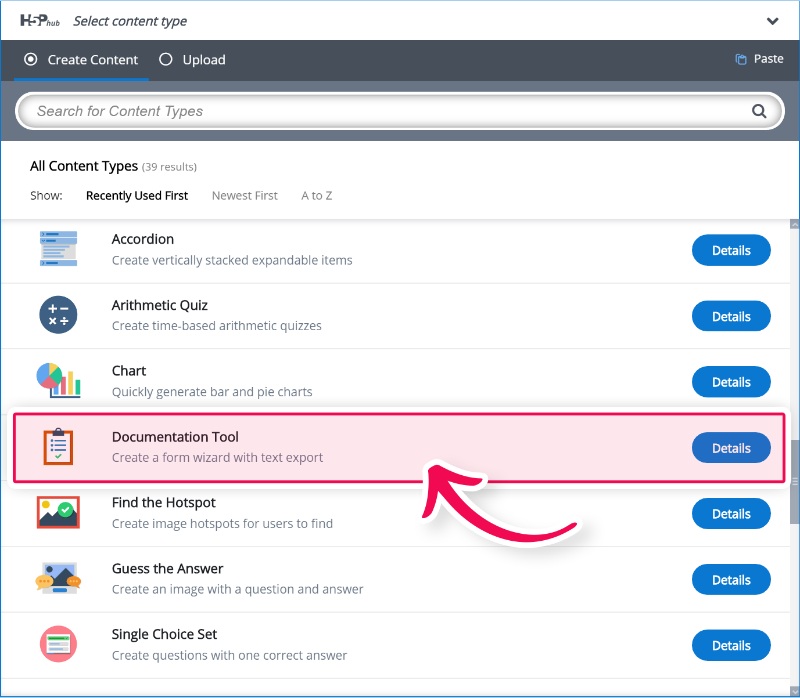
With H5P, learning designers can seamlessly embed interactive elements within their content, turning passive learning experiences into dynamic and immersive journeys. H5P supports a wide range of interactive formats, including quizzes, presentations, games, interactive videos, and timelines. Allowing your learners to explore your content in a non-linear way creates a sense of exploration, rather than just instruction.

Avoid Content Overload
My friends all tell me that when I get excited about a certain topic I talk fast. When I talk fast, I mumble and become incoherent. The same thing happens when content creators try to put too much on one slide, or give too much info all at the same time.
Effective learning design dictates content layering into digestible chunks. Like a magician unveiling a bunny, new learning points should be revealed when learners understand previous ideas. Learning designers can conceal information behind buttons, images, or drag drops. Knowing how to use all the interactive elements available allows the teacher to set the pace of the class. This allows learners to explore and discover information at [their own pace.](https://blog.thelearningos.com/benefits-and-disadvantages-of-self-paced-learning/)

Find out more about [Best microlearning practices](https://blog.thelearningos.com/benefits-of-microlearning/).
### Accessible Content across Devices

Even experienced companies that offer interactive learning experiences struggle to ensure their experiences work on every device. Making your content accessible and streamlined across hardware, operating systems and internet browsers can be a daunting task.
Lack of learner accessibility is a one-way street to poor user experience.
Make sure your designers have experience with the content authoring tool your company uses. Test your slides for compatibility on all devices before delivering content.
### Have Complete Control Over your Content
Educational institutions should be cautious about agreeing to license curriculums from major developers as such agreements may restrict any editing of the content.
Having complete authoring control of the content helps to avoid students being exposed to materials inappropriate for their age, culture, religious beliefs, or certain ideologies.
Curriculums should reflect the learners' cultural context and values. Having total control over the content allows creators to incorporate local history, literature, and societal perspectives. This ensures that education aligns with learners' cultural identity.

## Enhance the Learning Experience
Poorly designed content affects engagement. When learners are not engaged with the material, little or no learning occurs.
By working with a professional content provider, educational institutions can produce content, courses and curriculums that implement best practices for effective learning design.
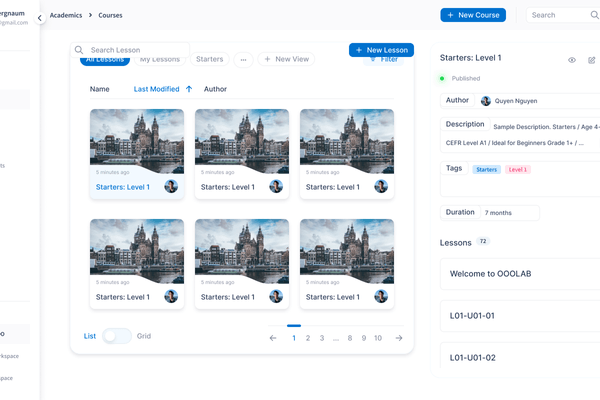
Whether your company wants your old slide decks turned into interactive lessons, rethink of your visual design, or a completely bespoke curriculum, our team of professional instructional, learning and graphic designers here at OOOLAB can help you level up your content.
Don’t let bad content keep your brand from thriving and your student’s from flying.
[Contact us today for a free consultation](https://thelearningos.com/#form).

---
This blog is powered by Superblog. Visit https://superblog.ai to know more.
---
## Efficient Learning at Scale: The Benefits of Customizing Your LMS
Author: Nga Tran
Author URL: https://blog.thelearningos.com/author/nga-tran
Published: 2023-05-22
Category: LMS
Category URL: https://blog.thelearningos.com/category/lms
Meta Title: Efficient Learning at Scale: The Benefits of Customizing Your LMS
Meta Description: Customizing an LMS adds a personalized feel that helps keep learners engaged while optimizing the management and delivery of educational content.
Tags: elearning-solutions/, personalized-learning/, saas/, white-labeling/, Enterprise-LMS/
Tag URLs: elearning-solutions/ (https://blog.thelearningos.com/tag/elearning-solutions), personalized-learning/ (https://blog.thelearningos.com/tag/personalized-learning), saas/ (https://blog.thelearningos.com/tag/saas), white-labeling/ (https://blog.thelearningos.com/tag/white-labeling), Enterprise-LMS/ (https://blog.thelearningos.com/tag/enterprise-lms)
URL: https://blog.thelearningos.com/benefits-of-customized-lms
## Efficient Learning at Scale: The Benefits of Customizing Your LMS
The benefits of using a Learning Management System (LMS) and Content Management System (CMS) are enormous.
But what's new is...
recent trends suggest technology vendors are offering clients **customizable** white-labeled learning platforms with **expert** support, for **no extra-charge.**
You might be wondering, why ?
Customizing an LMS adds a **personalized** feel that helps keep learners engaged while optimizing the management and delivery of educational content.
And it's these customizations that take software experts little time to implement, but offer **massive value**.
And they're worth bragging about.
In this article, we’ll explore **6 customizable features of an LMS**, which will help your enterprise:
- Automate learning operations
- Increase brand loyalty
- Implement cost effective solutions
Keep reading to see how customization can deliver efficient learning while **accelerating your business growth**.
### Domain name and URL

Making sure your platform uses your company's domain name and URL is a sought after and easily customizable feature. It ensures a smooth learning experience for your users and it avoids long, confusing addresses with forward slashes and redirects.
Online safety is a growing concern among parents, and using consistent domain names across all your virtual learning environments instills confidence in your clients and builds trust in your learning operations making scaling your brand easier.

### Logos, Layouts, and Color Schemes
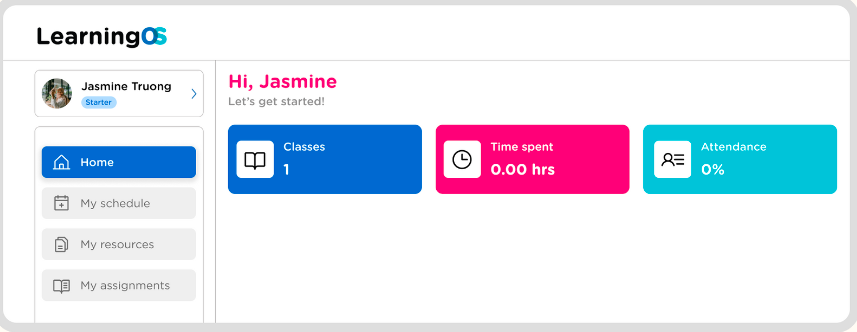
While you’re busy implementing tech-heavy features on your new LMS, it’s easy to overlook aesthetics. It's essential that the aesthetics of your LMS mirror your company branding and embedding your company's logo on the dashboard helps to do that.
Having consistent layouts and color schemes also creates a sense of ownership and familiarity for your learners. Furthermore, learning dashboards with subtle color schemes help build positive emotional connections which boost learner engagement. Having a cohesive interface enhances learning experience and makes digital products more scalable.

API Integrations
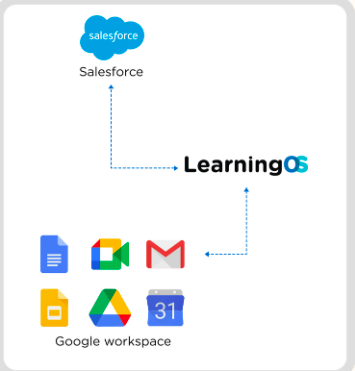
Educational and administrative tools are being designed and created at a rapid pace. And with the development of AI, you’ll need to innovate quickly to ensure your learning operations are automated and ahead of the competition.
White-labeled API customization offers increased flexibility for your business and functionality for your students. Many educators and enterprises already use an array of software and edtech tools to streamline their learning operations. Software experts can incorporate these integrations for you so learners, teachers, and employees can access them directly from your platform.

Learning Analytics
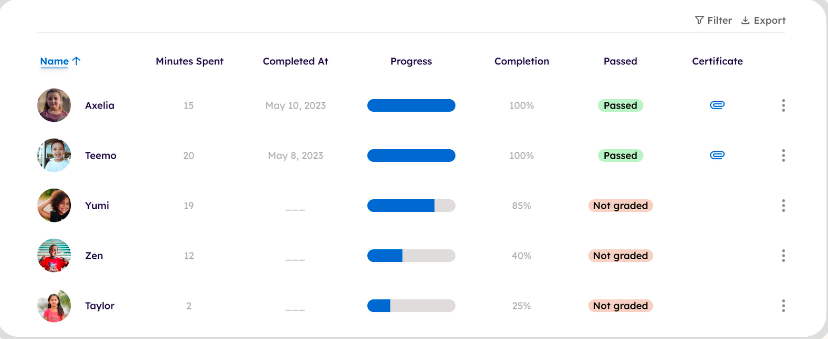
Learners, parents, and clients care a lot about student progress, so enterprises must measure progress at every opportunity. A lack of progress reporting reflects badly on any educational institution.
There are numerous customizable learning analytics templates to measure learning outcomes. These analytics track, collect, and analyze data. Leveraging this information is a no-brainer. Your enterprise is accountable for student progress, and learning analytics can showcase student progression and achievements. Demonstrating success makes your courses more scalable.
Learn more about Leveraging Learning Analytics to Increase ROI by clicking [this link!](https://blog.thelearningos.com/how-to-leverage-lxp-learning-analytics-to-increase-roi/).
### Advertising Banners

The school calendar year is full of noteworthy events. And your learning center will need to get information directly to the students as early as possible. Whether students are learning synchronously or asynchronously, utilizing advertising, or pop-up banners is an effective way to offer additional learning opportunities, inform students of schedule changes, or celebrate holidays and student achievements.
Uploading customizable banners to your LMS is simple but effective in maintaining an open line of communication between the enterprise and its learners. Promoting digital products directly on the dashboard will help scale your business faster. Keeping learners updated about scheduling changes, holidays, or other important events helps to avoid confusion and keep operations running smoothly.

Branded Mobile App
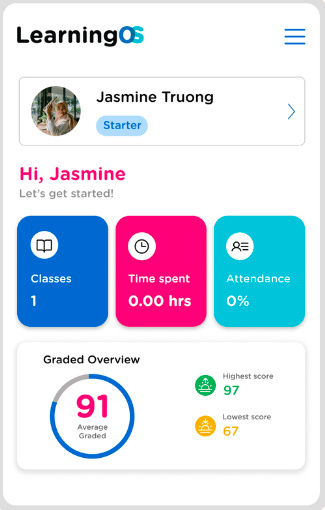
These days there’s an app for everything. Since students are more likely to use a cell phone to learn than a computer, it’s crucial your LMS has a branded mobile app. It will massively increase brand visibility and provide students with the flexibility and convenience of accessing educational resources anytime, anywhere. And aside from making your enterprise look professional, it improves students' learning accessibility, which improves overall engagement and performance.
Your LMS provider can help your enterprise put learning in the hands of your students by including a branded mobile app as part of your white-labeled LMS package. And you can customize the app with the same features as your desktop LMS.

## **Introducing LearningOS**
LearningOS is the #1 **Learning Management Platform** for enrichment learning by OOOLAB.
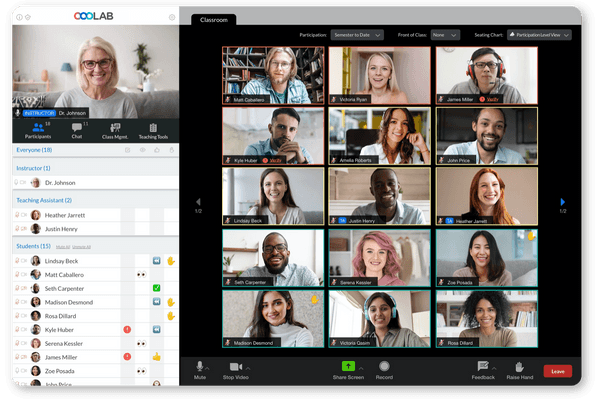
Take advantage of an LMS that offers complete white-labeling functionality and **unique customizable tools**.
**Customization is an Art**
OOOLAB appreciates each company is different, that's why we offer a free consultation with our expert educational software team. During this session we can discuss which white-label customizations would best suit **your business needs.**
**Schedule a demo here:** [LearningOS](https://thelearningos.com/#form)
---
This blog is powered by Superblog. Visit https://superblog.ai to know more.
---
## How to Leverage LXP Learning Analytics to Increase ROI
Author: Nga Tran
Author URL: https://blog.thelearningos.com/author/nga-tran
Published: 2023-05-03
Category: SaaS
Category URL: https://blog.thelearningos.com/category/saas
Meta Title: How to Leverage LXP Learning Analytics to Increase ROI in education
Meta Description: When you purchase an innovative Learning Experience Platform (LXP) from a reputable vendor, it comes fully equipped with all the latest tools, integrations.
Tags: white-labeling/, LXP/, Enterprise-LMS/, ROI/
Tag URLs: white-labeling/ (https://blog.thelearningos.com/tag/white-labeling), LXP/ (https://blog.thelearningos.com/tag/lxp), Enterprise-LMS/ (https://blog.thelearningos.com/tag/enterprise-lms), ROI/ (https://blog.thelearningos.com/tag/roi)
URL: https://blog.thelearningos.com/how-to-leverage-lxp-learning-analytics-to-increase-roi
## How to Leverage LXP Learning Analytics to Increase ROI
When you purchase an innovative Learning Experience Platform (LXP) from a reputable vendor, it comes fully equipped with all the latest tools, integrations for trouble-free interactivity. One **essential feature** of a LXP is its ability to seamlessly track, collect, and analyze data. We call these **Learning Analytics**.
When the business is ready to implement the software, learners will be able to log in, teachers can launch their virtual classrooms and administrators can assign classes to teachers. This is when LXP begin tracking data.
Your LXP will track data as soon as your learners, parents, teachers, or admin engage with the content.
LXPs collect data from three main areas:
- Individual Learner Progress and Performance.
- Class, Course and Curricula activity.
- Teacher Training and Development.
Analyzing your LXP’s Learning Analytics is a **battle-tested** approach to helping educational enterprises profit from their students' success.
### First Look
When we meet potential clients for the first time, two recurring pain points are brought to our attention:
- Clients are unsure of which learning analytics are available and customizable.
- Educators cannot draw accurate conclusions from the data.
Understandably, choosing the correct set of analytics to monitor and measure your educational organization's success can be tricky.
There are hundreds of **Learning Analytics** available on a LXP, but we’ve put together a list of **8** that will enable businesses to measure student's learning and the effectiveness of classroom teaching.
These valuable insights help increase student enrollment, client referrals, and boost product sales.
**LA1: Login Activity**
This metric tracks the log-in rate and frequency of students logging into the LXP. It also measures the duration of each learning session.
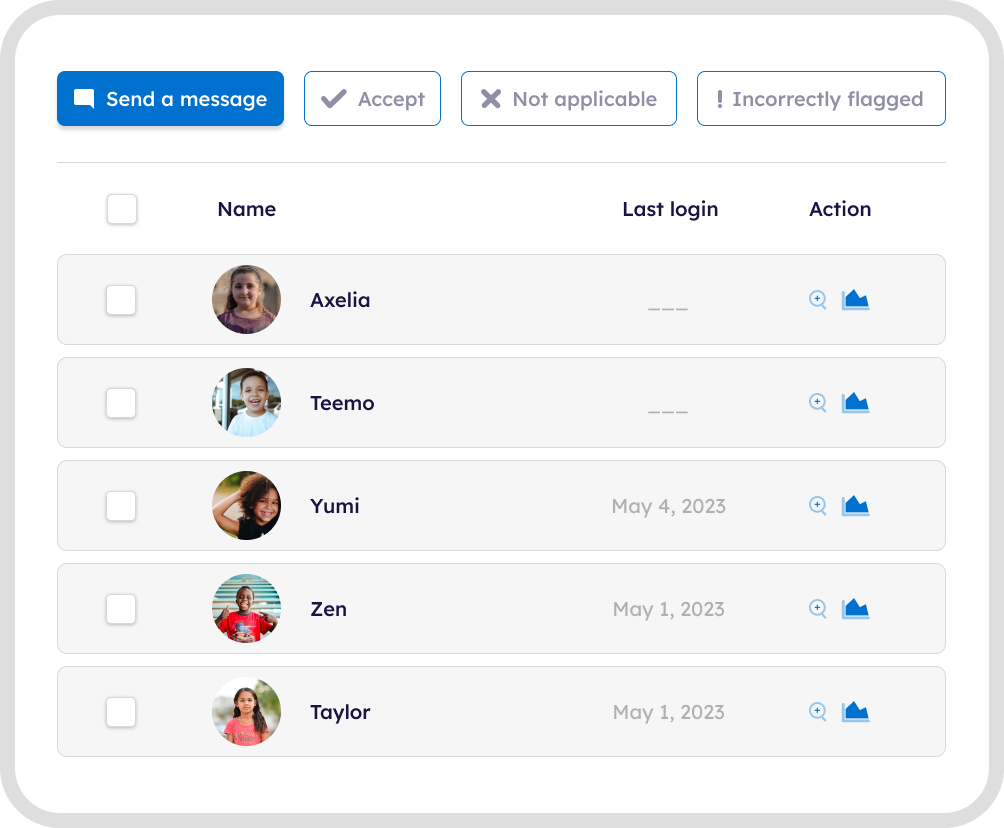
- If learners fail to log in, or log in for short periods of time, they may be struggling with assignments.
- Infrequent or no login activity might indicate accessibility issues, or lack of equipment, or even technical skill.
**LA2: Time Spent on Activity**
This metric tracks the amount of time students spend on each activity or course.
- 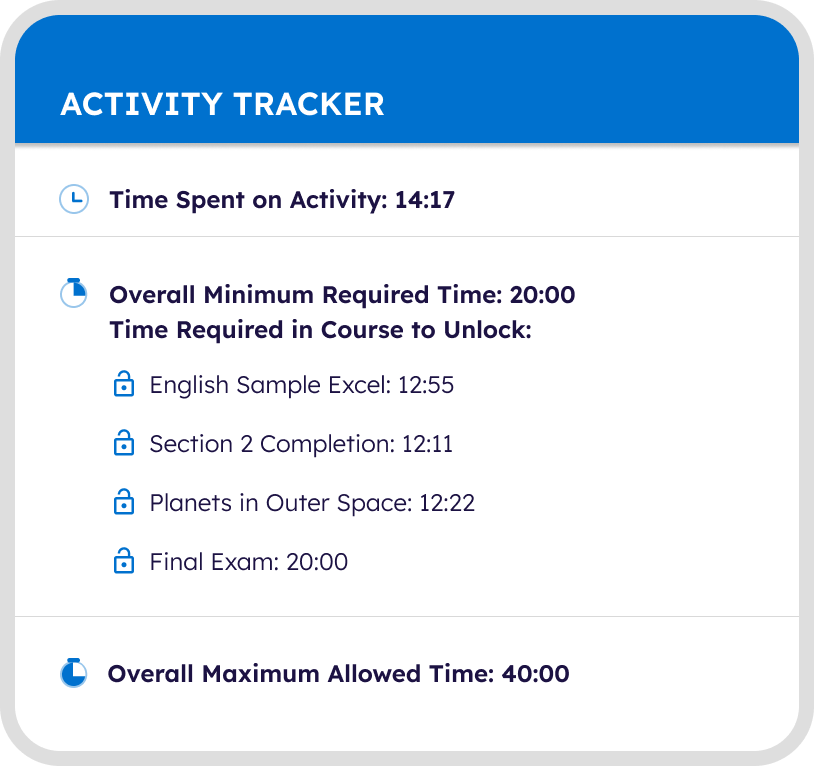
- Learners who spend too little or too much time on certain activities may find them too **easy, or difficult** leading to disengagement. Teachers may consider adjusting the learning level.
**LA3: Rewards Leaderboard**
This analytic compares learner participation, and shows which learners achieve the most rewards.
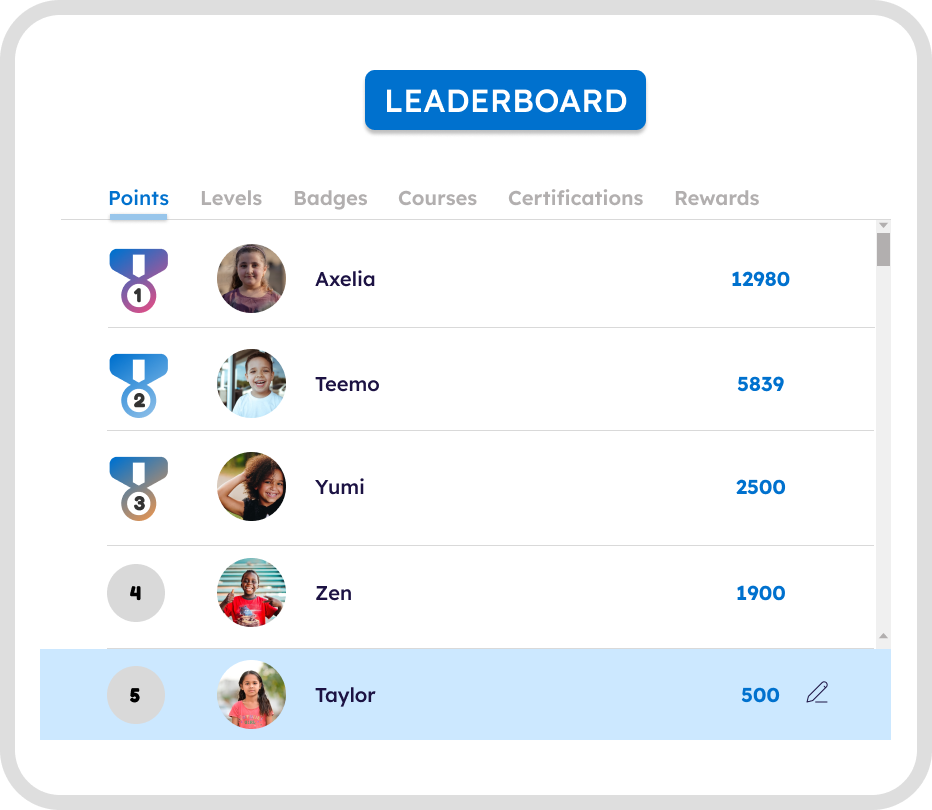
- Learners who steadily increase their reward count hit **their targets**.
- Resetting leaderboards can increase peer competition.

**LA4: Assignment Submission**
This metric tracks when students begin and submit their assignments and how they interact with them over time.
- 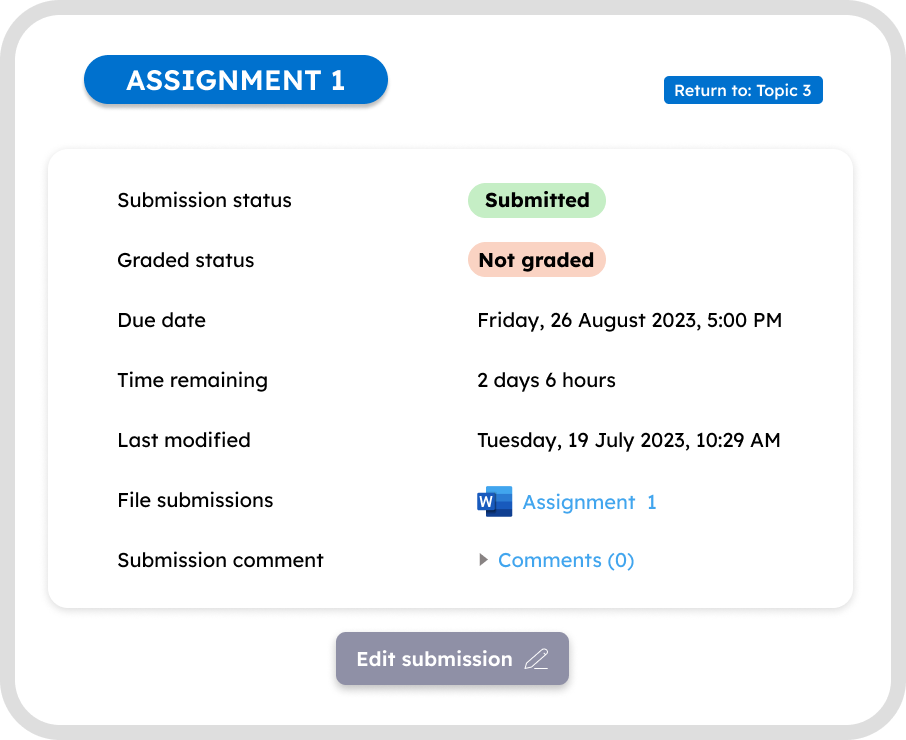
- Late submissions may indicate students are **struggling** with their current workload.
- It also tracks re-submissions. This is very helpful when learners make changes to their assignments based on teacher feedback.

**LA5: Learning Resources Access**
This metric measures who, and how frequently students access supplemental learning resources.
- 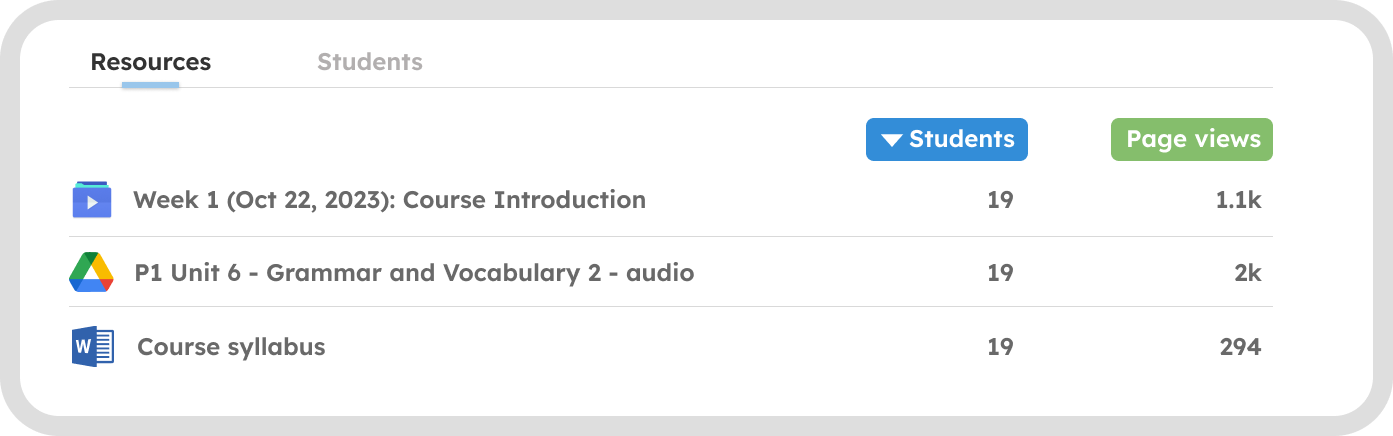
- Students who access additional learning resources **perform better.**

**LA6: Assessment Results**
This metric tracks how students perform on assessments. Results can be viewed as grades, points, or percentages.
- 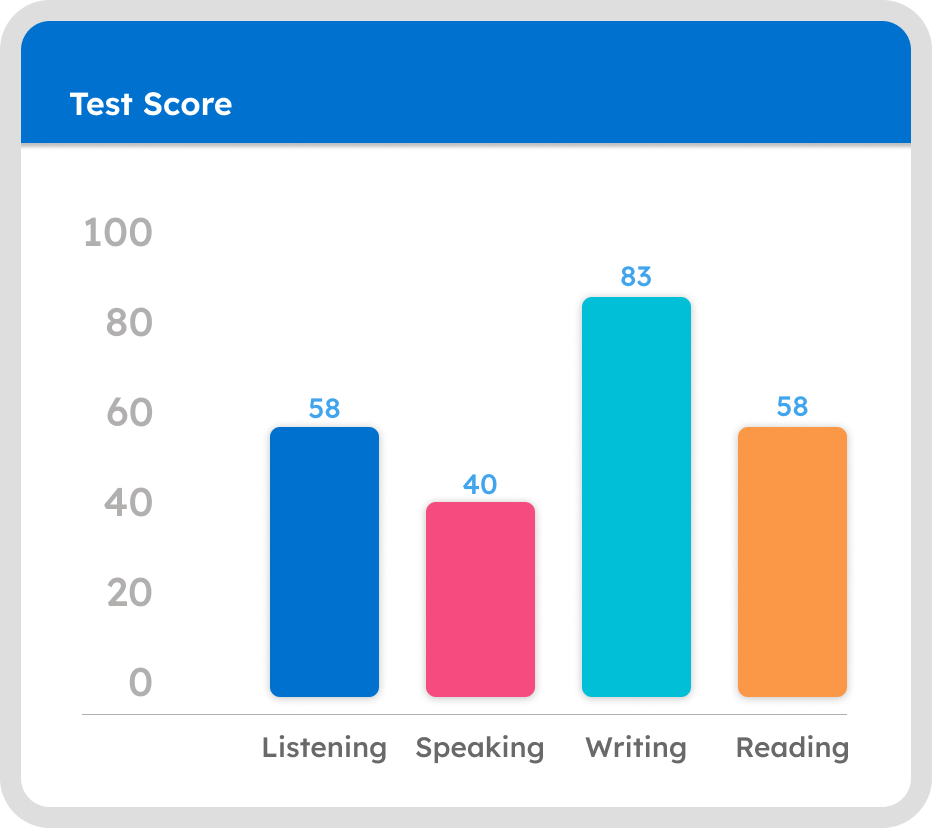
- This LA allows teachers to **identify** **knowledge gaps** and allocate additional teaching time to areas where students struggle.
- This helps keep track of previous exam scores and calculates students' averages across multiple assessments.
**LA7: Progress Tracking**
This metric tracks a student's progress through the course.
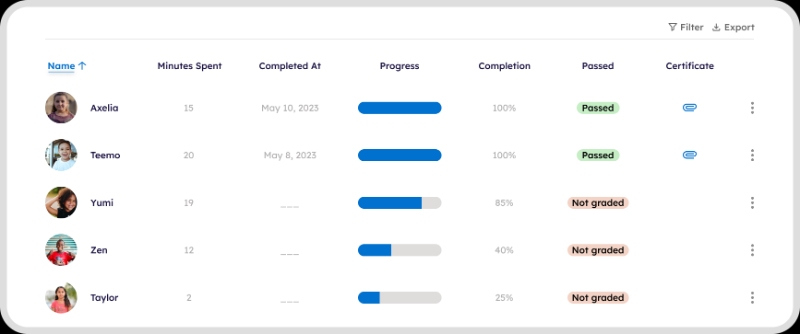
- Ensure learners progress incrementally through the course.
- Identifies parts of the course where learners may struggle.

**LA8:** **Student Satisfaction and Re-Enrollment**
This tracks the number of students who **remain enrolled** in a course over time.
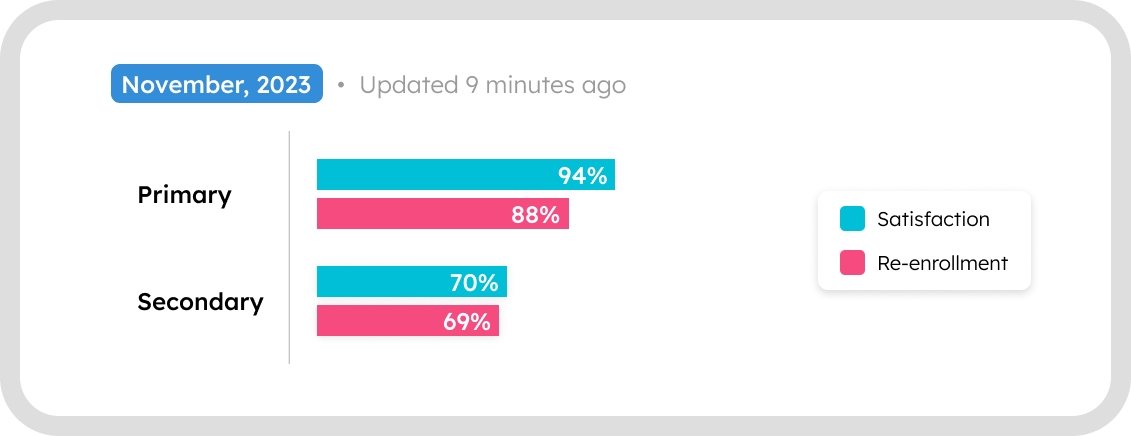
- Helps keep track of new, existing, and drop-out students.
- A drop in numbers may indicate learner **dissatisfaction**.

## Final Thoughts
These 8 analytics allow enrichment companies to monitor the effectiveness of their operations and identify areas to boost ROI.
To do this you’ll need a Fully Customizable LXP platform with built-in Learning Analytic software:
You can get that from OOOLAB with:
LearningOS is the #1 **Learning Experience Platform** for enrichment learning and contains all the learning analytics you need to gain valuable insights and increase your ROI.
OOOLAB knows each company is different, and during an onboarding session with OOOLAB our expert educational software team can configure your LXP and create organization-specific reports Learning Analytics based on your company's needs.
Schedule a demo here: [LearningOS](https://thelearningos.com/#form)
If you're interested in how **Learning Analytics** can be customized as part of our **white-labeling package** then read this blog: [6 Reasons Why Enrichment Centers are White-Labeling their LMS (And Why You Should Too)](https://blog.thelearningos.com/enrichment-centers-white-label-their-lms/)
## **About us**
At OOOLAB (pronounced 'uːlæb'), our mission is to make complex learning operations simple. We aim to positively impact the lives of over 1,000,000 learners and educators by the end of 2026.
OOOLAB's LearningOS provides educational institutions and corporate enterprises with an all-in-one solution to create and deliver engaging learning experiences.
Reach out to us at: [**Linkedin**](https://www.linkedin.com/company/ooolab/?viewAsMember=true), [**FaceBook**](https://www.facebook.com/ooolab.edu)
---
This blog is powered by Superblog. Visit https://superblog.ai to know more.
---
## What are the Benefits and Disadvantages of Self-Paced Learning?
Author: Nga Tran
Author URL: https://blog.thelearningos.com/author/nga-tran
Published: 2023-04-21
Category: Learning
Category URL: https://blog.thelearningos.com/category/learning
Meta Title: What are the Benefits and Disadvantages of Self-Paced Learning?
Meta Description: Self-paced learning can have both advantages and disadvantages. Let's find out more about in this blog.
Tags: k12-lms, interactive-learning/, personalized-learning/, LXP/, Enterprise-LMS/
Tag URLs: k12-lms (https://blog.thelearningos.com/tag/k12-lms), interactive-learning/ (https://blog.thelearningos.com/tag/interactive-learning), personalized-learning/ (https://blog.thelearningos.com/tag/personalized-learning), LXP/ (https://blog.thelearningos.com/tag/lxp), Enterprise-LMS/ (https://blog.thelearningos.com/tag/enterprise-lms)
URL: https://blog.thelearningos.com/benefits-and-disadvantages-of-self-paced-learning
## What are the Benefits and Disadvantages of Self-Paced Learning?
I recently had a long layover at the newly renovated Muscat Airport, Oman. While I was waiting for my connecting flight to London Heathrow, I had time to find coffee and settle into a metal chair and catch up on some work, marking student assignments.
As I scrolled through my students' English essays on the LMS it became apparent that the switch to online learning had taken a toll on the quality of my students' work. I knew they could write better than this. I began to wonder about the effectiveness of self-paced learning.
Across from me was a giant billboard. Unsurprisingly they were trying to promote tourism in the capital, Muscat. It featured the sun setting on a desert horizon with the caption: ‘Visit Oman: Miles and miles of nothing but white sand’ - while this might appeal to some people, for me, it was precisely the reason I wouldn’t be visiting in the future.
Similarly, I couldn’t help but feel self-paced learning benefits are misleading. My students were underperforming, and I wanted to find out if the freedom to self-regulate their learning was detrimental or even counterproductive.
### A Quick Google
I started researching the benefits of self-paced learning, and this is what I discovered:
> “online modules frequently have a dropout rate of more than one in five students…”
> “costing universities millions in lost revenue every year. It creates a poor perception of online education.” - theconversation.com
That’s an alarming dropout rate! Higher educational institutions offering 100% self-paced learning courses had BIG retention problems.
Concerned about my secondary school students and our blended learning approach, I decided to research the benefits and disadvantages of self-paced learning to better understand why my students were struggling.
5 ideas from the web kept popping up, however, just like the ‘miles and miles of nothing but white sand’, I’m not sure if they’re benefits or disadvantages.
### 1\. With Self-Paced Learning there is no pressure to complete assignments.
Initially, it sounds like a benefit. No one likes too much pressure, but from my experience as a classroom teacher, if there ain’t pressure, the students ain’t doing the work. Moreover, the longer students procrastinate on assignments, the less valuable information they'll remember.
Psychologist Robert Bjork (1994) says that there should be ‘desirable difficulty’.
> ### “Introducing an element of struggle or difficulty into the learning process can significantly improve long-term retention, it helps to form deeper neural connections.’
Deep down I know that challenge increases the motivation to succeed. Regarding my students, I think self-paced learning often becomes ineffective when there’s no pressure.
**Verdict:** No pressure is a disadvantage (at least for most learners).
**Action:** I decided to increase communication with my learners to apply pressure and remind them of their active deadlines.
—--------------------
**2\. Learners can develop the skills to work autonomously and stick to a learning schedule that they create for themselves.**
Learners who create and stick to a learning schedule feel empowered. Whether my students are early birds or night owls, allowing them to work autonomously can only be good…right?
> “Students choose what to study, how to study, when to study, and how long to study; these self-regulated aspects of learning have important implications for the effectiveness of their learning efforts and achievements in education (Dunlosky & Theide,1998)
Schools and teachers aren’t recognizing the potential burden self-paced learning adds to learner's workload. A student that’s never set their own schedule may not have the self-discipline to do so.
**Verdict:** I think it’s a benefit. Working autonomously may be difficult at first, but we shouldn’t underestimate our students.
**Action:** I’ll ask my students to discuss their learning schedule. I’ll ask them when and why certain times are best to study. Hopefully, this communication keeps them accountable for their learning.
**3: Freedom to try different models of learning.**
It’s true, one size doesn’t fit all. Some of my learners may have a ‘preferred method’ of learning. Perhaps they prefer to acquire information from textbooks, internet research, or even talking to professionals. But at the same time, they may think watching Netflix will help them pass a media studies exam. It might...but, it's not a very effective way to learn.
It’s my job to structure and facilitate their learning with a proven teaching methodology.
> Few examples exist in which allowing learners to control their own learning produces higher levels of performance than that of restricting learners’ control. (On the effectiveness of self-paced learning - J.G Tullis / A.S Benjamin)
**Verdict:** It’s a disadvantage. At this stage in my student’s education, it’s better to restrict the learning input.
**Action:** I’ll always encourage my students to research independently, but learners usually need help assimilating and breaking down their findings.
**4: Mobile learning is more engaging**
Even though I’m very proud that I can recite Hamlet's ‘to be or not to be’ speech unashamedly at the front of the classroom, maybe my students would prefer a multimedia version on their tablets, or mobile phones.
> “65% of all digital media is viewed on smartphones. 91% of the time spent on smartphones is spent using apps, of which about [50% is used for some form of learning](https://www.docebo.com/learning-network/blog/10-stats-mobile-learning/). https://www.go1.com/blog/the-benefits-of-mlearning-over-elearning
While most teachers experiment with engaging ways to use digital media in the classroom, students spend more time on their smartphones than in the classroom itself.
With an abundance of educational apps and resources, self-paced mobile learning has the potential to offer students the chance to learn completely from their mobile, or tablet.
Mobile learning gives more options for interactive and engaging content. Students have quizzes, digital flashcards, explainer videos, podcasts, and even educational games at their fingertips.
**Verdict:** It’s a benefit. Self-paced learning on smartphone devices offers students the chance to engage with a wider range of interactive content.
**Action:** I’ll curate a list of appropriate apps and resources my students can consume from the comfort of their sofas, but warn them of the dangers of distractions.
**5\. LMSs support self-paced learning**
Educators born in the 90s or later most likely came across Learning Management Systems (LMSs) and other educational technology during their professional teacher training. Slightly older teachers can perhaps remember all the fuss, fooling around, and chaos that implementing LMSs in the classroom had on the department.
> 90% of students prefer learning online to traditional learning methods. https://research.com/education/lms-statistics
Long story short, LMSs are here to stay. I successfully use them in the classroom, and for online teaching. And honestly, LMSs are better catered to support self-paced learners. Proficient systems include everything learners need to organize, deliver, and assess educational content on their schedule.
> We cannot force them to learn, nor can we teach them absolutely everything they'll need to know in the future. We can…give them the gift of self-paced exploration. In other words, we can offer them the tools and skills they need. https://elearningindustry.com/8-tips-adopt-elearning-mindset
Self-paced learning and LMSs go hand in hand like palm trees in sand.
**Verdict:** LMSs are already widely used in classrooms all over the world. Extending the effective use of LMSs is a massive benefit to self-paced learning.
**Action:** Make sure all my learners can benefit from our LMS's various functionalities.

## Can Self-Paced Learning Work?
As I sit in the airport, I’ve reached a few conclusions: It's getting closer to boarding time, but I'm no closer to getting my work done.
It’s true what _Business Dictionary_ says.
> "Self-Paced Learning is a Teach-yourself method of learning that is initiated and directed by the learner...”
I’d like to add more to that quote.
_'Teach-yourself method of learning that is initiated and directed by the learner..." ...._ with careful monitoring, assessment, and motivating communication throughout from a teaching professional.
I’m not 100% sold on self-paced learning yet, or the perfect desert destination either.
**Update: April 2023**
The good news is, I'm a lot more "sold" on self-paced learning as of April 2023.
I'm using a Learning Management System called **LearningOS**. It's a low-cost and low code system that’ll streamline your content, making it easy to personalize content for self-paced learning. With **LearningOS** it's easy to onboard students and allocate content and it's easy to monitor their learning progression and assessment with extensive learning analytics.
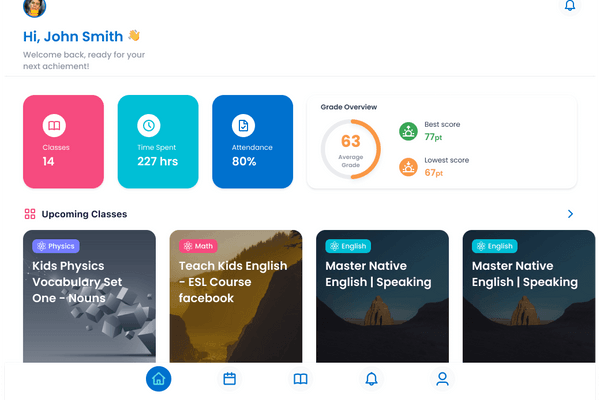
Take a look for yourself **[www.thelearningos.com](https://www.thelearningos.com/)**
And if you're interested in how **Self-Paced Learning** and **Microlearning** work together then scroll this blog...
>>>Read more: [Find out more](https://www.thelearningos.com/)
_**>>\> Read more:**_ **[The benefits of role play in sales training](https://blog.thelearningos.com/the-benefits-of-role-playing-in-sales-training-and-how-to-implement/)**
Additional Sources:
_[creatrixcampus.com/blog/top-10-benefits-self-paced-learning-you-were-not-aware](https://www.creatrixcampus.com/blog/top-10-benefits-self-paced-learning-you-were-not-aware)_
_[elearningindustry.com](https://write.superblog.ai/sites/supername/ooolab/posts/what-are-the-benefits-and-disadvantages-of-self-paced-learning-clgpv97yv667073ton4ze6eck7/elearningindustry.com)_
_[digitallearninginstitute.com](https://www.digitallearninginstitute.com/)_
---
This blog is powered by Superblog. Visit https://superblog.ai to know more.
---
## LMS vs. CMS: What’s the Difference? Which One Is Right For You?
Author: Nga Tran
Author URL: https://blog.thelearningos.com/author/nga-tran
Published: 2023-04-19
Category: LMS
Category URL: https://blog.thelearningos.com/category/lms
Meta Title: LMS vs. CMS: What’s the Difference? Which One Is Right For You?
Meta Description: LMS and CMS are two of the most commonly confused acronyms in the education industry. thinking about setting up and implementing an LMS, or a CMS.
Tags: LMS/, learningos/, personalized-learning/, cms/, Enterprise-LMS/
Tag URLs: LMS/ (https://blog.thelearningos.com/tag/lms), learningos/ (https://blog.thelearningos.com/tag/learningos), personalized-learning/ (https://blog.thelearningos.com/tag/personalized-learning), cms/ (https://blog.thelearningos.com/tag/cms), Enterprise-LMS/ (https://blog.thelearningos.com/tag/enterprise-lms)
URL: https://blog.thelearningos.com/differences-between-lms-and-cms
## LMS vs. CMS: What’s the Difference? Which One Is Right For You?
LMS and CMS are two of the most commonly confused acronyms in the education industry. If your enrichment center is thinking about setting up and implementing an LMS, or a CMS, then one letter can make a huge difference.
First of all, LMSs and CMSs are essential tools for eLearning. Whether you're delivering classes in-house, or online, using a LMS and / or CMS will help keep your operations running smoothly all the way from enrollment to engagement.
But what is the difference? And which one is right for you? This article aims to answer those questions and give you a few pointers on which one you’ll need for your business.
### How are they Similar?
A LMS and CMS are similar in many ways. Both systems allow enrichment institutions to create and edit educational content which can be stored in a centralized content library. Both systems let administrators and eLearning developers update simultaneously and allow colleagues to review changes and leave comments. They both allow learners to access the system remotely and learn at their own pace via desktop or mobile devices. Finally, they each offer performance tracking; such as progress and course completion reports, login data, and assessment scores.
Also, for both LMS and CMS systems the end user is the same. Sure enough, the learner is at the heart of all enrichment, or learning centers, but this is where the similarities end. Enrichment and learning centers using solely an CMS system will begin to have a widely different operational experience than a learner using a innovative LMS system.
How are they Different?
I’d say that a CMS is like an ice cream cone, but without the sauce, sprinkles, or cherry. It’s still a delicious treat, a welcome respite from the summer heat of the office, but it could be better. A LMS, on the other hand, offers so much more in terms of functionality.
They offer:
- Integration of third-party applications
- Individual dashboards for admin
- Advanced tracking
If we dive deeper into the modern LMS and you’ll discover it’s on another level.
### The Proof is in the Pudding
The proof that today's LMSs are superior to their CMS counterpart lies in the user's learning journey. One stand-out feature of an LMS is its ability to tailor courses to learners' needs and create customized learning paths.
After LMS users take a digital placement test, the LMS can create a series of learning objectives and learning goals based on the student's ability, which in turn suggests appropriate educational content. Curriculum development teams can effortlessly create a personalized strategy for each learner. something that a CMS doesn’t do very well.
But that's not all...
On top of customized learning paths, LMSs come with amazing features to analyze and measure the individual learner journey class by class. Learner Analytics can be used to:
- Track learner’s engagement in a course
- Identify areas where learners may need additional support or guidance
- Identify class content that is ineffective, or confusing
The way that the LMS can create and monitor learning paths with actionable insights benefits learners in an unprecedented way. And if the learners are succeeding, this success will reflect nicely on your Learning Center.
### Which One is Right for You?
All enrichment and learning centers operate slightly differently, but if you want to deliver educational content effectively with the learner at the heart of it you’ll need a LMS that incorporates all the best features of a CMS! Today’s LMS systems are more than capable of performing everything a CMS can do and more. And these extra trimmings might be the features your organization needs to boost sales.
## Introducing the LMS / CMS Fusion
Get the best of both worlds with LearningOS from OOOLAB. It really is in a _world of its own_.
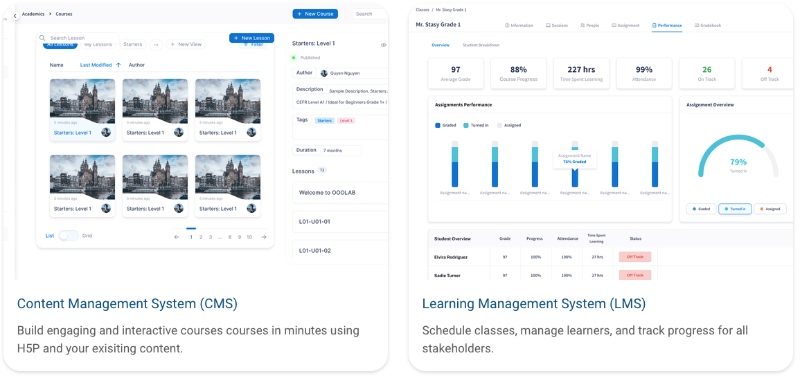
It seamlessly integrates and LMS / CMS and making it easy to create personalized learner paths and generate learner analytics. It boasts remote accessibility, gamified dashboards, and advanced tracking making sure the learners can engage socially and collaboratively. It also helps curriculum developers create and design content easily and lets administration staff enroll and allocate courses effortlessly. It’s the crème de la crème of LMSs.
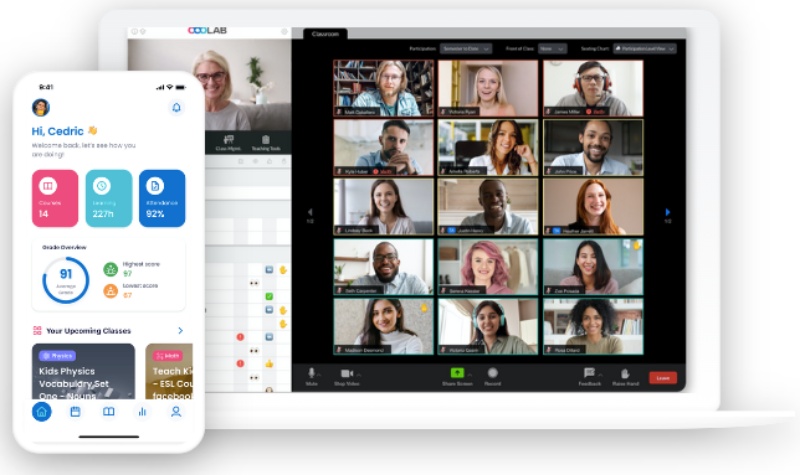
If you’re interested in implementing the best content and learning management system, then reach out to us here at [OOOLAB](https://thelearningos.com/). We offer a simple solution that’ll provide you with the most efficient learning system — **LearningOS**.
Contact a LMS expert [here](https://thelearningos.com/#form) and discuss how LearningOS can help your enrichment center.
—--------------
We know companies can't keep up with the trends that are driving technological advances. If you’re still using an outdated LMS or CMS, then don’t worry. OOOLAB’s LearningOS allows companies to merge any existing systems they are already using. Old data, records, and courses can be integrated alongside brand-new features.
Learn more about switching up systems here: [thelearningos.com/contact](https://thelearningos.com/#form)
If you've still got room for dessert then here's another essential acronym... **LXP**, stands for Learner Experience Platform. Click the link to learn more about [the difference between an LMS and LXP here.](https://blog.thelearningos.com/distinction-between-lms-and-lxp/)
---
This blog is powered by Superblog. Visit https://superblog.ai to know more.
---
## What is H5P and How Can it Help Me?
Author: Nga Tran
Author URL: https://blog.thelearningos.com/author/nga-tran
Published: 2023-04-19
Category: CMS
Category URL: https://blog.thelearningos.com/category/cms
Meta Title: What is H5P and How Can it Help Me?
Meta Description: H5P is a free and open-source content authoring tool that enables educators and developers to create interactive content that can be embedded in platforms
Tags: learningos/, elearning-solutions/, H5P/, Enterprise-LMS/, blended-learning/
Tag URLs: learningos/ (https://blog.thelearningos.com/tag/learningos), elearning-solutions/ (https://blog.thelearningos.com/tag/elearning-solutions), H5P/ (https://blog.thelearningos.com/tag/h5p), Enterprise-LMS/ (https://blog.thelearningos.com/tag/enterprise-lms), blended-learning/ (https://blog.thelearningos.com/tag/blended-learning)
URL: https://blog.thelearningos.com/h5p-and-its-application
## I. Intro to H5P:
As educators and trainers, we should strive to make learning more interactive, engaging, and interesting for our learners. One tool that has gained popularity in recent years is **H5P**, which stands for HTML5 Package. H5P is a **free** and open-source **content authoring tool** that enables educators and e-learning developers to create interactive content that can be embedded in websites, learning management systems, and other digital platforms.
The team at **OOOLAB** have been using H5P extensively over the years, and we're confident that we are among the most experienced developers using the platform. We'd like to share some ways that using H5P has helped us and can help you when creating your own online educational content.
## II. Benefits of H5P:

It's free! Most other content authoring platforms have annual licensing fees ranging from hundreds to thousands of dollars per user. H5P is free no matter how big your team is, leading to significant cost savings.

H5P is a versatile tool that can be used to create a wide range of interactive content types. From interactive presentations to drag and drop exercises, H5P offers [over 50 different content types](https://h5p.org/content-types-and-applications) that can be used to engage learners. Many of the content types are suitable for all age levels- from K-12 to corporate L&D. H5P allows you to do many of the same things that much more expensive content authoring tools do.


Although there is a slight learning curve, H5P is easy to use and does not require any programming skills or understanding of triggers, states, or variables. With a user-friendly interface, you can quickly create interactive content that is engaging and effective. You can even overlay interactive content into pre-made PowerPoint or Google Slides presentations.


H5P allows educators to create games that are both fun and educational. This approach can help increase student engagement by making learning feel like play. By using games to teach concepts, students are more likely to retain information and enjoy the learning experience.


With H5P, educators can create interactive videos that let students answer questions, make choices, and engage with the content in a more active way. H5P interactive videos have lots of different content type options to use, many more than other popular interactive video creators. There are even options to jump to other areas of the video, allowing you to create branched scenarios and choose-your-own-adventure style content.
> Keep your eyes open for a future post where we'll tell you all about the different question type possibilities for interactive videos!

H5P offers a variety of quiz and assessment options, including multiple choice, fill-in-the-blank, and true/false questions. These quizzes are embeddable in online courses and can provide students with immediate feedback on their progress. By providing instant feedback, students can learn from their mistakes and improve their understanding of the material. H5P can communicate with your LMS to provide tailored information about each student.
> Does your LMS work with H5P? If not, try **Learning OS**. We've custom built it around H5P for reliability and ease of use. There's even an inbuilt H5P creator, so what you make is automatically uploaded. Our system also lets you assemble individual H5P files into a lesson deck!

H5P is based on HTML5, which means that it is compatible with a wide range of devices and platforms. This makes it easy for educators to create content that can be accessed by students on their laptops, tablets, or mobile devices. This is especially useful if you would like to start making homework or pre-work content for your course. Our **LearningOS** app along with H5P lets you assign it straight to students’ mobile phones.
> If you would like to start making custom, H5P-based homework content in [your own app](https://blog.thelearningos.com/enrichment-centers-white-label-their-lms/), [let us know](https://thelearningos.com/#form)!
Overall, H5P is a powerful tool that can help to create interactive and engaging content that enhances the learning experience for students. By incorporating H5P into courses, educators and institutions can increase learner engagement and make learning more fun and interactive, leading to better retention and better outcomes.
In general, H5P is a robust tool designed to create interactive and captivating content that improves students' learning experiences. When educators and institutions integrate H5P into their courses, they can boost learner engagement, make the educational process more enjoyable and interactive, and ultimately enhance retention and outcomes.
### Why not [give it a try](https://thelearningos.com/)?
### **About us**
At OOOLAB (pronounced 'uːlæb'), our mission is to make complex learning operations simple. We aim to positively impact the lives of over 1,000,000 learners and educators by the end of 2026.
OOOLAB's LearningOS provides educational institutions and corporate enterprises with an all-in-one solution to create and deliver engaging learning experiences.
Reach out to us at: [Linkedin](https://www.linkedin.com/company/ooolab/?viewAsMember=true), [FaceBook](https://www.facebook.com/ooolab.edu)
---
This blog is powered by Superblog. Visit https://superblog.ai to know more.
---
## Choose the Right Content Authoring Tools to Scale E-Learning
Author: Nga Tran
Author URL: https://blog.thelearningos.com/author/nga-tran
Published: 2023-03-29
Category: Enterprise
Category URL: https://blog.thelearningos.com/category/enterprise
Meta Title: Choose the Right Content Authoring Tools to Scale E-Learning
Meta Description: Learning Management System (LMS) Market size to grow from USD 15.8 billion in 2021 to USD 37.9 billion by 2026, at a Compound Annual Growth Rate (CAGR) of 19.1%
Tags: personalized-learning/, white-labeling/, VLE/, Enterprise-LMS/, content-authoring/
Tag URLs: personalized-learning/ (https://blog.thelearningos.com/tag/personalized-learning), white-labeling/ (https://blog.thelearningos.com/tag/white-labeling), VLE/ (https://blog.thelearningos.com/tag/vle), Enterprise-LMS/ (https://blog.thelearningos.com/tag/enterprise-lms), content-authoring/ (https://blog.thelearningos.com/tag/content-authoring)
URL: https://blog.thelearningos.com/content-authoring-for-elearning-business
## **Choose the right Content Authoring Tools to Scale your E-Learning Business**
_Learning Management System (LMS) Market size to grow from USD 15.8 billion in 2021 to USD 37.9 billion by 2026, at a Compound Annual Growth Rate (CAGR) of 19.1% - (GLOBE NEWSWIRE)_

Crikey!
Is your business catching that wave?
If you run an eLearning or educational technology business, there is a ton of money to be made.
And with those numbers, every business in the education sector ought to be feeling the swell of success.
Learning Management Systems are the beating heart of educational organizations.
They are the first port of call and help companies to:
- Create
- Manage
- Deliver
- Optimize
ALL learning content.
Sadly, businesses continue to select LMSs without content-authoring tools.
They are unable to create unique learning materials.
This makes educational companies either vulnerable to competitors or leaves them with no choice but to pay obscene royalty fees for the intellectual property of others.
Many educational firms are not making the splash they had hoped for and many businesses are barely breaking even.
As an instructional designer, I develop engaging learning materials daily.
And you need to ensure that your educational institution can handle the rising demand for content development if you want to grow your business to great heights.
And I can assure you, the size of the fish you'll catch depends on how effective your content-authoring tools are.

Is your business ready to ride a huge wave? Keep reading and I’ll tell you which content authoring tools your business needs so that it’s not treading water anytime soon.
_**>>\> Read more:**_ **[Addressing declining retail foot traffic issue](https://blog.thelearningos.com/addressing-declining-retail-foot-traffic-strategies-for-success/)**
_**>>\> Read more:**_ **[Why is blended learning the future of corporate training](https://blog.thelearningos.com/blended-learning-in-corporate-training/)**
### **Popular Content Authoring Tools on the Market**
Have you ever used, or heard of _Adobe Captivate_? It’s one of the most popular content-authoring tools on the market. Instructional designers and eLearning developers use it to create seamless interactive online courses.
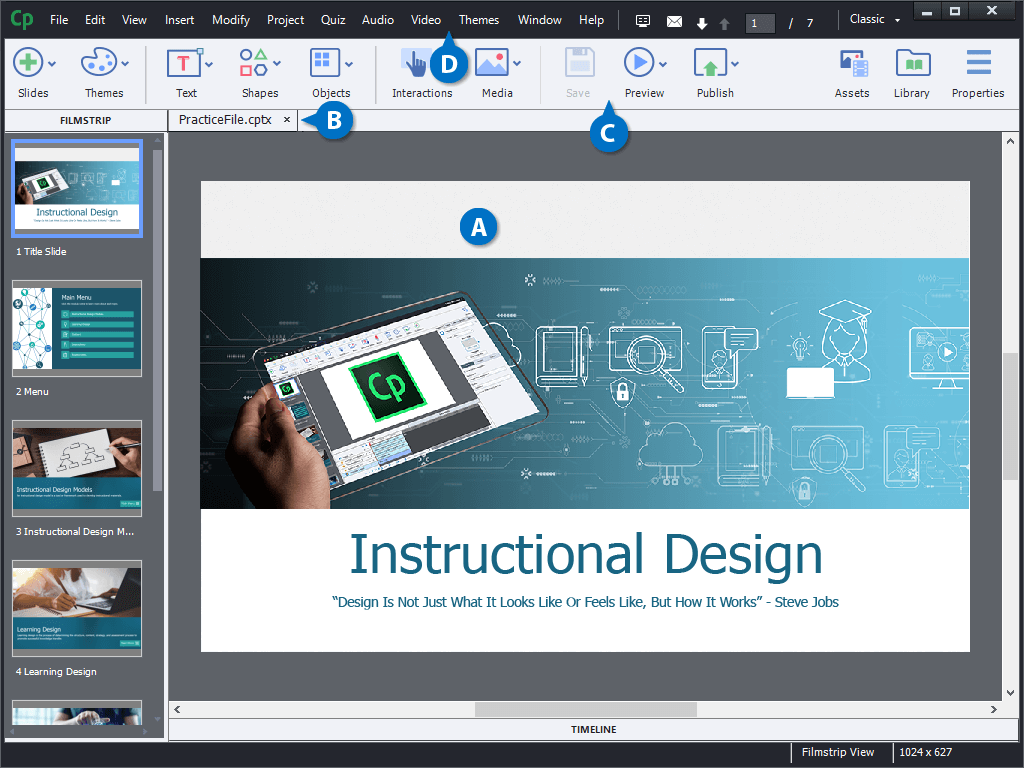
_“With professional instruction, an individual can become an expert in Adobe Captivate in about one week. Without professional instruction, learning Microsoft Access can take around a month or longer.”_ _Nobeldesktop.com_
Looks daunting, right? These courses aren’t _seamlessly created_. Only after spending countless hours learning how to utilize Adobe can instructional designers (like myself) start producing content.
You could use to design responsive eLearning courses that fit any device. It’s better than nothing, but it comes at an incredible cost. Costs that will make scaling difficult.
If you’re looking for something a little simpler to deploy, another popular content-authoring tool is _ispring suite_. According to their website, even newbie instructional designers can create eLearning courses.
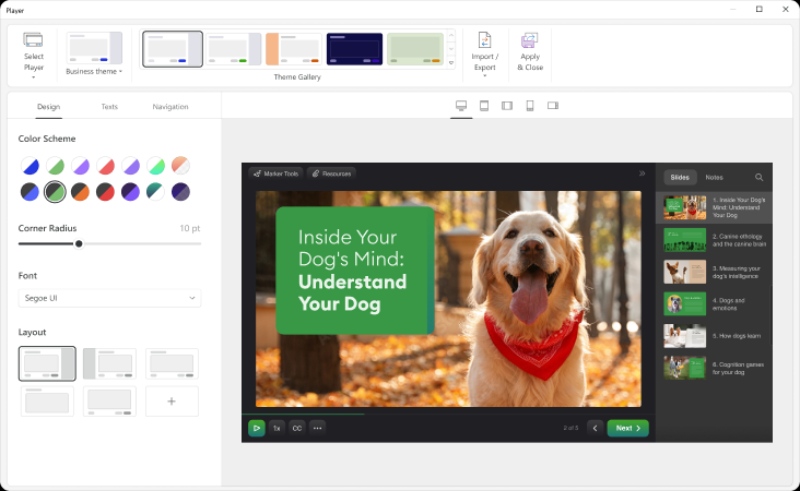
_ispring suite_ is significantly less complex than _Adobe_, actually it is exactly like designing PowerPoint presentations in high school. Since _iSpring suite_ is a component of Microsoft Powerpoint, you’ll need a Microsoft learning system AND you'll need to purchase a separate license for Microsoft Powerpoint to create content.
My guess is your learning center likes a quick turnaround on its educational courses and products. Even if you are among the 2% of people on Earth with a high IQ and could master Adobe Captivate effectively, training a whole curriculum development team could take the whole fiscal year.
Additionally, _ispring suite_ uses multiple software tools that can be time-consuming and difficult to manage.
In my opinion, Adobe Captivate and _ispring suite_ are unscalable options. And on top of that, they are not even learning management systems.
Since you need an LMS to ride that big lucrative wave, keep reading.
### **H5P Content Authoring**
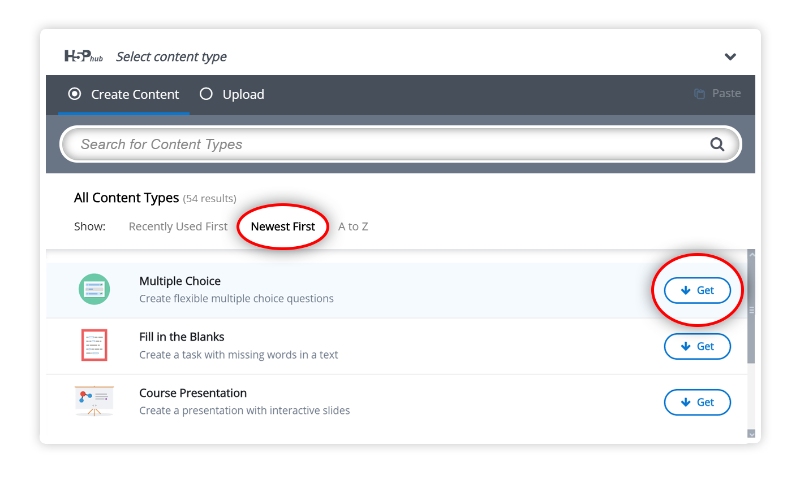
Content authoring with H5P is popular among instructional designers. I make high-quality K–12 curricula using this software.
H5P Content Authoring is:
- User-friendly -making it simple to train new members of the design team.
- Fully integrated on newer LMSs - so you won't need to switch back and forth between platforms.
- Widely used - with an increase of professional H5P communities sharing innovative ideas.
- Open source software - meaning it's free to operate. That'll surely boost your ROI.
## **All-In-One Solution**
As mentioned before, _Adobe Captivate_ and _ispring_ suite, are content authoring tools, but not LMSs. You can buy Adobe Prime, or _ispring_ _Learning_, which are LMSs, but that’s MORE software, MORE training, MORE expense, and a bigger headache.
You need an all-in-one solution, an LMS with integrated content creation tools.
An all-in-one LMS, allows content creators to design content on the same platform that learners will interact and engage with.
If you don't use an all-in-one LMS your team will spend days formatting media, converting zip files, and fiddling with SCORM features
You don’t need over-complicated processes across numerous programs, if you want to scale quickly,
You’re better off using a software that includes both H5P Content Authoring Tools and a Learning Management System.
If you wish to create interactive courses quickly and efficiently keeping the learner experience in mind, then I highly recommend **[LearningOS](https://thelearningos.com/)**.
It’s an enterprise-level learning management system developed by **[OOOLAB](https://thelearningos.com/)**.
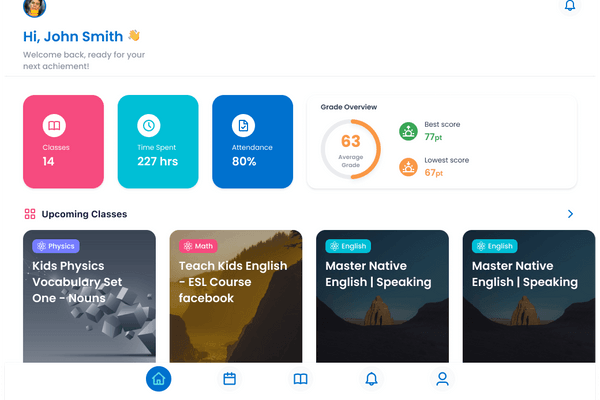
It is an affordable, all-in-one system with low-code that effortlessly integrates content-authoring tools allowing you to create, manage, deliver, and optimize your content efficiently and effectively, helping your company scale quickly.
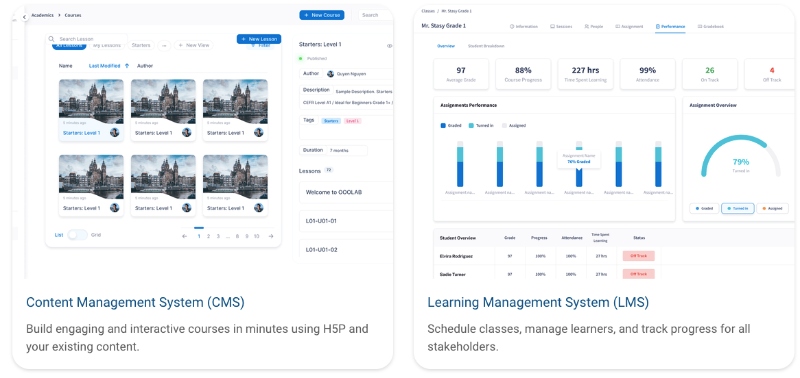
To schedule a demo or speak with a solutions consultant, [click here.](https://thelearningos.com/#form)
If you’re wondering whether **LearningOS** can even be white-labeled. The answer is yes. **LearningOS** can be customized to suit the needs of your educational empire.
_**>>\> Read more:**_ **[Addressing declining retail foot traffic issue](https://blog.thelearningos.com/addressing-declining-retail-foot-traffic-strategies-for-success/)**
_**>>\> Read more:**_ **[Why is blended learning the future of corporate training](https://blog.thelearningos.com/blended-learning-in-corporate-training/)**
_**>>\> Read more:**_ **[Why is employee upskilling non-negotiable for business success](https://blog.thelearningos.com/employee-upskilling-with-lms/)**
_**>>\> Read more:**_ **[10 ways that an LMS can revolutionize your corporate training](https://blog.thelearningos.com/how-an-lms-revolutionize-corporate-training/)**
---
This blog is powered by Superblog. Visit https://superblog.ai to know more.
---
## Handbook: What is the distinction between LMS and LXP?
Author: Nga Tran
Author URL: https://blog.thelearningos.com/author/nga-tran
Published: 2023-02-21
Category: Instructional Design
Category URL: https://blog.thelearningos.com/category/instructional-design
Meta Title: Handbook: What is the distinction between LMS and LXP?
Meta Description: LMS is crucial to your business as an irreplaceable tool that helps to manage and deliver all your courses and programs and allows you to engage with learners
Tags: LMS/, personalized-learning/, LXP/
Tag URLs: LMS/ (https://blog.thelearningos.com/tag/lms), personalized-learning/ (https://blog.thelearningos.com/tag/personalized-learning), LXP/ (https://blog.thelearningos.com/tag/lxp)
URL: https://blog.thelearningos.com/distinction-between-lms-and-lxp
## **Enrichment Center Handbook: What is the distinction between LMS and LXP?**
The education industry has a lot of confusing acronyms and terminology. If you're operating an enrichment center it's likely your technical staff will be familiar with all the lingo, however, managers, program coordinators, and administrative staff must all be on the same page.
Chances are your LMS is the heart and soul of your business. It’s an irreplaceable tool that helps to manage and deliver all your courses and programs and allows you to engage with students and parents. I’m sure you wouldn’t change it for the world. But say you begin to see the initials LXP appearing on educational forums. You might dismiss it as simply another trendy term, but then you see it in SaaS commercials and on the website of a competitor. Now that it's impossible to ignore. But what is a LXP? Read on to discover the ‘X’ in LXP is the secret ingredient to success.
X = Experience
**What’s the Difference…?**
This is every enrichment center CEO’s first question. Well, LXPs and LMSs are both eLearning solutions, and while there are many overlapping capabilities, it would be wrong to use LMS and LXP interchangeably. LXP stands for Learning Experience Platform and is far more than an upgraded version of an LMS.
A common analogy between LXPs and LMSs is that a LMS is like a TV, a great source of entertainment, but with limited functionality, and an LXP is like Netflix, it's still great TV, but it's more personable, it's able to suggest and curate a playlist based on your preferences.
I like to think of an LXP as ‘ _learning while working_' and here’s why:
- It focuses on delivering personalized and engaging learning experiences to users.
- It is capable of using AI to recommend learning content based on the user's interests, preferences, and past learning.
- It easily integrates social media to promote collaboration and knowledge-sharing.
Unlike an LMS, an LXP is designed to provide a continuous learning experience, the students are learning while they’re working on projects, or individual assignments, doing research, chatting to friends, and even playing online games.
### **How are they the same?**
An LXP still provides all the tools that an LMS has and that an enrichment center needs:
- It can easily enroll large quantities of students.
- It provides tools to create and manage courses, add learning content, and set up assessments and quizzes.
- It offers analytics and reporting tools to track user engagement and learning outcomes.
So while a LMS and a LXP are similar, the latter emphasizes user experience and is designed with a modern interface that is easy to navigate.
So, if you’re currently using an LMS for your business, then you can breathe a sigh of relief, there are enough crossovers between an LMS and an LXP to keep your business relevant and your clients happy…for now.
What do my Learners Need?
It’s always important to keep your clients in mind when choosing a Learning Management System. Students who benefit from structured and organized courses with clear goals and outcomes might prefer the LMS, while more creative students or exploratory students might prefer the LXP, which offers a more self-directed approach to learning. But one thing is for sure, LXPs' wide range of extra functionalities promotes engagement, collaboration, and personalization. All of which have been proven to improve test scores. Why not start leveraging the ability of an LXP to promote your business?
**Competitive Benefits of an LXP**
_techtarget.com_ suggested an LXP ‘ _was born out of the shortcomings of LMS systems._’ What the LMS systems of old were lacking, LXP software developers were learning. LXP may seem like an upgrade, but I prefer to think of an LXP as a total transformation of an LMS. It’s a digital makeover that modern learners need.
In the old days ‘what your car says about you’ meant people were careful about what car they drove to work. People used to think of cars as extensions of themselves and their personalities, and you might think LMSs act as an extension of your business and your company branding. If so, you'd want your LMS, like a sports car, as flashy as possible.
While today's CEOs won't mind if you're driving a cheap car, they might care if you're using dinosaur LMS system to onboard their employees and using obsolete software to deliver their valued content. But rest assured, a modern LXPs aesthetic design and intuitive interface makes it a very attractive product to market to potential clients.
### Where can I get one?
Nowadays, if you're in the market for a LXP chances are you’ll get a sophisticated LMS / LXP hybrid. On top of that you’ll want a secure system, that has live support and is cost-effective.
This can only be offered by a SaaS, or software as a service. Software companies are designing and creating LXPs with businesses and learners in mind.
_**>>\> Read more:**_ **[The benefits of microlearning](https://blog.thelearningos.com/benefits-of-microlearning/)**
_**>>\> Read more:**_ **[The benefits of role-play in sales training and how to implement](https://blog.thelearningos.com/the-benefits-of-role-playing-in-sales-training-and-how-to-implement/)**
_**>>\> Read more:**_ **[Adapting sales training for different generations](https://blog.thelearningos.com/adapting-your-sales-training-for-different-generations-in-the-workplace/)**
## Final Thoughts
Educational institutions such as enrichment centers are reaping the benefits of an intuitive, student-centered, and personalized learning experience with the efficiency, security, and control of a traditional LMS. And without a doubt, the best LXP on the market right now is...
by OOOLAB
[LearningOS by OOOLAB](https://thelearningos.com/) offers an all-in-one Learning Experience Platform that consists of a Virtual Classroom, an LMS, a Learning App, and all the other complementary features that you’d expect with an LMS, and more that you’ll discover with a LXP.
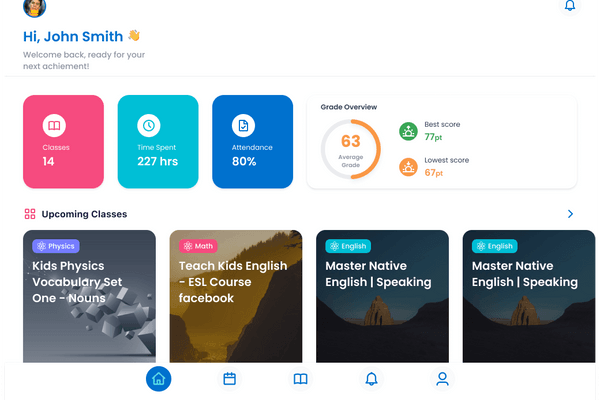
LXP Interface
Fancy integrating this awesome LXP into your enterprise?
[Click here to talk to a Solutions Consultant, or Book a Demo.](https://thelearningos.com/#form)
---
This blog is powered by Superblog. Visit https://superblog.ai to know more.
---
## The Mighty LMS and One Teacher's Love Affair with Microlearning!
Author: Nga Tran
Author URL: https://blog.thelearningos.com/author/nga-tran
Published: 2023-02-10
Category: Learning
Category URL: https://blog.thelearningos.com/category/learning
Meta Title: The Mighty LMS and One Teacher's Love Affair with Microlearning!
Meta Description: Microlearning is a learning approach that provides learners with small, bite-sized pieces of content such as short texts, video clips, and infographics.
Tags: elearning-solutions/, course-builder/, interactive-learning/, personalized-learning/, gamification/
Tag URLs: elearning-solutions/ (https://blog.thelearningos.com/tag/elearning-solutions), course-builder/ (https://blog.thelearningos.com/tag/course-builder), interactive-learning/ (https://blog.thelearningos.com/tag/interactive-learning), personalized-learning/ (https://blog.thelearningos.com/tag/personalized-learning), gamification/ (https://blog.thelearningos.com/tag/gamification)
URL: https://blog.thelearningos.com/benefits-of-microlearning

## What is Microlearning?
Microlearning is a teaching and learning approach that provides learners with small, bite-sized pieces of content such as short texts, video clips, and infographics. Best microlearning teaching practices mean each class is based around one achievable skill. Students will learn, practice, be assessed and receive feedback all in one session. That’s a lot to deliver, but with a microlearning approach you'll keep your content manageable, actionable and enjoyable.
### **When did Microlearning become a 'thing'?**
> _Microlearning started its journey to eLearning stardom with the domestic use of the internet in the mid-1990s. The internet revolutionised the way the world was able to learn. Suddenly we could stream our lessons online, or upload learning modules in the space of an afternoon - Growth Engineering_
While this revolution spread around the globe, it certainly hadn't reached my secondary school. Even as late as 2010, my school only had dial-up internet, and that hardly worked, probably due to the amount of chewing gum shoved into the dial-up socket.

### **When did Microlearning become important to you?**
I briefly learned about microlearning during my PCGE teacher training. However, it was only during the pandemic that I began to use microlearning practices properly.
The pandemic helped to accelerate many features of online learning, unfortunately at the expense of many other aspects of education. Face-to-face learning was reduced, recreational activities decreased, formal assessments were put on hold and access to resources like art materials, library books, and school computers was cut back entirely.
One of my first glimpses into microlearning practices came when we were given the daunting task of compressing and funneling all our lesson plans and assessments onto an LMS. That's when you really extract the most relevant information. All class materials and demonstrations had to fit on a 16:9 Zoom screen.
When the pandemic hit, learner disengagement, students' concentration, laptop batteries, and teachers' patience all diminished, but microlearning effectiveness increased.
### What are the benefits of Microlearning?
> _Hundreds of independent studies have proven that such interactive micro-learnings outperform traditional static formats, improving the completion rate by 85% and the retention rate by 75% - Mobietrain_
All teachers know young learners have a short attention span so microlearning focuses on increasing children’s engagement by using sensory and stimulating materials such as digital flashcards, songs, and interactive games. That said, teenagers don’t have a particularly long attention span either.
Microlearning aims to improve short-term memory by using appealing visual aids and multimedia like infographics, podcasts, competitive games, TikTok videos, and much more.
### What were you teaching before Microlearning?
The opposite of microlearning is macro-learning. This would resemble your typical classroom-based teaching focusing on in-depth instruction over a longer period of time.
I never liked this approach, since it was time-consuming to adjust to a 45-minute class. My students always had trouble picking up where we left off. If I asked them what we learned in the last class, they would look at me with a vacant stare.
Much time was wasted reviewing what we’d already studied and reminding students of information they needed to grasp before learning new material.
### What makes the LMS so suitable for Microlearning?

Learning management systems complement microlearning in a number of ways. Whether they are applied to a classroom-based learning management system, an online learning system, or on your mobile phone.
Microlearning is well-suited to a LMS because of its:
- Accessibility
- Flexibility
- Personalization
- Scalability
Accessibility
A LMS provides a single, centralized platform for delivering microlearning content, making it easy for teachers and learners to access and complete activities anywhere. Whether these activities are time fillers, essential classwork, homework, or extension exercises. Students can complete them at school, at home, or on their phones as they roam.
Flexibility
A LMS can deliver microlearning content in a variety of formats. A wide range of file types are supported allowing you to deliver interactive quizzes, explainer videos, and even educational MUD games. So, whatever your curriculum dictates you’ve got all the microlearning options at your fingertips.
Personalization
A LMS can provide personalized learning experiences. They can recommend activities to help teachers decide what students should learn next. And they can provide instant feedback on quizzes or assessments to let you know if students might benefit from moving up or down a level. Teachers can also create a personalized learning pathway if a student has shown an interest in a particular subject area.
Scalability
A LMS can support large numbers of learners, across all grades, levels, and courses. Teachers and administration staff can enroll more students and add more microlearning content at any time. The most streamlined LMSs are cloud-based, meaning you’ll have more storage than you’ll ever need, and it’s easy to delete data or save it for the upcoming semester, making it an excellent tool for delivering microlearning at scale.
### What are the disadvantages of Microlearning?
Microlearning's main disadvantage is that it requires time and effort to condense curriculum-based materials like textbooks, workbooks, and visual aids into concise interactive activities. It takes extensive knowledge of the subject's curriculum to create engaging activities that align with testing rubrics and other related criteria. And it takes a little tech skill to upload, format and manipulate all this education content into your learning management system.
But with the right LMS, all that hard work disappears...
## So what's the best LMS for Microlearning?
If teaching remotely taught us anything, it’s that microlearning is effective and here to stay. Content designers, curriculum developers, and exam boards are developing materials with microlearning in mind. Software developers, too, are designing, creating, and continually improving LMS software with microlearning methodology in mind.
One mighty LMS system that’ll support your micro-teaching is [LearningOS by OOOLAB](https://thelearningos.com/).
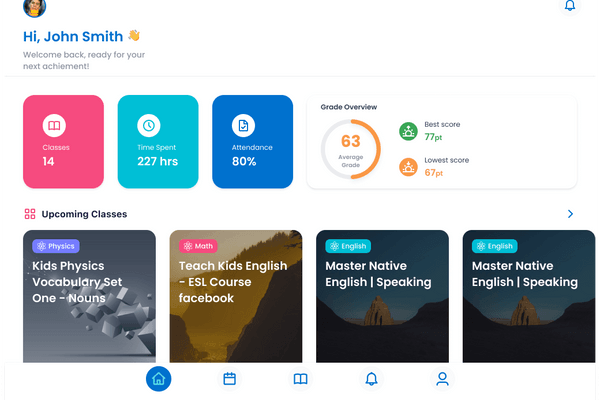
It's a low-cost and low code system that’ll streamline your content, making it easy to manage and deliver engaging, fun, and bite-sized chunks of learning to your students.
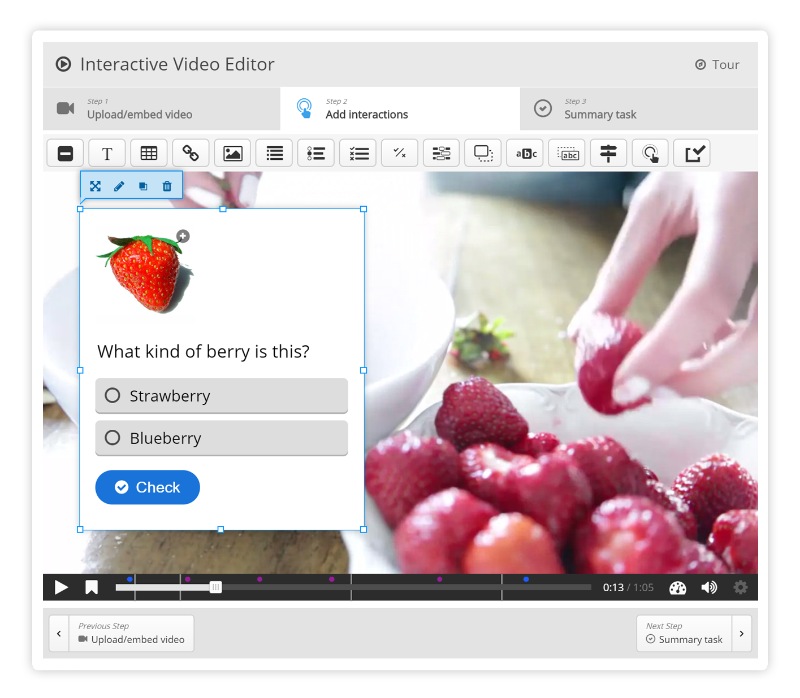
**>>>Read** **more**: [**Utilize the benefits of LMS-microlearning today**](https://thelearningos.com/).
_**>>\> Read more:**_ **[Addressing declining retail foot traffic issue](https://blog.thelearningos.com/addressing-declining-retail-foot-traffic-strategies-for-success/)**
_**>>\> Read more:**_ **[Why is blended learning the future of corporate training](https://blog.thelearningos.com/blended-learning-in-corporate-training/)**
_**>>\> Read more:**_ **[Why is employee upskilling non-negotiable for business success](https://blog.thelearningos.com/employee-upskilling-with-lms/)**
_**>>\> Read more:**_ **[10 ways that an LMS can revolutionize your corporate training](https://blog.thelearningos.com/how-an-lms-revolutionize-corporate-training/)**
_Learning Management System (LMS) Market size to grow from USD 15.8 billion in 2021 to USD 37.9 billion by 2026, at a Compound Annual Growth Rate (CAGR) of 19.1% - (GLOBE NEWSWIRE)_
---
This blog is powered by Superblog. Visit https://superblog.ai to know more.
---
## 6 Reasons Why Enrichment Centers are White-Labeling their LMS
Author: Nga Tran
Author URL: https://blog.thelearningos.com/author/nga-tran
Published: 2023-01-23
Category: Enterprise
Category URL: https://blog.thelearningos.com/category/enterprise
Meta Title: 6 Reasons Why Enrichment Centers are White-Labeling their LMS
Meta Description: If you’re a CEO, operations manager, or part of the administrative team, enrichment centers like yours are already white-labeling their LMS, and for good reason
Tags: personalized-learning/, saas/, white-labeling/, Enterprise-LMS/
Tag URLs: personalized-learning/ (https://blog.thelearningos.com/tag/personalized-learning), saas/ (https://blog.thelearningos.com/tag/saas), white-labeling/ (https://blog.thelearningos.com/tag/white-labeling), Enterprise-LMS/ (https://blog.thelearningos.com/tag/enterprise-lms)
URL: https://blog.thelearningos.com/enrichment-centers-white-label-their-lms
## 6 Reasons Why Enrichment Centers are White-Labeling their LMS (And Why You Should Too)
If you’re a CEO, operations manager, or part of the administrative team, enrichment centers like yours are already white-labeling their LMS, and for good reason.

**What is White-Labeling?**
White-labeling is when a company purchases something someone else has created and then brand it as their own. White-labeled products can be found in retail, e-commerce, and even banking, but most commonly used in computer technology. SaaS (software as a service) providers create software create products and allow other companies or individuals to white-label the software, making it appear as if you created the software independently. Many SaaS offer their software on a subscription basis that gives the user full functionality and customization tools.
White-labeling software is becoming increasingly popular in the education industry. Enrichment centers, learning institutions, coding, and even music schools are increasingly needing Learning Management Systems (LMS) to help run their business. LMSs are the beating heart of educational centers, and that's why companies prefer a white-labeled LMS that reflects their core identity.
6 Reasons to White-Label your LMS:
- Cheaper to Build
- Raises Brand Awareness
- Works for the Whole Team
- Helps Scale your Business
- Personalized Domain and Professional Correspondence
- Offers Better Security and Maintenance
Cheaper to Build
Creating an LMS from the beginning can be expensive. More often than not, you would have to hire a specialist team to help you design, build and carry out maintenance and updates. White-labeled LMSs are much cheaper since you’re not paying any fees for creating and developing the software. Companies offer free consultations and will walk you through their system and discuss all the designs and features that you wish to include. What you see is what you get! A fully functional ready-to-use LMS, with no hidden costs.
### Raises Brand Awareness
Branding your educational technology is just as important as branding in high-end designer fashion. All reputable educational technology have consistent logos, themes, and color schemes sweeping across their platforms. Consistent branding builds trust and loyalty and your learning center shouldn't be any different.
Using white-labeled software allows you to raise brand awareness at no extra cost. You can easily apply logos, typography, and color schemes to your LMS. So whether your enrichment center's company logo is a cute animal like a penguin or koala, or perhaps your STEM center boasts a cool robotic mascot, it needs to be seen after every click to promote familiarity and confidence in your brand.
### Works for the Whole Team
An LMS system makes it simple to create student, client, and business accounts. This versatility extends to management, administration, and instructors too. When an educational institution orders a white-labeled LMS system, you can create as many accounts as necessary. These accounts come with fully functional dashboards, so all members of your department can work simultaneously.

**Helps Scale your Business**
White-labeling your LMS offers enrichment centers the chance to scale their business by legally marketing the LMS as their own. Attract new clients by using built-in customizable advertising, or use the built-in course builder to create, market, and sell new courses to existing clients. Establish your brand by marketing your white-labeled LMS system globally.
### Personalized Domain and Professional Correspondence
White-labeled LMSs hide all signs of other companies. This is important when dealing with potential clients as every aspect of your business must appear professional.
On top of your aesthetically pleasing LMS, white-labeled software allows you to use your personalized domain name. Your clients can enter your enrichment center's domain directly into their computer, or mobile device without using forward slashes, or redirects. Also, when you order a white-labeled service, your provider will give you a unique email address that contains a unique domain name, so whether you are searching for new clients or recruiting new staff, your correspondence will appear as professional as possible.
### Offers Better Security and Maintenance
Improving internet security has become more important to educators, clients, and parents than ever before. Outdated LMS systems and other random software downloaded from the internet are more susceptible to malware and other forms of cybercrime. Unfortunately, browser-based software can be littered with additional downloads, sign-ups, and annoying pop-up ads.
Enrichment centers can feel at ease when choosing a white-labeled LMS system because you inherit a team of experts working actively behind the scenes to protect you, and the software from security threats. And should any bugs, or glitches arise, the software team can work to fix them right away.
## Why Should you Choose LearningOS by OOOLAB?
Using a white-labeled LMS is the most professional and cost effective way to operate your education business. It’s also the most accessible way to collaborate with colleagues and keep your students secure. OOOLAB has created **[LearningOS](https://thelearningos.com/)** a fully customizable white-labeled LMS that is enabling businesses like yours to scale and grow quickly and authentically.
Find out more about their white-labeled LMS system here [https://thelearningos.com/](https://thelearningos.com/)
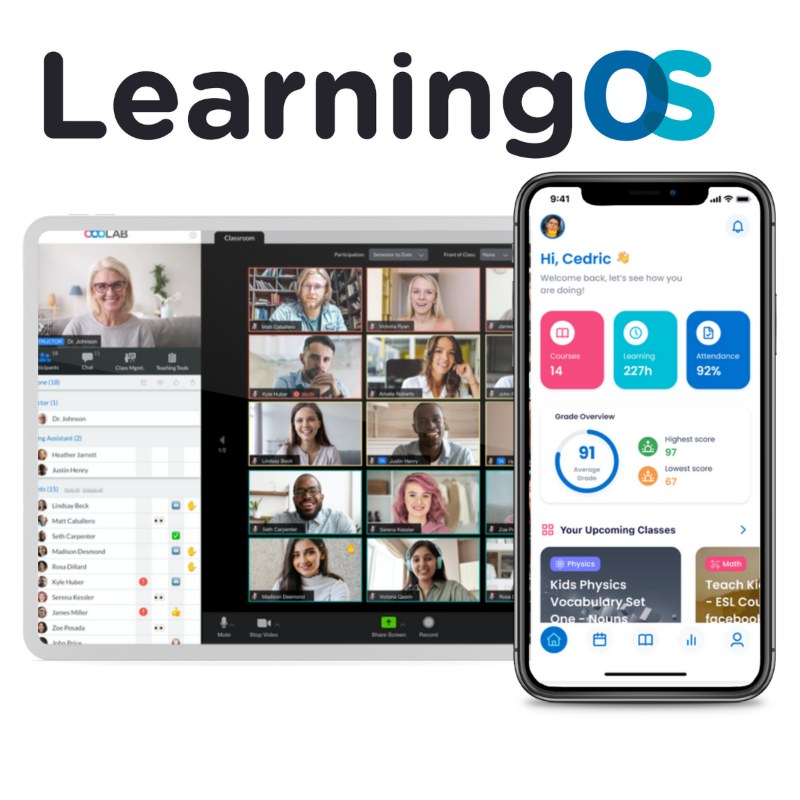
If you want to learn more about the benefits of ordering from an SaaS company like OOOLAB then click here: [5 Reasons why you should choose a SaaS for your LMS](https://blog.thelearningos.com/5-reasons-why-you-should-choose-saas-for-your-lms/)
Although, if you're ready to accelerate your business, then don't waste any more time [Book a LearningOS Demo](https://thelearningos.com/#form) today!
---
This blog is powered by Superblog. Visit https://superblog.ai to know more.
---
## 5 Reasons Why you should choose a SaaS for your LMS
Author: Nga Tran
Author URL: https://blog.thelearningos.com/author/nga-tran
Published: 2023-01-22
Category: SaaS
Category URL: https://blog.thelearningos.com/category/saas
Meta Title: 5 Reasons Why you should choose a SaaS for your LMS
Meta Description: If you’re part of an educational institution that supports e-learning, then here are 5 reasons why you should consider searching for a SaaS provider.Learn more
Tags: corporate-elearning/, course-builder/, saas/, LXP/, Enterprise-LMS/
Tag URLs: corporate-elearning/ (https://blog.thelearningos.com/tag/corporate-elearning), course-builder/ (https://blog.thelearningos.com/tag/course-builder), saas/ (https://blog.thelearningos.com/tag/saas), LXP/ (https://blog.thelearningos.com/tag/lxp), Enterprise-LMS/ (https://blog.thelearningos.com/tag/enterprise-lms)
URL: https://blog.thelearningos.com/5-reasons-why-you-should-choose-saas-for-your-lms
## **5 Reasons Why you should choose a SaaS for your LMS**
More and more people that work with enrichment programs are turning to SaaS companies for their LMS solutions. And I'm glad I did, because it's saved me a tremendous amount of hassle.
I'm running an online education company using a custom-built, white-labeled LMS system from a SaaS provider. I'm productively managing a cohort of 50 students and I employ two part-time staff. It's a small but healthy operation, and the SaaS has given me the all tools I need to grow.
If you’re part of an educational institution that supports e-learning, then here are 5 reasons why you should consider searching for a SaaS provider for your LMS and what might happen if you choose to set one up without any help.

We’re Educators, not Software Experts
Recently a friend of mine was tasked with establishing a learning management system (LMS) at an after-school learning center for K-12 students. He had previous experience with using VLEs and thought he could implement an LMS for his students and other staff.
However, it wasn’t long before he realized going at it alone was wishful thinking. He quickly ran into problems. He began complaining about things such as self-hosting, domain support, and plugins. He contacted me for assistance at this point, but as I am not an expert in LMS software either, I was unable to assist him.
The only small piece of advice I gave was “pay someone to do it for you.’ I suggested that a SaaS provider will take care of all the technical aspects of running an LMS system such as software updates and maintenance for the LMS, so he won’t have to.
### **Latest LMS Features**
One of the pitfalls of setting up your own LMS system is that you’ll likely download an outdated version. Many companies continue to offer software that hasn't been updated and comes without live support. Would you pay for a sandwich that has been in the fridge for a month? No, so why would you download software that hasn’t been upgraded in years?
If someone chooses to use SaaS, they can ensure that their LMS is efficient and equipped with all the necessary tools for modern administrators and teachers. Using SaaS is the only way to make sure your LMS is streamlined.
### **Easy to Enroll and Scale**
I'm confident that your enrichment center offers enjoyable, worthwhile, and affordable courses, so your students will be progressing through them in no time. Afterward, your current clients will tell their friends about your classes, and before you know it, your door will be flooded with enthusiastic students who are interested in enrolling.
An LMS system makes it easy to manually enroll batches of new students, and assign them to the correct level and course. An asynchronous LMS even enables students to self-enroll at home. Eventually, using a SaaS-provided LMS, you’ll be able to access and edit hundreds of learner profiles at the touch of a button.
### **Scaling is Cost-Effective**
Just because you're scaling up doesn't necessarily mean the cost is going higher. You can scale your LMS subscription or plan with SaaS providers to meet the needs of your educational institution. SaaS providers provide basic subscriptions that provide you total access to and management over your LMS, regardless of whether you manage a small learning center or a large enterprise. And it would be affordable to do so if you were to increase your enrollment numbers since the more pupils you have, the more affordable it gets. SaaS suppliers allow flexible payment options, which makes it easier on the accounting department.
### **A Team will Guide you through the Process**
‘That’s a great question, I’m not sure of the answer right now, but I’ll get back to you soon.’ Is this something your administrative staff would say? Clients, especially the tech-savvy ones, are likely to ask your staff puzzling questions about the LMS that can't be answered on the spot. And when you’re operating a business, questions about the LMS will occur with increasing frequency.
Not having all the answers in moments like these can be frustrating and even costly, but don't worry, SaaS providers offer round-the-clock support if you need help. A team of experts not only guides you through the onboarding process, but we'll stay in close communication with you until your business becomes LMS fluent. So, when clients, employees, and parents ask you about your LMS functionalities, you’ll be sure to have the right answer.
## Final Thoughts
Luckily for my friend, he took my advice and reached out to OOOLAB. OOOLAB is a SaaS that offers an innovative Learning Management System. After a quick meeting to find out his requirements, they built a customized learning platform for his learning center. His staff and students now think of him as some IT specialist…we won’t tell them he needed a little help from a SaaS and a friend in the know.
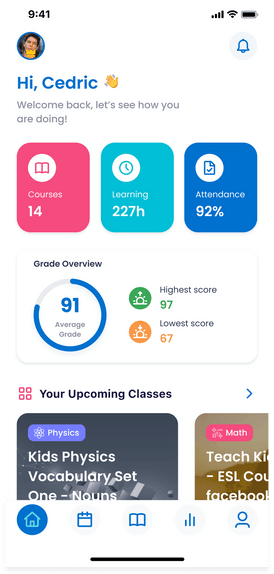
If you want to see the LMS we both use, then check out [the LearningOS](https://thelearningos.com/) from OOOLAB.
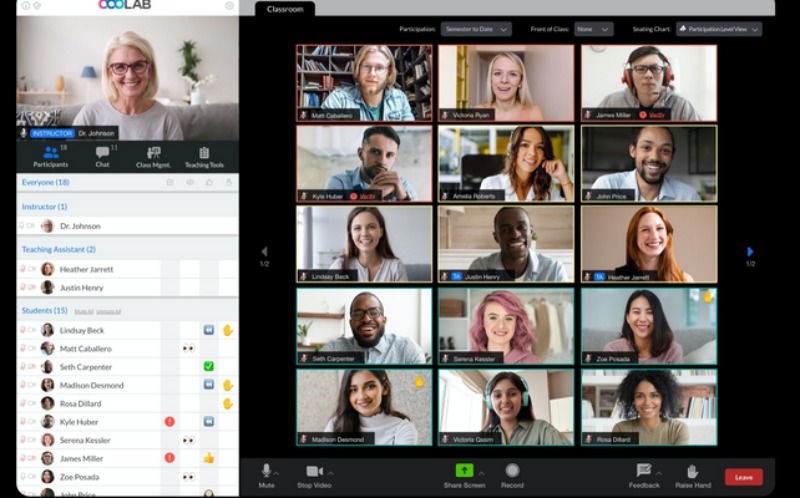
_**>>\> Read more:**_ **[The benefits of role playing in sales training](https://blog.thelearningos.com/the-benefits-of-role-playing-in-sales-training-and-how-to-implement/)**
---
This blog is powered by Superblog. Visit https://superblog.ai to know more.
---
## 5 Top Features of an LMS to Reduce Administrative Workload
Author: Nga Tran
Author URL: https://blog.thelearningos.com/author/nga-tran
Published: 2023-01-11
Category: LMS
Category URL: https://blog.thelearningos.com/category/lms
Meta Title: 5 Top Features of an LMS to Reduce Administrative Workload
Meta Description: A LMS simplifies administrative tasks through a centralized platform. It allows you to automate all the tedious and repetitive jobs that can be time-intensive
Tags: learningos/, corporate-elearning/, lcms/, elearning-solutions/, Enterprise-LMS/
Tag URLs: learningos/ (https://blog.thelearningos.com/tag/learningos), corporate-elearning/ (https://blog.thelearningos.com/tag/corporate-elearning), lcms/ (https://blog.thelearningos.com/tag/lcms), elearning-solutions/ (https://blog.thelearningos.com/tag/elearning-solutions), Enterprise-LMS/ (https://blog.thelearningos.com/tag/enterprise-lms)
URL: https://blog.thelearningos.com/5-top-features-of-an-lms-to-reduce-administrative-workload
## 5 Top Features of an LMS to Reduce Administrative Workload
A Learning Management System, abbreviated as an LMS, simplifies administrative tasks through a centralized platform. It allows you to automate all the tedious and repetitive jobs that can be time-intensive and taxing. If your business isn’t using one yet to reduce the workload then you’re missing out. Save time, money, and effort with an LMS.

Read more about LMS's top features:
- Cloud Communication
- Award Certificates
- Authorize Access
- Set Employee Availability
- Schedule Reports
### **Cloud Communication**
Are you constantly running around the office trying to contact team members? It's true enough, at educational institutions, things can change quickly. One call can set off a chain reaction from the bottom to the top floor. It's important to keep your staff updated on changes in procedures, policies, or products, but chasing them up can be time-consuming and exhausting.
Why not use your LMS to communicate? Since you're already using it to send attendance, enrollment, and progress reports, why not use it for budget, staffing, or facility reports? An LMS allows you to convert different file extensions so that you can digitize your company documents. It is easy to import documents from a scanner and save them to your LMS cloud.
Whether you need to deliver an important policy change to the CEO or schedule a training seminar for your teachers, you can send that info privately or to everyone simultaneously. An LMS cloud is a great way to store all your in-house communication, and it is always there if you need to go back and edit.
### **Award Certificates**
Employees work hard, and managers and CEOs ought to give praise where and when it is due. Giving verbal recognition can give employees a little confidence boost in their day-to-day errands, but nothing says 'management is incredibly grateful' quite like an A4 certificate.
Thanks to an LMS, it’s easy to acknowledge and give accreditation around the clock. Admin can log in anytime to check if staff have achieved their goals, or teachers have completed their assigned classes. If praise is due, the admin can customize and award certificates directly on the LMS. Increase morale, motivation, and productivity with these digital awards, and yes, if employees or teachers want a hard copy, they can print it off and place it on their wall.
### Authorize Access
Since enrichment centers spend a lot of money on digital content, it's critical to safeguard it from hackers and...students! There is nothing more frustrating than having pupils finish a year's worth of material in a handful of days. To deal with these bookworms, you don't need to call pest control; instead, you can use your admin controls to grant access as needed.
The administrator can grant access to new courses and materials after students have finished a course by merely altering the sharing setting. Similarly to that, you can prevent students from enrolling in courses by restricting what they can see. When new permissions are introduced, students will be notified, enabling them to immediately check out the new content.
### Set Employee Availability
Many learning centers have staff members who can work remotely. You might hire instructors who deliver instruction online or curriculum designers who work abroad. Personnel that live in various cities and time zones can occasionally make scheduling a little challenging.
The most recent LMS systems, fortunately, offer digital calendars that let staff members submit and change their availability in real-time. Because we can see who is available for an online lesson or meeting and who is not at their desk, using this digital calendar helps us avoid confusion. Employees can communicate via the LMS if there has been a scheduling issue, and even if no one is awake at the time, the LMS notification will notify the admin of the issue right away.
### Schedule Reports
You can remain on top of all your reporting duties using the LMS's Scheduling Report Mailout function. It aids in the automatic planning and distribution of reports. When you want emails, invites, or instructor comments sent out, you may choose a time and date for it. Even regular reporting can be planned out over a semester.
Top Tip: The admin can ask each department which days are best for receiving documents and emails and schedule accordingly.
As the term progresses, using an LMS to schedule reports automatically could save you some headaches.
## Top Features = Top LMS
If your business is ready to simplify administrative tasks through a centralized platform. Then contact [OOOLAB](https://thelearningos.com/). They have developed a sophisticated LMS system called LearningOS.

[LearningOS'](https://thelearningos.com/) intuitive LXP design provides businesses with the tools they need to deliver their content while saving valuable time, resources, and money!

[Click the Link to find out more about](https://thelearningos.com/) LearningOS.
Thanks for reading
_**>>\> Read more:**_ **[Addressing declining retail foot traffic issue](https://blog.thelearningos.com/addressing-declining-retail-foot-traffic-strategies-for-success/)**
_**>>\> Read more:**_ **[Why is blended learning the future of corporate training](https://blog.thelearningos.com/blended-learning-in-corporate-training/)**
_**>>\> Read more:**_ **[Why is employee upskilling non-negotiable for business success](https://blog.thelearningos.com/employee-upskilling-with-lms/)**
_**>>\> Read more:**_ **[10 ways that an LMS can revolutionize your corporate training](https://blog.thelearningos.com/how-an-lms-revolutionize-corporate-training/)**
---
This blog is powered by Superblog. Visit https://superblog.ai to know more.
---
## Streamline your Courses: 3 Top Features of CMS
Author: Nga Tran
Author URL: https://blog.thelearningos.com/author/nga-tran
Published: 2023-01-05
Category: CMS
Category URL: https://blog.thelearningos.com/category/cms
Meta Title: Streamline your Courses: 3 Top Features of CMS
Meta Description: A CMS is used by organizations around the world to develop, manage, and deliver digital learning content. CMS helps to streamline courses which benefit learners
Tags: corporate-elearning/, lcms/, elearning-solutions/, Enterprise-LMS/
Tag URLs: corporate-elearning/ (https://blog.thelearningos.com/tag/corporate-elearning), lcms/ (https://blog.thelearningos.com/tag/lcms), elearning-solutions/ (https://blog.thelearningos.com/tag/elearning-solutions), Enterprise-LMS/ (https://blog.thelearningos.com/tag/enterprise-lms)
URL: https://blog.thelearningos.com/streamline-your-courses-3-top-features-of-content-management-systems-cms
## Streamline your Courses: 3 Top Features of Content Management Systems (CMS)
If your team consists of content developers, instructional designers, or subject matter experts, then you might have heard the acronym CMS echoed around the workspace. A CMS is used by educational organizations around the world to develop, manage, and deliver digital learning content.

Perhaps you're reading this now because you're the proud owner, franchisor, or franchisee of megabytes of intellectual property, and you're searching for a natural home for your digital learning material. Perhaps you've explored the idea of a CMS before but were unable to see its advantages. Just like money feels safest in the bank rather than in your pocket, your digital content is best off in its natural habit, a CMS.

A CMS is worth its weight in gold. Here's why:
### A Content Management System contains neat features that help establishments:
- Organize and Adapt Content
- Work Collaboratively
- Deliver Clear and Actionable Feedback
**Organize and Adapt Content**
" _An educator's work is never done_" \- Anonymous.
Enrichment and learning centers have said that promoting, selling, and delivering their first course is the hardest. For educational institutions, there are many initial hurdles such as course quality, branding, and pricing they must overcome. But after all that, it's smooth sailing...or is it? Clients begin accelerating through your course content at a faster rate than you had prepared for causing you to panic create, or buy volumes of courseware and resources. Sooner or later, you'll be working with curriculums across different levels, learners, and class sizes, and even in different file formats.
It may seem daunting, but don't worry. The CMS course module editor allows you to organize, update, and revise your e-learning content efficiently. One of my favorite course categorizing tools is 'tagging', this allows you to tag a course by its topic, learning objective, or learner profiles, making it easy to identify or allocate to a learner.
With ever-changing curriculum standards, workplace law, and consumer characteristics. It can be challenging for any establishment to keep its course content fresh and relevant.
Another feature of an CMS that helps you organize and adapt content is the functionality of the cloud. A cloud-based CLMS (Cloud Learning Management System) can support and streamline any changes instantly, collaboratively, and remotely. Even an entire K-12 course with gigabytes of interactive multimedia can be stored independently on the cloud. And when it's time to edit a formative exam or add more supplementary materials for your accelerated learners, you can access your asset library, highlight, or insert efficiently.
It's never been easier to redesign or repurpose existing content, and a decorated Content Management System will effortlessly allow you and your team to give existing courses a touch-up or a total makeover.
**Work Collaboratively**
" _This is a job for the A-Team_" – Col. John 'Hannibal' Smith

When your courses are starting to sell like hotcakes, you'll want to scale your business and have other companies use your content. Sooner or later your CMS will play host to another CEO, and it's important to impress while you're showcasing your CMS. After you've successfully demonstrated how to use your system you may have to onboard new members of a team and work even more collaboratively than before.
A sophisticated CMS allows admin, teachers, and learners to have unique log-ins, with specific functionalities. Management has a clear overview of all the enrichment center's active courses, while the admin can monitor, allocate, and gain detailed course insights such as course progression, assessment results, user engagement, and student satisfaction. An CMSs vivid interface gives users clarity so that everyone can work as collaboratively.
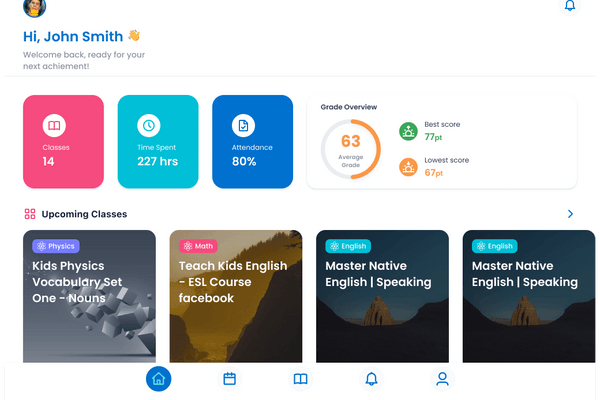
Deliver Clear and Actionable Feedback
“ _Clear feedback is the cornerstone of improvement_’ \- David Brailsford
After all your digital content is laid bare for all to use, it'll inevitably begin to receive feedback from other team members or professionals.
To make swift changes that'll impact your learners efficiently you'll want feedback to be funneled down through the team fast. A CMS provides tools that assist feedback, employees can leave messages publicly or privately on courses, curriculums, and comment on day-to-day progress. An advanced collaborative learning platform allows team members to leave constructive feedback, give suggestions, and drop links to each other, creating a positive flow of communicative feedback.
## Final Thoughts
A CMS helps to streamline the process of content creation, course management, and delivery, resulting in more efficient and effective digital learning experiences for clients. More delightful learning experiences give your product, and your digital courses more value.
Find a new home with your hard work with OOOLAB.
[OOOLAB](https://thelearningos.com/) has the ultimate LCMS system.
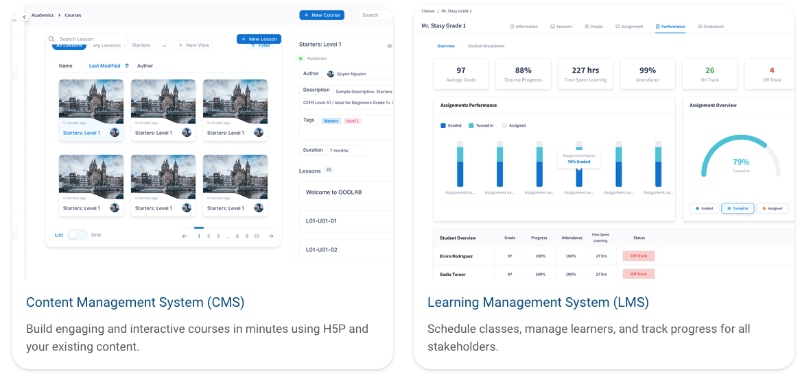
OOOLAB has developed **LearningOS**, an enterprise level content management system that benefits ALL education teams and learning and development specialists. This CMS uses low-code software with high functionality, so you can easily organize and adapt your content while working collaboratively and directly with your team.
Fancy integrating this awesome CMS into your enterprise?
[Click here to talk to a Solutions Consultant, or Book a Demo.](https://thelearningos.com/#form)
Wondering if you can put your companies name on it, the answer is yes. **LearningOS** can even be _white-labeled_. Find out more about [white-labeling in this blog](https://blog.thelearningos.com/enrichment-centers-white-label-their-lms/) **.**
---
This blog is powered by Superblog. Visit https://superblog.ai to know more.
---
## 4 Learning Analytics That Tell Your Students Need Support
Author: Nga Tran
Author URL: https://blog.thelearningos.com/author/nga-tran
Published: 2022-12-05
Category: LMS
Category URL: https://blog.thelearningos.com/category/lms
Meta Title: 4 Learning Analytics That Tell Your Students Need Support
Meta Description: To justìy student's performance, you need to look at statistics. Which statistics should you look for? These analytics will tell if your students need support.
Tags: k12-lms, learning-analytics/, learningos/, elearning-solutions/, saas/
Tag URLs: k12-lms (https://blog.thelearningos.com/tag/k12-lms), learning-analytics/ (https://blog.thelearningos.com/tag/learning-analytics), learningos/ (https://blog.thelearningos.com/tag/learningos), elearning-solutions/ (https://blog.thelearningos.com/tag/elearning-solutions), saas/ (https://blog.thelearningos.com/tag/saas)
URL: https://blog.thelearningos.com/k-12-lms-4-learning-analytics-that-tell-you-your-students-need-support
## **K-12 LMS: 4 Learning Analytics That Tell You Your Students Need Support**
As an educator, if I gave you a magic wand to instantly improve _your_ student's scores, you'd use it, right? Unfortunately, we don't have wands, but we do have learning analytics (LA).
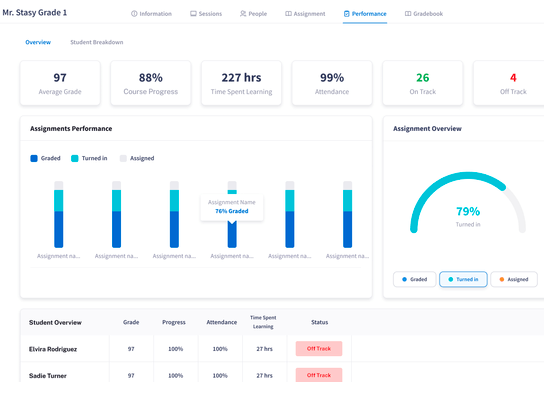
These metrics collect, analyze, and report data about learners to improve learning and teaching. The problem is with large groups of students and many different kinds of analytics; teachers face the difficult task of sifting through data, identifying struggling students, and devising plans to provide support.
## 4 Learning Analytics:
- **Forum Contribution Data**
- **Student Login Data**
- **Access to Resource Data**
- **Grade Report View**
To help you save countless hours and make those student data-driven decisions easier. I will detail four ways you can use learning analytics to gain the valuable insights _all_ educators need to support their student's learning.
### **Forum Contribution Data**
Imagine you've recently set an assignment, before a student has even put fingers to keys, an ominous thread may appear in the LMS forum. For better or for worse, students will likely turn to the discussion forum to express their delights, concerns, or frustrations. By monitoring students' posts, you'll determine if your project is too difficult or too easy. Students may type words such as 'head-ache worthy' if it is challenging, or on the contrary, 'easy-breezy,' if the task is simple. No matter how humorous, online communication is a vital sign that students are engaging positively with the task.
Unfortunately, not all students avidly post, making it far more difficult to gauge their feelings. And it is the lack of engagement on these forums that teachers need to pay attention to since an absence of participation may indicate that the student is somewhat disinterested, disillusioned, or even in total despair. Of course, it's up to educators to diagnose the root cause and deliver support, but monitoring those LMS forums is an excellent place to start.
**Student Login Data**
Imagine it's the night before an assignment is due. You're logging into your class LMS to spot-check student progress. Most students have logged in frequently, and many have already completed the task. However, one student has yet to produce any work, albeit logging in multiple times. Whereas it isn't unusual for students to procrastinate, it's worrying that the students making an effort may need more tools to make a start.
Keeping track of login activity and comparing it with the quality of the student's work may indicate who is putting off their work until the last second and who is staring at a blank page.
### **Access to Resource Data**
As educators, it is our job to offer a helping hand, even when we're not in the classroom. Many schools and learning centers opt to digitize key coursebooks, past exam papers, and presentations to help students. A good LMS allows teachers, or admin to upload any content they think students need.
However, you might be optimistic in thinking that most students would take advantage of your treasure chest of resources you've been compiling; unfortunately, for many learners, that's not the case. Some learners might not want that helping hand, and therefore won't access all those useful materials, but for some students, it'll be the first thing they click on. As an educator, you need to know.
Since we can't change students learning behavior overnight, it's best to use a competent LMS that tells you who's been accessing the learning resources and who hasn't. It's true some students can complete tasks without extensive resources, but others may struggle in silence.
### **Grade Report View**
For most students, getting feedback on work can be a mixture of nervousness and excitement. Teachers may reward them with a grade A, or they may have received a lower grade and were left to contemplate how they could do better. Completing a task and receiving a score is a fitting end for a piece of work. It allows students to have closure and move on to the next step.
During mid-term, educators might deliver grade reports through an LMS, where students can view their grades independently. An intriguing learning analytic on the LMS allows teachers to check whether students have opened their grade reports. Unfortunately, more often than not, some students don't open their grade reports. Whether it's due to forgetfulness, disinterest, or fear is up to the teacher to decide, but thanks to Learning Analytics, we're one step closer to finding out why that grade report stayed closed.
### **Final Thoughts**
We all know there is no quick fix for underperforming students. However, if we utilize K12 LMS metrics, we can gain priceless insights into a student's progress. Being able to identify and understand these analytics allows us to give support to the students who need it most.
If you're looking for an innovatively designed learning management system that is data-driven yet keeps learners at the heart of it, you should check out **[LearningOS](https://www.thelearningos.com/)** . Its Learning Analytics is intuitive, customizable, and as if by magic, will help your learners progress rapidly.
_**>>\> Read more:**_ **[Addressing declining retail foot traffic issue](https://blog.thelearningos.com/addressing-declining-retail-foot-traffic-strategies-for-success/)**
_**>>\> Read more:**_ **[Why is blended learning the future of corporate training](https://blog.thelearningos.com/blended-learning-in-corporate-training/)**
_**>>\> Read more:**_ **[Why is employee upskilling non-negotiable for business success](https://blog.thelearningos.com/employee-upskilling-with-lms/)**
_**>>\> Read more:**_ **[10 ways that an LMS can revolutionize your corporate training](https://blog.thelearningos.com/how-an-lms-revolutionize-corporate-training/)**
**>** _**>\> Read more**_ **_:_** [**5 essential sales techniques every sales rep should master**](https://blog.thelearningos.com/5-essential-sales-training-techniques-every-new-rep-should-master/)
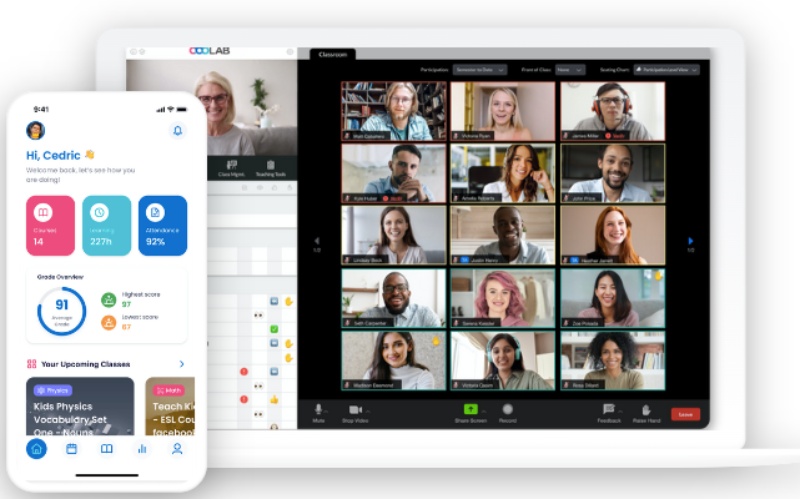
---
This blog is powered by Superblog. Visit https://superblog.ai to know more.
---
## Sample Page
Author: Nga Tran
Author URL: https://blog.thelearningos.com/author/nga-tran
Published: 2022-12-05
URL: https://blog.thelearningos.com/sample-page
Checking Checking
---
This blog is powered by Superblog. Visit https://superblog.ai to know more.
---